REVIEW · LEXINGTON
Half-Day Thoroughbred Horse Farm Tour in Kentucky
Book on Viator →Operated by Thoroughbred Heritage Horse Farm Tours · Bookable on Viator
A Bluegrass horse day beats another museum morning. This half-day small-group tour is built around Keeneland Race Course and one or more nearby thoroughbred farms, plus the story of how Lexington became the U.S. breeding capital. It’s part driving tour, part working-farm visit, and it moves at a pace that lets you ask questions along the way.
I especially like the small-group size (max 13), because it keeps the van ride from feeling like a bus tour and makes it easier to get answers. I also like the hands-on style moments—when farms have horses available, you may get to meet and interact with the animals rather than just watch from a distance.
One drawback to plan for: the day’s exact stops and how “hands-on” it feels can vary with farm schedules. If you’re expecting a long, behind-the-scenes Keeneland experience every time, know the itinerary can shift depending on what’s available.
In This Review
- Key things to know before you go
- Bluegrass Thoroughbreds in a Half-Day: What the Experience Really Feels Like
- Starting Point at 366 Waller Ave: Where Your Kentucky Morning Begins
- Thoroughbred Heritage Visitors Center: Your Quick Orientation Before the Farms
- Keeneland Race Course: What You Can Expect Without Overpromising
- Farm Stops Around Lexington: Where the Real Story Lives
- The Guide Factor: How This Tour Gets Its Personality
- Small-Group Size and Van Time: The Good and the Trade-Off
- What You Should Bring (and What You Should Skip)
- Price and Value: Is $45 Worth It in Lexington?
- Who This Tour Is Best For (and Who Might Be Frustrated)
- Timing, Weather, and Day-to-Day Changes
- Should You Book This Half-Day Thoroughbred Tour?
- FAQ
- How long is the half-day tour?
- How much does the tour cost?
- What’s included in the price?
- Is food included?
- How many people are on the tour?
- Where do I meet, and is parking available?
- Does the tour run in winter months?
- What if the tour is canceled due to weather?
- Can I bring my own animals or service animals?
Key things to know before you go

- Small group (max 13) keeps the tour personal and question-friendly
- Keeneland Race Course focus plus Bluegrass farm-country touring
- Thoroughbred Heritage Visitors Center start/finish with free parking
- Hands-on horse time is conditional on what farms have available
- No food on tour, so plan for water and light timing
- Guide-led storytelling with real ranch-and-racing perspective
Bluegrass Thoroughbreds in a Half-Day: What the Experience Really Feels Like

This tour is for people who want to understand thoroughbreds as working animals, not just famous names. You get the big-picture story—breeding, training, racing, and aftercare—then you see how that story plays out in the surrounding countryside.
Timing matters here. With about 3 hours 30 minutes total, you’re not committing an entire day, but you still get van transportation and multiple stops. That makes it a strong fit if you’re already in Lexington for lunch-and-sightseeing plans.
The tour runs in English, and you’ll be in a 14-person passenger van with a cap of 13 travelers. That’s a practical difference: smaller groups mean fewer people competing for guide time.
You can also read our reviews of more tours and experiences in Lexington.
Starting Point at 366 Waller Ave: Where Your Kentucky Morning Begins
You’ll meet at 366 Waller Ave, suite 119, in Lexington. The experience ends back at the meeting point, so you’re not stuck trying to find your way after the tour.
Good news if you plan to drive: free parking is available at the Thoroughbred Heritage Visitors Center. That matters because you can treat the Visitors Center as a calm base before the tour and a simple “back to start” end point after.
The tour is designed to include most travelers, but come in with realistic expectations about walking. Farms can mean uneven footing and barn paths, so comfortable walking shoes are not optional if you want to enjoy the stops.
Thoroughbred Heritage Visitors Center: Your Quick Orientation Before the Farms
The first stop is the Thoroughbred Heritage Visitors Center area, where the tour sets up the main theme: what makes Lexington a thoroughbred breeding center and how the industry works as a full life cycle.
This is where you’ll learn the roles that show up later in real conversation—breeding, training, racing, and aftercare. Then the tour moves from classroom-to-countryside, with transportation in the van taking you to the working parts of the area.
A practical detail: you’ll be transported from the pickup location to see farms in the region, and you’ll return to the Visitors Center at the end. That loop keeps the day from feeling chaotic.
Keeneland Race Course: What You Can Expect Without Overpromising
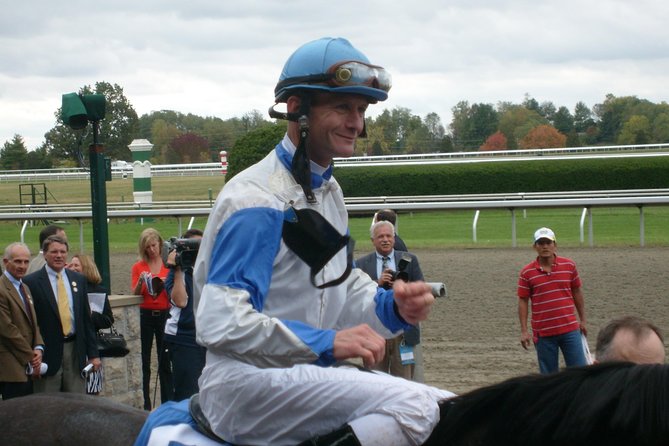
Keeneland is the headline name for a reason, and it’s one of the tour’s key attractions. The tour highlights include a visit to the famous Keeneland Race Course, and that’s the moment most horse lovers have circled on their Lexington to-do lists.
Here’s the practical expectation: your experience at Keeneland may be time-limited. One review concern pointed out that some days can feel more like passing by than getting a long, deep look. That doesn’t mean Keeneland isn’t included—it just means you should treat it as a major stop rather than a full day admission experience with every possible angle.
If you’re the type who likes photo ops, this is where you’ll want to stay alert and ready. Keep your phone charged, because barns and farms are one thing, but Keeneland is the kind of place that begs for quick shots and short questions to your guide.
Farm Stops Around Lexington: Where the Real Story Lives
After Keeneland, the tour’s center of gravity shifts to the thoroughbred farms. The tour is designed to visit one or more thoroughbred farms, and the itinerary can change depending on availability.
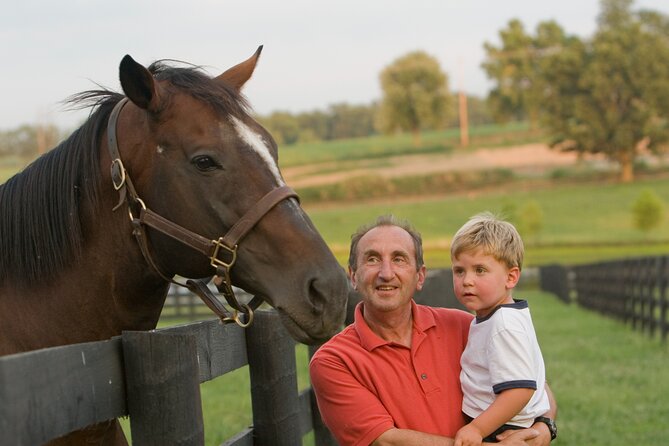
What makes this valuable is the combination of story plus proximity. You’re not just hearing about breeding and training—you’re in the world where it happens. And in some cases, you may get to interact with horses as available.
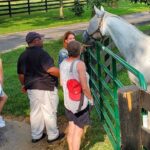
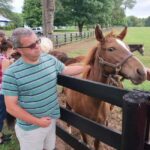
You might find hands-on moments like walking through stables, meeting horses up close, or even touching mares and younger foals when the farm schedule allows. Reviews also mention seeing horses in different stages and roles, like horses prepared for breeding and friendly horses that let you get a better sense of how these animals are handled.
Still, remember the “conditional” part. Farms have daily rhythms, and weather, staffing, and what’s available can affect how close you can get. If you want maximum horse contact, ask your guide early what’s likely that day.
The Guide Factor: How This Tour Gets Its Personality
This is a guide-led experience, and the guide’s tone shapes the day. Many guides mention having deep local ties and years in the industry, and that shows in how the tour feels—more conversation, more explanations, and lots of room for questions.
Names that come up often include Tim, Vicky, Mark, John, Richard, Mike, Hope, and others. Even if you don’t get those exact guides, the pattern is the same: you should expect someone who can connect breeding decisions, racing timelines, and aftercare to real working routines.
One of the biggest pluses is that the guides don’t just recite facts. They tend to tell industry stories with a sense of humor, then steer you into questions. That’s how you leave with practical context you can use even after you’ve left Lexington.
Small-Group Size and Van Time: The Good and the Trade-Off
Small-group tours can go two ways: intimate and relaxed, or intimate and rushed. This one lands closer to relaxed, mainly because you’re not packed in like sardines.
Still, van time is part of the deal. You’ll be driving through horse country to reach the farms. Some people want more walking time and less riding, and that’s a fair consideration—especially if you’re hoping for a nonstop stream of close-up horse moments.
The best way to make van time work for you is to treat it as part of the tour, not downtime. Pay attention to what your guide is explaining while you’re moving—often the “why” behind Lexington’s breeding culture is easier to grasp when you can look out at the terrain and farm setup.
What You Should Bring (and What You Should Skip)
Food is not allowed on tour. That’s a clear rule, and it affects your day planning. You’re allowed bottled water or covered drinks, so bring your preferred water bottle and keep hydration simple.
Wear shoes that can handle barn and farm paths. Even short walks can get slippery, and you’ll enjoy the horses more if you’re not thinking about your footing the whole time.
Also, bring a mindset for real farm conditions. You’re visiting working operations, not a polished theme park. The better your attitude, the more you’ll get from the moments that are genuinely “up close.”
Price and Value: Is $45 Worth It in Lexington?
At $45 per person for about 3 hours 30 minutes, the tour is priced as an experience you can fit between bigger ticket Lexington plans. When you compare it to ticketed attractions, the value comes from two things: transportation and guided access to working-farm context.
Included items are a professional guide and transportation in a 14-person passenger van, plus admission ticket for the Visitors Center. That means you’re paying for a guided “how it all connects” day, not just a ride and a vague stop list.
Where the value really shows is in the learning-to-seeing ratio. You don’t just get a drive past horses—you get explanations tied to breeding, racing, and aftercare. If you love horses and want more than a basic photo moment, this is the kind of half-day that can stick with you.
Who This Tour Is Best For (and Who Might Be Frustrated)
This tour is a strong match for:
- Horse lovers who want real context about the thoroughbred life cycle
- People who like small-group guidance and Q&A
- First-time Lexington visitors who want a compact “Bluegrass horses” introduction
It might be less satisfying if:
- You want a long, in-depth Keeneland walk-through every time
- You need lots of nonstop hands-on horse contact, no matter what
- You get annoyed when farm schedules influence the exact interaction level
If you’re traveling with kids, it can still be worthwhile because the format is active and story-driven. Just know barn visits can involve rules and boundaries around animals and space.
Timing, Weather, and Day-to-Day Changes
Good weather is required. If conditions are poor, the tour can be canceled and you’ll be offered a different date or a full refund. That’s not unusual for farm experiences, and it’s a reason to keep a flexible schedule when you book.
Also, the itinerary may change depending on availability. That can mean different farms on different days, and it can affect how interactive the horse time feels. If you go with curiosity instead of fixed expectations, you’ll get more out of the tour.
One seasonal note: from November 12 through March 10, minimum numbers of 4 guests are required to run the tour. So if you’re traveling in winter, book with that in mind.
Should You Book This Half-Day Thoroughbred Tour?
I think you should book it if your goal is a guided, small-group look at Kentucky thoroughbreds—Keeneland plus farm-country context—without spending a full day on the road. The $45 price makes sense when you factor in van transportation and a professional guide, and the tour’s rating and strong recommendation rate reflect how often people leave feeling they learned something real.
I’d skip it or at least temper expectations if you’re expecting the kind of hands-on horse access that never varies. This is a working farm setting, and day-to-day availability shapes what you can do. If you’re okay with that, you’ll probably have one of the more memorable half-days in Lexington.
FAQ
How long is the half-day tour?
It’s approximately 3 hours 30 minutes.
How much does the tour cost?
The price is $45.00 per person.
What’s included in the price?
You get a professional guide, transportation in a 14-person passenger van, and admission ticket included for the Visitors Center.
Is food included?
No. Food is not allowed on tour, though bottled water or covered drinks are allowed.
How many people are on the tour?
The tour has a maximum of 13 travelers.
Where do I meet, and is parking available?
You meet at 366 Waller Ave suite 119, Lexington, KY 40504. Free parking is available at the Visitors Center.
Does the tour run in winter months?
From November 12 to March 10, the tour requires a minimum of 4 guests to run.
What if the tour is canceled due to weather?
Since good weather is required, the tour may be canceled for poor weather. If that happens, you’ll be offered a different date or a full refund.
Can I bring my own animals or service animals?
No animals, including service animals, are allowed on the tours.