REVIEW · BOZEMAN
Alpaca and Llama Farm Tour
Book on Viator →Operated by Alpacas of Montana, Inc. · Bookable on Viator
A walk with alpacas beats a museum stop. This 1.5-hour farm experience near Bozeman is a hands-on look at camelids and how a working farm actually runs, plus you’ll meet the farm’s animal cast (including Turkish Anatolian Guard Dogs). I love that you’re not just watching through a fence; you’ll get to feed, bathe, and walk the animals, with your guide coaching you the whole way. I also love the extra farm flavor beyond alpacas and llamas, like the guard dogs and seasonal animals. One thing to plan for: it’s outdoors the entire time, with no public restroom and uneven ground, so come ready for dirt, sun (or at least mud).
The tour is offered in morning or afternoon slots, and the group stays small (maximum of 4 travelers). That small size matters because you get more time with the animals instead of rushing through a crowd scene. For families, the farm encourages kids—but they ask for close adult supervision so interactions stay calm and safe for the animals and people.
If you’re the type who likes real farm context, not just cute selfies, this is your kind of outing. You can also count on lively details from guides—names you may hear during your visit include Sarah, Jenna, and Fiona—who explain the animals and answer questions as you go.
In This Review
- Key Points Worth Knowing
- Why This Bozeman Alpaca Farm Tour Feels More Real Than a Petting Zoo
- What You’ll See First: Alpacas, Llamas, Guard Dogs, and the Farm’s Animal Cast
- Hands-On Time: Feeding, Walking, and Bathing Camelids Step by Step
- Stop-by-Stop Flow: How the Farm Loop Works in Practice
- 1) Arrival and animal meet-and-greet
- 2) Feeding time and close-up interaction
- 3) Walking session on the lead
- 4) Bathing/grooming moment
- 5) Photos, then a take-home souvenir
- What Makes the Working-Farm Details Matter (Breeding, Live Births, and Watch Your Step)
- Terrain, Rest Breaks, and Mobility: Comfort Options Without Overpromising
- Weather Reality: Rain, Sun, and Why Timing Is About Comfort
- Photo Opportunities and the Souvenir Moment
- Best Time to Go in Bozeman: Pair It With the Rest of Your Day
- What to Pack: Closed-Toe Shoes, Sunscreen, Water, and Long Pants
- Price and Value: Why This Small-Group Tour Often Feels Worth It
- Who Should Book This Alpaca and Llama Farm Tour
- Should You Book? My Practical Recommendation
- FAQ
- Where is the Alpaca and Llama Farm Tour meeting point?
- How long is the tour?
- What’s included in the experience?
- Is there a public restroom on site?
- What should I wear and bring?
- Are there options to accommodate mobility needs?
- Is this tour good for children?
- How large are the groups?
- What happens if the weather is poor?
Key Points Worth Knowing
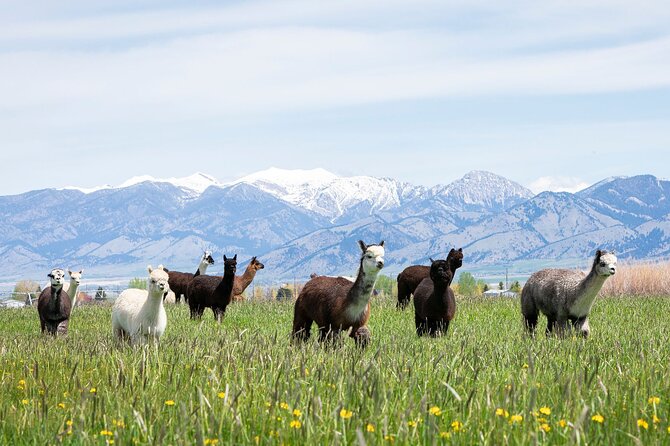
- Small group size (max 4) means more hands-on time with alpacas and llamas
- Feed, bathe, and walk the camelids, not just pet them for a minute
- Real working farm moments may include breeding or live births—go with curiosity, not fear
- Turkish Anatolian Guard Dogs (Chili, Hazel, and Finn) add a rare, safety-first farm layer
- No public restroom on site, so plan ahead and bring water
Why This Bozeman Alpaca Farm Tour Feels More Real Than a Petting Zoo
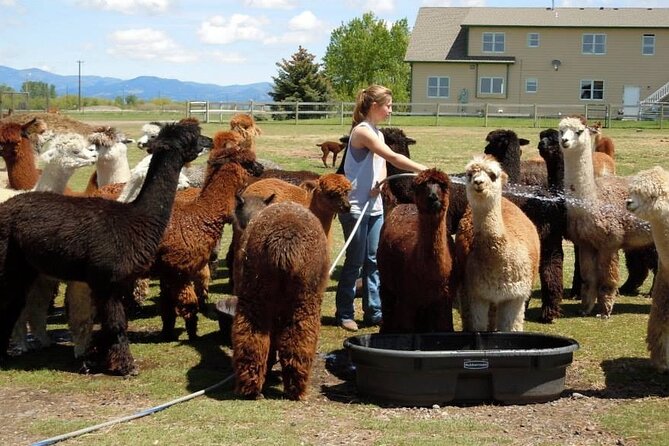
A good animal experience should teach you something while keeping things respectful for the animals. This one does that with a simple format: you get brief guidance, then you spend real time interacting—feeding, walking, and even bathing—under a guide’s watch. It’s the kind of activity where you start noticing the animals’ personalities and habits, not just their cuteness.
You’ll also feel the difference between a display and a workplace. The farm is active, and you may witness day-to-day events like alpacas breeding or live births. That isn’t meant to be a shock; it’s a reminder that these are animals with schedules and needs, not props.
If you’re traveling with kids, this often lands well because farm visits can be both magical and educational—when everyone stays close and supervised. The ranch asks for a simple adult-to-kid rhythm (at least one adult for every two children for younger kids) to keep interactions safe and gentle.
What You’ll See First: Alpacas, Llamas, Guard Dogs, and the Farm’s Animal Cast
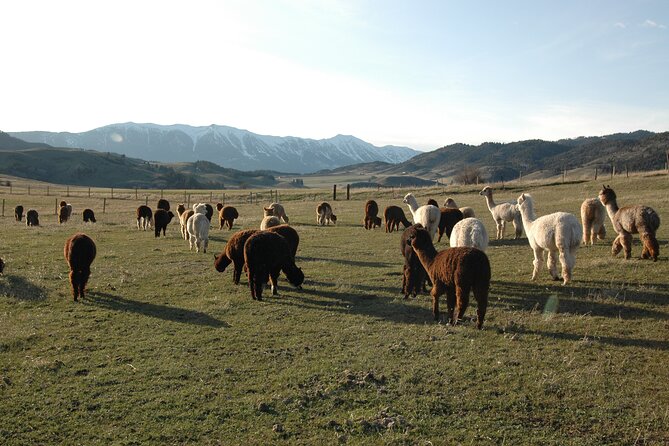
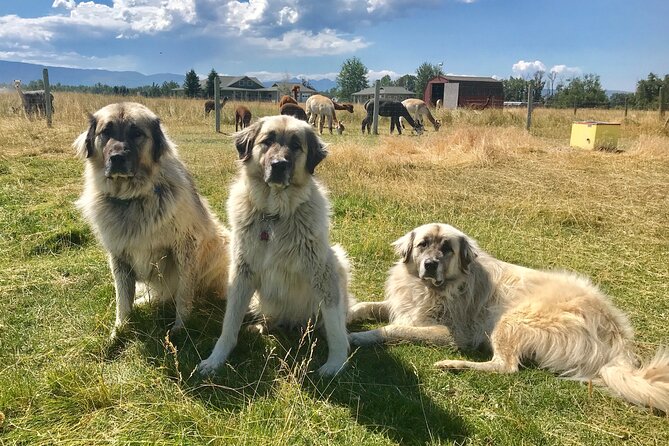
The tour begins at 8255 S Cottonwood Rd, Bozeman, MT. From the start, you’re introduced to more than just alpacas and llamas. The farm’s three Turkish Anatolian Guard Dogs—Chili, Hazel, and Finn—are part of the experience, and they’re there for a reason: they help protect the herd. You may also spot other farm animals depending on the day and season, including chickens and horses (seasonal).
Then there’s the wild-life and variety that makes the property feel alive. You might see ground squirrels and deer around the grounds, and bald eagles have been spotted as well. The cat, Jill, occasionally makes a special appearance too, which is always a fun moment when it happens.
Photographs are a big part of why people book this. The farm encourages you to take lots of pictures, including shots with your favorite alpaca. Just keep in mind you’re on an active farm, so you’ll want to move calmly and follow your guide’s directions rather than rushing for that one perfect photo.
Hands-On Time: Feeding, Walking, and Bathing Camelids Step by Step
This tour’s heart is hands-on interaction—and they guide you through it. Instead of a free-for-all, you’ll get instruction on how to approach, how to handle things safely, and what to expect from the animals.
Feeding is usually the first big wow-factor. You learn quickly that camelids respond to gentle handling and quiet attention. Your guide helps you understand what you’re doing and why—how your posture and movement can affect the animals’ comfort.
Walking is the next highlight. Getting an alpaca or llama walking on a lead is a small thrill, but it also teaches you how sturdy and responsive these animals are up close. One of the best parts is that you’re not stuck doing it in place. You can usually take a relaxed walk as part of the farm loop, with your guide making sure you’re safe on the terrain.
Bathing rounds out the experience. If you’ve only seen alpacas as fluffy photos, bathing adds a totally different angle. You’re still interacting, but now you’re seeing grooming and care practices as part of day-to-day farm life. A lot of guides also use this moment to explain why socializing and routine contact matter for the animals’ long-term health care.
From past visitors, a strong theme is the guides’ steady, personal attention—people like Sarah, Jenna, and Fiona are repeatedly praised for staying engaged, answering questions, and keeping everyone on track through each step.
Stop-by-Stop Flow: How the Farm Loop Works in Practice
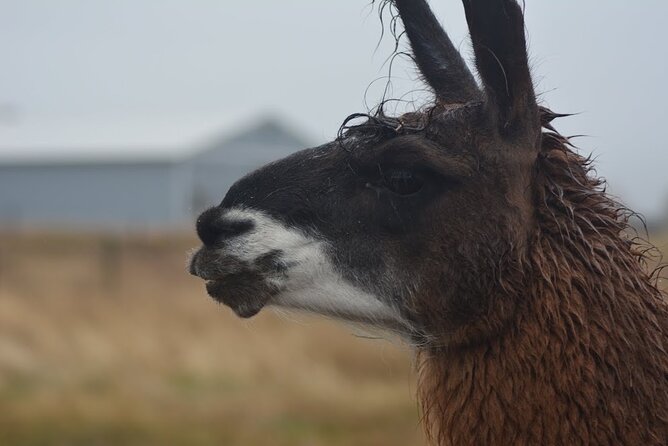
Even though the tour is structured simply, it feels like a full mini-adventure because it moves through several distinct modes of interaction.
1) Arrival and animal meet-and-greet
You start on the farm grounds, meeting the alpaca/llama group and also being introduced to the guard dogs and other animals that welcome visitors. This isn’t just a waiting period. It’s your orientation—how to behave, where to stand, and what the guide wants you to watch for.
2) Feeding time and close-up interaction
Once you’re oriented, you’ll get hands-on with feeding. This is where you’ll learn the basics of calm interaction and notice the difference between alpacas and llamas in their body language.
3) Walking session on the lead
Then comes walking. This is a change of pace, and it’s also why shoes matter. The walk keeps the experience active without turning it into a strenuous hike.
4) Bathing/grooming moment
Next is bathing, which helps you see farm care in action. You’ll likely spend enough time here to feel like you actually contributed to the process, not just watched from the side.
5) Photos, then a take-home souvenir
Toward the end, you’ll have time for photos and a souvenir. The tour includes a keychain or ornament, and you’ll get to pick one to remember your visit. That’s a small detail, but it turns the end of the experience into a real closure instead of a quick drop-off.
What Makes the Working-Farm Details Matter (Breeding, Live Births, and Watch Your Step)
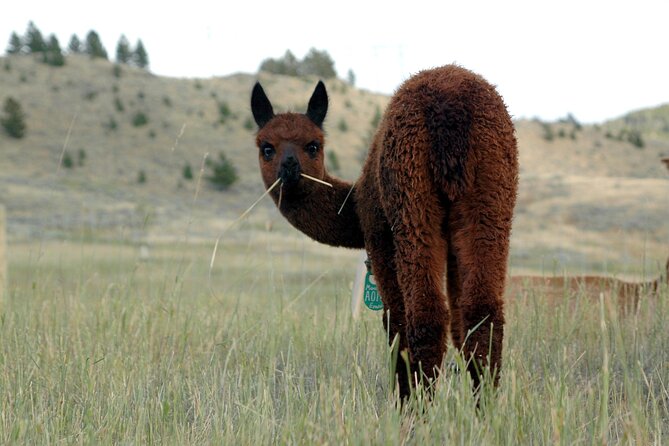
This is the point where the farm feels most “real,” and it’s also the point where you’ll want to set your expectations. The ranch notes that you may see alpaca breeding and even live births. If you’re visiting with kids, it’s smart to talk beforehand about what animals do in nature and on farms—your guide will help you stay grounded and safe in the moment.
The other working-farm detail is practical: watch your step. The property includes uneven terrain like gravel, dirt roads, and natural rocks. It’s not a rough hike, but it isn’t smooth like a paved path either.
Also, there’s a strong outdoors factor. Bring sunscreen and water, and wear closed-toed shoes you don’t mind getting dirty. If you care about your footwear, plan on some level of dust. One recent visitor mentioned the farm had shoes available so people didn’t have to ruin their own shoes—so it’s worth asking at check-in if you’re worried.
On the bug front, biting flies have been called out in seasonal timing. Long pants can help a lot, especially when the farm weather shifts.
Terrain, Rest Breaks, and Mobility: Comfort Options Without Overpromising
Not everyone wants a walking experience, and the farm understands that. They’ll move at a relaxed pace with time to enjoy the animals. They also note that if you can walk about 100 yards from the parking area to the barn, there’s a shaded swinging chair where you can rest and take in the views.
If walking the full loop is hard, they’ll still try to bring alpacas over to you for close-up interactions. That’s a helpful compromise, and it’s better than the usual situation where you just watch from the sidelines.
That said, you should still plan for uneven ground and outdoor time. If mobility is a concern, consider asking about your comfort needs before your visit so the guide can plan the flow around your group.
Weather Reality: Rain, Sun, and Why Timing Is About Comfort
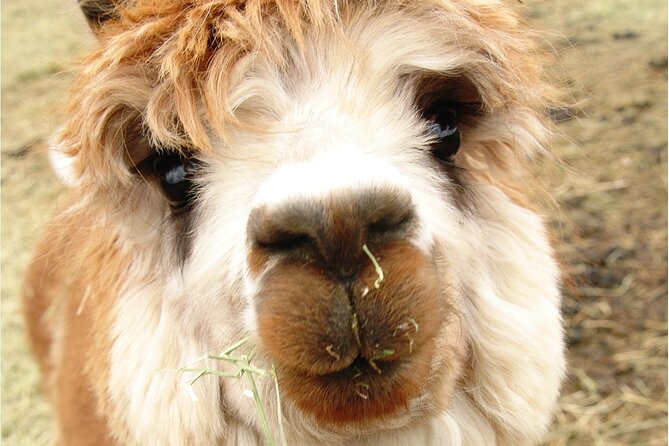
This is an outdoor tour for the full duration, so weather matters. The good news is the experience is designed to work in real conditions, not fantasy sunshine—there’s at least one report of the tour still being a good time during rain.
That said, the farm does require good weather, and if poor weather forces a cancellation, you’ll be offered a different date or a full refund. The common-sense advice: pick a time when you’re ready to be outdoors and don’t plan the tightest sightseeing schedule right before or after, just in case conditions change.
Photo Opportunities and the Souvenir Moment
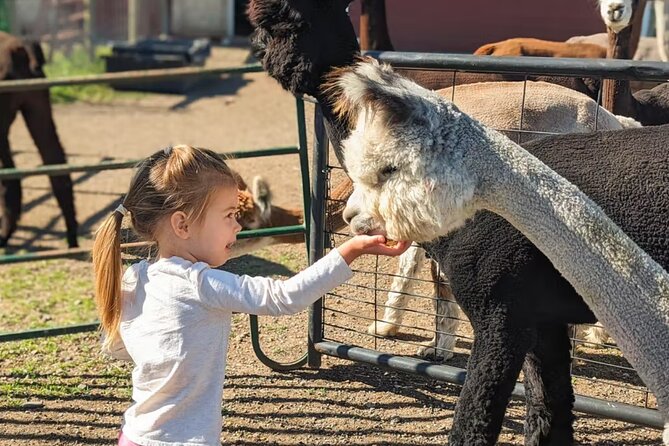
If you love photos, you’re in luck. The farm encourages taking lots of pictures during the tour, including photos with your favorite alpaca. The animals are calm enough for moments that feel natural rather than rushed, especially in a small group.
The souvenir is also part of the fun. At the end, you can choose a keychain or ornament. It’s a small cost-to-memory payoff, and it makes the whole experience feel complete—like you actually brought a piece of the visit home instead of leaving with just phone photos.
Best Time to Go in Bozeman: Pair It With the Rest of Your Day
The tour runs for about 1 hour 30 minutes and has morning or afternoon options. That makes it easy to plug into a Bozeman itinerary because you don’t need a half-day block.
A simple strategy:
- If you want a calmer start, pick a morning slot so the rest of the day is open.
- If you prefer a slower day, choose an afternoon slot and use the morning for museums, coffee, or scenic driving.
Either way, remember the tour is outdoors and you’ll be focused on animals for the full time. Don’t stack it right on top of anything that depends on perfect timing—give yourself breathing room.
What to Pack: Closed-Toe Shoes, Sunscreen, Water, and Long Pants
This is the practical stuff that keeps the tour fun instead of stressful.
Bring:
- Closed-toe shoes you don’t mind getting dirty
- Sunscreen (you’ll be outdoors the whole time)
- Water
Think about:
- Long pants in warmer months when biting flies are a possibility
- A plan for no public restroom on site (use the restroom before you arrive)
If you’re worried about footwear, you might get help. One visitor mentioned the farm had shoes available so they didn’t have to get their own shoes dirty. Don’t assume it’s guaranteed for every situation, but it’s a reasonable question at check-in.
Price and Value: Why This Small-Group Tour Often Feels Worth It
The exact price isn’t listed in what I have here, but you can judge value by what’s included and how much time you actually get.
You’re paying for:
- 1.5 hours of hands-on farm interaction
- a small group (max 4 travelers), so your guide can spend time with you
- access to multiple camelid activities: feeding, bathing, and walking
- a take-home souvenir (keychain or ornament)
That combination is what makes the experience feel efficient. You’re not paying for a quick photo stop. You’re paying for participation—being guided through care and interaction, not just standing near animals.
It’s also good value as a day-management tool. The tour is easy to add to a sightseeing day in Bozeman without taking half your schedule.
Who Should Book This Alpaca and Llama Farm Tour
This is a strong fit if you:
- want hands-on animal time instead of passive viewing
- enjoy learning through doing (feeding/walking/bathing)
- like small-group experiences where the guide can tailor attention
- are traveling with kids and want an educational farm stop (with close supervision)
It’s also a good choice for couples and solo travelers who want a calm, therapeutic break from driving and crowds. One visitor even described the interaction as relaxing, and that tracks with the overall pace: you’re outside, you’re moving slowly, and you’re focused on animals.
Should You Book? My Practical Recommendation
Book it if your ideal day includes hands-on animal care, calm instruction, and a real working farm experience. The best reasons to go are simple: you’ll feed, walk, and bathe alpacas and llamas, you’ll meet the guard dogs (Chili, Hazel, and Finn), and you’ll get a small-group feel that makes the time count.
Skip it or plan carefully if:
- you strongly need indoor facilities or you can’t manage outdoor uneven terrain
- you’re not comfortable with the idea that a working farm may include natural farm events like breeding or live births
- you rely on a public restroom on site
If you can handle dirt, sun, and a relaxed walk, you’ll likely leave with more than photos—you’ll have a clearer sense of how camelids are cared for and why socialization matters.
FAQ
Where is the Alpaca and Llama Farm Tour meeting point?
The tour starts at 8255 S Cottonwood Rd, Bozeman, MT 59718, USA. It ends back at the same meeting point.
How long is the tour?
The tour lasts about 1 hour 30 minutes.
What’s included in the experience?
You get a souvenir at the end of the tour, such as a keychain or ornament.
Is there a public restroom on site?
No. There is no public restroom available.
What should I wear and bring?
Wear closed-toed shoes that you don’t mind getting dirty, and plan for sunscreen since you’ll be outdoors the entire time. Bring water as well.
Are there options to accommodate mobility needs?
The farm notes that uneven terrain can be a challenge. If you can walk about 100 yards from the parking area to the barn, there is a shaded swinging chair to rest. They also say they can bring alpacas over for a close-up experience if you don’t want to navigate the full route.
Is this tour good for children?
Yes, the ranch welcomes children, but kids must be supervised at all times. They recommend a ratio of at least one adult per two children for young kids.
How large are the groups?
The tour has a maximum of 4 travelers.
What happens if the weather is poor?
The experience requires good weather. If it’s canceled due to poor weather, you’ll be offered a different date or a full refund.