REVIEW · ESSAOUIRA
Berber Cooking Class at a Farm in the Countryside & shopping at a rural Souk.
Book on Viator →Operated by Ecotourism and Hiking · Bookable on Viator
Clay ovens beat takeout any day. On a farm in the Haha hills (35 km south of Essaouira), you shop a rural souk for the real ingredients, then cook them with Khadija and a small group. I also love how hands-on it is, from roasting barley on a fire to grinding it with a stone mill, instead of just watching someone cook.
The best payoff is what you eat: a vegetable-and-goat tagine flavored with Moroccan spices and farm olive oil, plus flat bread baked in a clay oven and couscous steamed in a clay pot. Depending on the weather, lunch may be outside, and that means you get your meal with quiet views and garden-tea afterward, not a cramped room.
The main thing to watch is timing and weather. This experience needs good weather, and if conditions are rough, the outdoors lunch plan (and the feel of the day) can shift. Also, the Argan oil cooperative stop is optional, so don’t count on it every day.
In This Review
- Key Things I’d Put on Your Radar
- Where the Day Starts: Essaouira Pick-Up at 9:00
- Souk Stop in the Haha Hills: Buying Ingredients That Actually Shape the Meal
- The Ecological Farm Kitchen: Where Traditional Tools Still Matter
- Roasting Barley by Fire, Then Grinding It on a Stone Mill
- Clay Oven Flat Bread: Hot Bread With a Hands-On Finish
- Clay Pot Couscous: Steaming the Texture, Not Just Boiling the Stuff
- The Tagine Lunch: Goat Meat, Vegetables, Moroccan Spices, and Olive Oil From the Farm
- Outdoor Lunch and Weather Reality: What to Expect When the Sky Changes
- Argan Oil Cooperative Option: Learn Production and Taste the Results
- Price and What You’re Really Paying For: $98.76 for 7 Hours
- Who This Tour Suits Best (And When It Might Not)
- Getting the Most From the Day
- Should You Book This Berber Cooking Class Near Essaouira?
- FAQ
- What time does the Berber Cooking Class start in Essaouira?
- How long is the experience?
- Where do we meet, and where do we end?
- What is the group size?
- What do we cook and eat during the class?
- Is there an Argan oil stop?
Key Things I’d Put on Your Radar
- Haha-region Berber farm cooking: you’re in the Berber countryside, not a city classroom.
- Souk shopping with staples: fruits, vegetables, meat, eggs, honey, and the ingredients that match the recipes.
- Barley roasted then stone-milled: you’ll see the grain-to-flour basics up close.
- Clay-oven and clay-pot cooking: flat bread and couscous are cooked the traditional way.
- A real tagine lunch: vegetables and goat meat, finished with Moroccan spices and olive oil from the farm.
- Optional Argan oil cooperative tasting: you may stop to learn production and sample products.
Where the Day Starts: Essaouira Pick-Up at 9:00
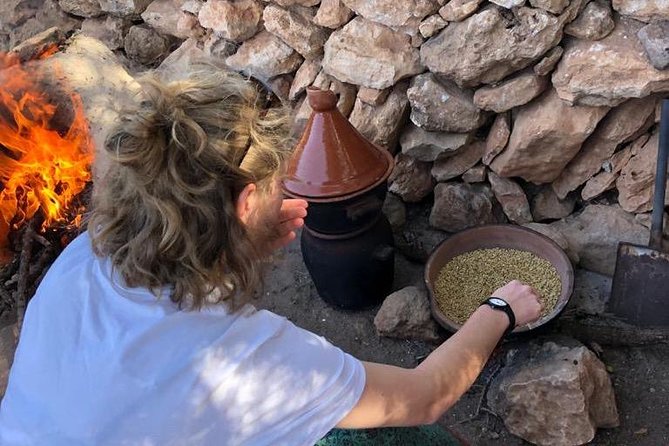
Your day begins back at the meeting point in Essaouira, starting at 9:00 am. The address is Labo Abdelkrim Khatabi d’Analyses Médicales, 287 Rue Oued El Makhazine, Essaouira 44000, Morocco, and you return there at the end.
This is a 7-hour experience with a mobile ticket, and it’s capped at a maximum of 8 travelers. That small group size matters. You’re more likely to actually talk, ask questions, and get time at the cooking steps instead of standing in the background.
If you’re coming from a Riadh or hotel outside central Essaouira, plan to show up a bit early so you’re not sprinting to catch the group. A later arrival can throw off the flow, since the day includes time for the souk and then cooking.
Souk Stop in the Haha Hills: Buying Ingredients That Actually Shape the Meal
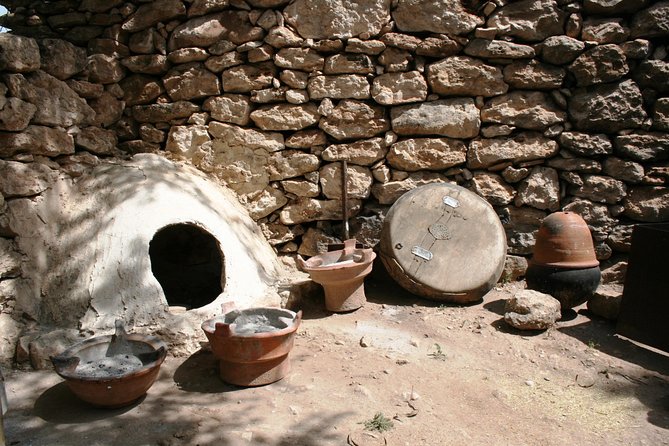
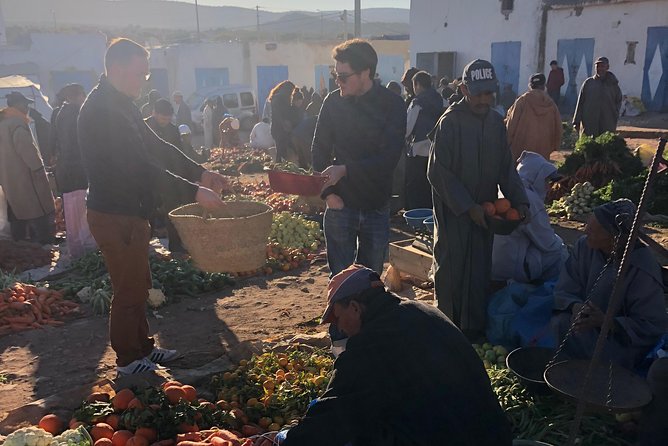
Before the cooking starts, you go to a local souk in the Haha region. This isn’t a staged market. You’re looking at freshly harvested fruit and vegetables, plus the staples you need for the class: meat, eggs, honey, and more.
What I like about this part is how it gives you a clearer map of the flavors you’ll cook later. When you see the ingredients in front of you, it becomes easier to understand why the dishes taste the way they do. You also get a real sense of daily food priorities, not just tourist-friendly products.
One practical detail: since the class uses what you select and buy, go into the souk with an open mind. Don’t expect English-first explanations of every item. If your guide switches languages, that’s normal for Morocco tours that operate across different groups.
The souk stop also sets the tone for the rest of the day: rural, food-focused, and grounded in what people use at home.
The Ecological Farm Kitchen: Where Traditional Tools Still Matter
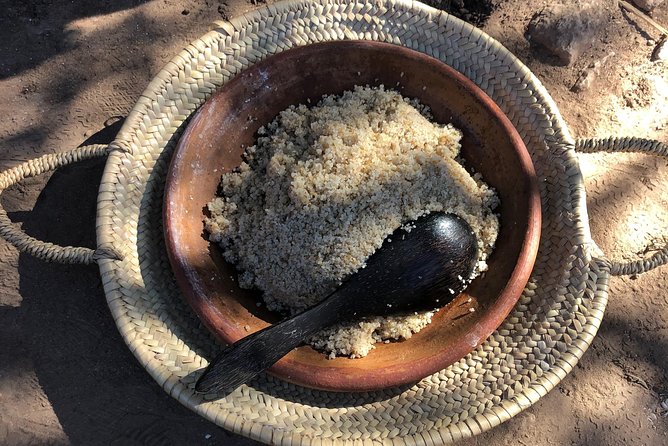
After the souk, you head to the ecological farm centered around an authentic Berber kitchen. This is where the day stops feeling like a sightseeing package and starts feeling like a cooking day.
The farm kitchen is stocked with traditional tools for food preparation. That means you’re not just learning recipes in theory. You’re seeing the equipment and processes that make these foods what they are.
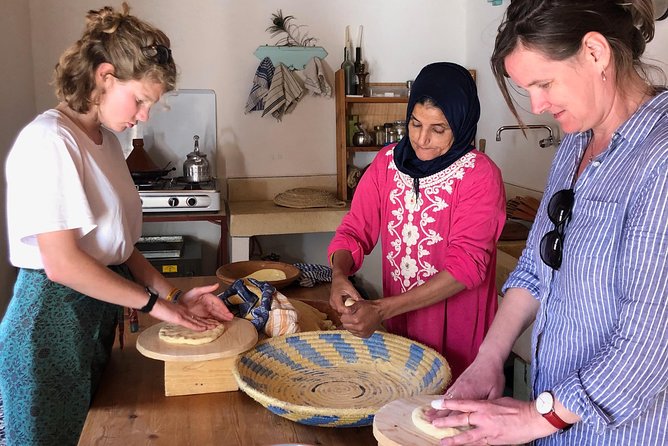
You’ll likely meet Khadija and another Khadija (yes, two women with the same first name lead the hands-on steps). Their job is to guide you through the key transformations: grain to flour and semolina, dough to flat bread, and steamed couscous to plate-ready comfort food.
And if you’re into small details, keep an eye on how they handle timing. In traditional cooking, timing is part of the technique. The bread, couscous, and tagine don’t all follow the same “set it and forget it” logic.
Roasting Barley by Fire, Then Grinding It on a Stone Mill
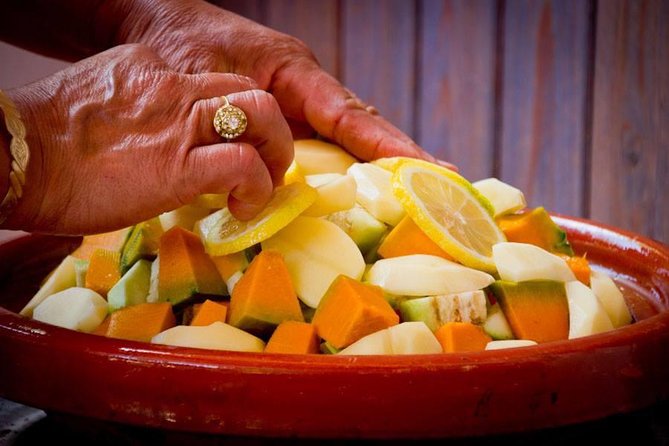
This is one of the most memorable parts of the day. Khadija and her fellow Khadija show you how to roast barley grains on the fire, then grind them in a stone mill to make the flour and semolina that form the backbone of traditional flat bread and couscous.
Why it’s worth your attention:
- Roasting changes the grain’s aroma and flavor. You don’t need a chemistry lesson. You just notice the smell and warmth of the process.
- Stone milling is a slow, physical step. It reminds you that a lot of “simple” food takes real work before it becomes dinner.
If you like learning by doing, this section is built for you. You get a front-row view of how the ingredients come to life before heat ever hits the dough or the pot.
Clay Oven Flat Bread: Hot Bread With a Hands-On Finish
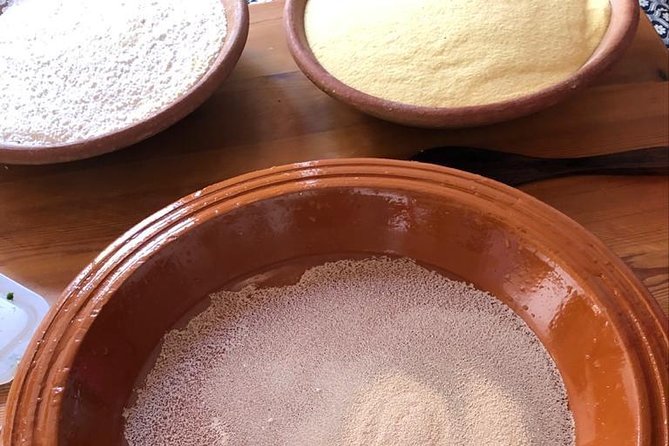
Next comes one of the simplest pleasures of travel: baking flat bread in a clay oven. Seeing bread go from dough to baked bread is satisfying on its own. Doing it with the traditional method is even better, because it connects the grain you roasted and milled to the final food.
Clay ovens behave differently from modern ovens. Heat distribution and retained warmth are part of the magic here. Even if you don’t understand the technical side, you’ll feel the rhythm.
This is also a good moment to ask questions like:
- How do you know it’s ready
- What changes if the dough is handled differently
- What role the oven play has in the final texture
If your guide is Nicole and your group is German-speaking, you may get extra clarity on process. In one German review, Nicole is specifically credited with making the day feel like you’re cooking with friends, not attending a class.
Clay Pot Couscous: Steaming the Texture, Not Just Boiling the Stuff
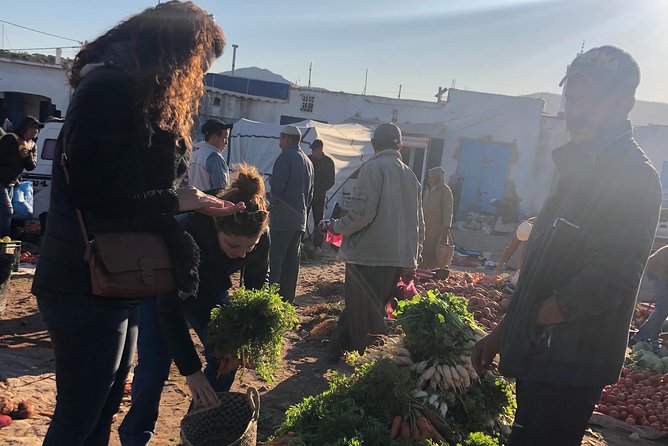
Then it’s couscous, steamed in a traditional clay pot. Couscous has a reputation for being fast. But traditional steaming is about texture, fluff, and timing.
What makes this step valuable for you is that it shows the structure behind the dish. You’re learning that couscous isn’t just a side. It’s a key foundation for how these meals are built.
If you’re picky about texture when you eat couscous at home, this is where you’ll see the difference between a basic version and the kind that’s made with careful steaming.
The Tagine Lunch: Goat Meat, Vegetables, Moroccan Spices, and Olive Oil From the Farm
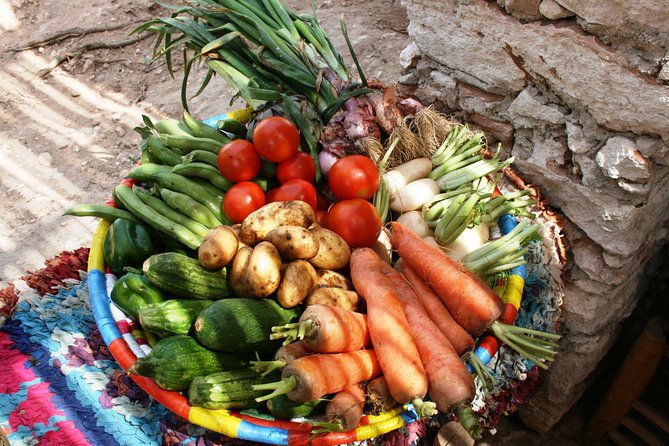
By lunch time, the day centers on a traditional tagine of vegetables and goat meat, cooked with Moroccan spices and olive oil. The olive oil is from olive trees growing on the farm, which is one of those details that makes you understand the “farm-to-table” claim in a real way.
The tagine style matters too. Tagine cooking is about slow flavor and gentle heat. If you’ve ever had tagine that tasted flat, it usually lacked one of these basics: good ingredients, good spice balance, or enough time to let flavors meld.
When you eat, you’ll get the connection between what you bought at the souk and what ends up on the plate. Vegetables and meat aren’t random. They’re chosen to match the cooking process you just experienced.
And if weather allows, lunch is served outside if possible. That outdoor meal is one of the biggest “why this is worth it” factors. You get a calm setting, fresh air, and garden-herb tea afterward.
The tea is infused with fresh herbs from the garden. It’s a simple finish, but it gives the day closure. You’re not rushing off to another stop. You’re ending with something made from the same place.
Outdoor Lunch and Weather Reality: What to Expect When the Sky Changes
This experience requires good weather. That line is there for a reason. When lunch can’t go outside, the atmosphere changes, and the farm’s quiet charm becomes more controlled and indoor-focused.
Still, don’t read that as a deal-breaker. Good weather simply makes the setting more memorable. If the day feels calmer and you’re eating in open air, you’ll probably find yourself grateful you chose this instead of another “watch and leave” activity.
For your comfort:
- Dress for warm days and cooler moments outdoors.
- Plan for sun, and bring something to protect your head if you run hot.
- If you’re sensitive to smells near cooking areas, be aware you’ll be near fire and spices.
These are practical, not fancy. They help you enjoy the food steps instead of thinking about discomfort.
Argan Oil Cooperative Option: Learn Production and Taste the Results
As you drive through the Argan zone, you have the option to visit an Argan oil cooperative. If you do this add-on, you’ll learn about how argan oil is produced and then taste products they make with it.
This stop is different from the cooking class because it’s about a single ingredient at origin, not a whole meal. It’s also a good match for the rest of the day. You already saw olive oil from the farm used in the tagine. Argan oil is the star here, tied to the region.
A key detail for decision-making: it’s an option. So if you prefer staying purely on the cooking/farm flow, you might choose to skip it depending on how the day is paced.
Also, the tour notes that you very likely see famous goats in trees on the south of Essaouira drive. That can turn the transit into a mini-sightseeing moment.
Price and What You’re Really Paying For: $98.76 for 7 Hours
At $98.76 per person for about 7 hours, this isn’t a bargain cooking class. But I think it’s fair value if you care about process and hands-on learning.
Here’s what you’re getting that justifies the price:
- A small group (max 8), so you’re not stuck watching.
- Souk shopping for ingredients that directly feed your meal.
- Multiple cooking steps: barley roasting, stone milling, clay oven bread, clay pot couscous, and a vegetable-and-goat tagine.
- Lunch and tea are part of the experience, and they’re tied to the farm and garden.
If you only want a quick taste or you’re not interested in cooking methods, it could feel pricey. But if you want to understand how Moroccan staples are made, you’re paying for more than food. You’re paying for the chain of techniques that produces the flavor.
It also tends to book ahead, with an average booking time of 55 days. If you’re traveling in peak season, that can be a sign to lock in early.
Who This Tour Suits Best (And When It Might Not)
This tour fits you if:
- You want hands-on cooking, not just a demonstration.
- You like rural settings and ingredient-focused travel.
- You’re curious about Berber farming and food preparation tools.
- You prefer smaller groups and more conversation time.
You might think twice if:
- You dislike long outdoor drives from Essaouira and want a shorter, city-based activity.
- Your schedule can’t handle weather changes, since good weather is required.
- You expect a guarantee of the Argan cooperative stop, since it’s optional.
It’s also likely a good fit for service animals, since service animals are allowed, and most travelers can participate.
Getting the Most From the Day
To make the experience go smoothly, I’d show up at the meeting point ready to move. The day has multiple stages, and you’ll switch from market to farm kitchen to cooking steps and then to lunch.
A couple of mindset tips:
- Treat the souk as part of the lesson. Don’t rush past ingredients you don’t recognize.
- Be present during the barley process. Roasting and grinding are the kind of steps you’ll remember later when you cook at home or compare foods in Morocco.
- Ask about what changes the most in the dishes. That’s where you’ll learn the practical cooking lessons.
If you’re traveling as a German-speaking group, Nicole being a German-speaking guide is one detail worth noting, because it can help you understand the steps and ingredients better.
Should You Book This Berber Cooking Class Near Essaouira?
Yes, if you want an authentic, small-group day that connects ingredients to cooking methods, this is a strong choice. The value is in the full sequence: souk shopping, grain prep, clay-oven bread, clay-pot couscous, and a tagine lunch with farm olive oil, then garden herb tea.
Book it especially if you’re the type who gets more joy from learning how food is made than from collecting photos. Just keep your weather in mind and remember the Argan oil cooperative is optional.
If that fits your travel style, you’ll likely leave with both full stomachs and a better feel for Berber cooking beyond the recipe card.
FAQ
What time does the Berber Cooking Class start in Essaouira?
The tour starts at 9:00 am. It ends back at the same meeting point.
How long is the experience?
The duration is about 7 hours.
Where do we meet, and where do we end?
You meet at Labo Abdelkrim Khatabi d’Analyses Médicales, 287 Rue Oued El Makhazine, Essaouira 44000, Morocco. The tour ends back at the meeting point.
What is the group size?
The activity has a maximum of 8 travelers.
What do we cook and eat during the class?
You’ll learn to roast barley grains, grind them for flour and semolina, bake flat bread in a clay oven, steam couscous in a traditional clay pot, and make a vegetable-and-goat tagine with Moroccan spices and olive oil. Lunch is served during the experience, along with tea infused with fresh herbs.
Is there an Argan oil stop?
There is an optional visit to an Argan oil cooperative while driving through the Argan zone, where you can learn about production and taste products.