REVIEW · MARRAKECH
Authentic Moroccan Cooking Class in a Farm in Marrakech
Book on Viator →Operated by One Life Trips · Bookable on Viator
Cooking tajine on a Marrakech farm beats city classes. I love the hotel pickup that removes the usual meet-up hassle, and I love that this isn’t a sit-and-watch show. It’s a hands-on class where you work through flavors, spices, and technique, then eat in the same place you cooked.
One thing to consider: the format is interactive, not just demonstration. If you’re hoping to mostly observe, you’ll still be expected to jump in and prepare part of the meal.
In This Review
- Key highlights at a glance
- Hotel pickup at 10:00, then west to the farm
- A small group, and a real farm kitchen feel
- Cooking Moroccan tajine the hands-on way
- A small caution: you’ll be doing real cooking
- Fresh salad and mint tea, the skills you’ll reuse
- Lunch in a mindful farm setting
- Price and value: $56.99 with pickup, lunch, and teaching
- Who should book this farm tajine class
- Should you book this Marrakech cooking class?
- FAQ
- What time does the Moroccan cooking class start?
- How long is the experience?
- Is hotel pickup and drop-off included?
- What will I eat and drink during the class?
- Will the class teach me how to make tajine?
- Can you accommodate dietary needs?
- What is the cancellation policy?
Key highlights at a glance
- Hotel pickup and drop-off makes the farm trip easy, even if you’re new to Marrakech
- Small group size (up to 20) keeps things friendly and questions practical
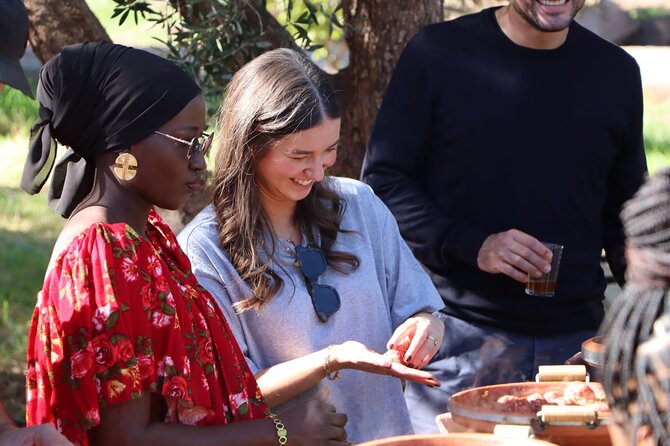
- Tajine cooking plus salad, then mint tea so you leave with a full set of Moroccan basics
- Farm setting with orange and lemon trees in the background, not a crowded kitchen
- English-speaking host/chef means you’re not stuck guessing what to do next
- Dietary needs accommodated with prior notice so you can plan ahead
Hotel pickup at 10:00, then west to the farm
This tour starts at 10:00 am, and you don’t have to figure out where to go or how to get there on your own. A driver picks you up from your hotel, and you head to the western side of Marrakech for the cooking experience.
The drive is usually short. In one of the experiences I reviewed, the round-trip was described as about 20 minutes, which matters because it keeps your morning from turning into an all-day logistics puzzle. The pickup also helps if your lodging is in a busy medina alley where taxis or walking routes can be tricky.
You’ll also appreciate that this is near public transportation. Even though pickup is included, that’s a helpful backup if your plans change or you want to understand how the area connects.
You can also read our reviews of more tours and experiences in Marrakech.
A small group, and a real farm kitchen feel
This class caps at 20 travelers, which keeps the vibe from feeling like a factory line. That size usually means you can ask questions without shouting over a crowd.
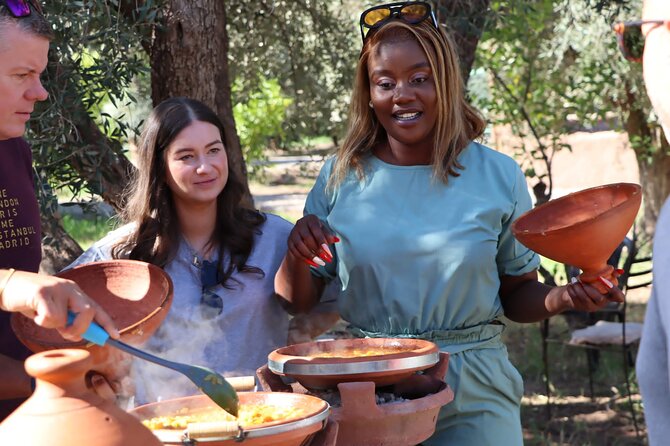
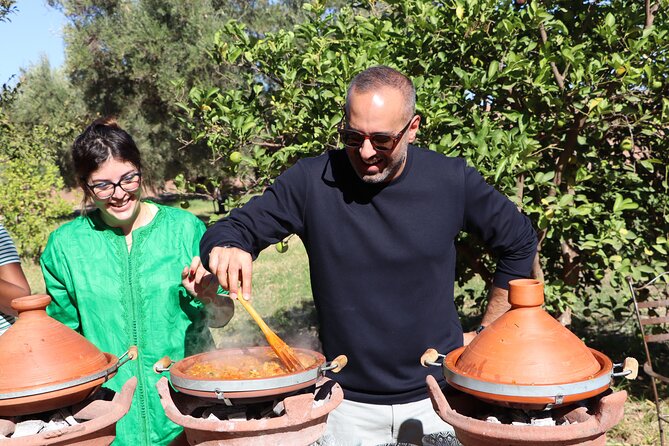
You’ll be welcomed by an English-speaking host/chef. In multiple accounts, the host was named Khaoula, and she’s repeatedly described as warm, confident, and calm with teaching. One review noted that she had everything set up for arrival, which is exactly what you want: less waiting, more cooking.
The setting is a working farm experience rather than an apartment studio. Guests described lemon and orange trees around the place, and several comments mention the sense that you’re welcomed by a family. That matters because Moroccan cooking is part technique, part ingredient culture, and part food-as-community. A farm setting supports all three.
Cooking Moroccan tajine the hands-on way
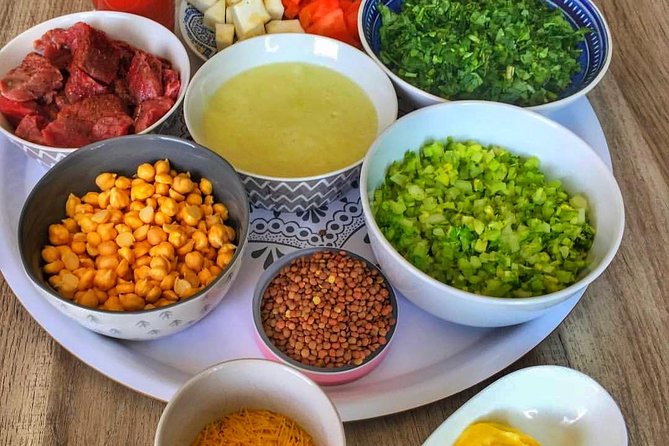
The main event is tajine. And importantly, this is hands-on, meaning you’re not just watching someone else cook. You’ll start preparing your Moroccan tajine with guidance on ingredients and steps, while your host explains what’s happening and why.
The class is designed so you understand the full process: how flavors build, how spices are used, and how the cooking method affects the final result. Tajines are often treated like a mystery dish when people first try them at home, but here you get the step-by-step workflow so you can repeat it later without reinventing the wheel.
You’ll also learn practical decisions that matter in real kitchens. For example:
- how to handle the sequence of prep so things don’t get chaotic
- how to think about spice balance rather than just dumping in a mix
- how to get the texture right, since tajine relies on slow, steady cooking
One account also mentioned making a Berber-style tajine and a chicken tajine. Even if your exact menu varies, you can expect a similar approach: build your dish, then learn enough to recreate the method at home.
A small caution: you’ll be doing real cooking
Because the experience is interactive, you should be ready to chop, mix, and actively participate. If you want a purely observational class, this format may feel like work in a good way, but it’s still work.
Fresh salad and mint tea, the skills you’ll reuse
After tajine prep begins, the schedule expands beyond the main dish. You’ll make a Moroccan fresh salad as part of the meal, and then you’ll learn how to make the famous Moroccan mint tea.
Why mint tea is worth your attention: it’s one of the most recognizable Moroccan food rituals. And it’s also surprisingly technique-driven. The host walks you through the full process, so you don’t just learn a flavor profile—you learn the routine you can repeat at home.
The same goes for the salad. In many Moroccan meals, salad isn’t an afterthought. It’s a bright, fresh counterpoint to the slow-cooked richness of tajine. When you prepare it yourself, you understand how it balances the plate. That’s the kind of knowledge you can actually use later when you’re cooking without the farm setting and without the host nearby.
In short, you’ll leave with more than a recipe. You’ll leave with a workflow.
Lunch in a mindful farm setting
Once your food is ready, you sit down and eat what you made. Lunch includes Moroccan salad and a main course, plus authentic Moroccan mint tea and local pastries.
This is one of the best parts of the experience: the meal isn’t rushed. Since you cooked it on-site, you’re not dealing with that awkward moment where the class ends but you still have a half-cold plate waiting. The farm atmosphere supports a slower pace, and multiple reviews described it as an enjoyable, welcoming meal with the host.
Local pastries and tea also help you round out the experience. You get a fuller taste of a Moroccan table rather than a single dish lesson.
One thing to keep in mind: you’re spending about 3 hours total. That’s a nice length for doing meaningful cooking and actually eating, but it still takes a chunk out of your day. Plan accordingly, especially if you’re trying to fit in a souk visit afterward.
Price and value: $56.99 with pickup, lunch, and teaching
At $56.99 per person, this class doesn’t sound like a cheap add-on—and it shouldn’t be treated like one. The real question is what’s included, and in this case the list is strong.
You’re getting:
- hotel pickup and drop-off
- an English-speaking host/chef
- lunch (salad + main course)
- mint tea and local pastries
- a hands-on cooking format
When you add up those pieces, the price starts to look fair. A cooking class alone might cost a similar amount in many places, but the transport + full meal + tea setup is what makes this feel like a complete half-day experience instead of a short activity with no real payoff.
Also note the timing. It’s commonly booked about 33 days in advance on average, which usually signals it’s not a fly-by-night operation. And with free cancellation, it’s easier to hold a spot while your Marrakech plans firm up.
Who should book this farm tajine class
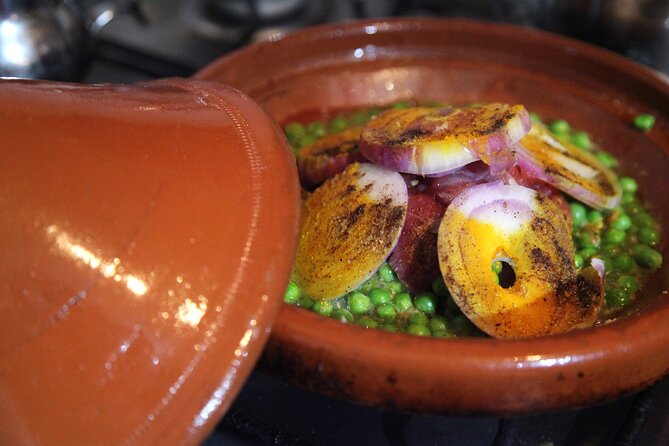
This is a great fit if you want Moroccan food beyond the basics. The experience works especially well for people who like learning by doing: you want to taste, chop, mix, and build your own dish.
It’s also a strong choice for families and mixed-age groups. One review specifically mentioned doing the experience with a 16-month-old and a 9-year-old, with a good outcome and a sense that the host set everything up quickly on arrival. That suggests the experience can handle real-life variety better than very formal classes.
If you’re traveling solo, you’ll likely appreciate the group size and the English-speaking instruction. If you’re with friends or a partner, the farm setting and shared meal make it feel like an experience you’ll remember, not just a checklist item.
Should you book this Marrakech cooking class?

Book it if you want a practical Moroccan cooking skill set: tajine technique, fresh salad, and mint tea. The pickup, the farm setting, and the included lunch and pastries make it feel like a complete experience for your money.
Skip it only if you strongly prefer watching over participating. Since it’s hands-on and interactive, you’ll be part of the process, not just an observer.
If you’re looking for one good food-focused activity that gives you something you can repeat at home, this one is a solid bet. With scores around 4.9 and a recommendation rate of 100%, it’s clearly hitting the mark for many people who come hungry for more than restaurant meals.
FAQ
What time does the Moroccan cooking class start?
The start time is 10:00 am.
How long is the experience?
It lasts about 3 hours.
Is hotel pickup and drop-off included?
Yes. Pickup and drop-off from/to your hotel is included.
What will I eat and drink during the class?
Lunch includes Moroccan salad and the main course, plus authentic Moroccan mint tea and local pastries.
Will the class teach me how to make tajine?
Yes. You’ll prepare a Moroccan tajine and learn the cooking steps during the hands-on session.
Can you accommodate dietary needs?
Dietary needs can be accommodated with prior notice.
What is the cancellation policy?
You can cancel for a full refund if you cancel at least 24 hours before the experience’s start time. If you cancel less than 24 hours before, the amount paid is not refunded.