REVIEW · CRETE
Spiridi Olive Oil Farm Tour
Book on Viator →Operated by Cretan Olive Oil Farm · Bookable on Viator
Olive oil history, served with samples. Spiridi Olive Oil Farm is a small family-run stop outside Agios Nikolaos where you learn how Cretans make and use olive oil, then taste your way through the basics. I like that it feels relaxed and personal, not rushed, and you can move at your own pace through the museum set up for learning.
What I really loved is the hands-on, food-and-flavor focus. You get free tastings—olive oil, honey, raki, and local goodies—so the information lands fast in your mouth, not just in your head. I also liked the sense of everyday life here, including moments like watching Costas chase a renegade goat.
One thing to consider: this is mostly a self-guided visit. If you prefer a fully guided, sit-and-listen format, you may want to double-check what’s included on your ticket day—especially around audio—so you don’t end up wanting more guided storytelling than you expected.
In This Review
- Key things to know before you go
- Spiridi Olive Oil Farm: A short, satisfying Cretan culture stop
- Getting to the farm and timing your visit
- Entering the museum: your self-guided “station walk” experience
- The olive oil story: what you learn along the way
- Tasting time: olive oil, honey, raki, and more local products
- Optional workshops and extra activities (what to look for)
- Shop time: what to buy and how to shop smart
- Price and value: is $9.60 worth it?
- Who should book Spiridi Olive Oil Farm?
- Should you book this Spiridi Olive Oil Farm tour?
- FAQ
- How long is the Spiridi Olive Oil Farm tour?
- What is the price per person?
- What language is the tour offered in?
- Is a mobile ticket included?
- What does the ticket include?
- What is not included?
- Where do I meet for the tour?
- Where does the tour end?
- What are the opening hours?
- Is there free cancellation?
- How many people can be in a group?
Key things to know before you go
- Self-guided museum with audio/text you follow through stations at your own speed
- Free tastings of olive oil plus local products like honey and raki
- Family-farm feel near Agios Nikolaos, not a big factory tour
- A setup with information boards and a tablet/iPad-style guide to make it easy
- The farm atmosphere can include extra on-site activities like workshops depending on the day
Spiridi Olive Oil Farm: A short, satisfying Cretan culture stop
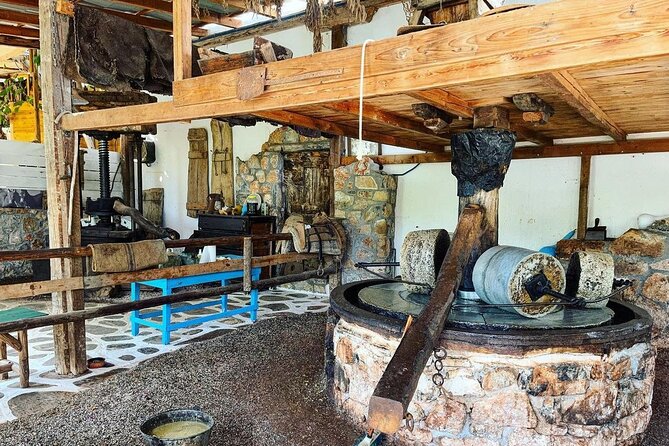
If your Crete trip has you bouncing between beaches and archaeology, this is a different kind of “real life” experience. Spiridi Olive Oil Farm is designed as a learning walk—olive oil history, how production works, and what you can make from olive trees besides oil. It’s also not trying to swallow your whole day. You can get a lot out of about one hour.
The farm sits just outside Agios Nikolaos, so it works well as either:
- a break during a lighter afternoon, or
- a focused cultural stop when you’re tired of museums that feel like lectures.
And yes, you will taste things. Olive oil tourism without tasting is just homework. This one hands you the answer key.
You can also read our reviews of more tours and experiences in Crete.



Getting to the farm and timing your visit
The tour runs from 10:00 AM to 5:00 PM (Monday through Saturday) during the listed season. Plan around that window so you don’t show up expecting it to be open.
For timing, the visit is listed at about 1 hour. In practice, that means:
- you can comfortably complete the stations,
- do the tastings without rushing,
- and still have time to browse any products in the shop.
As for transportation, the data doesn’t include hotel pickup. So you’ll be planning your own way there. If you’re based in Agios Nikolaos center, you might find it’s roughly a walkable stretch (around 30 minutes) if the weather and your pace are friendly. Otherwise, you’ll likely want a taxi or local transport to keep it simple.
Entering the museum: your self-guided “station walk” experience
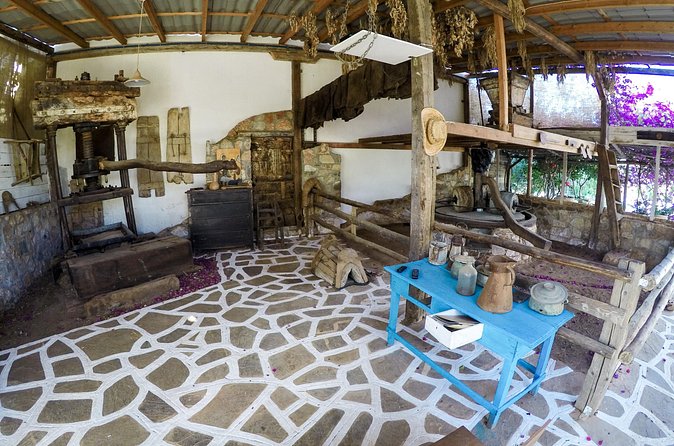
The core of this farm tour is a traditional olive oil museum experience. You don’t stand in line for a script. You walk through a series of stations, using the audio and text guide to understand what you’re seeing.
What makes this work well is the format:
- clear stops,
- explanations you can absorb at your speed,
- and a layout that helps you stay oriented without guessing.
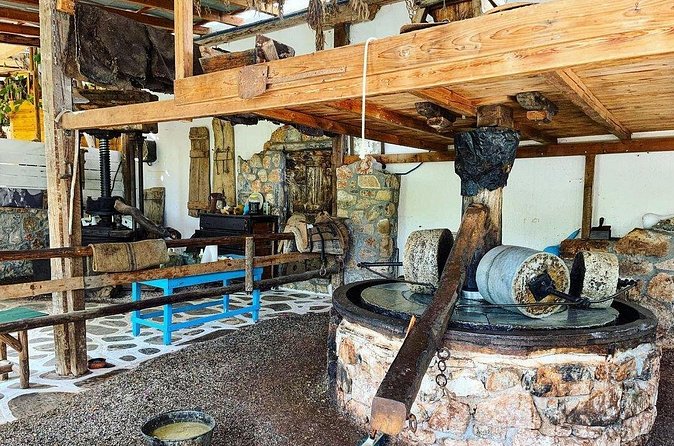
A number of visitors describe getting a tablet/iPad to guide them. That’s a smart setup for a short visit because it keeps the learning “on the move.” You can pause when something grabs your attention—like the traditional olive press—or continue when you’re just trying to keep the flow.
One small detail I appreciate about this style of touring: it suits different travel personalities. If you like to read and watch, you can. If you’d rather skim and then focus on tasting, you can do that too. It’s flexible.
The olive oil story: what you learn along the way
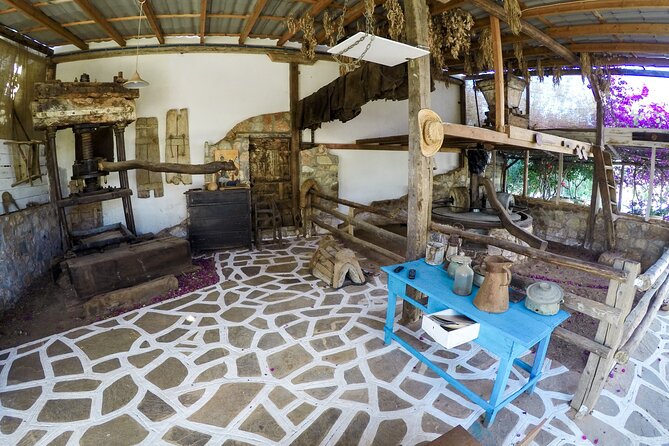
The museum is built around the idea that olive oil isn’t just a bottle on a shelf. It’s a whole system—trees, seasonal work, processing, and byproducts that show up in Cretan kitchens and households.
Here’s what you can expect to cover as you move through the exhibits:
- background and history of olive oil production on Crete
- how olive oil is produced (from the trees to processing)
- how olives and olive-based products fit into everyday life
- other byproducts you might not think about until you see them in context
There’s also something human about visiting a family-run place like this. You’ll likely notice little moments—like Costas the goat-chaser—that remind you you’re not in a staged showroom. That kind of atmosphere makes the learning feel tied to real work.
Tasting time: olive oil, honey, raki, and more local products
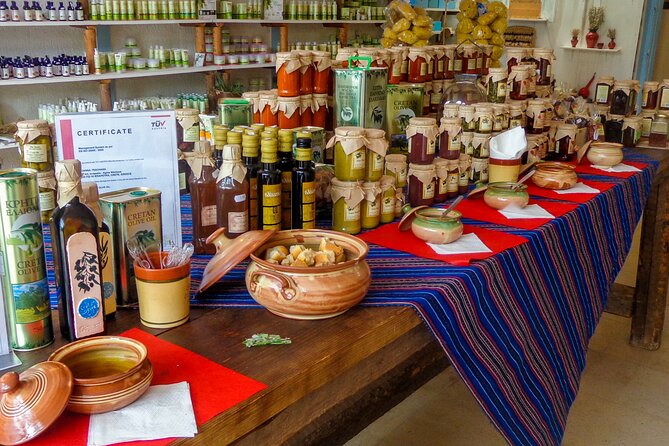
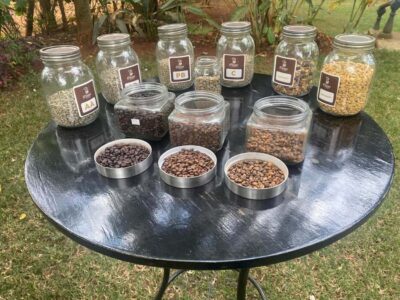
For most people, the highlight is the tasting. The tour includes tastings of:
- olive oil
- honey
- raki
- and local delicacies
This matters because it turns olive oil production into something you can actually evaluate. You’re not just told that olive oil varies—you get to taste different versions and notice differences yourself.
A big practical tip: take a moment before the tastings to reset your palate. If you’ve just had coffee, eaten something very sweet, or come straight from lunch, you’ll notice less. Try to arrive a little hungry in the good way, or at least plan to keep your snack light beforehand.
Also, expect the farm’s shop to be tempting. A tasting experience almost always comes with shopping momentum, and that’s part of the business model. The upside here is that you’re buying from the same place teaching you the story.


Optional workshops and extra activities (what to look for)
The farm experience is described as relaxed and authentic, with hands-on options that can include things like:
- cheese making
- cooking lessons
- pottery workshops
But those extras aren’t clearly labeled as included in the core ticket. So treat them as “possible if available on your day,” not as guaranteed add-ons that you can plan around like a museum guided tour.
Still, even when those activities aren’t part of your specific route, the farm’s setup makes it easy to connect what you learn in the museum to what you see happening around you. And if you do find a workshop running, you’ll probably get a deeper sense of how Cretans use local ingredients in daily life.
If you’re traveling with kids or you just like interactive moments, this is the kind of place where something practical might be happening nearby—even if your ticket is mainly museum + tasting.
Shop time: what to buy and how to shop smart
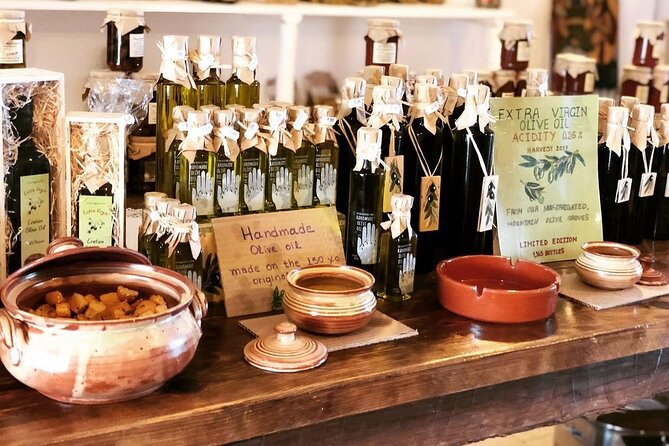
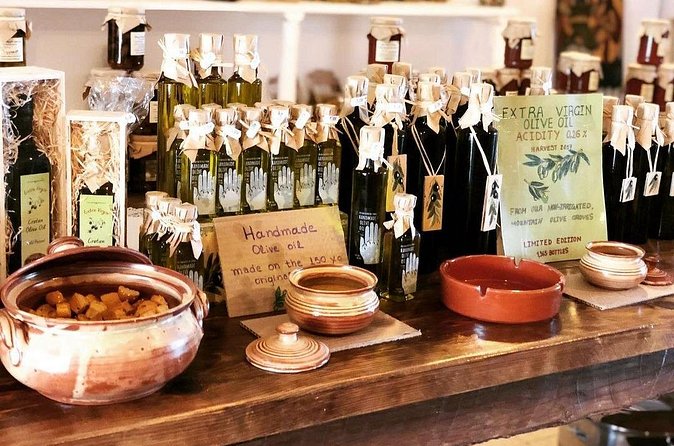
The farm has a shop where you can purchase olive-oil-based products, honey, and other locally made items. Visitors often mention the shop pricing as reasonable, especially compared with what you’d see back in Agios Nikolaos.
How to shop smart:
- Buy olive oil based on taste first, not label claims. If you’re unsure, ask what they recommend for eating vs cooking (if staff are available, which they often are in a small farm shop).
- Pick one or two specialty items instead of trying to take home a whole grocery store. A small selection from a focused place makes more sense than a heavy suitcase.
- If you’re buying gifts, look for smaller bottles and locally made goods that won’t turn into a packing nightmare.
If you’re the kind of traveler who wants to bring home something that actually makes sense for your trip, this farm is a good match.
Price and value: is $9.60 worth it?
At $9.60 per person, this tour hits that sweet spot where you can justify it even if you’re on a mid-range budget. The best value comes from what’s included:
- admission to the olive oil museum,
- a guided self tour with audio/text,
- and tastings of multiple local products.
If you add it up, you’re basically paying for an hour of learning plus a built-in tasting lineup. That’s usually more satisfying than paying for a single tasting somewhere else, then leaving with nothing but a couple small bites.
One practical way to judge value for you: if you like food learning—olive oil, honey, raki, and Cretan ingredients—this is likely a strong buy. If you’re not into tasting, the museum alone might feel shorter, and you may prefer a different activity that’s more visually centered.
Who should book Spiridi Olive Oil Farm?
This is a good fit if you want:
- a simple, short cultural stop near Agios Nikolaos
- a self-guided experience where you can go at your own speed
- an olive oil education that doesn’t require sitting through a long talk
- a place to taste local products and then shop responsibly
It’s also a solid choice for families who need something structured but not too strict. And for couples? It works because it feels different from the standard “walk and photos” plan, but it still moves at an easy pace.
If you have limited time and want one Cretan-flavor experience that doesn’t feel touristy in an overwhelming way, this tends to deliver.
Should you book this Spiridi Olive Oil Farm tour?
Book it if you want a high-return experience: about an hour, clear learning stations, and included tastings of olive oil plus local staples like honey and raki. The price makes it low-risk, and the setup makes it easy to enjoy even if you’re not a hardcore olive-oil nerd.
Skip it only if you strongly prefer a full guided tour where you’re not directing your own pace, or if tastings aren’t your thing. In that case, you might feel like the hour goes by fast.
FAQ
How long is the Spiridi Olive Oil Farm tour?
It’s listed as about 1 hour.
What is the price per person?
The price is $9.60 per person.
What language is the tour offered in?
The experience is offered in English.
Is a mobile ticket included?
Yes, it offers a mobile ticket.
What does the ticket include?
Your ticket includes access to the olive oil museum, a guided self tour with audio and text, and tastings of olive oil, honey, raki, and local products.
What is not included?
Hotel pickup and drop off are not included. Food or drinks beyond the tasting are also not included.
Where do I meet for the tour?
The meeting point is Spiridi Olive Oil Farm, Cretan Olive Oil Farm, Ag. Nikolaos 721 00, Greece.
Where does the tour end?
It ends back at the meeting point.
What are the opening hours?
During the listed season (04/11/2026 – 10/31/2026), it’s Monday through Saturday from 10:00 AM to 5:00 PM.
Is there free cancellation?
Yes. You can cancel up to 24 hours in advance for a full refund.
How many people can be in a group?
The maximum is 40 travelers.