REVIEW · CRETE
Traditional Olive Oil Making at Spiridi Olive Oil Farm – Crete
Book on Viator →Operated by Cretan Olive Oil Farm · Bookable on Viator
Olive oil has a smell, a sound, and a workout. At Spiridi Olive Oil Farm in Crete, you don’t just watch—you make extra virgin olive oil the old-fashioned way in a 130-year-old olive factory. I like that it’s fully hands-on, guided step-by-step by the people running the farm, with a small group so you actually get hands-on time.
Two things I really like: first, you physically do the key steps—weighing, crushing with a stone mill, and pressing—so you leave understanding how flavor and texture come from the process. Second, the final part isn’t a sales pitch; you taste the oil and get a 100ml bottle as a souvenir you can actually use back home.
One possible drawback to consider: this is time on your feet and your arms. If you’re hoping for a mostly seated, passive demo, you may find the hands-on pressing less your style, and there’s no included meal beyond water.
In This Review
- Key highlights you’ll feel right away
- A 130-year-old olive factory where you do the real steps
- How the 10-person limit changes the experience
- Olive oil workshop start: what happens when you arrive
- Weighing olives: the first step that shapes the lesson
- Crushing with a stone mill: pushing the weight matters
- Moving crushed olive paste into sacks
- Pressing with a manual wooden press: where patience shows
- Tasting the result and taking home 100ml
- Timing, comfort, and what to bring for a 10:30 am start
- Price and value: $78.60 for a working farm lesson
- Who should book this workshop (and who might not)
- Quick FAQ for planning your olive oil morning
- FAQ
- What exactly do I do during the workshop?
- How long does the experience last?
- What time does it start?
- Is there a chance to taste the olive oil?
- What do I get to take home?
- What’s included in the price?
- Is food included?
- How big is the group?
- Are pets allowed?
- Can I cancel for a full refund?
- Should you book Traditional Olive Oil Making at Spiridi Olive Oil Farm?
Key highlights you’ll feel right away
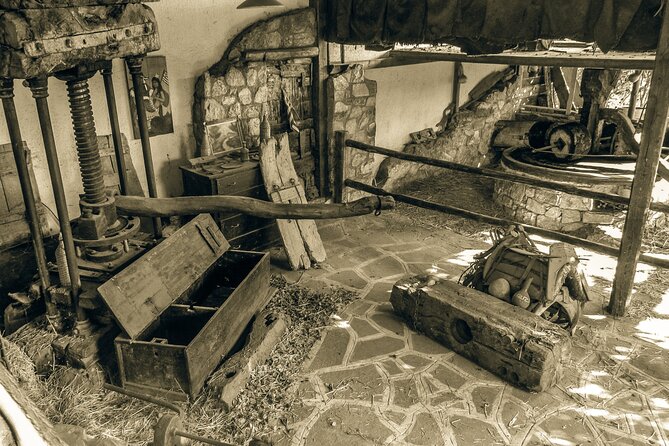
- You crush olives by pushing a stone mill—this is the real work, not a staged photo moment.
- A manual wooden press turns olive paste into oil, under close guidance.
- Small groups (max 10) mean you’re not stuck waiting your turn.
- You tour a 130-year-old factory, so the setting matches the technique.
- You taste your result at the end, then take home 100ml of extra virgin oil.
- Tassos and the team keep the whole process clear and in English.
A 130-year-old olive factory where you do the real steps
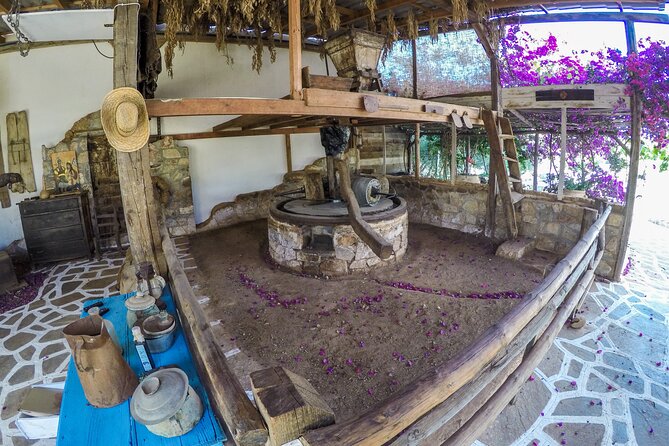
This workshop is set at Spiridi Olive Oil Farm, in a working olive oil space that’s been around for about 130 years. That matters more than you might think. You’re not learning theory in a modern room. You’re learning how people in Crete actually turned fruit into oil, using methods built for the rhythm of the harvest.
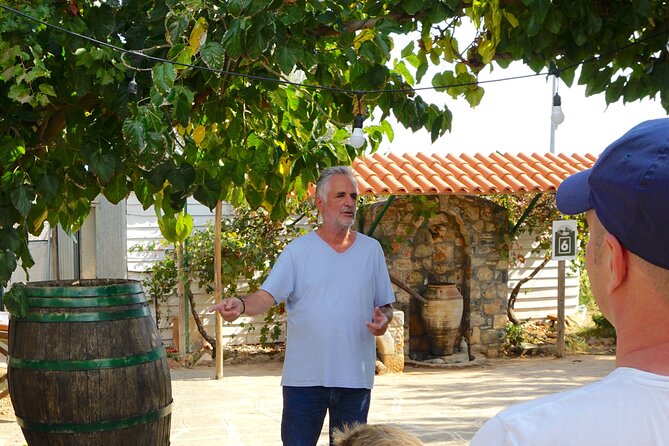
The tone is practical, family-run, and direct. You’ll follow along with guidance from the farm team, including Tassos and staff in English, and you’ll do each step yourself. You’ll weigh olives, crush them, move the crushed paste into sacks, then press it with a manual wooden press.
This is also a good “first olive oil lesson.” Most tours teach you what the product is. This one teaches you how it gets made, so tasting later makes more sense.
You can also read our reviews of more tours and experiences in Crete.
How the 10-person limit changes the experience
The group cap is 10 travelers, which instantly improves the quality of the time. When it’s small, the staff can watch your technique and help you get it right. You’re also less likely to feel like a spectator while someone else does the work.
This is part of why the workshop runs about 1 hour 30 minutes. The pacing is tight, because the goal is getting you through the process while everyone still gets a turn at the equipment. If you like structured workshops with clear steps, you’ll appreciate this.
The meeting point is Spiridi Olive Oil Farm, Ag. Nikolaos 721 00, Greece, and the start time is 10:30 am. The activity returns back to the same meeting point at the end, so you don’t need to plan a separate stop or transit to wrap up.
Olive oil workshop start: what happens when you arrive
When you show up at the farm, expect a short orientation and then straight into the process. You’ll be taught how to handle olives and what each stage is trying to accomplish. It’s not complicated, but it is hands-on, so it helps to arrive with comfortable shoes and a willingness to get a little olive mess on you.
There’s drinking water included, but no other food or drinks. That’s a detail worth planning around. If you’re doing this early in your day, you’ll likely want breakfast or a snack before you arrive.
Also, you’ll be on a farm setting where things can be dusty or slippery depending on conditions. The safest bet is to wear closed-toe shoes and keep your day bag light. You’ll thank yourself later when you’re leaning into the stone mill.
Weighing olives: the first step that shapes the lesson
You’ll start by weighing olives, which sounds minor until you realize it teaches discipline. Olive oil isn’t magic. It’s quantity, processing time, and how much fruit you can convert in a batch.
Weighing also gives you context for the rest of the workflow. When you later taste what comes from your batch, you’re not tasting a random sample. You can mentally connect input to output.
It’s also one of those steps that’s doable for most people. You don’t need special strength. You just need to pay attention, follow instructions, and work calmly.
Crushing with a stone mill: pushing the weight matters
Then comes the part people remember: crushing using a stone mill. You push the mill yourself. That’s the moment when the workshop stops feeling like a lesson and starts feeling like a real farm task.
The key benefit here is that you’ll feel what “crushing” really means. You’re taking whole olives and turning them into paste. The more evenly you crush, the more consistent the paste is—something you’ll appreciate later when you taste the oil.
This is also where you learn how much effort the old methods required. The mill isn’t motorized. Your body is part of the process. If you like activities with physical payoff, you’ll probably grin during this stage.
Moving crushed olive paste into sacks
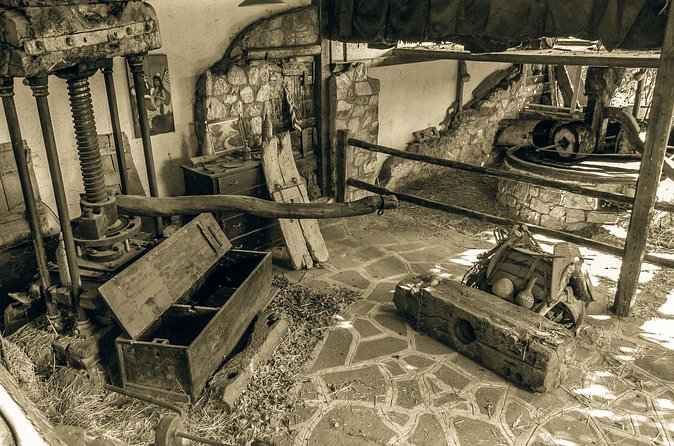
After crushing, you’ll transfer the crushed olives into large sacks. This step is easy to skip in your imagination, but it’s important practically. It sets up the pressing stage, and it’s part of how old systems organized batches.
This is also an eye-opening moment for first-timers. You get to see that olive oil production is less about one dramatic machine and more about careful handling at each stage. It’s farm work logistics—then technique.
The staff guides you here, so you don’t need to guess. But it’s still active time, and it helps you stay focused on the process instead of just watching.
Pressing with a manual wooden press: where patience shows
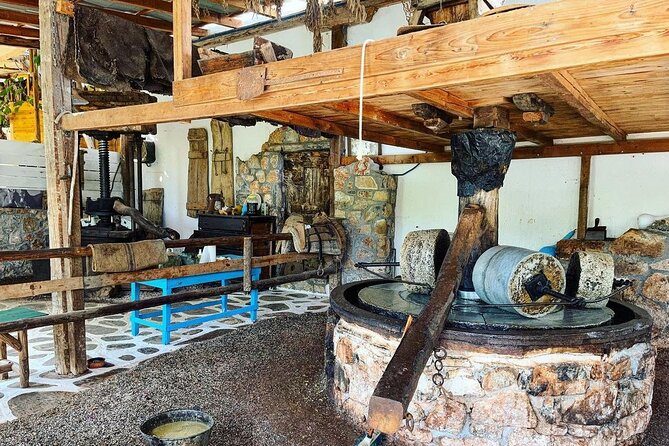
Next is pressing the olive paste into oil using a manual wooden press. This is the climax. You’re taking paste and extracting oil through force, controlled work, and attention to what’s happening.
A manual press tends to reward patience and steady effort. If you try to rush, you’ll feel it. The workshop structure keeps everyone on track, and the staff supervises so you can focus on the task without second-guessing the method.
This is the second big reason the workshop is worth it. You’ll understand why olive oil is treated with respect in Crete. It’s not a product you manufacture casually. It’s made through work that takes time.
You also get a stronger sense of why fresh processing matters. The workshop doesn’t turn into a lecture on chemistry, but the process makes the basics obvious.
Tasting the result and taking home 100ml
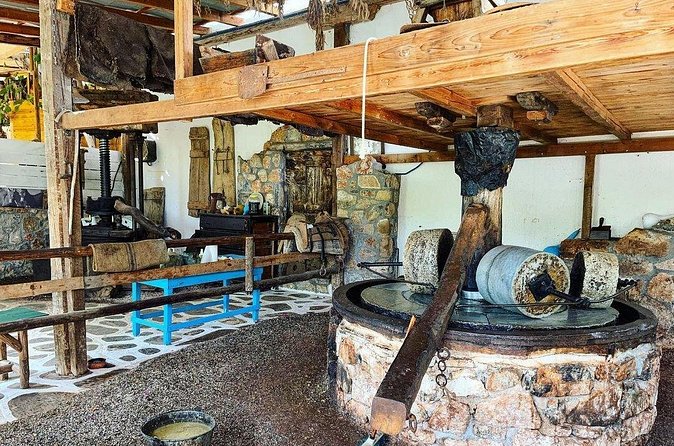
At the end, you’ll do an olive oil tasting. And because you made the oil, the tasting feels different. Instead of tasting a generic product, you’re tasting the “end of the journey” from your own batch.
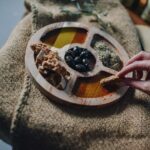
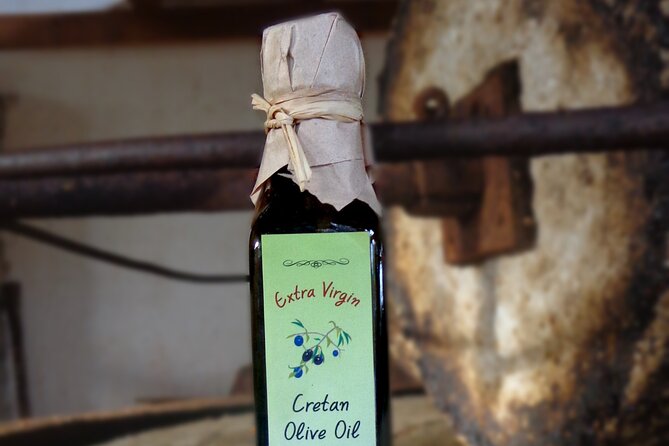
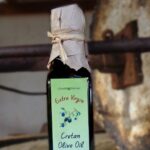
Then you’ll receive a 100ml bottle of the farm’s extra virgin handmade olive oil as a souvenir. That’s a practical gift: not just a small item, but a bottle you can actually cook with.
One more bonus is the farm shop. There’s a chance to buy and taste other products, and the farm offers additional experiences beyond olive oil. Depending on what’s running, you might find other activities like wine tasting, cheese making, honey, and cooking classes. There’s also an e-tour option using provided tablets, which can be a nice add-on if you want more context without extra hands-on work.
Timing, comfort, and what to bring for a 10:30 am start
The experience starts at 10:30 am and lasts about 1 hour 30 minutes. That’s a manageable chunk of time for a day trip, especially if you plan other stops around it.
Because there’s no included food beyond water, I suggest you:
- Eat something before you go
- Bring a small towel or wear clothes you don’t mind getting farm-dirty
- Wear closed-toe shoes with decent grip
If you’re combining this with other farm experiences on site, keep your expectations realistic. The hands-on pressing and milling take energy.
And if you like to walk after activities, there’s an added option to stretch your legs. One of the nicer practical extras: after the session, you can do a short walk downhill toward town, with the archaeological museum along the route.
Price and value: $78.60 for a working farm lesson
At $78.60 per person, this isn’t a cheap add-on. But it also isn’t just a show. You’re paying for equipment time, staff guidance, a group-size limit, and a real souvenir—100ml of extra virgin olive oil.
What makes the value better than typical “watch and clap” tours is the equipment access. You’re using the stone mill and manual press, which cost real money to maintain and take real time to support for a group. With a max of 10 travelers, the farm can actually run the workshop the way it’s meant to be run.
There’s also value in the learning payoff. Many people come away with a better sense of what to look for when buying olive oil later. Even if you don’t become an olive oil expert, you’ll at least know the basics of how the paste-to-oil step changes what you taste.
Who should book this workshop (and who might not)
You’ll probably love this if:
- You like hands-on activities over passive tours
- You’re curious about how food is made in Crete
- You want a memorable, tactile souvenir rather than a generic gift
- You’re traveling with friends and want a shared activity that breaks up a sightseeing day
You might want to skip or consider carefully if:
- You don’t enjoy physical work (pushing the stone mill and pressing takes effort)
- You’re expecting a full meal or a longer cooking-style experience
- You prefer air-conditioned comfort and minimal mess
It’s also great for families in the sense that the farm is set up for different ages to participate, though your exact level of participation will depend on the session and staff guidance.
Quick FAQ for planning your olive oil morning
FAQ
What exactly do I do during the workshop?
You weigh olives, crush them using a stone mill by pushing it yourself, transfer the crushed olives into large sacks, and press the olive paste into oil using a manual wooden press.
How long does the experience last?
It runs about 1 hour 30 minutes.
What time does it start?
The start time is 10:30 am.
Is there a chance to taste the olive oil?
Yes. You’ll have an olive oil tasting at the end of the workshop.
What do I get to take home?
You receive a 100ml bottle of the farm’s extra virgin handmade olive oil as a souvenir.
What’s included in the price?
The workshop includes guidance during all steps, access to the 130-year-old olive oil factory, the tasting, a 100ml oil bottle, drinking water, and the hands-on production using the stone mill and manual press.
Is food included?
No. Food and drinks (other than water) are not included.
How big is the group?
The workshop has a maximum of 10 travelers.
Are pets allowed?
Service animals are allowed.
Can I cancel for a full refund?
Yes, you can cancel up to 24 hours in advance for a full refund.
Should you book Traditional Olive Oil Making at Spiridi Olive Oil Farm?
If you want one activity in Crete that actually connects you to food heritage through work you can feel, I’d book this. The combination of the 130-year-old factory setting, the hands-on stone mill and manual press, and the end tasting plus 100ml souvenir gives you both a memory and something practical to bring home.
Just go in with the right expectations: it’s a working workshop, not a museum stroll. Bring comfortable shoes, eat beforehand, and be ready to use your arms a bit. If that sounds like your kind of travel, this is a strong choice.