REVIEW · MARRAKECH
Moroccan Cooking Class In Farm with Transfer Marrakech
Book on Viator →Operated by Lalla Zahra Cooking Class - Atelier de cuisine · Bookable on Viator
Cooking with Atlas views changes your pace.
I like this class because it mixes hands-on cooking with a real farm setting outside Marrakech, so you’re not just sitting in a demo room. You’ll work through classic dishes most people come to Morocco for, including tagines, couscous, and chicken pastilla, plus you make bread together. I also like the way the session stays practical: you get full cooking support and plenty of chances to ask questions about techniques and Moroccan food culture.
One heads-up: the farm is described as being outside the city, and that includes a more “real world” environment with farm-related pollution and nuisances. If you’re very sensitive to smells or noise, this is the one factor I’d think about before you go.
In This Review
- Key things that make this class worth your time
- From Marrakech pickup to the farm outside town
- The farm experience: views, outdoor cooking, and real-world tradeoffs
- Hands-on Moroccan menu: tagines, couscous, and chicken pastilla
- Tagines you can expect to learn
- Couscous variations that change the whole experience
- Chicken pastilla and the bread-making part
- Eating what you cook: salads, seasonal fruit, and mint tea
- Pool time and why the break actually improves the class
- Dietary needs and group pace: vegan, vegetarian, and language support
- Price and value: what $82.46 covers in the real world
- Practical tips so your 5 hours feel smooth
- Should you book this Moroccan cooking class on a farm outside Marrakech?
- FAQ
- How long is the Moroccan cooking class?
- Is pickup from Marrakech included?
- What dishes will I learn to cook?
- Is lunch included?
- Can the class accommodate vegetarian or vegan diets?
- Is there swimming pool time?
- How big is the group?
- What’s the cancellation policy?
Key things that make this class worth your time
- Breathtaking Atlas mountain backdrop for the whole experience, not just a quick photo stop
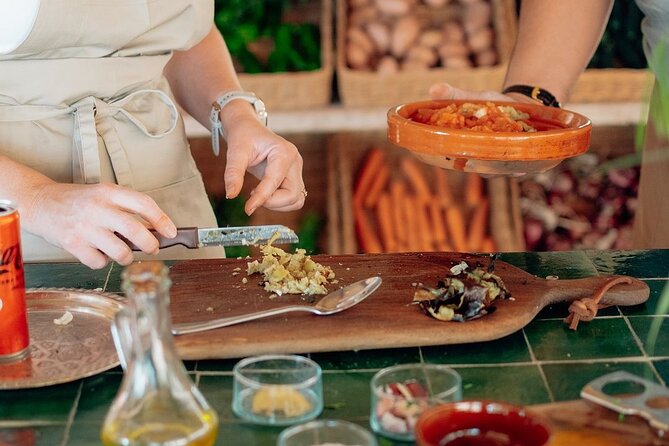
- Hands-on bread + main dish practice (tagines, couscous, and chicken pastilla)
- Chef support for clear instructions, including guidance from Chef Othman
- A proper meal: salads, seasonal fruit, and Moroccan tea after cooking
- Pool time included, so you can cool off after the work in the kitchen
- Small group size (max 20), which makes questions easier and the pace feel human
From Marrakech pickup to the farm outside town
This is built around easy transfer. You get an air-conditioned vehicle and private transportation, and pickup is offered. For a 5-hour activity, that matters. You’re not carving out half a day just to get to the cooking space, and the drive keeps you from showing up sweaty, grumpy, and already behind.
It’s also scheduled so you can enjoy the break from the city. One review notes the location feels like about half an hour from Marrakech, which lines up with the general idea: close enough to be practical, far enough that you feel the “we left town” shift. You’ll start with an introduction to the small farm itself, which sets expectations that this is a working place, not a staged restaurant.
Practical detail: you’ll receive a mobile ticket, so you can keep things simple on your phone. And since the guides are available in French, English, and Spanish, language usually isn’t a barrier.
You can also read our reviews of more tours and experiences in Marrakech.
The farm experience: views, outdoor cooking, and real-world tradeoffs
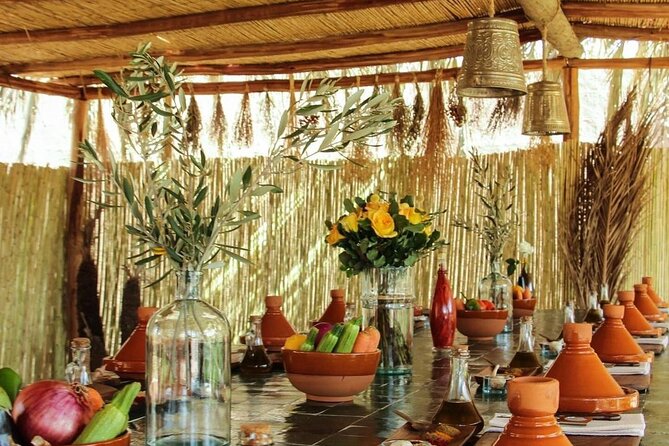
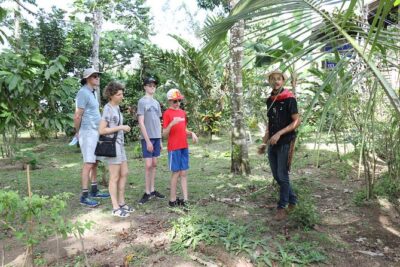
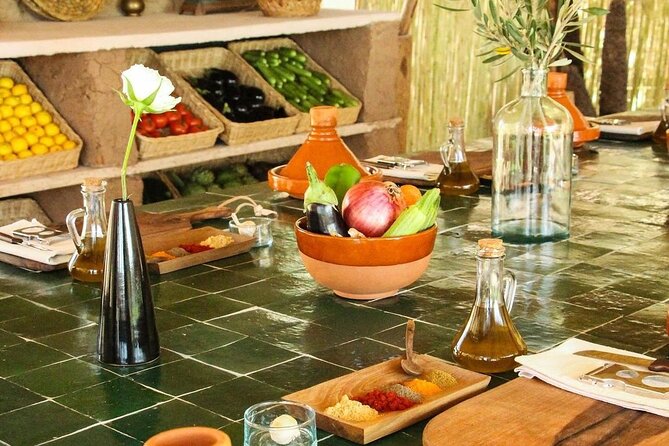
The first phase is about the farm setting—outside Marrakech, with mountain views of the Atlas. You’re meant to see the place as it is: a small farm with an outdoor cooking setup. One review calls out the location as beautiful and the exterior kitchen as a highlight, which matches how these classes usually feel best. Working in an open-air kitchen changes your sense of time. You hear more, smell more, and the food process feels less artificial.
At the same time, the description is honest that the farm sits in an area that can come with pollution and nuisances from the environment. That doesn’t mean it’s awful—it’s just not a sealed, climate-controlled bubble. If you’re booking during warmer hours, you may notice more outdoor smells and ambient noise than you would in a city cooking studio.
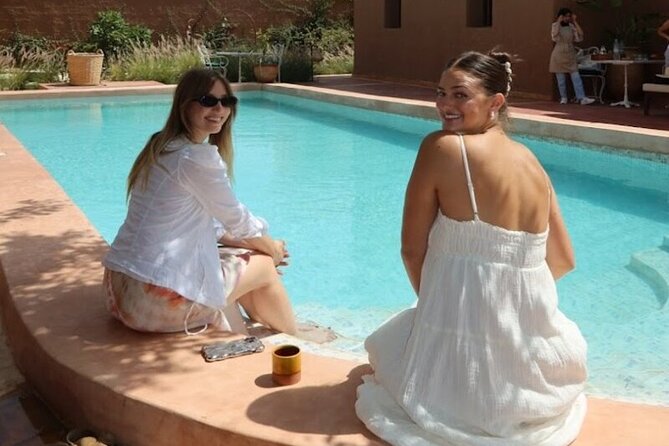
Still, the payoff is the setting. You’ll also have the option to enjoy the swimming pool later, which is a smart feature if you’re going to be active in the kitchen. Think of it as the reset button after hands-on cooking.
Hands-on Moroccan menu: tagines, couscous, and chicken pastilla
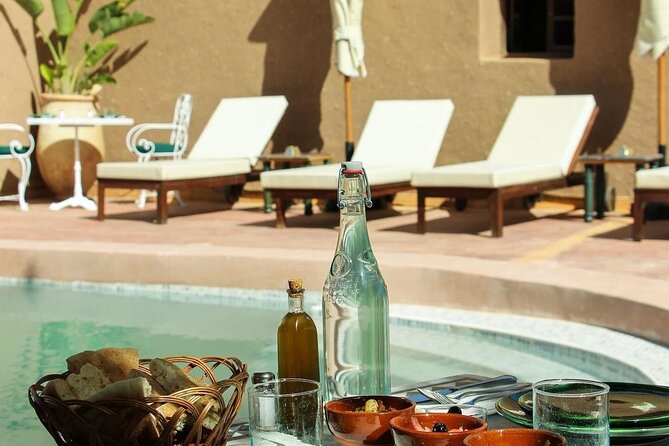
This class is for people who want to cook dishes you can actually recognize and recreate later. The main promise here is variety, especially in the Moroccan staples.
Tagines you can expect to learn
You’ll focus on multiple tagines—the kind of dishes that teach you technique, not just ingredients. Based on the menu described, you’ll learn to prepare variations such as:
- chicken tagine with olives
- meat and vegetable tagine
- meat and prune tagine
A tagine is as much about timing and layering flavor as it is about the pot. Working through different versions helps you see how sweet, savory, and herb notes behave differently depending on what you add and when.
Couscous variations that change the whole experience
Couscous here isn’t treated as one static recipe. You’re set up to learn different takes, including:
- couscous with meat and vegetables
- couscous with raisins and onions
That second style is especially useful for understanding how Moroccan cooking balances richness with brightness. If you’ve only had couscous from restaurants back home, learning the raisin and onion approach can change what you think the dish is.
Chicken pastilla and the bread-making part
Pastilla (including chicken pastilla) is one of those Moroccan dishes people remember for its contrasts—tender filling, warm spices, and that signature pastry vibe. You’ll get into the technique side so it doesn’t feel mysterious.
And you’ll prepare bread together. That’s a big deal for value. Cooking is one thing; learning the bread element helps you rebuild the full meal when you’re back home. Even if you don’t reproduce the exact same equipment, bread-making teaches the feel of the dough and the logic behind Moroccan staples.
Chef support is central. One review specifically praises Chef Othman for making sure everyone gets instructions clearly and gets time to enjoy the experience—not just rush through steps.
Eating what you cook: salads, seasonal fruit, and mint tea
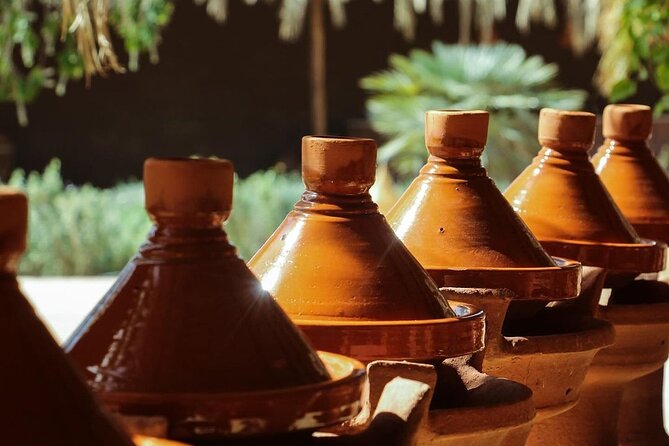
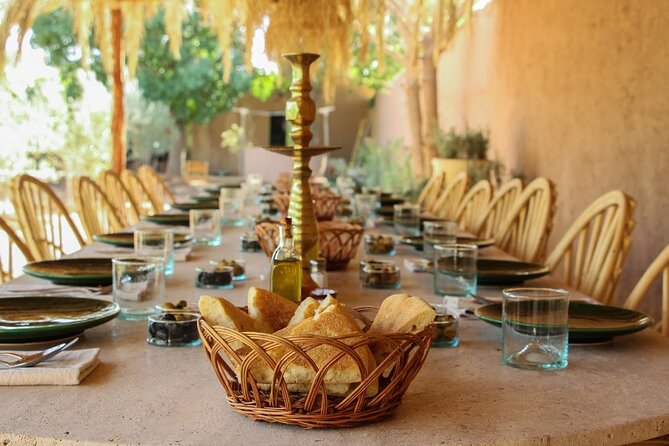
After the cooking work, you’ll sit down and eat what you prepared. The class includes salads served alongside the dishes, plus seasonal fruits. That’s practical, because it rounds out the flavors you’ve been creating—spice and depth from tagines and pastilla, balance from fresh salads, and sweetness from fruit.
Then comes Moroccan tea. The experience includes coffee and/or tea during the class, and it also mentions a mint tea moment afterward. This matters more than it sounds. Tea is part of how Moroccan hospitality stretches time. You’re not just fueling up; you’re getting the rhythm right.
One of the best small touches: a chef-provided special sweet from a secret recipe is mentioned in the feedback. You can treat it as a bonus tasting—one more way this class feels like family-style hospitality instead of a ticketed show.
Pool time and why the break actually improves the class
You can cool off at the swimming pool. This isn’t just a leisure add-on. In a hands-on cooking class, you’re likely to get warm, you may move around outdoors, and you might handle spices and hot surfaces. Pool time gives you a clean reset so the final portion doesn’t feel like a marathon.
The experience also includes the chance to stay a little longer after the meal, with mention of a glass of mint tea. If you’re the type who likes to linger and chat—about Moroccan cuisine, culture, and what you learned—this is built for that.
And since the group size is max 20, you usually get enough space for the pace to stay comfortable. It’s big enough for variety, small enough for real questions.
Dietary needs and group pace: vegan, vegetarian, and language support
Good news for food restrictions: the experience says it can accommodate dietary restrictions like vegetarian and vegan. That means you don’t have to skip the class or settle for a sad side dish.
The key for you is to speak up about your needs in advance. The tour notes that dietary accommodations are possible, but your exact menu adjustments aren’t spelled out. So when you book, send your dietary details clearly so the team can plan properly.
Language support is also listed: certified guides in French, English, and Spanish. That’s valuable in a cooking class, where small technique details matter. If you’ve ever tried to learn from a recipe book while watching someone cook, you know how quickly it turns into guesswork. Here, you can ask questions during the session.
Group size (max 20) is another quiet advantage. You’re more likely to get attention when you’re learning bread or spice blends, and the atmosphere stays friendly rather than hectic.
Price and value: what $82.46 covers in the real world
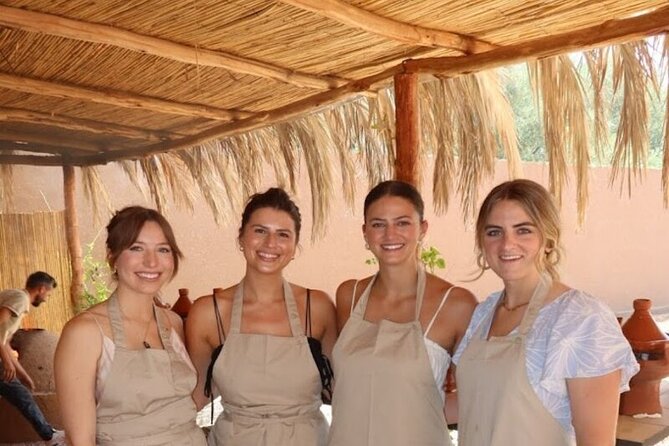
At $82.46 per person, this isn’t a bargain like a free walking tour. But it also isn’t “pay for vibes only,” either. Your money goes toward real expenses: private transportation, an air-conditioned vehicle, a small-group cooking environment, certified multilingual guides, bottled water, lunch, and coffee and/or tea. Plus, the pool access is included.
Here’s the value math that matters for you:
- You’re learning multiple core Moroccan dishes (tagines, couscous, pastilla) instead of just one
- You cook + eat + get drinks during the same 5-hour block
- You get bread-making practice, which makes the class more reusable at home
- Small group size (max 20) usually means better instruction and fewer bottlenecks
The class is also described as popular and commonly booked about 14 days in advance on average. That’s a gentle sign to book early enough to lock in your preferred day and avoid scrambling.
Also worth noting: alcoholic beverages are not included. If alcohol is part of your typical meal routine, plan on tea and water as part of the experience, or expect to pay separately if it’s offered. Tips are not included either, so keep a little cash or card readiness.
Practical tips so your 5 hours feel smooth
This experience is short enough that you’ll feel rushed only if you ignore the basics. Here’s what helps.
- Wear breathable clothes and closed-toe shoes. You’ll be working in a kitchen space and moving around the farm area.
- Bring a light layer. Outdoor cooking can shift from hot to cooler, especially if you’re near open views toward the Atlas.
- Ask about dietary needs early. Vegan or vegetarian is possible, but tell them clearly so the plan is accurate.
- Come hungry, but don’t show up expecting speed. Bread and multiple dishes take time; that’s the point.
- Plan to linger. The class includes tea and time that can stretch after the meal, and pool time is part of the feel.
Should you book this Moroccan cooking class on a farm outside Marrakech?
Book it if you want a hands-on way to learn Moroccan staples—tagines, couscous, and chicken pastilla—with real support from guides (including Chef Othman, known for clear instruction). You’ll also get the full meal format: salads, seasonal fruit, and mint tea, plus pool time to cool down after you cook.
Skip it if you’re extremely sensitive to outdoor farm conditions. The description doesn’t pretend the area is perfect and silent; it’s outside the city, with the kinds of nuisances that come with real environments.
For most people, this is a strong pick because it balances technique with atmosphere. You’re not just watching food happen—you’re making it, eating it, and bringing home the method behind Moroccan flavors.
FAQ
How long is the Moroccan cooking class?
The class lasts about 5 hours.
Is pickup from Marrakech included?
Pickup is offered, and the tour includes air-conditioned vehicle transport.
What dishes will I learn to cook?
You’ll learn traditional Moroccan dishes such as tagines (including chicken with olives, meat and vegetable, and meat with prune), couscous (including with meat and vegetables, and with raisins and onions), and chicken pastilla. Bread is also made together.
Is lunch included?
Yes. Lunch is included, along with coffee and/or tea, bottled water, and a meal that features salads and seasonal fruits.
Can the class accommodate vegetarian or vegan diets?
Yes, vegetarian and vegan options are possible, and dietary restrictions can be accommodated.
Is there swimming pool time?
Yes. A swimming pool is included, and you can cool off later.
How big is the group?
The activity has a maximum of 20 travelers.
What’s the cancellation policy?
Cancellation is free up to 24 hours in advance for a full refund. After that cutoff, you won’t get your money back.