REVIEW · CHICAGO
Explore Chicago’s Indoor Mushroom Farm Experience
Book on Viator →Operated by Four Star Mushrooms · Bookable on Viator
A controlled mushroom farm can sound niche, but this one feels like a behind-the-scenes food lesson. You’ll walk through a high-tech, urban indoor growing facility and see the full process end-to-end, from substrate prep to fruiting rooms and packaging. I especially like how the tour breaks the work into clear steps and makes it practical to understand, even if you usually just buy mushrooms at the store.
Two more things I like: you get real context for gourmet specialty mushrooms, and you learn how the business connects to customers around Chicagoland. The main drawback is that this is very much a grown-up style tour focused on production and equipment, so very young kids may find the rules around handling things less fun.
In This Review
- Key highlights
- Entering Chicago’s indoor mushroom operation (and what to expect)
- The step-by-step mushroom growing process you’ll see
- Why the packaging and business side is part of the fun
- Regenerative agriculture lessons you can actually use
- Price and group size: is $20 good value?
- Getting the most out of your 90-minute visit
- Where you start and how to fit it into your Chicago day
- Should you book the indoor mushroom farm tour?
- FAQ
- What is the starting location for this tour?
- How much does the indoor mushroom farm tour cost?
- How long does the experience last?
- What time does the tour start?
- What language is the tour offered in?
- How many people are in the group?
- Do I need to bring a printed ticket?
- What will I learn during the tour?
- Is free cancellation available?
- Should You Book This Indoor Mushroom Farm Tour?
Key highlights
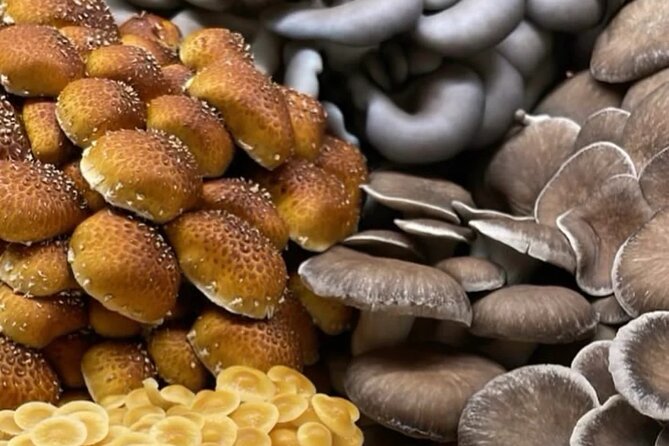
- From sterilized substrate to inoculation: you’ll see the workflow that turns raw inputs into the start of a crop.
- Grow rooms where fruiting happens: the tour shows where mushrooms actually form.
- Retail and wholesale packaging: you’ll understand how mushrooms go from farm rooms to local buyers.
- Regenerative agriculture angle: the tour ties mushroom cultivation to the bigger sustainability conversation.
- Small group size (max 25): better chance to ask questions and hear details.
Entering Chicago’s indoor mushroom operation (and what to expect)
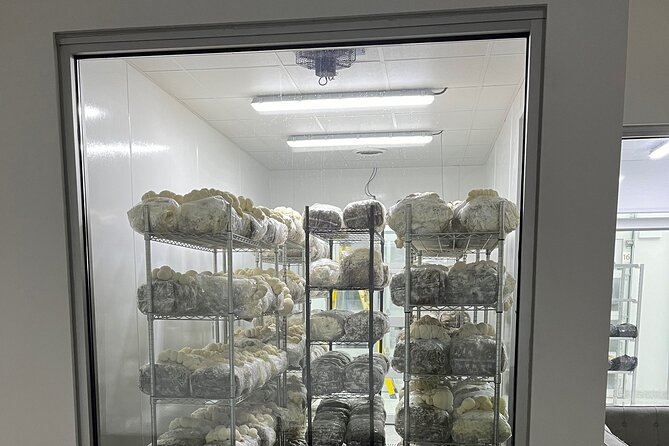
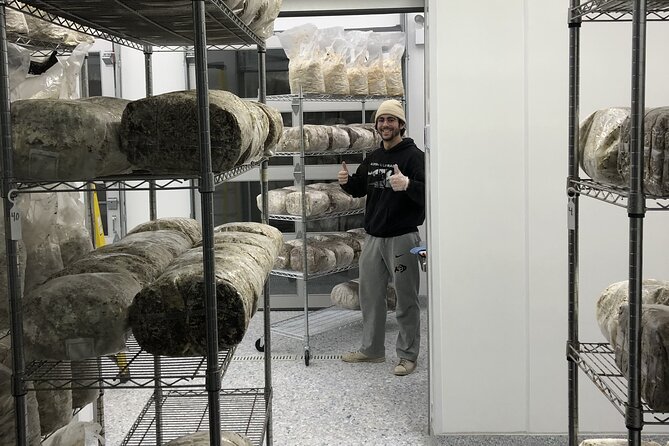
This tour takes place at an urban, indoor growing site run by Four Star Mushrooms. Instead of wandering a garden path, you’re shown how a controlled environment farm works in real life—lighting, humidity, staging, and the careful handling required to grow gourmet specialty mushrooms consistently. Even if you think mushrooms are just a grocery staple, you start to see them as a production system.
The experience is scheduled to start at 12:00 pm and ends back at the same meeting point at 320 N Oakley Blvd, Chicago, IL 60612. Plan for about 1 hour 30 minutes overall, with the guided tour portion running closer to 60 minutes. That difference matters because there’s time to get oriented, move between areas, and absorb what you’re seeing.
The group is capped at 25 people, which I consider a sweet spot for a technical tour. Small groups help you actually hear explanations, and they make it easier for staff to keep things orderly in working areas with equipment.
The step-by-step mushroom growing process you’ll see
One reason this tour earns strong marks is how clearly it lays out the growing chain. You’re not just told mushrooms grow in the dark. You walk through the stages that make the crop possible, and each stop adds another piece to the puzzle.
Here’s what you should expect in order:
First, you’ll learn how raw substrate is bagged and sterilized. That step is the foundation of the whole operation. It’s also where the tour becomes more than a quick peek, because you begin to understand why mushroom cultivation is so controlled. Clean starts help reduce unwanted microbes and give the cultivated mushrooms a fair shot.
Next comes inoculation, when the prepared substrate is introduced to the growing process. The tour then moves to how batches are staged to incubate, which is a fancy way of saying the farm manages timing and conditions so the crop develops in the right rhythm.
After incubation, you’ll head to the grow rooms where fruiting happens. This is the stage most people picture when they think of mushrooms, but the tour helps you connect the “wow” moment to all the earlier work. You also start noticing how indoor farms keep things consistent—because mushrooms don’t just grow by luck.
Finally, you’ll see how product is packaged for retail and wholesale customers across Chicagoland. That last step often gets skipped on tours of farms, but it’s a big deal. It turns the story from science to supply chain, and it explains why the production side matters to what you find on shelves and in kitchens.
Why the packaging and business side is part of the fun
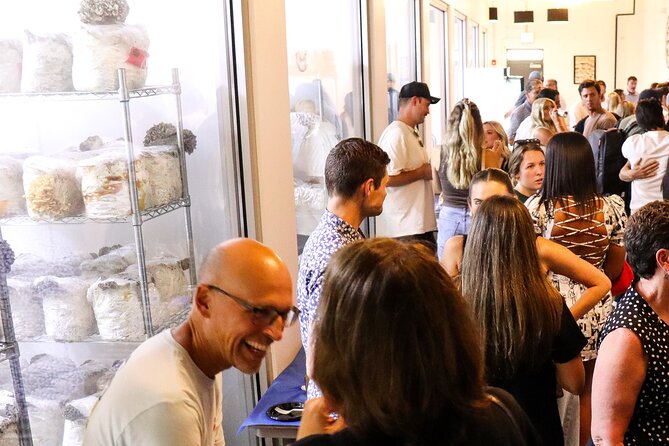
Mushrooms have a reputation for being simple, but the tour makes it clear there’s real logistics behind them. Once you’ve seen how a crop is prepared for growth and fruiting, packaging becomes the bridge to the real world: quality control, practical handling, and getting product ready for customers.
You’ll learn that the farm supplies retail and wholesale channels throughout the region. That matters because it shows mushrooms as part of Chicago’s local food ecosystem, not just as a curiosity.
In particular, I like that the tour explains how the organization connects to the restaurant scene. When a farm talks about customers that use mushrooms regularly, you understand that the growth system isn’t just for experiments. It’s built to deliver reliable product to people who cook and serve food every day.
Regenerative agriculture lessons you can actually use
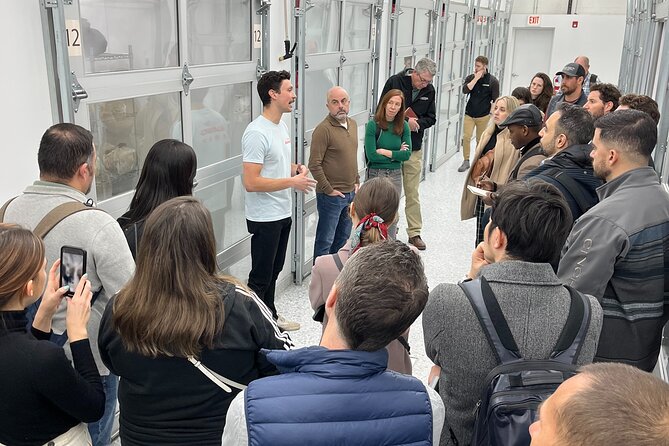
This tour includes a section on regenerative agriculture, and it treats mushroom cultivation as part of the conversation rather than a standalone hobby. The key here is the framing: you learn that indoor mushroom production can play a role in sustainability efforts, and the farm ties its work to that bigger goal.
Now, let’s keep it honest. The tour doesn’t turn into a textbook on climate policy. It’s grounded in what the farm does: controlling conditions, producing food, and explaining why mushroom growing is relevant in regenerative thinking. That makes it easier to leave with something you can explain to friends without sounding like you memorized facts from a brochure.
If you’re the kind of traveler who likes meals and ingredients to have a story behind them, this segment gives you the story. If you’re just hoping for a quick look at mushrooms, you might find the regenerative angle more reflective than hands-on.
Price and group size: is $20 good value?
At $20 per person, this tour sits in the affordable range for a guided, technical food experience in Chicago. The value comes from the format: you’re getting an organized walk-through of production steps, not just a general overview. And you’re doing it in a working indoor facility where the details matter.
The max 25 travelers size also helps justify the price. In a large crowd, technical tours get noisy fast. Here, the smaller group supports clearer explanations and better flow through different areas of the facility.
Timing also affects value. Since the tour itself is about 60 minutes, you’re not sacrificing half a day. You’re getting concentrated information in a manageable chunk, then you can go do something else in the city afterward.
One planning note: the experience is often booked ahead. On average, it’s reserved about 23 days in advance, so if you’re visiting during busy weeks, don’t wait until the last minute.
Getting the most out of your 90-minute visit
To enjoy this tour, arrive thinking like a curious shopper and a practical learner. You’ll remember more if you pay attention to the sequence. Substrate prep, inoculation, incubation, fruiting, packaging—those steps form a framework you can reuse later when you’re buying mushrooms or cooking with them.
A few practical tips that will help:
- Wear comfortable shoes. You’ll be moving through a working environment, and surfaces may not be designed for long tourist walks.
- Ask questions when you can. Small groups make that easier, and the tour clearly includes room for explanation rather than a strict script.
- Keep an eye on kid behavior if you’re bringing children. There’s equipment around the facility, and even in a family-friendly mood, you’ll want to prevent touching. One review mentioned kids wanting to interact with equipment (like a forklift) and staff staying tolerant, but that doesn’t mean it’s a free-for-all.
Who should go? I’d aim this at adults, food lovers, and anyone curious about how industrial agriculture differs from backyard growing. If you like visiting local production sites and learning how ingredients move from facility to plate, you’ll get a lot out of this.
If you’re traveling with very young children, go in knowing it’s still a production tour. Most families will be fine if kids are engaged and supervised, but it’s not really a hands-on playground type of activity.
Where you start and how to fit it into your Chicago day
The meeting point is 320 N Oakley Blvd, and the tour ends back there. That’s convenient because it reduces decision fatigue at the end of your visit—you’re not trying to navigate back from the far side of a neighborhood.
With the 12:00 pm start, you can treat this like a mid-day anchor. It’s also a good way to break up a day of Chicago sightseeing: you get an indoor experience that’s different from museums and lakefront walks, and it ties directly to what you might eat later.
Also note the ticket style: you’ll use a mobile ticket. That’s the kind of detail that matters in real life—less paper to manage and less chance of forgetting something at the hotel.
Should you book the indoor mushroom farm tour?
Book it if:
- You want a real process tour, not just a photo stop. The steps from sterilization and inoculation to fruiting and packaging are the whole point.
- You care about Chicago food systems and want to understand how mushrooms connect to local buyers, including restaurant use.
- You like learning sustainability concepts through practical production rather than abstract lectures.
Skip it if:
- You’re expecting a purely kid-focused, hands-on activity. This is production-focused and equipment is part of the environment.
- You want a quick 20-minute walkthrough. The full experience is closer to 90 minutes, with about an hour of touring.
If you like food facts that actually connect to real work, this is a strong fit. At $20, it’s also easy to justify as one of those “I’m glad I did that” Chicago experiences.
FAQ
What is the starting location for this tour?
The tour meets at 320 N Oakley Blvd, Chicago, IL 60612. It also ends back at the meeting point.
How much does the indoor mushroom farm tour cost?
The price is $20.00 per person.
How long does the experience last?
The experience is listed at about 1 hour 30 minutes total, with the guided tour portion described as about 60 minutes.
What time does the tour start?
The start time is 12:00 pm.
What language is the tour offered in?
The tour is offered in English.
How many people are in the group?
The maximum group size is 25 travelers.
Do I need to bring a printed ticket?
No. It uses a mobile ticket.
What will I learn during the tour?
You’ll see how substrate is bagged and sterilized, how it’s inoculated and incubated, visit grow rooms where mushrooms fruit, and learn how product is packaged for retail and wholesale customers. You’ll also hear about regenerative agriculture and mushroom cultivation’s role.
Is free cancellation available?
Yes. You can cancel for a full refund up to 24 hours before the experience start time.
Should You Book This Indoor Mushroom Farm Tour?
This is a smart pick for food lovers who like facts with a facility behind them. You’ll leave with a clear mental picture of how gourmet mushrooms are grown in a controlled indoor system, plus why that production supports Chicago’s restaurant and wholesale world. If you go prepared for a production-focused tour and not a hands-on play session, you’ll likely feel like the $20 buys real understanding, not just a quick peek.