REVIEW · SAN SALVADOR
Ruta de Las Flores Adventure, Relax at Hotsprings + 1930’s farm Coffee Tour
Book on Viator →Operated by Eco Tours Petate · Bookable on Viator
Ruta de las Flores is one of those day trips that feels like a whole country vacation. This one strings together colonial towns, a 1930s coffee processing tour, and a volcano-warmed soak at Termales de Santa Teresa, all in about 8 hours. Two things I really like: the tight itinerary that hits major stops without making the day feel chaotic, and the way the guide turns each town into a story you can picture. One drawback to keep in mind: the day is full, so if you want long free time in only one town, you might feel the schedule is a bit strict.
You’ll start with markets and handicrafts in Nahuizálco, then head to Concepción de Ataco for murals and coffee culture. After that comes a hands-on look at how coffee is processed at a plantation running since 1930, then you end with hot spring pools in different temperatures. The tour runs with small groups (up to 10 people), and pickup/drop-off is available only within San Salvador—good if you’re staying in town.
In This Review
- Key highlights worth planning around
- Ruta de las Flores in one day: what the day is really about
- Price and logistics from San Salvador: what $115.85 really covers
- Nahuizálco market stop: wicker, tule, and the meaning of the name
- Concepción de Ataco: murals on cobblestones and coffee culture
- El Carmen Estate coffee tour: a 1930s processing plant that turns work into a story
- Termales de Santa Teresa hot springs: best relaxation payoff, with a couple reality checks
- Guides that make it feel personal: Osmaro, Herbert, Francisco, and more
- What to pack for a full Ruta de las Flores day
- Timing, breaks, and meals: how to avoid the most common day-trip frustrations
- Who should book this tour, and who might want to choose differently
- Should you book Ruta de las Flores + 1930s coffee + Termales de Santa Teresa?
- FAQ
- How long is the Ruta de Las Flores adventure plus coffee and hot springs tour?
- What is the price per person?
- What are the main stops during the day?
- What’s included, and what should I pay for myself?
- Do I need a swimsuit?
- Is the tour dependent on weather?
Key highlights worth planning around
- Four-stop Ruta de las Flores day that packs history, coffee, and relaxation into one route
- Nahuizálco market visit where you can taste tropical fruit and spot wicker and tule crafts
- Concepción de Ataco murals + coffee farm time in the final town on the flower route
- El Carmen Estate 1930s coffee processing tour that tracks coffee from freshly cut to cup
- Termales de Santa Teresa hot springs with multiple pools of volcanic hot water
- Small-group format (max 10 people) that helps the guide keep the day moving smoothly
Ruta de las Flores in one day: what the day is really about
This tour is built for people who like variety but hate planning. You get a sweeping look at the western part of El Salvador—towns, markets, local crafts, coffee production, then a hot spring payoff. Instead of bouncing between cities or trying to stitch together taxis, you ride the route as a single package.
The most satisfying part is the balance. The town stops are for culture and everyday life (markets, streets, crafts), the coffee stop is for how things are made (not just where they’re made), and the hot springs are for an actual decompression moment. If you’re only in El Salvador for a short time, this is a strong way to see a lot of the regional identity in one day without feeling like you missed the point.
It’s also a good fit for families and mixed-age groups. One review mentioned the guide carefully helping with stairs for elderly visitors, which hints at a practical, real-world approach, not just “watch and go.”
You can also read our reviews of more tours and experiences in San Salvador.
Price and logistics from San Salvador: what $115.85 really covers
At $115.85 per person for an ~8-hour day, you’re not just paying for a driver. You’re paying for a professional guide, hotel pickup/drop-off inside San Salvador, and key paid experiences (coffee processing at El Carmen and entry to Termales de Santa Teresa).
Here’s the value logic I’d use if I were budgeting:
- You’re not paying separate admission for the last two big activities, since they’re included.
- You’re getting guided context for the towns, which matters on the Ruta de las Flores. Without that, you’d just see streets and signage and move on.
- The group is kept small (maximum 10 people), so you’re less likely to spend your day waiting for a big bus to load and unload.
What you should budget for yourself:
- Food and drinks are not included (and bottled water isn’t included either).
- You may want extra cash for snacks, drinks, and small crafts. Nahuizálco is known for wicker and tule products, and Ataco is a shopping-friendly mural town.
If you’re staying outside San Salvador, you’ll want to confirm pickup options first—pickup/drop-off is only listed for San Salvador.
Nahuizálco market stop: wicker, tule, and the meaning of the name
Nahuizálco is where the day starts with “local life” energy. It’s a charming town with an old indigenous layer—its name comes from Nahuatl and means the four Izalcos. That matters because the Ruta de las Flores isn’t just pretty streets; it’s a trail through communities shaped by history.
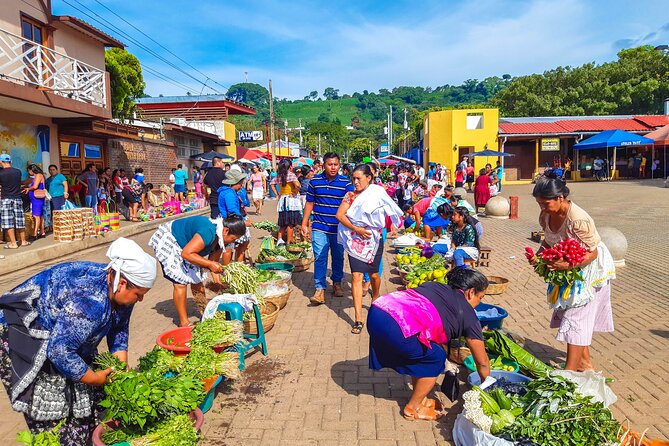
In Nahuizálco, you’ll visit the municipal market. This is one of those stops that works even if you’re tired, because it’s immediate and flexible:
- You can browse everyday goods.
- You can taste tropical fruits (this is specifically mentioned as part of the stop).
- You can look at wicker and tule handicrafts—baskets, chairs, mats, and more.
The crafts angle is a nice change from the usual souvenir hunt. These are practical items made by local producers, and it’s easy to spot the materials and the workmanship up close.
A practical note: the market time is shorter (about 45 minutes). If you love shopping, arrive ready to move. I’d treat this as a “taste + look + pick one or two items” stop, not a full shopping session.
Concepción de Ataco: murals on cobblestones and coffee culture
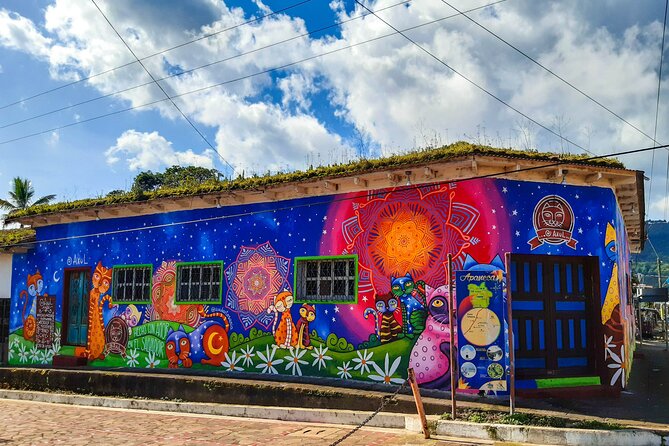
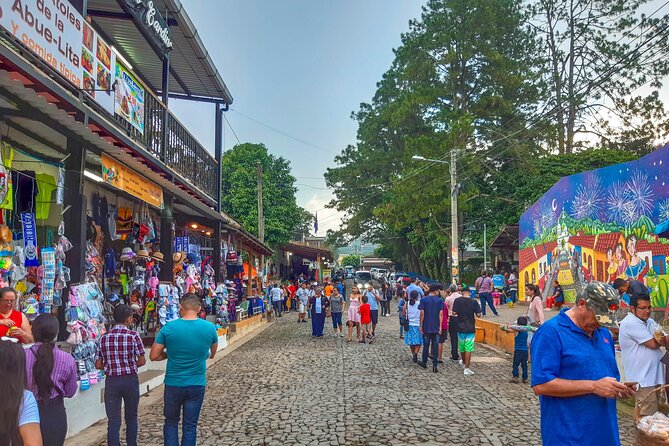
After Nahuizálco, the route leads to Concepción de Ataco, described as the colorful end point of the flower route. This is where the day becomes more photogenic—murals on nearly every corner and cobblestone streets that feel like a walk through another era.
Ataco has a second identity beyond art: coffee. The area is known for producing top-quality coffee in El Salvador, and the tour includes time to visit a coffee farm to learn the coffee production process from planting onward.
What makes this stop worth your time is the connection between place and product. You’re not just learning coffee facts. You’re seeing the setting where coffee grows and thinking about why certain regions develop strong reputations.
Still, there’s one consideration. The schedule is designed to cover several towns in one day, so you won’t get to linger as long as you might on your own. One person wished for more time in the towns and less hot spring time. If you’re the type who wants extra wandering freedom, you might feel the clock.
El Carmen Estate coffee tour: a 1930s processing plant that turns work into a story
Then comes the coffee “how it’s made” part at El Carmen Estate. This isn’t just a scenic farm visit. You’ll tour facilities of a coffee processing plant that has been operating since 1930, and you’ll follow the transformation process from fresh coffee delivered by trucks to the point it’s served as a cup.
This is the stop that helps the day make sense. The town visits set the scene. The coffee processing plant shows the machinery of the story—how coffee moves from harvest to finished product.
From a value standpoint, this is where you’re likely to feel your money working:
- You’re getting guided explanation tied to real steps in production.
- The included time is long enough (about 1 hour) to leave you with more than “coffee is important” as a takeaway.
One helpful tip: if you see opportunities to ask questions (like about processing steps or what’s happening at each stage), don’t be shy. Tours like this are built for conversation, not a lecture you can’t interact with.
Termales de Santa Teresa hot springs: best relaxation payoff, with a couple reality checks
The final stop is Termales de Santa Teresa, a small mountain resort with hot water pools coming from volcanic activity. You’ll have about 1 hour here, and the hot springs are designed with different temperatures, so you can choose your comfort level.
This is the emotional release part of the day. After markets and coffee, hot water pools feel like the natural reward. One person specifically mentioned lots of pools and hot tubs (they counted about 30), which suggests you can spread out and find your ideal spot.
Two practical things to plan for:
- Bring your swimsuit (it’s explicitly recommended).
- Bring your own towel. At least one review called this out because you may want your own setup.
Now the balanced part. Not everyone loved the condition of the facilities. One review complained about cleanliness and mentioned restrooms not being clean and lack of showers. That doesn’t mean it’s always like that, but it’s a reason to pack smart: expect basic facilities, and use the hot springs for soaking, not for luxury spa standards.
Also, because the stop comes at the end of the day, heat and fatigue are real. If you’re sensitive to crowds or long walks, go slow when moving between pools.
Guides that make it feel personal: Osmaro, Herbert, Francisco, and more
The tour lives or dies on the guide, and the good news is that the guides mentioned in the experience have a consistent pattern: they make the route feel interactive, not robotic.
Here are some examples you can use as expectations:
- Osmaro is mentioned for making the experience feel local, including guidance to a spot where locals eat (and the food was described as delicious).
- Herbert shows up in multiple notes for interactive storytelling, with humor like an exam at the end (you don’t need to study, it’s just a way to keep attention on the history).
- Francisco is credited with respectful explanations and practical help for elderly visitors when stairs were involved.
- Smart and David are both named for kindness, helpfulness, and local context tied to history and culture.
- Antonio is mentioned as doing a driver-guide combo smoothly and making sure there were breaks for water, lunch, and bathroom needs.
What I’d take from this, as a planning tip for you: when your guide offers bathroom/snack pauses, treat it as part of the itinerary flow. That’s usually how people avoid the cranky, rushed feeling at the end of the day.
What to pack for a full Ruta de las Flores day
This tour is mostly walking and stepping on uneven ground in towns, plus time in and around hot springs. Keep your packing simple, but don’t under-pack comfort.
Bring:
- Comfortable shoes (cobblestones happen, and hot springs paths can be uneven)
- Light clothing for daytime, plus a sweater or jacket for cooler mountain air
- Sunscreen (the sun can hit during road time and town stops)
- A swimsuit for the springs
If you’re bringing electronics, consider a small dry bag or zip pouch. Town markets and coffee experiences can be dusty. Also, the springs stop is the one where accidents happen, so protect your phone and camera before you head in.
One other “small but important” item from real-world use: plan for water. Bottled water isn’t listed as included, so bring your own or plan to purchase during the day.
Timing, breaks, and meals: how to avoid the most common day-trip frustrations
This is a full-day loop. Pickup starts around 8:30am in the examples shared, and return is around 6pm to 8pm depending on the day and traffic.
That means your energy strategy matters as much as your itinerary:
- The towns and markets are best enjoyed with a relaxed pace, but the schedule still keeps you moving.
- The coffee plant stop is time-boxed, so don’t expect a long lunch inside the coffee facilities.
- The hot springs time is limited to about 1 hour, so don’t plan to spend it looking for supplies or changing locations.
Food: lunch is not included, and bottled water isn’t included. In practice, people tend to eat during breaks or around the hot springs area. If you’re the type who gets hungry fast, bring a snack for the road or ask your guide for the best timing to grab something.
Also, traffic can affect the day. One person said there was traffic but the guide still managed to keep the itinerary completed without feeling rushed. That’s a great sign: you want a guide who stays calm and works around real conditions.
Who should book this tour, and who might want to choose differently
Book this if you want:
- A one-day Ruta de las Flores overview without juggling rides or confusing logistics
- Coffee education that includes how processing works, not just tasting a drink
- A real end-of-day reset with hot spring pools of volcanic hot water
- A small-group experience (max 10 people) with a guide who talks history and culture
You might think twice if:
- You’re only interested in one town and want hours of free time there
- You’re expecting a spa-grade resort experience at the springs (some people reported cleanliness issues)
- You dislike packed itineraries and prefer slow travel
The tour is also a good match if you’re traveling with family, because the route includes local markets and manageable sightseeing segments. Just remember it is still a full day.
Should you book Ruta de las Flores + 1930s coffee + Termales de Santa Teresa?
If you like value-for-time and you want a focused slice of western El Salvador in one day, I’d book it. The included coffee processing tour at a 1930s plant and the included hot springs entry are two big anchors that make the price feel reasonable for what you get. Add in hotel pickup within San Salvador and a small-group format, and it becomes a practical way to see more without turning your trip into a logistics project.
My advice to you: go in with the right expectations. This is a day trip with limited free time, and hot springs facilities can be more rustic than luxury. Bring a swimsuit, a towel, and comfortable shoes. If you do that, you’ll be positioned to enjoy the market stop, the mural streets of Concepción de Ataco, the hands-on coffee process at El Carmen Estate, and the hot spring soak as a satisfying finish.
FAQ
How long is the Ruta de Las Flores adventure plus coffee and hot springs tour?
It’s listed as about 8 hours.
What is the price per person?
The price is $115.85 per person.
What are the main stops during the day?
You’ll visit Nahuizalco, Concepción de Ataco, El Carmen Estate for a coffee tour, and Termales de Santa Teresa for the hot springs.
What’s included, and what should I pay for myself?
Included: professional guide, hotel pickup and drop-off in San Salvador, small groups, and taxes/fees. Tickets are included for the El Carmen Estate coffee tour and Termales de Santa Teresa. Not included: food and drinks (including lunch), and bottled water.
Do I need a swimsuit?
Yes. The tour recommends bringing a swimsuit for the hot springs.
Is the tour dependent on weather?
Yes. It requires good weather, and if it’s canceled due to poor weather, you’ll be offered a different date or a full refund.