Blue water, polar bears, and lavender in one day. This Asahiyama Zoo and Aoi-Ike Blue Pond day trip bundles nature, animals, and flower fields into one efficient 10-hour route.
I like how this plan gives you real variety: Asahiyama Zoo for polar bears, arctic foxes, red pandas, and Hokkaido deer, plus the strange, beautiful mystery of Aoi-Ike. I also appreciate the Hokkaido logic of it all—short drives between big “wow” stops, instead of cramming history lectures.
The main trade-off is time. Some places are quick (like the pond), and your window at Farm Tomita changes depending on the month, so you’ll want to go in with a flexible mindset.
In This Review
- Key points worth knowing before you go
- Asahiyama Zoo: up close with northern animals
- Biei Blue Pond (Aoi-Ike): the “why is it blue?” moment
- Farm Tomita flower fields: lavender timing and seasonal reality
- Biei patchwork views from the window
- Service areas, souvenir stop, and breaks that keep the day sane
- Price and logistics: what $75 buys you (and what it doesn’t)
- Timing, pace, and how to avoid feeling rushed
- Language support and comfort on the bus
- Best season to plan: lavender peaks, November limits
- Should you book this Biei and Asahiyama day trip?
- FAQ
- How long is the tour, and when does it return?
- What’s included in the $75 price?
- Is lunch included?
- What animals can I expect at Asahiyama Zoo?
- How much English is provided?
- When is the best time to see lavender at Farm Tomita?
- Can I see flowers in November?
Key points worth knowing before you go
- Asahiyama Zoo is the big anchor with a long stop and standout northern-leaning animals
- Aoi-Ike Blue Pond is short but memorable, and the back-of-pond view is worth prioritizing
- Farm Tomita depends on the season, with lavender usually best mid-to-late July
- You’ll see Biei patchwork countryside from the bus, not as a long walking tour
- It’s a tight schedule with multiple quick breaks and shop stops (so don’t plan a long lunch)
- Language is mostly Japanese, with only simple English support
Asahiyama Zoo: up close with northern animals
Asahiyama Zoo is the kind of stop that feels made for one-day touring. You get enough time to actually move through exhibits and not just snap photos while rushing past everything. The animal list is the headline: polar bears, arctic foxes, red pandas, plus Hokkaido deer.
What I like about this arrangement is focus. A zoo day can turn into a blur, but here the schedule gives you a solid block of time (about 2 hours 30 minutes) to see the main highlights. If you’re traveling with kids, this is the part that usually keeps everyone engaged without needing a lot of explanation.
One practical note: Asahiyama Zoo is included at no extra admission cost on this route, which helps your budgeting. And since the tour uses an air-conditioned vehicle, you’re not stuck overheating between indoor-outdoor areas.
You can also read our reviews of more tours and experiences in Sapporo.
Biei Blue Pond (Aoi-Ike): the “why is it blue?” moment
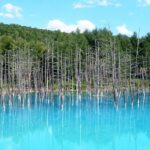
Then you get to the reason people route their day around Biei. Aoi-Ike, the Blue Pond, is famous for its eerie color—so blue it feels a little unreal at first glance. The pond’s story comes from a natural event: it was created unexpectedly after the eruption of Mt. Tokachi, and the color is tied to the water’s natural phenomenon.
You’ll also get a big visual clue from where you stand. If you go toward the back of the pond, you can see the river water takes on a deep blue tone too. That’s the kind of detail that makes a quick stop feel more purposeful.
The timing is short—about 15 minutes. That can sound rushed, but in this case it works like a “strike while it’s at its best” stop. I’d plan to arrive ready: take a few minutes for the first wide look, then walk for that back-of-pond view before you head out.
Farm Tomita flower fields: lavender timing and seasonal reality
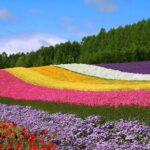
Farm Tomita is where Hokkaido turns into a postcard. This is the place most people come for lavender, and the timing matters. The best chance is usually mid-to-late July, when the fields look their sharpest and most full.
If you’re going outside peak season, don’t panic—Farm Tomita still has seasonal flowers year-round. But the experience shifts. In May, October, and November, the time on-site is shorter (about 30 minutes). In other periods, you’ll typically get closer to 1 hour.
Here’s the key planning truth: in November, you won’t be able to see flowers in most open areas. You may only get limited viewing (for example, greenhouse areas), though the shop still offers popular lavender-based products, including cosmetics and aroma oils made with lavender grown at Farm Tomita.
I like that this tour doesn’t treat Farm Tomita as one-note. You’re not only chasing one flower. You’re allowed to experience the seasonal version of it, plus browse the shop if the garden viewing is limited.
Biei patchwork views from the window
Between major stops, you’ll roll through the Biei countryside on a scenic stretch often described as patchwork road. You won’t get a long hike here—you’ll see the patterns from the bus window.
This is a good use of time. You get countryside texture without burning your whole day walking. And because the day is scheduled around animals and signature sights, the window-view sections act like visual rest—letting your eyes recalibrate between the zoo, the pond, and the fields.
If you’re the type who likes to photograph trains, fields, or wide-open space, bring a lens habit you can use fast. The scenery changes continuously, and window views are the kind you’ll want to capture quickly, then enjoy without staring through your camera the whole time.
Service areas, souvenir stop, and breaks that keep the day sane
This route includes timed breaks that make the long day more comfortable. The first stop is at Sunagawa Service Area (Outbound) for a short rest (about 15 minutes). There’s also another break at Iwamizawa Service Area (Outbound).
Then there’s Campana Rokkatei, a famous souvenir shop with about 30 minutes. This is one of those stops that’s less about sight and more about practical travel momentum: stocking up on gifts and snacks without needing a separate shopping errand.
I like these built-in pauses because the itinerary hits several “big” stops back to back. When your day is already timed tightly, bathroom breaks and a chance to stretch can be the difference between enjoying the views and feeling grumpy on the return drive.
Price and logistics: what $75 buys you (and what it doesn’t)
The price is $75, and it includes all fees and taxes, along with an air-conditioned vehicle. Mobile tickets are used, which saves you time and reduces the fuss of printing or scanning paper receipts at the start.
The big thing not included is lunch. You get a lunch window at your own expense during the day, so you’ll want to plan what kind of meal you’re hoping for—quick bites, a sit-down meal, or something close by the zoo area.
Value-wise, I think this price makes sense if you want transportation plus admissions handled cleanly. You get zoo admission included, and the pond stop is admission-free on this route. Add in the fact that the tour caps at 45 travelers, and you’re getting a small-to-medium group day rather than a massive bus scramble.
One logistics detail to keep in mind: the sightseeing time can change due to traffic and the number of passengers. That’s normal for a road-based itinerary. It’s also why you should keep your day flexible and avoid tight, separate plans right after the tour ends.
Timing, pace, and how to avoid feeling rushed
This is a 10-hour day trip with return times between 19:00 and 19:30. Most of the schedule is structured around getting you to the right place at the right time, not around letting you wander freely all day.
The pacing is the main thing to calibrate:
- Asahiyama Zoo gets about 2 hours 30 minutes (your deepest stop)
- Aoi-Ike Blue Pond is about 15 minutes
- Farm Tomita is about 30 minutes in May/October/November and 1 hour at other times
- Campana Rokkatei has about 30 minutes
- Service area breaks are short, around 15 minutes
If you like slow travel, you’ll want to embrace this as a “highlights day.” If you like seeing several iconic Hokkaido spots in one go, you’ll probably feel satisfied instead of tired.
Also, the bus schedule is fixed around holiday or facility restrictions, so arrival time can be earlier than expected on some days. And buses can be delayed due to traffic jams or adverse weather—plan buffer time when connecting from other parts of your trip.
Language support and comfort on the bus
Language is Japanese for the tour. English support is provided in simple English, but it’s also noted that there won’t be tourist information during the tour. In practice, that means you’ll want to rely on signage at each stop and whatever the simple English guidance covers.
There’s another comfort issue to watch: seat requests aren’t accepted. So if you’re picky about window vs. aisle, your best move is to show up early and be ready to take what you get.
The good news: you don’t need deep language skills to enjoy this day. Most of the experience is visual—animals, blue water, and flowers. The key is knowing what you’re chasing before you arrive, then using the short time at each stop well.
Best season to plan: lavender peaks, November limits
If your goal is the classic lavender look, plan around mid-July to early August, with the usual peak in mid-to-late July. That’s when Farm Tomita’s fields are most likely to match the photos in your head.
Going in other months can still be worthwhile:
- In May, you’re more likely to see early seasonal variety than full lavender peak
- In October, the timing shifts, and you’ll get a different feel while still visiting the same signature areas
- In November, open flower viewing is limited, but you can still shop for lavender products and enjoy whichever greenhouse areas are available
So I’d treat the tour as flexible-season Hokkaido. You’ll get the essentials either way, but your “flower drama” level changes with the month.
Should you book this Biei and Asahiyama day trip?
You should book if you want:
- A one-day hit list: zoo animals plus Biei Blue Pond plus Farm Tomita flowers
- Transportation handled with an air-conditioned vehicle
- A reasonable group size (up to 45 travelers) and admissions largely covered
You might skip it if:
- You hate short stops and want long wandering time at every photo spot
- You need lots of detailed English on-site guidance (this tour is mostly Japanese, with limited simple English support)
- You’re going specifically for November flower viewing outdoors and expect full lavender-field scenery
If you go in with realistic expectations—prioritizing the zoo block, planning for a quick pond walk, and treating Farm Tomita as season-dependent—you’ll get a genuinely satisfying Hokkaido day.
FAQ
How long is the tour, and when does it return?
The tour runs for about 10 hours. Return times are typically between 19:00 and 19:30.
What’s included in the $75 price?
The price includes an air-conditioned vehicle and all fees and taxes. Zoo admission is included, and the Blue Pond stop has free admission on this route.
Is lunch included?
No. Lunch is not included, and you’ll have time to eat at your own expense.
What animals can I expect at Asahiyama Zoo?
You can expect to see animals such as polar bears, arctic foxes, red pandas, and Hokkaido deer.
How much English is provided?
The tour language is Japanese. English is provided in simple English, and there won’t be tourist information during the tour.
When is the best time to see lavender at Farm Tomita?
Lavender is usually best from mid-July to early August, with the best time often mid to late July.
Can I see flowers in November?
In November, you won’t be able to see flowers in most open areas. You may only see flowers in limited areas such as the greenhouse, but you can still buy lavender products at the shop.