REVIEW · LAPLAND
Discover Inari: Reindeer Farm, Siida Museum & Open Fire Lunch
Book on Viator →Operated by Xwander Nordic · Bookable on Viator
Sami life in Lapland has a face. This day trip in Inari pairs the Siida Museum with a reindeer farm stop, plus an outdoor lunch by fire. I like the clear focus on everyday Sami culture and Arctic nature—not just photos and folklore. I also love that you get a hands-on moment with reindeer care, not a rushed meet-and-greet. One drawback: this is mostly outdoors, so dress for cold and wind, and have a flexible mindset if weather changes the plan.
You start at the Siida Museum and Nature Center with time to take in Sami history, local tools, clothing, and seasonal Arctic nature (in a modern museum setting). Then you head into the Inari area for lunch cooked at an open fire and a visit to an authentic Airamo reindeer farm where you can feed and pet the animals. If you’re the type who enjoys learning by doing, this format works well. If you prefer long indoor time and minimal time outside, you might find the outdoor portions a bit demanding.
Small groups help. This activity is capped at 7 travelers, and that matters when you’re standing outside around the fire or asking questions at the farm. I also appreciate that there’s a guide involved from start to finish, and names like Sonja show up repeatedly for friendly, professional guiding. The main consideration is that the experience requires good weather, so build it into a flexible day if you can.
In This Review
- Key reasons this Inari day trip works
- Siida Museum in Inari: learning Sami culture without the lecture vibe
- Fireside lunch outdoors: warm food, real Lapland timing
- Airamo reindeer farm: feeding, petting, and why care matters
- What the guide and small group size really change
- Timing and logistics: start at 10:00, back to the start
- Price and value: does $113 make sense?
- What to pack for a cold-weather, fire-and-reindeer day
- Should you book this Inari Sami culture day trip?
- FAQ
- How long is the Inari experience?
- What time does the tour start?
- Where do I meet the group?
- Is pickup available?
- What’s included in the price?
- How big is the group?
- Is the tour mainly indoors or outdoors?
- What happens if the weather is bad?
- Can service animals go on the tour?
- What’s the cancellation window?
Key reasons this Inari day trip works
- Siida Museum first: a strong grounding in Sami culture and Arctic nature before the outdoor parts
- Fireside lunch by the bonfire: you eat warm food outdoors, not in a quick stop-by-stop cafe
- Airamo reindeer farm visit: you feed and pet reindeer and learn why they matter to life in the Arctic
- Hands-on style: you’re not only watching; you get chances to try activities tied to survival skills and nature learning
- Limited to 7 people: easier conversation and a calmer pace at both museum and farm
Siida Museum in Inari: learning Sami culture without the lecture vibe

Your day starts at the Xwander Nordic meeting point (Ivalontie 12, 99800 Inari) at 10:00 am, and you’ll spend about two hours at Siida: the Sámi Museum and Nature Center. The museum is modern and practical in feel, which helps if you’re not in the mood for a slow, heavy history museum. It’s the kind of place where you can look closely at items and then connect them to how people live with the land.
What I like about this stop is the mix of themes. You’re not only learning about Sami life; you’re also getting Arctic nature explained in a way that connects to seasons. Based on what I’ve seen emphasized in the guide-led approach, the museum experience tends to cover the material culture too—things like clothing and tools—so it doesn’t stay abstract.
There’s also a hands-on element tied to outdoor skills. Even if you’re not trying to become an expert survivalist, the point is to understand what matters in northern conditions. In practice, that means you’ll be standing and moving enough to shake off museum-only fatigue.
How to make the museum time count: pace yourself. Take one slow lap for context, then return to the items that catch your eye—especially clothing and tools—because those details help you make sense of what you’ll see later at the reindeer farm.
You can also read our reviews of more tours and experiences in Lapland.
Fireside lunch outdoors: warm food, real Lapland timing
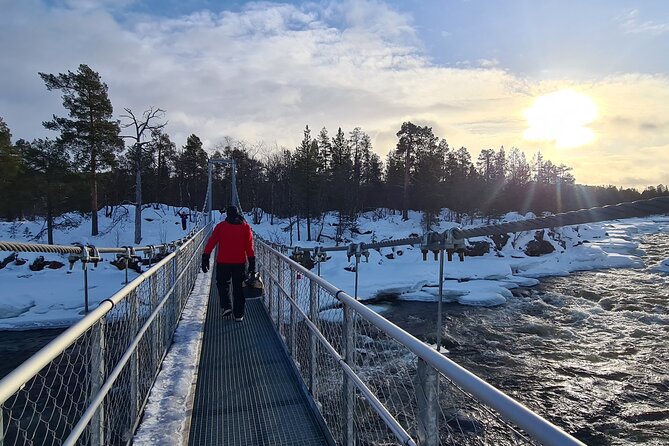
After the museum, you’ll shift gears and head into the Inari village area for lunch outdoors. This is the part that many people remember because it’s simple and grounded: an open fire lunch cooked near a fire setting by a riverside-feeling location. In the experience write-ups, you’ll see mention of creamy soup prepared at the campfire next to river rapids—exact wording isn’t guaranteed, but the vibe is consistent: hot, comforting food while you warm up and watch the day.
A fireside meal changes the tempo. Indoors, you can sit and power through. Outdoors, you naturally take breaks, talk more, and slow down a bit. That’s a big deal in the Arctic, where “good weather” is never just a checkbox—it’s part of the atmosphere.
What to expect from the lunch: local specialties and a fireside cooking setup. This isn’t framed as a fancy restaurant experience. It’s more like Lapland hospitality: you get something warm to eat, you stay outside long enough to feel the setting, and you reset for the reindeer farm portion.
Practical tip: if you tend to feel cold fast, treat the lunch as your main warming window. Eat early in the lunch break if you can, and keep your outer layers on. You’ll likely spend time standing, listening, and watching, so warm layers matter.
Airamo reindeer farm: feeding, petting, and why care matters
Next comes the Airamo reindeer farm visit, run by a local family for years. You’ll typically spend around five hours total in the Inari portion of the tour, and the farm visit is a key chunk of that time. This is where the day stops being “learning from displays” and starts becoming “learning from animals and routines.”
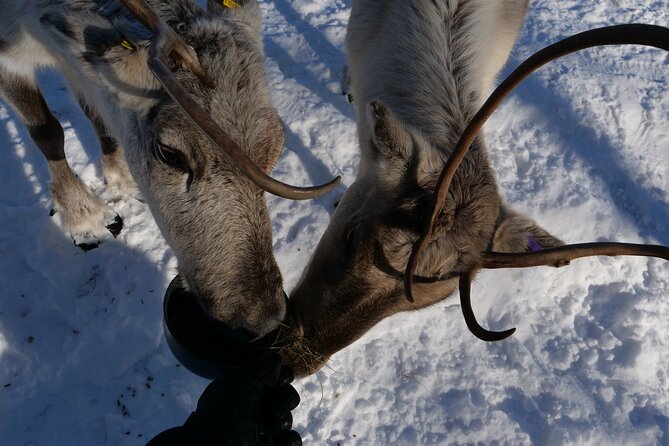
This part is built around contact and understanding. You get to feed and pet reindeer, and your guide explains how reindeer fit into Arctic life—what they eat, how they’re cared for, and why that knowledge matters. The tone here tends to be practical. It’s not just about cuteness (though they are). It’s about the relationship between people, animals, and the seasonal rhythm of the north.
If you’re worried this will feel like a tourist act, the best signal is the way the farm is described as authentic and family-run. A family business usually has a clearer routine and fewer distractions, which makes the interaction more respectful and less chaotic.
How to have a good interaction: follow your guide’s cues on feeding. Keep your movements calm and don’t try to rush the moment. Reindeer respond best to steady energy, and you’ll also learn more if you slow down enough to watch how the animals behave.
What the guide and small group size really change
This is led by a guide from start to finish, and the group limit is 7 travelers. That’s not a random detail. Small group size changes the quality of questions you can ask at the museum and the farm. You’re also less likely to feel like you’re herding yourself through stops.
Names that come up in the experience history include Sonja, with a friendly, professional guiding style and a noticeable focus on sharing love for nature and Lapland civilization. You may not get Sonja specifically, but the consistent theme is that the guide role is active: explaining what you’re seeing, connecting it to daily life, and pacing the group so you’re not constantly standing in a line.
Why you should care about this: in a cultural setting, a good guide helps you avoid surface-level impressions. In a farm setting, a guide keeps interactions safe and respectful. Small groups make both parts easier.
Timing and logistics: start at 10:00, back to the start
The tour runs about 7 to 8 hours total, starting at 10:00 am and ending back at the meeting point. Pickup is offered, and the meeting point is near public transportation, which can help if you’re staying in Inari but don’t want to drive.
The schedule structure is straightforward:
- Siida takes about two hours (admission included)
- The Inari block is roughly five hours, including lunch and the Airamo reindeer farm visit (with the Inari-area admission listed as free)
Because the timing is spread across museum + outdoor + farm, plan for movement. You’re not trapped indoors all day, which is part of why it feels real.
Consideration: if you’re sensitive to long outdoor stretches, this might not be your best fit. Even with breaks, you’ll be outside enough that weather affects comfort.
Price and value: does $113 make sense?
At $113, you’re paying for three things that are hard to replicate cheaply on your own in Lapland:
1) guided interpretation at the museum (time + expertise)
2) an outdoor lunch that’s cooked at fire setup (food + coordination)
3) a reindeer farm visit with feeding and petting (which also takes staff time and farm access)
The price isn’t just a ticket fee. You’re buying a day’s worth of structure: transport coordination (pickup offered), a local guide, and access to places that would require planning to do independently.
If you’re traveling through the Inari area and want a compact “learn + experience + eat” day, this is strong value. If you already have your own car, your own reindeer farm plans, and you’re comfortable arranging museum time yourself, the cost may feel less like a bargain. But for many visitors, it’s exactly the kind of day that removes decision fatigue.
What to pack for a cold-weather, fire-and-reindeer day
You’ll spend real time outdoors: at least during lunch and definitely at the reindeer farm. Even on good days, temperatures can be brisk, and wind can make it feel sharper.
Here’s what I suggest you bring (and keep handy):
- warm layers you can adjust (think base layer + insulating layer)
- gloves that work well for feeding/petting
- a hat or hood (your head is not the place to save insulation)
- waterproof outer layer if conditions are unpredictable
- closed-toe shoes with grip
The experience guidance is consistent on one point: dress warmly because you’ll be outside for a good stretch. If you show up underdressed, you’ll spend more time managing discomfort than learning.
Should you book this Inari Sami culture day trip?
I think you should book it if you want a balanced day in Inari: museum grounding in Sami culture plus a farm encounter that explains reindeer care in the Arctic. The format works especially well for families and for teens, because it mixes indoor learning with an active, memorable outdoor segment. You’ll also appreciate the small group cap if you like asking questions without feeling rushed.
Skip it (or choose a different style) if your priority is only indoor time, or if you know you can’t handle extended outdoor hours in cold weather. Also consider timing: because it requires good weather, you’ll want a bit of flexibility in your itinerary.
FAQ
How long is the Inari experience?
It runs about 7 to 8 hours total.
What time does the tour start?
The start time is 10:00 am.
Where do I meet the group?
You’ll meet at Xwander Nordic, Ivalontie 12, 99800 Inari, Finland. The tour ends back at the same meeting point.
Is pickup available?
Pickup is offered.
What’s included in the price?
Siida Museum admission is included, and the Inari portion includes lunch outdoors and the Airamo reindeer farm visit. A mobile ticket is used.
How big is the group?
The maximum group size is 7 travelers.
Is the tour mainly indoors or outdoors?
It’s a mix. You’ll have a museum visit and then spend a good amount of time outdoors for the fireside lunch and reindeer farm visit.
What happens if the weather is bad?
The experience requires good weather. If it’s canceled due to poor weather, you’ll be offered a different date or a full refund.
Can service animals go on the tour?
Yes, service animals are allowed.
What’s the cancellation window?
Free cancellation is available up to 24 hours in advance for a full refund. If you cancel less than 24 hours before the start time, the amount paid is not refunded.