REVIEW · LA RIOJA
La Rioja Biosphere Organic Pig Farm and Ham and Wine Tasting
Book on Viator →Operated by Curioseety SRLS · Bookable on Viator
Ham curing meets organic farming.
This 2-hour visit in La Rioja’s Ocón Valley (a Biosphere Reserve) mixes animals, countryside walks, and real-food education, ending with a guided tasting of organic hams paired with Rioja DOCa wines. It’s not just a snack stop. It’s the whole story, from how the pigs are raised to how the curing process changes flavor, all in one small group experience.
What I like most is the hands-on look at free-range Duroc pigs and the clear explanation of how organic practices affect the final product. I also really enjoy the pairing: you’ll taste top organic artisan hams and sausages alongside one Rioja red and one Rioja white, with someone talking you through what you’re tasting as you go.
One possible downside: you’re on a tight 2-hour schedule, and it’s a group tour (max 20), so if you want long, quiet wandering time with no food focus, this may feel a bit structured.
In This Review
- Key things to know before you go
- La Rioja’s Ocón Valley: a farm walk that leads to your glass
- Starting at the organic farm: see how the pigs are raised
- A stroll through olive groves and fields, plus purebred Spanish horses
- The sustainable production cycle: a working mill on the farm
- Artisan facilities and the ham-curing culture you can taste
- Tasting organic jamón and sausages with Rioja DOCa red and white
- Price and time: what $207.11 actually buys you
- Who this tour suits best (and who might want something else)
- Should you book the La Rioja organic ham and wine tasting?
- FAQ
- What is the duration of the tour?
- Where does the tour start?
- What time does the tour begin?
- Is the tour in English?
- What’s included in the tasting?
- How large are the groups?
- How do tickets work?
- What is the cancellation policy?
Key things to know before you go
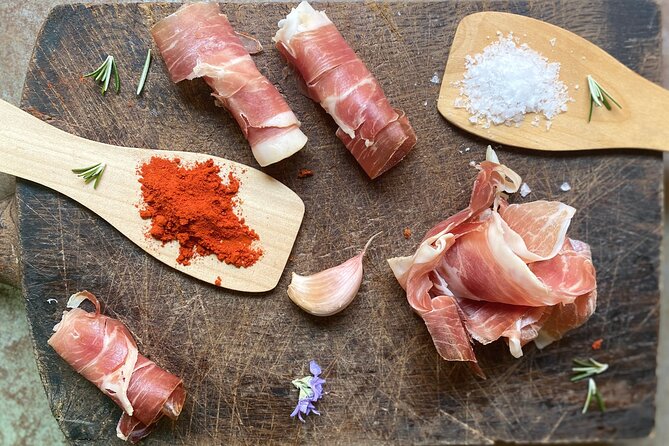
- Organic farm education, not a lecture: you’ll see the system behind jamón, including their sustainable production cycle.
- Duroc pigs raised free-range: you get a practical sense of the animals’ lifecycle and welfare.
- Ocón Valley strolls: expect olive groves and grain fields, plus a chance to meet purebred Spanish horses.
- Working mill + organic cycle: the farm doesn’t just sell a product; it shows how they manage inputs and outputs.
- Video-led ham-curing culture: you’ll watch a presentation that connects tradition to what ends up on your plate.
- Rioja DOCa pairing with organic hams: a red and a white, explained as you taste.
La Rioja’s Ocón Valley: a farm walk that leads to your glass
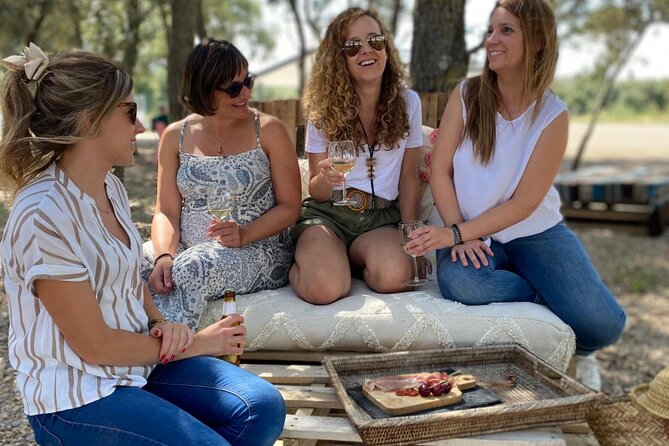
La Rioja is famous for wine, but in the Ocón Valley it also shows you where food systems start—on the land, with animals, and with long processes. This tour is built around an organic pig farm in that Biosphere Reserve area, so the setting is part of the point. You’re not just driving past fields; you’re stepping into the working environment that helps shape what ends up curing into jamón.
The vibe is friendly and practical. You start at the farm, then you move through open spaces (olive groves and grain fields), and finally you end in artisan facilities for the ham-curing story and the tasting. Because the group is capped at 20, the experience tends to feel personal rather than assembly-line.
And yes, the food matters here. The tour earns its place because you’ll be tasting premium organic hams and sausages with Rioja DOCa wines, with context for what you’re tasting. That pairing turns it from a fun stop into something you can actually understand—and repeat at home when you’re ordering jamón and choosing a glass of Rioja.
Starting at the organic farm: see how the pigs are raised
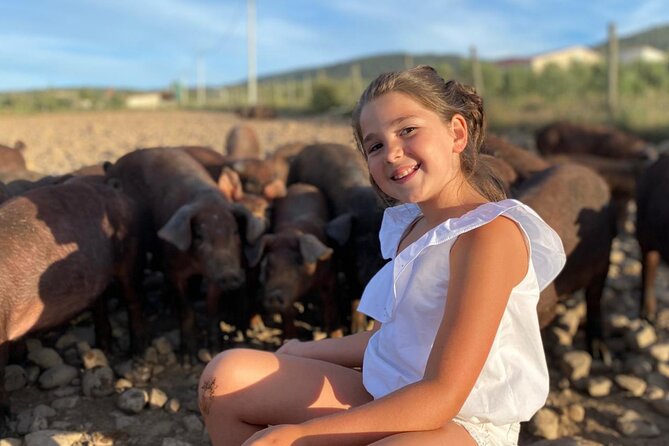
You’ll begin at the organic farm where the production story starts—with the pigs, the land they live on, and the approach to raising them. The tour specifically focuses on Duroc pigs raised free-range, so you’re getting more than a quick look at an enclosure. You’ll learn about the animals’ lifecycle and how organic farming influences the end product.
Why this matters for you: jamón isn’t just a flavor you taste. It’s the result of choices made before curing ever begins. When you see the welfare and management side—how animals are raised more naturally and within an organic system—you start to understand why the ham you taste later isn’t only about curing time. It’s also about raw ingredients and how the farm’s practices feed the process.
The best part of starting here is that it gives you something to watch while you walk later. Once you understand what “organic” means in practice on this farm, the countryside scenery (olive trees, grain fields) stops being just pretty scenery and becomes part of the production ecosystem.
A small practical note: this is an active farm setting. If you’re sensitive to animal areas or outdoor walking, wear shoes you don’t mind getting a little farm-dust.
A stroll through olive groves and fields, plus purebred Spanish horses
After the farm intro, you move into the outdoors: a peaceful stroll through olive groves and grain fields. This is the part where you reset from the production focus and just enjoy the Ocón Valley air.
Then there are the horses—purebred Spanish horses—and this tends to be the favorite moment for a lot of visitors, including families. You get to meet them, and in at least some cases you can even interact, like petting (if conditions allow during the tour). It’s a change of pace from talking about curing, and it helps ground the whole experience in living land.
Why this stop is valuable: it prevents the tour from becoming a food-only event. You’re learning, but you’re also getting a real sense of where this farm sits in a working landscape. If you come from a city and you’ve been stuck in museums and tastings that feel disconnected from the source, this walk gives you context fast.
If you’re traveling with teens or mixed ages, this is also a smart design. Even if you’re there for wine and ham, the horses and animals make it feel like an adventure, not homework.
The sustainable production cycle: a working mill on the farm
One of the most interesting stops is the working mill, shown as part of how they manage and close the organic production cycle. You’ll see how sustainability isn’t only a marketing word here; it’s part of the farm operations that support organic production from start to finish.
You don’t need to be a sustainability expert to get something out of this. The practical takeaway is that good food systems try to reduce wasted effort. Mills, processing tools, and farm logistics are the connective tissue between crops, feed, and finished products. Seeing it firsthand helps you understand why an organic farm can be productive without relying on the idea that everything happens elsewhere.
For you, it’s also a nice contrast to how many tours work. Some just show animals and then immediately jump into tasting. Here, the mill gives you a middle layer: the farm infrastructure that supports the whole process.
Artisan facilities and the ham-curing culture you can taste
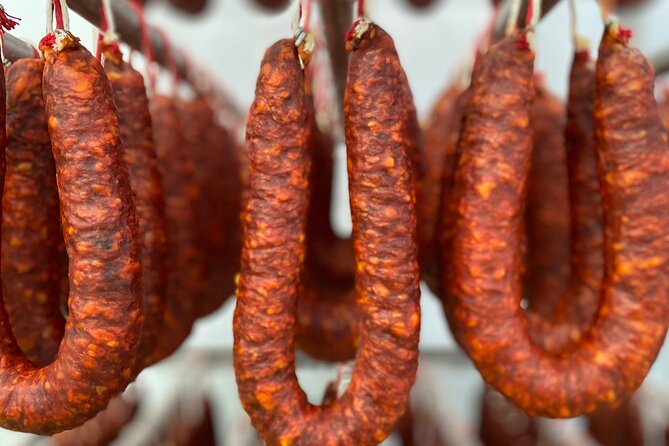
Next comes the artisan side. You’ll tour the facilities and get a video presentation that explains the secrets of the ancient art of ham curing. The goal isn’t just romance. It’s comprehension: how curing works, and how tradition lives alongside their organic identity.
You’ll also learn Spanish ham culture in a way that helps you order and talk about what you’re eating. A key point in the explanation is how to distinguish Jamón Ibérico de Bellota from the farm’s own organic Jamónes. That matters because many people hear “Iberico” and stop there. This gives you more vocabulary for the differences you’ll spot in taste and style.
Here’s why I think this section is a great value: it turns tasting into learning you can use. If you’ve ever wondered why some jamón tastes more nutty, more savory, or more intense than others, this is the kind of structured context that makes your next purchase make sense.
You’ll be guided through the story, then your experience moves directly into eating—so the information stays fresh instead of floating around as trivia.
Tasting organic jamón and sausages with Rioja DOCa red and white
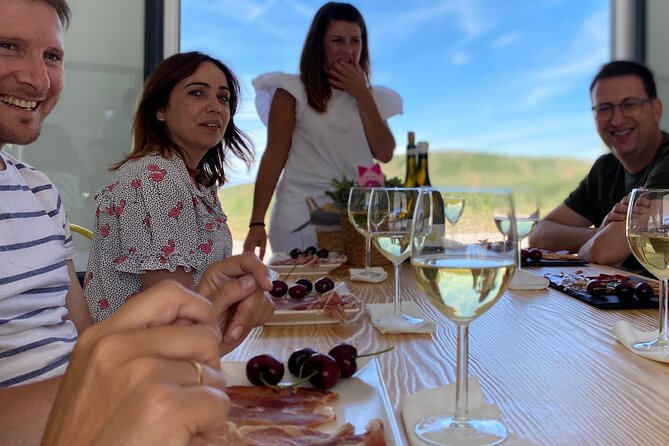
The tour culminates with a commented tasting of their finest organic artisan hams and sausages, paired with two premium Rioja DOCa wines—one red and one white. This is the moment the whole afternoon (and all that farm knowledge) turns into flavor in your mouth.
The tasting is guided, not silent. You’ll get cues for what to notice as you try the food and then switch to wine. That pairing setup is smart because Rioja can behave differently depending on whether you’re drinking a red or a white. Having both helps you see how the ham’s salt and fat interact with wine aromas.
The tasting menu is centered on Spanish Jamón, paired with one red and one white wine from Rioja. In practice, that means you get a focused spread: enough variety to learn, not so much that you lose the thread.
If you care about food quality, you’ll likely enjoy this most if you slow down during the tasting. Let the jamón unfold—first aroma, then texture, then flavor depth. If you race through, you miss what the pairing is teaching you.
And the tone is warm. People describe the hosts as welcoming and family-like, and that shows in how the tasting feels outdoors and relaxed rather than formal and stiff.
Price and time: what $207.11 actually buys you
At $207.11 per person for roughly 2 hours, this isn’t a bargain-basement tasting. But it also isn’t just paying for food. You’re paying for access and instruction: an organic farm visit, the outdoor walk, a look at working farm processes like the mill, a ham-curing presentation, and a guided pairing with both red and white Rioja DOCa.
To judge value, ask what you would otherwise spend money on:
- If you only did a ham tasting, you’d still pay for wine and education, just with fewer stops.
- If you only visited a farm, you’d likely miss the structured ham-curing context and the pairing that ties everything together.
- If you tried to do both on your own, you’d spend extra time coordinating and you’d likely lose the guided explanations.
This tour packages it into one small window. For visitors who want quality and context (not just sampling), the price starts to make sense.
The group cap of up to 20 helps too. Smaller groups usually mean you can ask questions and actually hear the guide while you’re tasting.
Who this tour suits best (and who might want something else)
This experience is especially good for you if you:
- want a real organic farm-to-food connection, not only a tasting room visit
- enjoy animals and outdoor walking in a working countryside setting
- like Rioja and want to understand how it pairs with Iberian ham and sausages
- travel with family members, including teens who need “something to see,” not only “something to listen to”
It may be less ideal if you:
- want a long, slow countryside hike (this is only about 2 hours)
- prefer a mostly cultural museum-style tour where food is secondary
- are very limited in what foods you can eat, since the core of the experience is jamón and wine pairing
Should you book the La Rioja organic ham and wine tasting?
I’d book it if your idea of a great day in La Rioja includes farms, animals, and food you can understand—not just food you consume. The strongest reason to choose this tour is the way it connects the dots: free-range Duroc pigs and organic practices, an outdoors walk through olive groves and fields, a working mill tied to the production cycle, then ham-curing education that feeds into a guided tasting with Rioja DOCa red and white.
The hosts and family feel also sound like a big part of what makes it work. If you want a warm, hands-on experience with real tastings at the end, this one fits well.
If you’re short on time but want an authentic taste of both La Rioja food culture and sustainability in practice, this tour is one of the easier choices to justify.
FAQ
What is the duration of the tour?
The experience runs for about 2 hours.
Where does the tour start?
It starts at Calle Diseminado la Rueda, 1, 26145 Las Ruedas de Ocón, La Rioja, Spain.
What time does the tour begin?
The start time is 10:00 am.
Is the tour in English?
Yes, the tour is offered in English.
What’s included in the tasting?
You’ll taste premium organic artisan hams and sausages paired with two Rioja DOCa wines: one red and one white, with Spanish jamón as the main focus.
How large are the groups?
The maximum group size is 20 travelers.
How do tickets work?
You’ll receive a mobile ticket, and confirmation is received at the time of booking.
What is the cancellation policy?
You can cancel for a full refund up to 24 hours before the experience’s start time. If you cancel less than 24 hours before, the amount paid is not refunded.