REVIEW · LA RIOJA SPAIN
La Rioja: Jamon Iberico Farm Tour and Tasting with Wine
Book on GetYourGuide →Operated by Timonfaya Travel Lanzarote · Bookable on GetYourGuide
Pig freedom meets jamón know-how.
This is a hands-on farm visit in La Rioja built around how Jamón Ibérico de Bellota comes to life, from piglets to the tasting table. I like the way the walk stays practical, with stops that explain the breeding project on the organic farm El Encinar and how the animals are raised outdoors. I also like the change of pace with the free-roaming pure Spanish horses, which keeps the tour from feeling like a one-note food stop.
One possible drawback: the tasting and timing may feel slightly different than expected. One review notes there wasn’t much of a structured wine tasting and that the tour ran closer to 2 hours than the listed 3.
In This Review
- Key things to know before you go
- Where this farm tour in La Rioja really starts: El Encinar
- The piglet walk: seeing growth stages in the open air
- Facilities and artisan meats: where the process becomes production
- The horse farm stop: pure Spanish horses in freedom
- Olive groves, cereal fields, and the feed mill: the practical middle
- Jamón Iberico de Bellota explained, then tasted
- Rioja wine pairing: what to expect in practice
- Time and value: is $146 per person fair for this tour?
- Who this Jamón farm tour suits best
- Practical tips before you book
- Should you book it?
- FAQ
- FAQ
- Where does the tour take place?
- How long is the tour?
- Is the tour guided in English?
- Is the tour wheelchair accessible?
- What farm animals will I see?
- Do I get to walk through the farm?
- What tastings are included?
- Will I taste Rioja wine?
- Is there any field or feed-mill visit during the tour?
- What’s the cancellation and payment policy?
Key things to know before you go
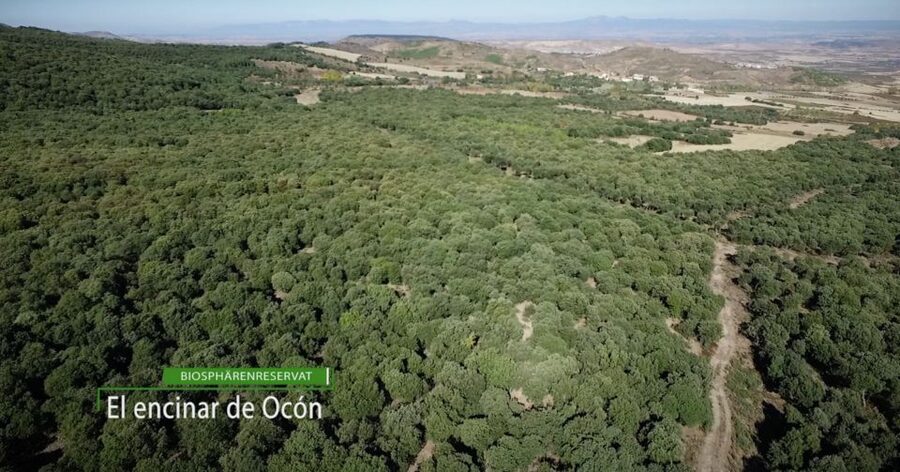
- Organic farm setting at El Encinar: You start in the open-air piglet breeding project in the Ocón Valley.
- Duroc piglets, raised outdoors: You walk through the farm and see growth stages in a natural environment.
- Free-roaming pure Spanish horses: You visit a horse farm where the animals are kept in freedom.
- From fields to feed mill: You also move through olive groves and cereal fields, then see the operation for animal feed.
- Jamón Iberico learning plus tastings: You get an explanation of how Jamón Ibérico de Bellota is created and end with eco tastings.
Where this farm tour in La Rioja really starts: El Encinar
The tour begins at an organic farm called El Encinar, in the Ocón Valley in La Rioja, in the heart of a Biosphere Reserve. That matters because this isn’t just a warehouse visit. You start with the living part of the story—piglets and horses—and then the experience turns into what that farming model produces.
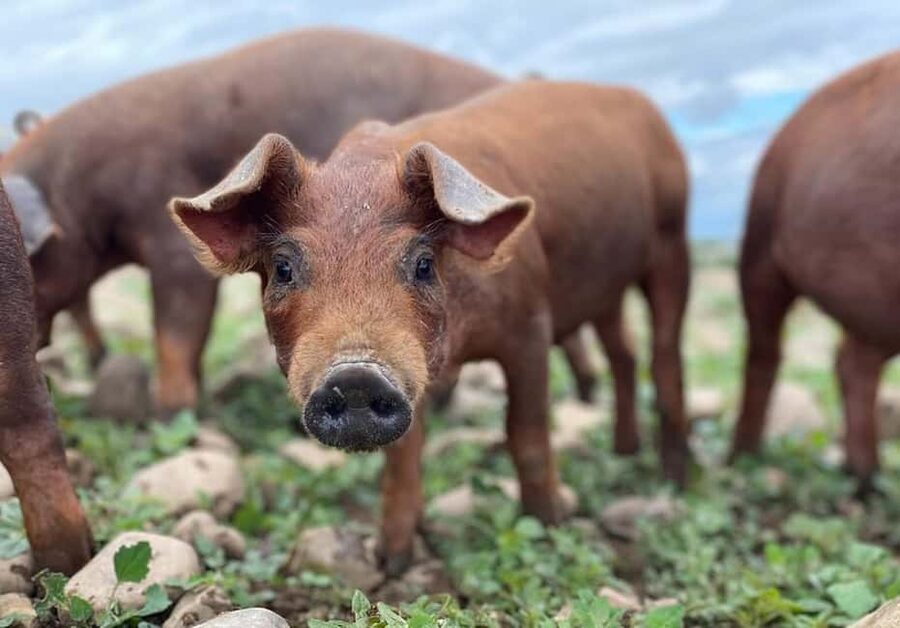
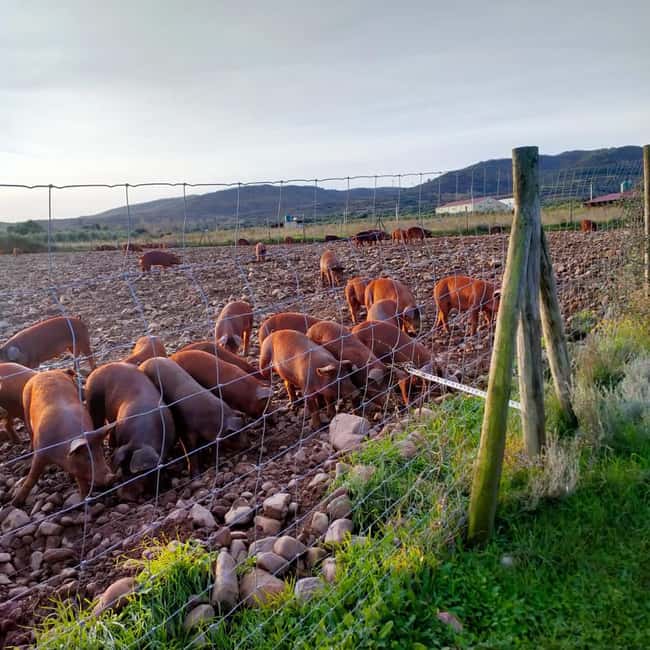
Expect a walk on the grounds where piglets live and breed in open air. The focus is an organic farming method tied to a Duroc piglet breeding project. I like that it’s framed as a project you can actually see, not a marketing slideshow.
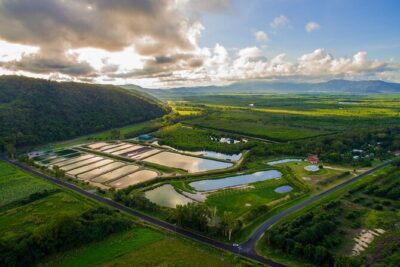
You’ll also spend time between olive groves and cereal fields. This gives you the broader farming context—why the animals’ world is tied to the land around them. Even if you only have a few hours, that change from buildings back to fields helps the whole thing make sense.
The piglet walk: seeing growth stages in the open air
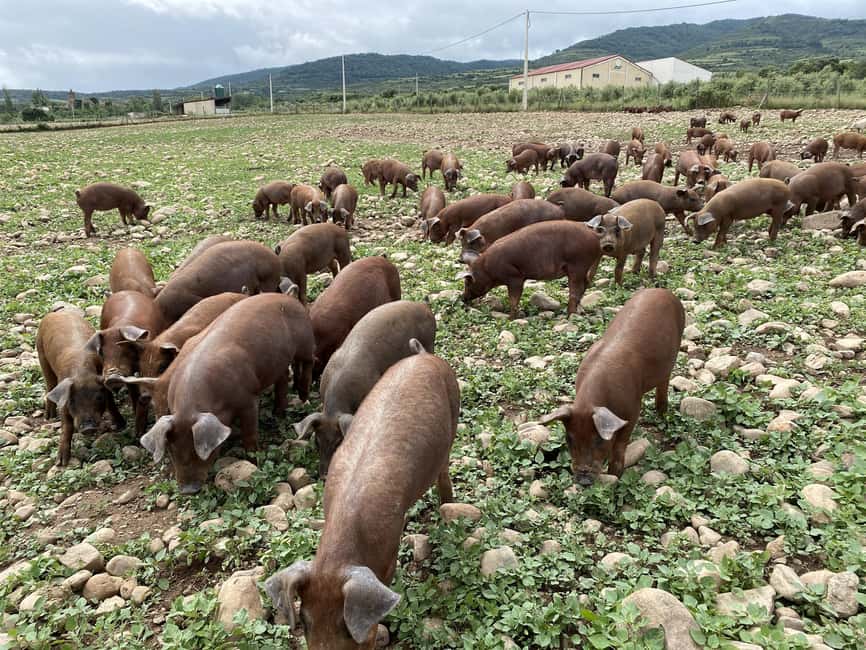
A big part of the value here is the farm walk. You’re guided through the different stages of the piglets’ growth, and you can connect the animal you’re seeing with the later ham-making explanation.
This is where you’ll get the most “real life” feel. You’re not just being told about animal welfare—you’re shown the conditions described as freedom in an organic setup. If you care about how food is made, this step is the heart of the tour.
It’s also a good moment to ask questions, because the guide is there while you’re looking at the animals and the farm setup. One review highlighted plenty of info during the walk, and that’s exactly what makes a farm experience worth your time: you should leave feeling like you understand what you saw.
Facilities and artisan meats: where the process becomes production
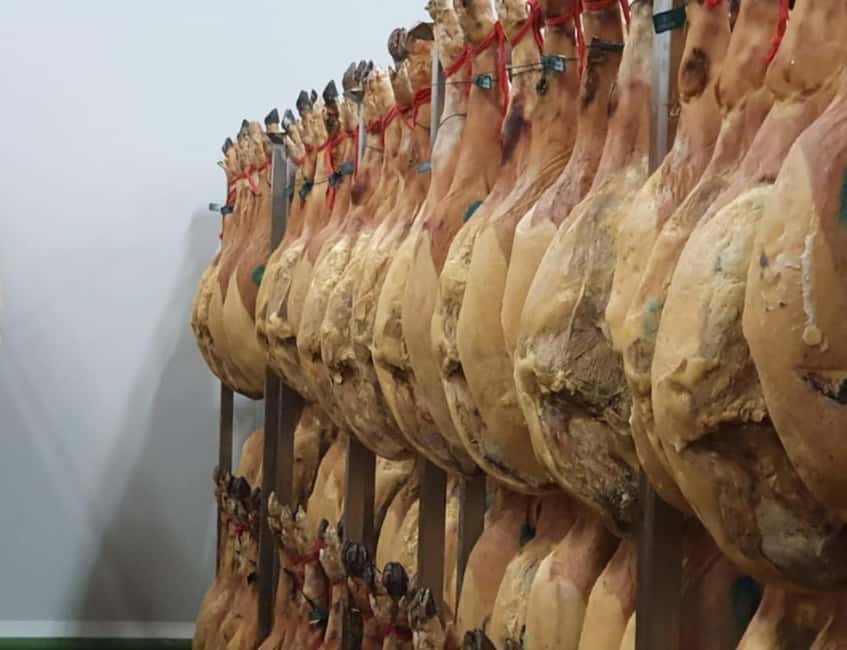
After the farm walk, the tour moves to the facilities where they elaborate organic artisan meats and sausages. This is the shift from “how they live” to “how they work,” and it’s also where you’ll learn more about the complete process.
The key point to watch for: you’ll likely see the operation and hear an explanation of how Jamón Ibérico de Bellota is created. The description doesn’t spell out every production step in detail for you in advance, but the structure is clear: farm first, then facilities, then the jamón story with a tasting at the end.
One review specifically called out understanding different types and characteristics of pigs, including the life cycle. If that’s your kind of interest, you’ll probably enjoy this portion more than the usual “quick stop and snack” tour.
The horse farm stop: pure Spanish horses in freedom
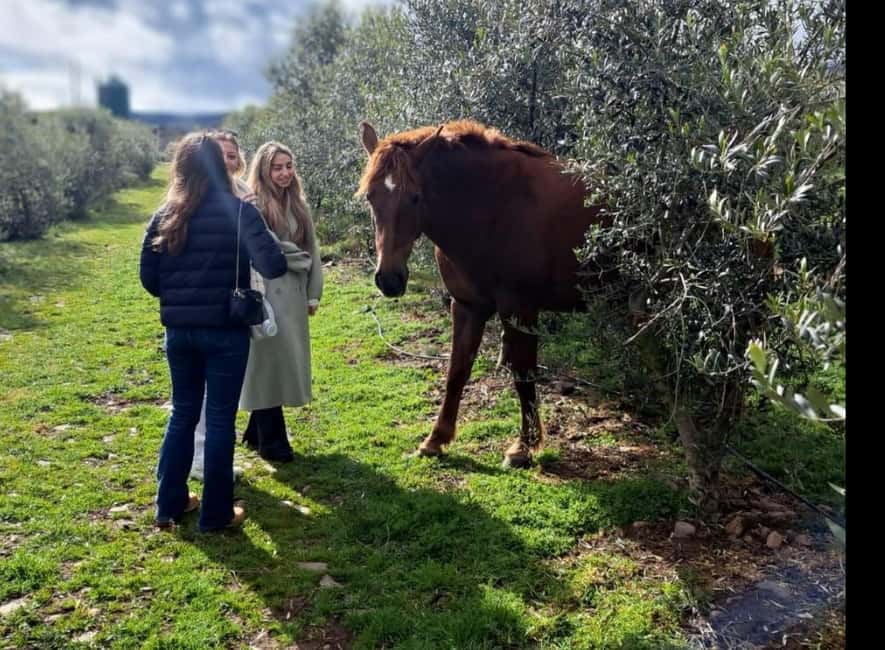
This tour includes a visit to a farm of pure Spanish horses in freedom. It’s a smart inclusion. If you only came for jamón, it could be tempting to think you’d spend most of your time with one topic. The horses break that rhythm and make the tour feel like a true working farm day.
Also, it’s a visual reminder that this is farm-based food production, not only a food brand experience. When you see horses moving around naturally, it gives context to the broader agricultural operation that supports the ham project.
In one review, seeing both pigs and horses was part of what made the tour feel informative and enjoyable. So if you want variety in a 3-hour window, this is one of the best reasons to pick this option.
Olive groves, cereal fields, and the feed mill: the practical middle
The itinerary includes time between olive groves and cereal fields, then a stop where they explain the operation of the mill for animal feed. This part might sound “less exciting” than tasting ham, but I think it’s where the tour earns its keep.
Why? Because feeding and land use are where farm reality lives. You’re not only learning about the final product. You’re hearing how the animals’ daily needs tie back to their environment and the farm’s workflow.
If you like tours where you leave with a few practical facts—what happens on the farm day-to-day—don’t skip the middle stops waiting for the tasting to start. This is the stage that makes the last bite feel earned.
Jamón Iberico de Bellota explained, then tasted
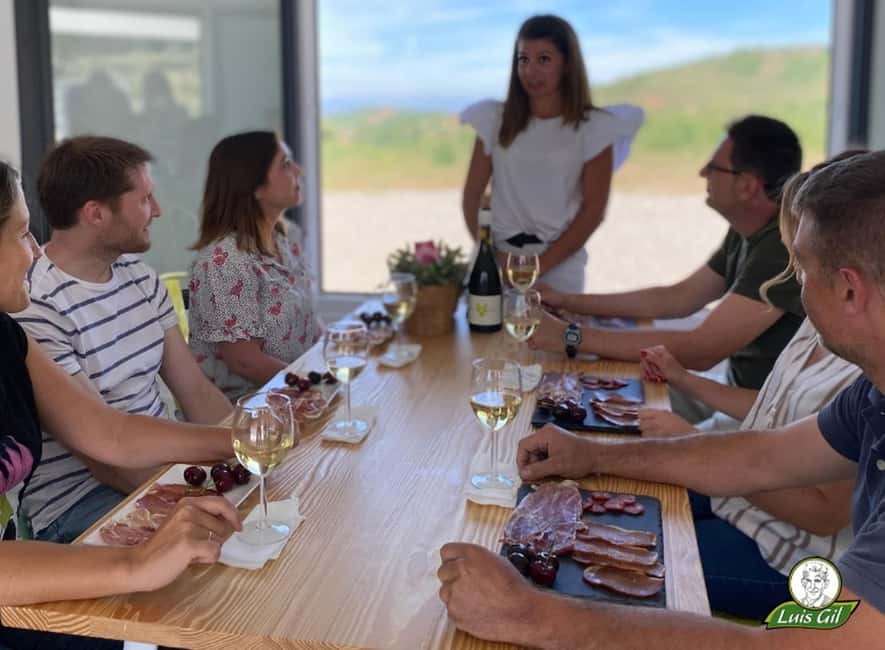
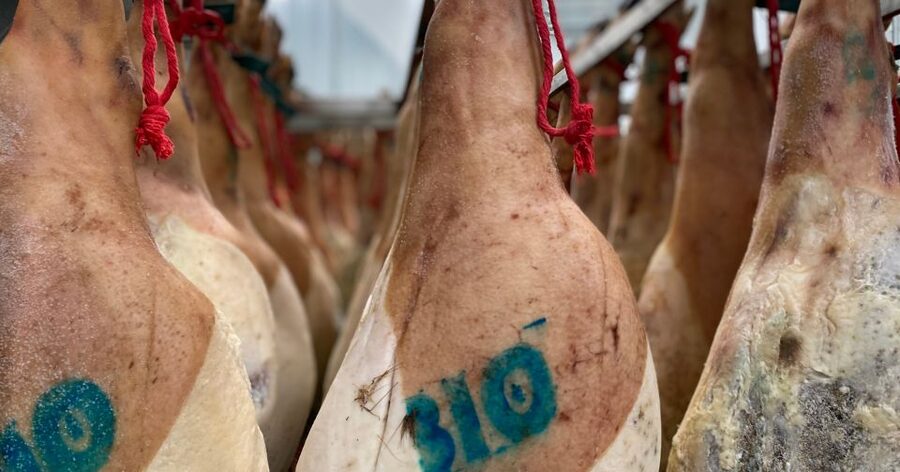
The tour is designed to teach you how Jamón Ibérico de Bellota is created, and it ends with a commented tasting. From the details provided, the tasting focuses on ecological jamón and ecological acorn-fed hams, with pairings of Rioja wine.
This is where you should adjust your expectations a bit. Even if the guide explains the ham process well, the tasting itself is still a tasting—short, curated, and designed to show quality rather than replicate a full restaurant experience.
That said, the tastings appear generous. One review mentioned a generous tasting sample of pig products. Another review said the food tastings could be substantial, even calling out chorizo. If you’re hungry or you enjoy sampling several cured items, that’s a plus.
Rioja wine pairing: what to expect in practice
You’re told the tasting includes 1 red wine and 1 white wine from Rioja. One review noted that there wasn’t a true wine-tasting feel—more like a bottle to drink—so the structure could vary.
My advice: treat the wine as part of the pairing experience, not as a deep sommelier-led tasting seminar. If your goal is to learn wine techniques, you might want a separate wine-focused tour in La Rioja. If your goal is to understand how the jamón tastes alongside Rioja, this tour should fit that bill.
Time and value: is $146 per person fair for this tour?
At $146 per person for a tour listed as 3 hours, you’re paying for a farm-based, guided, multi-stop experience with animals, facilities, and tastings. In other words, you’re not just paying for food. You’re paying for access.
Where value can wobble: one review said the tour was only 2 hours rather than 3. If that shorter timing is your reality on the day you book, the per-hour cost feels higher.
Here’s how I’d decide:
- If you want the animal-and-farm component—piglets, horses, and the feed/facilities stops—this price can feel fair because you’re getting more than a quick tasting.
- If you mainly want wine education and a long tasting session, $146 can feel steep if the wine is minimal or less structured.
In short, this is best value when you care about the whole farming-to-ham story, not only the final bite.
Who this Jamón farm tour suits best
This tour is a strong fit if you:
- enjoy food experiences that start with animals and farming routines
- want to learn about Jamón Iberico de Bellota through a guided farm visit
- like small-course sampling—jamón and cured items—paired with Rioja wines
It’s also a decent choice if you’re traveling with mixed interests. Horses add variety. The olive groves and cereal fields add a sense of place. And the mill/feed explanation adds practical grounding.
If you hate walking outdoors or want long indoor explanations, you might find parts of it less comfortable. The visit style is clearly farm-and-field oriented, even if the facilities stop will offer shelter and production context.
Practical tips before you book
A few things to help you enjoy it more:
- Wear shoes that handle farm paths. You’ll be walking the farm and moving between outdoor areas.
- Plan to treat tastings as samples, not a full meal.
- If wine education is your top priority, consider pairing this with a separate Rioja tasting later. This is first and foremost a jamón-and-farm experience.
Also, the tour is in English with a live guide, and it’s wheelchair accessible. That’s helpful if you need an option that can be adapted for mobility needs—just remember the tour still includes farm movement.
Should you book it?
I’d book this tour if you want a genuine farm-first food experience in La Rioja—piglets on an organic project at El Encinar, a stop with pure Spanish horses in freedom, and an ending built around learning and tasting eco Jamón Iberico with Rioja wine. It’s the kind of tour where you’ll probably come away with a clearer idea of what you’re eating and why the process starts long before it reaches your plate.
Skip it or pair it strategically if you’re mostly after a deep, formal wine program or a long tasting session. Also keep your expectations flexible on duration and how the wine gets handled day-to-day, since timing and wine focus can differ.
FAQ
FAQ
Where does the tour take place?
It takes place in the Ocón Valley in La Rioja, in the heart of a Biosphere Reserve, starting at the organic farm El Encinar.
How long is the tour?
The duration is listed as 3 hours.
Is the tour guided in English?
Yes, the live tour guide speaks English.
Is the tour wheelchair accessible?
Yes, the tour is described as wheelchair accessible.
What farm animals will I see?
You’ll see piglets as part of the Duroc piglet breeding project, and you’ll also visit pure Spanish horses kept in freedom.
Do I get to walk through the farm?
Yes. You’ll walk through the farm and visit the different stages of the piglets’ growth.
What tastings are included?
The tour includes a commented tasting of ECOLOGICAL Jamón Iberico and ECOLOGICAL acorn-fed hams.
Will I taste Rioja wine?
Yes. The tasting includes 1 red wine and 1 white wine from Rioja.
Is there any field or feed-mill visit during the tour?
Yes. You’ll visit between olive groves and cereal fields, and you’ll see and get an explanation of the mill operation for animal feed.
What’s the cancellation and payment policy?
You can cancel up to 24 hours in advance for a full refund, and you can reserve now & pay later.