REVIEW · PHUKET
Old Phuket Farm Ticket – Countryside Local Life Culture
Book on Viator →Operated by Oh-Hoo · Bookable on Viator
Buffaloes, rubber trees, and rice work in two hours. I love the hands-on rhythm of the day, and I like that it’s run in a small group (up to 10) with a guide who keeps it clear and fun. If you’re not comfortable around animal handling details, note that you may see buffaloes with nose piercings, and one visitor found that upsetting.
In This Review
- Key highlights at Old Phuket Farm
- Old Phuket Farm: what this countryside visit feels like
- Buffaloes and rubber trees: the work behind Thai agriculture
- Rice fields plus tin panning: crops, tools, and a hands-on break
- Pineapples, rice milling, and winnowing: the food side of the farm
- Inside a classic Thai house: coconut grating and curry paste-making
- The guide-led factor: why small-group matters
- Price and logistics: is $38.88 worth it?
- What to expect on the day (and how to prep)
- Who should book Old Phuket Farm?
- Should you book Old Phuket Farm?
- FAQ
- How long is the Old Phuket Farm countryside tour?
- What is the price and is the admission ticket included?
- How many people are in the group?
- What ages are eligible for a child ticket?
- Does the tour require good weather?
- What’s the cancellation policy?
Key highlights at Old Phuket Farm
- Buffaloes first: learn why they matter in day-to-day farming here
- Rubber from tree to sheet: see how tapping turns a living tree into product
- Rice field work up close: planting and harvesting explained at a working pace
- Tin panning try-it: connect Phuket’s mining legacy to something you can do with your own hands
- Thai house food skills: coconut grating and curry paste-making you can watch and learn from
Old Phuket Farm: what this countryside visit feels like
Old Phuket Farm is a short, practical taste of how farming supports Thai life. In about two hours, you get a run of activities that feel more like “how it works” than “look at this.”
This is also a tour that works for different ages and energy levels. If you’re traveling with a child, the pace is usually easy to follow because the focus shifts often: animals, then crops, then a hands-on task, then food.
The setting is intentionally off the usual tourist circuit, so you trade city sights for farm smells, dirt paths, and close-up tools. That’s the value here: you’re not just hearing about agriculture, you’re seeing the sequence of work people do during a typical agricultural cycle.
You can also read our reviews of more tours and experiences in Phuket.

Buffaloes and rubber trees: the work behind Thai agriculture
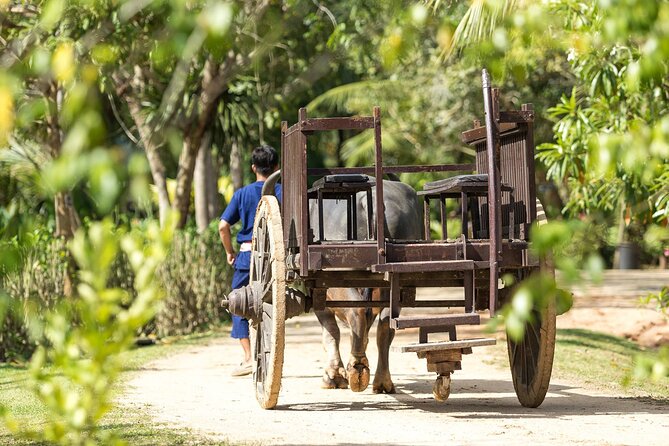
You start with the farm’s biggest characters: buffaloes. You’ll spend time meeting them and learning their role in Thai agriculture, which helps explain why they’ve been part of rural farming for so long. Buffaloes aren’t just scenery; they’re part of the practical toolkit that shaped how fields get worked.
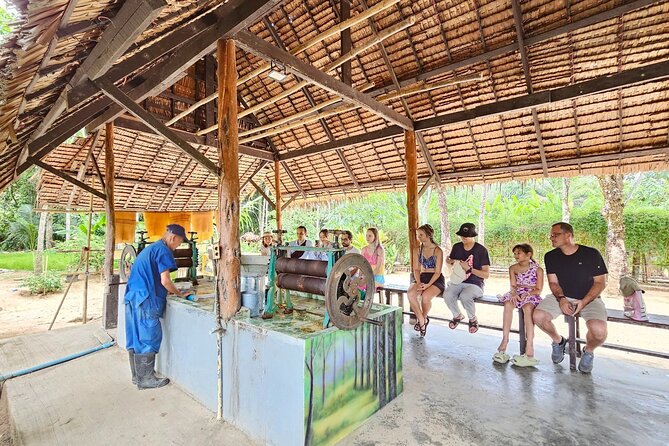
Then the tour shifts to rubber production. You’ll see the tapping process on rubber trees and learn how that turns raw tree activity into rubber sheet material. It’s a useful reminder that agriculture isn’t only about food. On Phuket and in surrounding regions, rubber has long been a major farm product.
What I like about these two sections is the cause-and-effect. The buffalo part gives you the “why” of livestock on farms, and the rubber part gives you the “how” of industrial agriculture. Together, they make the countryside feel real, not staged.
A small consideration: this is a working farm setting. Conditions can change with the weather and the day’s rhythm, so the schedule can feel more like guided farm walks than a fixed museum script.
Rice fields plus tin panning: crops, tools, and a hands-on break
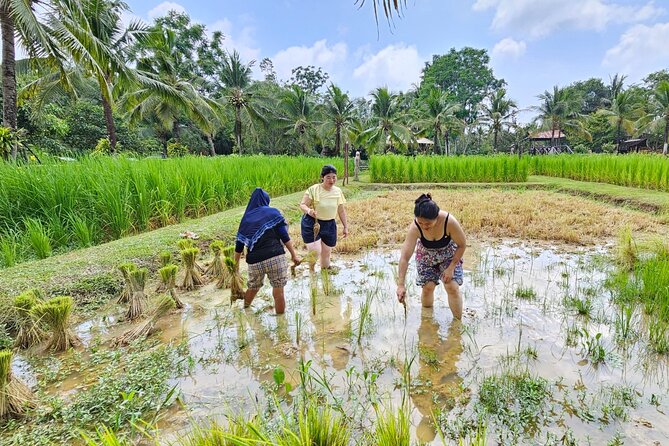
Rice is the next big stop. You’ll head to rice fields to see planting and harvesting up close, with traditional techniques explained in a way that makes sense even if you’ve never farmed before. This part is often where the tour clicks for first-timers, because it connects the landscape to the calendar of farm work.
After that, you get a fun practical activity: tin panning. Phuket’s tin mining legacy is part of the island’s story, and this try-it session helps you understand how people extracted something valuable from earth using simple methods. You’re basically doing a scaled-down version of a real skill.
This pairing works well because it alternates “watch and learn” with “do and try.” Rice gives you context about farm life, and tin panning gives you a playful, hands-on moment that breaks up the day.
If you like activities with a bit of challenge, you’ll probably enjoy tin panning most. If you prefer calm observation, you can still watch closely and learn the steps, even if you don’t get the best pan at first try.
Pineapples, rice milling, and winnowing: the food side of the farm
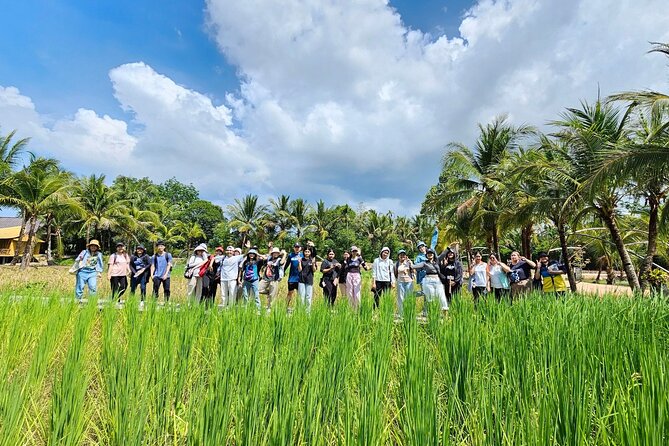
The farm doesn’t just teach agriculture. It also focuses on how food becomes something you can eat.
You’ll taste freshly grown pineapples, which is a quick but satisfying way to connect the farm work to actual flavor. It’s the kind of moment that makes agriculture feel tangible, not abstract.
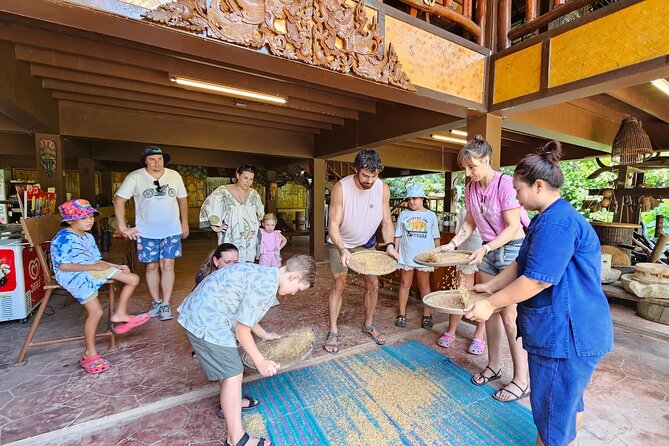
You’ll also learn about traditional rice milling and winnowing. These steps matter because rice isn’t ready to eat straight from the field. Milling and sorting are where raw harvest turns into usable food, and winnowing shows how farmers separate grain from chaff using basic airflow and technique.
This portion is valuable for two reasons. First, it shows that farming is only half the story. Processing is the other half. Second, it gives you a clearer understanding of why farm tools and methods exist, even if you never plan to farm yourself.
Go in with a “curious eater” mindset. If you pay attention to how each step changes the product, you’ll come away with a better mental picture of how Thai farm-to-table work connects.
Inside a classic Thai house: coconut grating and curry paste-making

One of the most memorable parts of this tour is the shift from fields to kitchen skills. You’ll explore a classic Thai house and see how everyday ingredients get prepared.
Coconut grating is included, and you’ll also see curry paste-making. These are core skills in Thai cooking, and watching them helps you understand why certain dishes taste the way they do. Even if you don’t cook at home often, it’s interesting to see the physical work behind common flavors.
I like this part because it ties the whole farm loop together. Earlier you learned about farm products like rice and other crops. Here, you see how food becomes meal-ready through hands-on preparation and traditional methods.
A practical tip: curry paste-making and coconut prep can involve strong scents and a working kitchen setup. If you’re sensitive to smells or prefer not to linger in very active food areas, you can still learn a lot while standing back respectfully.
The guide-led factor: why small-group matters
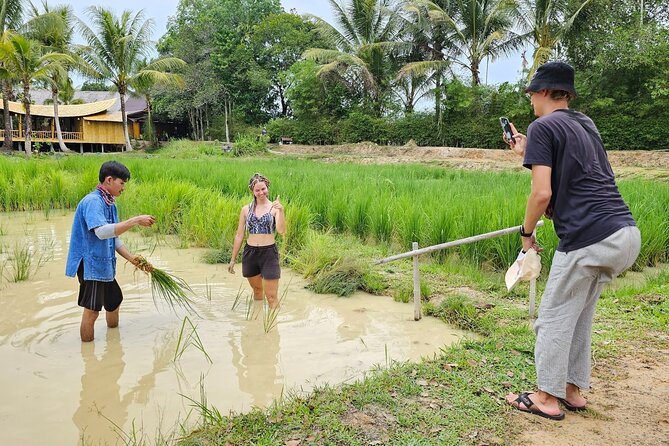
What makes this tour rate so highly is the combination of structure and personality. The format is simple: you’re guided from one activity to the next, but it doesn’t feel like a rushed lecture.
The best experience usually comes down to the guide. In the feedback, the guide is consistently described as excellent and the tour as hands-on and informative. That lines up with what you want from a farm tour: explanations that match what you’re seeing, not generic facts.
The small group size (maximum 10) helps too. It keeps questions from getting lost and gives you more time at each stop. For families, this matters because kids need short attention cycles and clear turn-taking.
If you’re a solo traveler, the small size also helps you feel less like you’re stuck watching a group ahead of you. You can usually ask practical questions and get direct answers.
And if you’re with a partner, it’s a nice date-length activity. Two hours is long enough to feel you learned something, but short enough not to feel trapped in a rigid schedule.
Price and logistics: is $38.88 worth it?
At $38.88 per person for about two hours, this sits in the “value if you want hands-on” category. You’re paying for access to a working farm experience and a guided sequence of multiple farm topics: buffaloes, rubber tapping, rice work, tin panning, pineapples, rice processing, and Thai house food preparation.
Here’s the honest way to judge value: if you like active learning and watching real processes, the price makes sense because you’re getting several different activities in one coherent visit.
If you’re only interested in photos of scenery, you might feel the time is better spent elsewhere. This isn’t a long scenic walk. It’s a guided farm education session with practical participation.
Logistics are also pretty friendly. You get a mobile ticket, and the location is noted as near public transportation. You’ll also get confirmation at booking.
Because it’s weather-dependent, plan to keep your day flexible. If conditions are poor, you may be offered another date or a full refund. That’s common for outdoor farm settings, and it’s worth factoring into your Phuket schedule.
What to expect on the day (and how to prep)
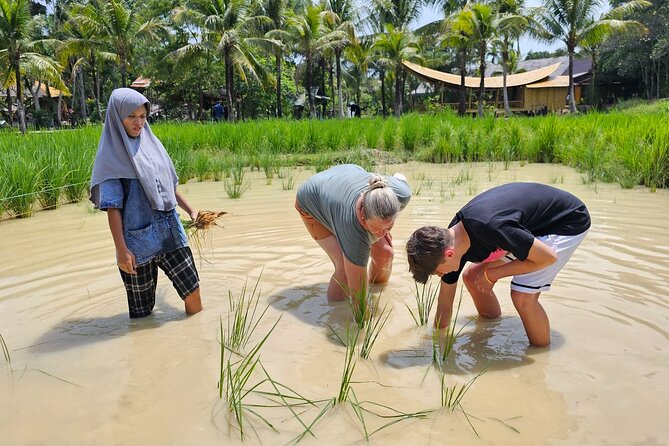
This is a farm tour, so you should prepare like you’re visiting the countryside, not a polished indoor attraction. Expect uneven ground, outdoor walking between areas, and hands-on moments that can get dusty.
Wear closed-toe shoes you don’t mind getting a little dirty. Light layers help because farm conditions can feel different across sunny patches and shaded areas.
Bring sun protection. Even if the morning starts mild, Phuket sun can build fast. A hat and sunscreen make the tour more comfortable without adding bulk.
If you’re doing tin panning or handling farm-related activities, you’ll probably want to keep your phone secure and your hands ready for basic mess. A small towel or wet wipes are never a bad idea for comfort.
And about animals: this tour includes meeting buffaloes as part of the cultural farming lesson. One visitor noted discomfort about buffaloes with nose piercings. You can’t control how animals look, but you can control your approach. If you need emotional distance, take breaks, observe from a respectful range, and focus on the agriculture lesson rather than close animal details.
Who should book Old Phuket Farm?
I think this tour fits best if you want a short, guided countryside day that teaches real skills and farm routines. It’s a great match for families because it mixes animal time, plant work, and short practical activities that keep kids engaged.
Couples often enjoy it because it’s different from beach-only Phuket days. You also get built-in conversation starters, since each stop has a clear “what it is and why it matters” explanation.
Solo travelers usually like it because it’s structured and efficient. You won’t need to plan transport between spots or worry about finding farm experiences on your own.
It’s also worth considering if you’re into food and ingredients. The coconut grating and curry paste-making help you understand Thai flavor at the source, not just as a finished dish.
Should you book Old Phuket Farm?
Book it if you want an active, short lesson in how Phuket-area farming works, and you’ll enjoy learning through real steps like rice processing, rubber tapping, and tin panning. The small-group size and the consistently praised guide make it one of the stronger options for a 2-hour cultural countryside stop.
Skip it (or adjust expectations) if you mainly want scenic sightseeing with minimal participation. This is a working-farm style experience, so you’re there to learn processes, not just take photos.
If animal visuals might upset you, especially details like nose piercings, go in gently and decide what level of closeness works for you. With that in mind, it’s a solid, practical choice for a cultural day in Phuket.
FAQ
How long is the Old Phuket Farm countryside tour?
It runs for about 2 hours.
What is the price and is the admission ticket included?
The price is $38.88 per person, and the admission ticket is included.
How many people are in the group?
The tour has a maximum of 10 travelers.
What ages are eligible for a child ticket?
Child ticket age is 4 to 11 years.
Does the tour require good weather?
Yes. The tour requires good weather. If it’s canceled due to poor weather, you’ll be offered a different date or a full refund.
What’s the cancellation policy?
You can cancel for a full refund up to 24 hours in advance. If you cancel less than 24 hours before the start time, the amount paid isn’t refunded.