REVIEW · REYKJAVIK
Snæfellsnes in Spanish with lunch on a farm Minibus
Book on Viator →Operated by EastWest · Bookable on Viator
Snæfellsnes feels like an entire planet in one day. This full-day minibus loop from Reykjavík strings together glacier views, lava coasts, and postcard fishing towns, with WiFi and a small group size to keep the day moving without feeling rushed.
I like two things a lot. First, the max 19 passengers setup means you actually hear your guide and get time at the stops. Second, the farm stop is real value: a homemade lunch at Lýsuhóll plus a visit to the stables to see Icelandic horses.
One drawback to know up front: you’re outdoors for cliffs, beaches, and viewpoints, and the tour needs good weather. If conditions are rough, the plan can shift or the experience can be canceled.
In This Review
- Key takeaways I’d plan around
- Snæfellsnes from Reykjavík: the Mini-Iceland day plan that makes sense
- The minibus setup: small group, WiFi comfort, and why max 19 matters
- Snæfellsjökull at the start: glacier atop a volcano and the Journey to the Center of the Earth vibe
- Ytri Tunga seals: short beach stop, high reward for wildlife spotting
- Lýsuhóll farm lunch and Icelandic horses: the most satisfying part of the whole route
- Buðir black church in the Búðahraun lava field: history you can actually see
- Arnarstapi–Hellnar basalt walk: cliffs, arches, and the myth-meets-rocks Bardur statue
- Djúpalónssandur black-sand beach: shipwreck stones and a very human lesson
- Kirkjufell and the orca-and-seal shore: the photo mountain plus real wildlife country
- Selvallafoss to finish: sheep waterfall legends and the view across Selvallavatn
- Guides make the day: small touches that show up across different names
- Price and value: what $220.91 buys you on a 12-hour Snæfellsnes loop
- Who should book this Snæfellsnes day tour?
- Should you book this Snæfellsnes minibus tour with farm lunch?
- FAQ
- How long is the Snæfellsnes Peninsula tour from Reykjavík?
- What does the tour cost?
- Is pickup from Reykjavík included?
- How many people are on the minibus?
- Is WiFi available during the trip?
- Is lunch included, and do you see Icelandic horses?
- Are there admission tickets required for the main stops?
- Is the tour in Spanish?
- What happens if the weather is poor or you need to cancel?
Key takeaways I’d plan around
- Max 19 passengers keeps this Snæfellsnes day feeling human-scale.
- Farm lunch at Lýsuhóll plus Icelandic horses is the “worth it” moment for food lovers.
- Buðir black church sits in a lava field and adds history without turning into a museum day.
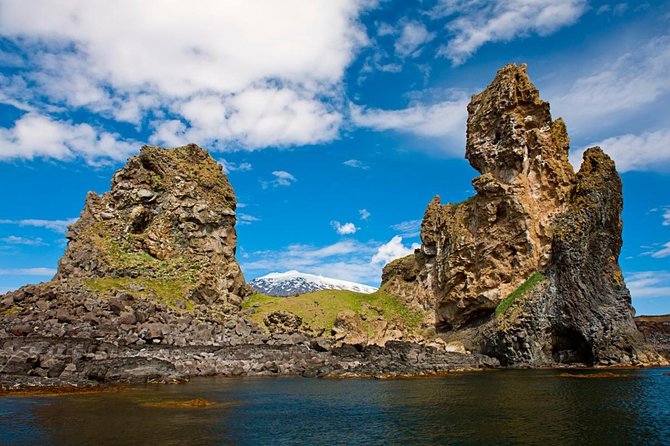
- Arnarstapi–Hellnar cliff walk is built for basalt formations and seabird spotting.
- Kirkjufell is the photo stop, and the nearby shores are a good place to watch for seals and orcas from land.
- Guides tune the day (timing, bathroom stops, and weather/light adjustments are part of the job).
Snæfellsnes from Reykjavík: the Mini-Iceland day plan that makes sense
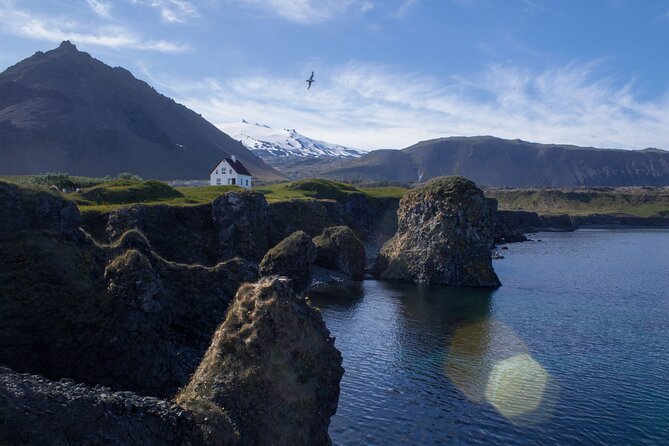
Snæfellsnes is the peninsula people call miniature Iceland for a reason. In one long day you can see glacier country, black-sand beaches, dramatic cliffs, and small fishing ports that feel a world away from Reykjavík.
This tour is designed for that kind of “greatest hits” flow, but it isn’t just a drive-by sightseeing checklist. The day is built around a sequence of short stops: you get a little time at the right photo angles, a little walking at the coast, and at least one stop that feeds you properly. A farm lunch is included, and it’s one of the easiest ways to make the day feel complete.
The other smart part is the pacing. Most stops are listed as free and short, which helps when Iceland weather changes fast. You’re not stuck for long stretches with nothing to do.
And because it’s offered in Spanish, you can follow the stories and place names without translation gymnastics.
You can also read our reviews of more tours and experiences in Reykjavik.
The minibus setup: small group, WiFi comfort, and why max 19 matters
Transportation can make or break an Iceland day tour. Here, you’re in a minibus with a maximum of 19 passengers. That number matters. With a smaller group, you’re less likely to feel like part of a moving crowd, and your guide can manage transitions better.
You’ll also have WiFi on the vehicle. It’s not the main reason you’re here, but on a 12-hour day it’s handy for maps, messaging, and saving space in your brain for Iceland facts instead of logistics.
Pickup is offered, and the pickup point is near public transportation. That can matter if you’re staying outside the strict downtown pickup zone, or if you want an easy Plan B.
One more detail that shows up in the way the guides run things: they plan for comfort. Prompt pickup, good timing at stops, and bathroom breaks are part of how they manage the day. On days with tricky light or weather, guides also tend to adjust timing so you still catch the best views.
Snæfellsjökull at the start: glacier atop a volcano and the Journey to the Center of the Earth vibe
After pickup, you head northwesterly out of Reykjavík toward Snæfellsjökull. The glacier sits atop an active stratovolcano of the same name. Even if you don’t get close-up glacier hiking, the setup is part of the show: volcano-and-ice energy is the theme from the beginning.
This is the place Jules Verne used for Journey to the Center of the Earth. You don’t need to be a sci-fi nerd to feel why the reference sticks. The peninsula is full of sharp coastlines, volcanic rocks, and that eerie “everything looks shaped by time and pressure” look.
Your guide also frames the mountain with Iceland-style stories: local belief includes mystical powers, and Snæfellsjökull is considered by many to be one of the seven major energy centers on earth. Whether you buy into that or not, it’s a fun layer to add to the visuals.
On the drive, you’ll pass lunar-like scenery, waterfalls, lakes and rivers, rocky coasts, and small fishing villages. This is one of those parts where the day doesn’t feel like it starts with a lecture. It starts with the view.
Practical note: visibility can change. If the weather is good, you get more impact from glacier views. If it’s cloudy, your guide will still keep the day moving through the best alternatives.
Ytri Tunga seals: short beach stop, high reward for wildlife spotting
Ytri Tunga Beach is your first stop. It’s known for a seal colony, especially during the summer months.
This works well because it’s a quick stop: about 30 minutes. You’re not committing to a long walk just to be disappointed. Instead, you get a focused window to scan the shoreline for movement and resting seals.
The beach setting also adds variety after the longer drive. Instead of looking at cliffs only, you shift to ocean level. That change of perspective makes the day feel less like one continuous “look at rocks” segment.
If you’re traveling in the off-season, seals might be less predictable. Still, it’s the right kind of stop for Iceland: quick, outdoors, and tied to a real animal presence rather than a staged experience.
Lýsuhóll farm lunch and Icelandic horses: the most satisfying part of the whole route
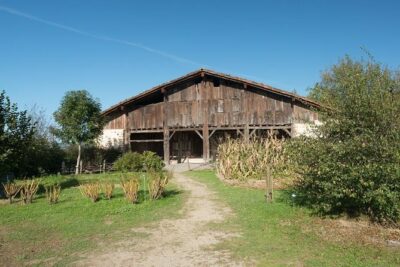
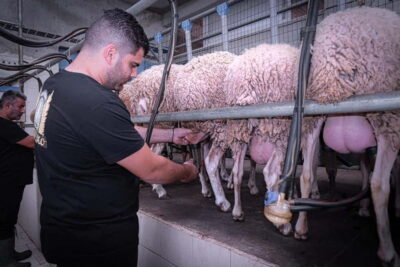
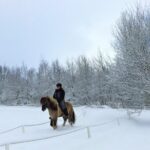
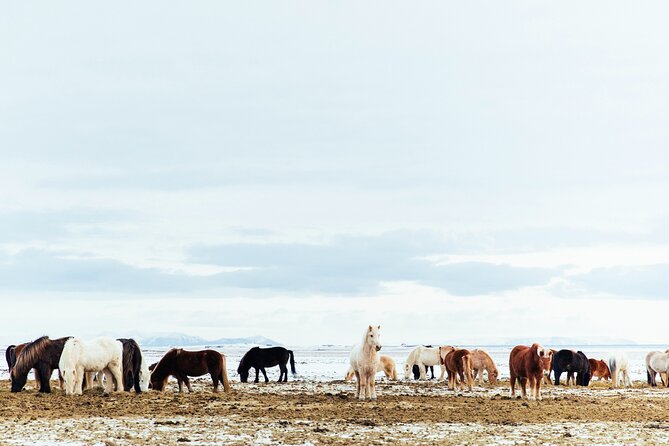
Then comes the farm stop at Lýsuhóll. This is not just a photo stop. You’ll taste a homemade meal and also visit the stables to meet the Icelandic horse.
This is where the tour earns its value. A lot of day trips in Iceland are “scenery only,” which means you spend your whole day hungry or paying for expensive food at random times. Here, lunch is built into the itinerary and tied to an actual place, not a convenience stop.
The Icelandic horse visit is also a good change of pace from coastal walking. Icelandic horses are compact, sturdy, and used to people. Even if you’re not an animal person, they’re a memorable experience because they look so distinct from typical “big horse” breeds.
If you’re choosing between day tours, I’d put a farm-and-horses stop near the top of your shortlist. It’s one of the fastest ways to make a Snæfellsnes day feel like more than just scenery.
Buðir black church in the Búðahraun lava field: history you can actually see
Next up is Buðir, with its black church in the Búðahraun lava field. This is one of the few black churches in Iceland.
It’s painted with tar, which is the functional explanation you want: wood needs protection from harsh weather, and tar helped do that. The church is a declared national monument, so this stop carries real significance without demanding a museum ticket or a long indoor visit.
There’s also context about why this area mattered historically. Buðir sits in an area with a natural harbor, which made it important as a commercial center during the Danish commercial monopoly in the 17th and 18th centuries.
And because it’s in a lava field, the church doesn’t feel placed into a gentle landscape. It looks like it belongs to the volcanic setting. That contrast is a big part of the appeal.
This stop is about 30 minutes, which is perfect. You’ll have enough time to take in the structure and surrounding terrain, without feeling like you need to “study” it.
Arnarstapi–Hellnar basalt walk: cliffs, arches, and the myth-meets-rocks Bardur statue
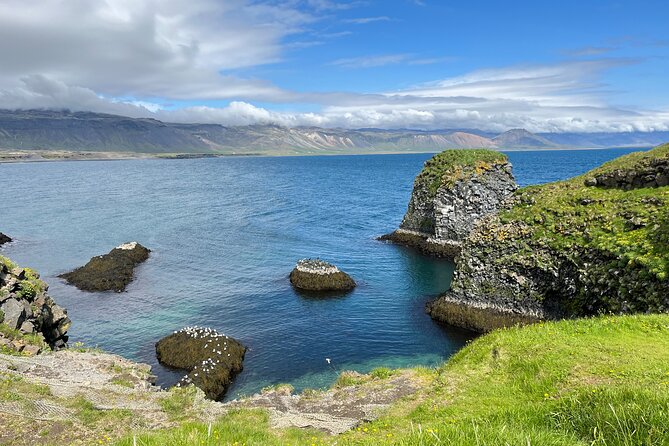
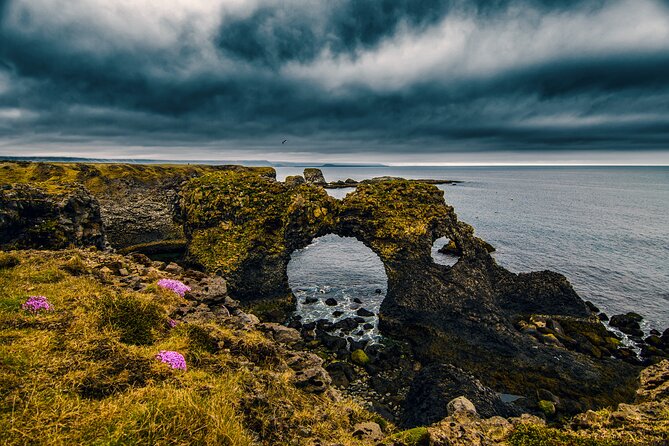
Now you move to the Arnarstapi and Hellnar coast area. Expect basalt rock formations, spectacular cliffs, and a coastal walk that’s more interesting than it sounds on paper.
During the walk, you can look for basalt columns, arches, grottoes, and canyons. This is the kind of place where the scenery keeps changing every few minutes. One minute it’s a cliff face, then a natural arch, then a hidden-looking inlet.
Seabirds are part of the experience too. The area is a known spot for Arctic terns, so keep an eye on the air as well as the rocks.
The walk ends at the statue of Bardur, half troll and half man. According to sagas, he chose this place to found his home. It’s a quirky touch, but it helps anchor the geology in storytelling.
One consideration: it’s a hike along the coast, and the peninsula is windy. Even if the route is short (about 30 minutes of walking time), you’ll want to be comfortable moving on uneven ground. If weather turns, your guide will still aim to keep the walk sensible.
Djúpalónssandur black-sand beach: shipwreck stones and a very human lesson
Djúpálónssandur is another black-sand beach stop. This one has a shipwreck background from 1948 and four smooth stones at the entrance to the beach.
Those stones weren’t just for show. They were used to measure the strength of sailors working these coasts. Wages were determined accordingly. That’s a grim-but-interesting detail because it turns a dramatic beach into something practical and human.
The sand, rocks, and ocean texture make the place feel raw and real. It’s not themed or polished. It’s coast life.
This stop is also about 30 minutes, so it fits well between bigger viewpoint moments like Kirkjufell. It’s long enough to slow down and take photos, but short enough that you still have energy for the later stops.
Kirkjufell and the orca-and-seal shore: the photo mountain plus real wildlife country
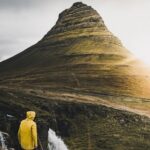
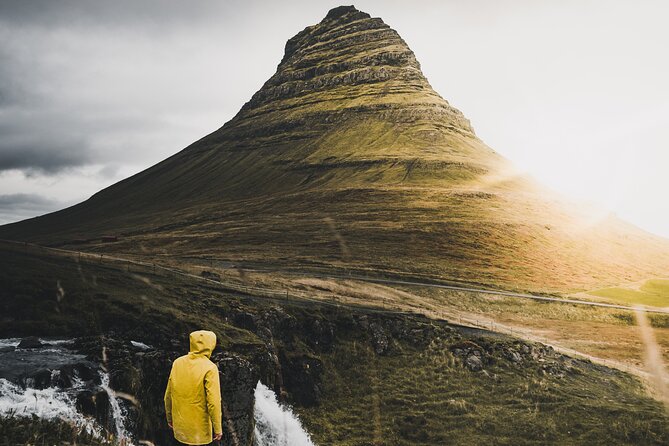
Kirkjufell is next, and yes, it’s one of the most photographed mountains in Iceland. It’s surrounded by streams and small waterfalls, and it’s often associated with Arrowhead from Game of Thrones.
You’ll also pass fishing villages Gründarfjörður and Ólafsvík. This stretch is described as one of the best in the country to spot orcas from shore, along with seals.
So you’re not only chasing a mountain silhouette. You’re scanning a coastline that can deliver wildlife moments. That’s a big deal on a day trip because it adds unpredictability in a good way. If you get a clear view and calm enough sea, the odds improve.
This is still just about a 30-minute stop, so don’t expect an extended wildlife-watching session. Instead, treat it like your chance to scan carefully: look out over the water, and if you see movement, adjust your spotting.
If weather is cloudy, you may not get the crisp “Kirkjufell postcard” look. But the mountain remains the mountain, and the surrounding streams add plenty of texture even when the light isn’t perfect.
Selvallafoss to finish: sheep waterfall legends and the view across Selvallavatn
You close the day with Selvallafoss, also called Sheep Waterfall. It’s known because sheep often use the area as shelter.
From here, you get views of Selvallavatn lake and the massive lava field across it. The combination matters: you’re not only looking at a single waterfall. You’re looking at a whole volcanic basin system, with the water and rock playing together.
Local legends and folk stories are part of this finish. That’s a smart ending choice because you’ll likely be a bit tired by then. A story-based stop gives your brain something new even if your feet are ready for a break.
This final segment is about 30 minutes, and then the rest of the time is travel back.
Guides make the day: small touches that show up across different names
What comes through strongly is that the guides shape the day beyond the route map. On one run, Devin/Kevin/David is mentioned for prompt pickup, strong English, a great playlist, and tailoring stops for weather and lighting, plus bathroom timing. On other runs, guides like Halldór and Monica are praised for fun energy with comedy, music, and Icelandic cultural knowledge. Óscar and Leroy are noted for sharing detailed information and keeping things lively even when the weather was cloudy. Martin is also mentioned for boosting the experience with passion for Icelandic culture and nature.
Even without knowing which guide you’ll get, that pattern helps you understand the style of the day: it’s guided, not just escorted. A good guide matters most on Iceland days, because weather is the real boss.
If you want a smooth day, ask questions during the ride. You’ll get better stories when you’re engaged, and the stops are short enough that you’ll want your questions answered while you’re still in the area.
Price and value: what $220.91 buys you on a 12-hour Snæfellsnes loop
At $220.91 per person for a roughly 12-hour day, you’re paying for time, transportation, and guidance. This isn’t a budget hike. But there are clear reasons it can still feel fair.
First, the group size is capped at 19. That keeps costs lower than many private tours while maintaining a more personal feel than mega-coach trips.
Second, pickup is offered, and you get WiFi on the minibus. That’s comfort on a long day, and comfort matters in Iceland.
Third, the tour includes a farm lunch at Lýsuhóll, described as a homemade meal, plus a stable visit to see Icelandic horses. Food and an activity stop like that can easily eat up your budget if you have to do it on your own.
Fourth, many stops are listed as admission ticket free. That doesn’t mean you won’t spend money on snacks or warm drinks, but it reduces the “surprise fees” that can pop up on day trips.
Finally, this route hits a lot of distinct places: Ytri Tunga seals, Buðir black church, basalt cliff walks, a black-sand beach with shipwreck stones, Kirkjufell, and Selvallafoss. You don’t have to rent a car for a full day to stitch those together.
The booking timeline is also practical: it’s often booked about 60 days in advance on average. If you’re traveling in peak season, that’s a hint to book early so you’re not hunting for last-minute availability.
Who should book this Snæfellsnes day tour?
This is a strong fit if you want:
- A one-day taste of Snæfellsnes without planning drives and stop times yourself
- A Spanish-language experience with guides who explain places clearly
- A mix of wildlife (seals), farm life (horses and lunch), and coastal geology
- Comfort upgrades for a long day (pickup and WiFi)
It’s also a good choice for people who don’t want to drive on their own. Iceland roads outside Reykjavík can be manageable, but doing it in a single day with multiple stops is still work.
If you hate short stop windows, this might feel too “busy.” The time per stop is built to keep the day flowing, so you’ll be walking and scanning rather than camping at each viewpoint.
Should you book this Snæfellsnes minibus tour with farm lunch?
Yes, with one condition: treat it as a weather-aware day. If you get decent conditions, the route gives you a lot of variety that you can’t easily assemble quickly on your own. The combination of a real lunch at Lýsuhóll, horses, and the coastal walk at Arnarstapi–Hellnar is the kind of mix that makes a day trip feel complete.
I’d book it if you want value from the price you pay: small-group transport, guided storytelling, mostly free stop access, and a meal that saves you money and time later.
FAQ
How long is the Snæfellsnes Peninsula tour from Reykjavík?
It’s listed at about 12 hours (approx.).
What does the tour cost?
The price is $220.91 per person.
Is pickup from Reykjavík included?
Pickup is offered.
How many people are on the minibus?
The tour has a maximum of 19 travelers.
Is WiFi available during the trip?
Yes. The vehicles are described as having WiFi.
Is lunch included, and do you see Icelandic horses?
Yes. You’ll taste a homemade meal at the Lýsuhóll farm and visit the stables to meet Icelandic horses.
Are there admission tickets required for the main stops?
The listed stops are marked as admission ticket free.
Is the tour in Spanish?
The tour is described as Snæfellsnes in Spanish.
What happens if the weather is poor or you need to cancel?
The experience requires good weather. If it’s canceled due to poor weather, you’ll be offered a different date or a full refund. For cancellation, you can cancel up to 24 hours in advance for a full refund.