REVIEW · SRI LANKA
Udawalawe: Farm to Table Cooking & Authe: Village Experience
Book on GetYourGuide →Operated by OwinRich Hospitality · Bookable on GetYourGuide
A Sri Lankan village day can fit into two hours. This one blends farm-to-table cooking with hands-on culture, starting with a cinnamon drink and moving into an ancient gem mine, then ending with a meal you helped make in a traditional kitchen.
What I really like here is how practical it feels: you’ll pick vegetables from the garden and cook using old-school methods with local women, not just watch from the sidelines. I also like the spice focus, from cinnamon prep to the flavor work that happens in the kitchen.
One drawback to consider: plan for extra cost if you want drinks during the meal. One earlier guest noted beverages were charged separately at a much higher price than in nearby shops, so it’s smart to ask first.
In This Review
- Key highlights you’ll feel in your day
- Two Hours in Udawalawe: Farm-to-Table Meets Village Life
- Cinnamon Tea Welcome (and How the Program Starts)
- The Ancient Gem Mine Stop: A Side of Sri Lanka Most People Miss
- Cinnamon Peeling Demonstration: Why This Spice Matters
- Pick Vegetables from the Garden: Where the Meal Starts
- Cook in a Traditional Village Kitchen with Local Women
- The Local Feast: Coconut Sambal and Dahl That Actually Deliver
- Join the Melas: Music, Crafts, and Local Snacks
- Price and Value: Is $30 Fair for This Much Included?
- Timing, Walking, and What to Wear (So You Enjoy It More)
- Who Should Book This Udawalawe Village Experience?
- Should You Book It?
- FAQ
- How long is the experience?
- Where is the meeting point?
- What language will the guide speak?
- What activities are included besides the cooking class?
- Is the meal included?
- Is it wheelchair accessible?
Key highlights you’ll feel in your day
- Cinnamon tea welcome that sets the right mood before you start walking
- Ancient gem mine visit tied to how miners worked and how stones were found
- Cinnamon peeling demonstration with skilled artisans and the spice behind Sri Lanka’s economy
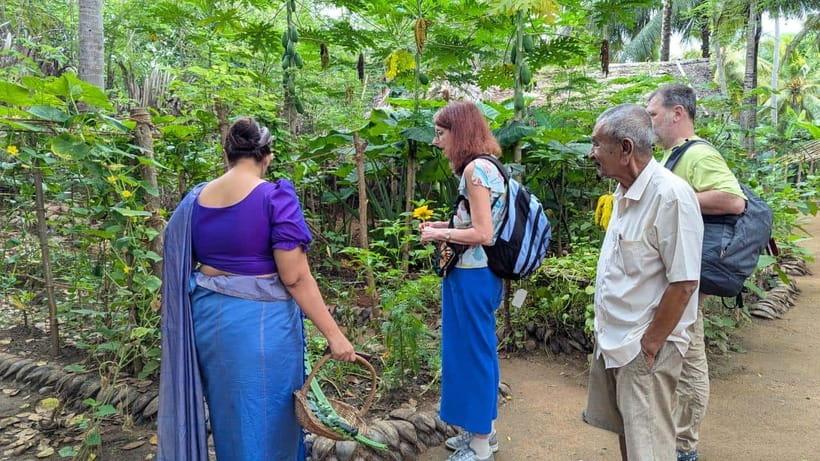
- Pick-your-own organic vegetables straight from the garden before the cooking begins
- Hands-on village cooking with local women over traditional methods and techniques
- Local melas at the end, adding music, crafts, and local snacks to the experience
Two Hours in Udawalawe: Farm-to-Table Meets Village Life
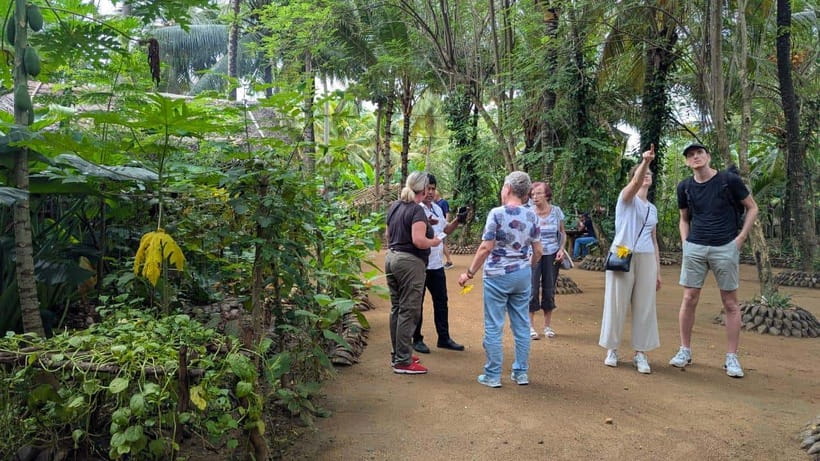
Udawalawe is known for wildlife nearby, but this experience is all about village routines—the stuff that happens every day when nobody’s trying to impress you. The tone is old-school: agriculture, spices, and community meals, wrapped into a tight 2-hour visit.
The best part is that it doesn’t try to be everything at once. You’re moving through a few clear stages—welcome, gem mine, cinnamon, vegetables, cooking, food, and melas—so you always know what comes next. With the walk time listed as about 90 minutes, it’s active enough to feel like a real outing, but not so long that you’ll lose energy.
It’s also positioned just 1.2 km from the Udawalawe Elephant Orphanage, which makes it easy to pair with a full day in the area. If you’re already going for elephants in the morning or afternoon, this can become the food-and-culture anchor.
Cinnamon Tea Welcome (and How the Program Starts)
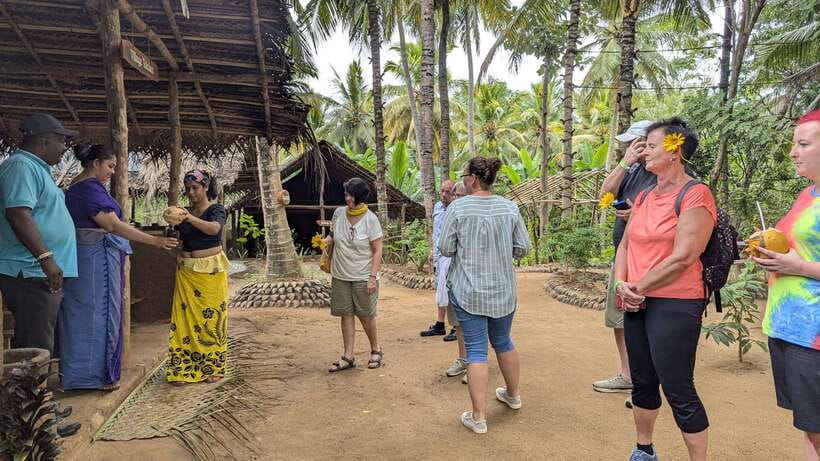
Most people start hungry, and that’s exactly why the first stop matters. You begin with a cinnamon tea welcome drink, designed to get you comfortable before the walking and demos.
The details for the welcome include “Refreshing King Coconut” as well, so you may see coconut in the welcome flow depending on how the day is run. Either way, the idea is the same: give you something Sri Lankan, aromatic, and cooling before you shift into village mode.
Tip: if you’re sensitive to spice, cinnamon is aromatic rather than fiery, but Sri Lankan cooking can bring heat later. Tell your guide (English and Singhalese are available) if you want your dishes mild.
The Ancient Gem Mine Stop: A Side of Sri Lanka Most People Miss
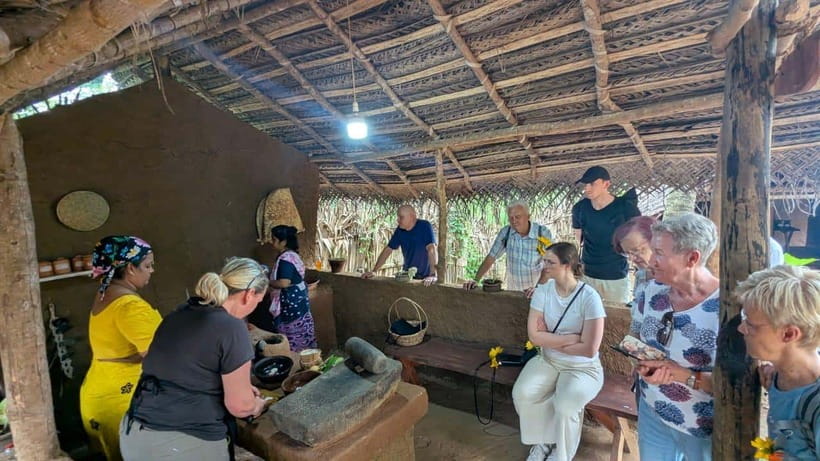
After the welcome, you head to an ancient gem mine. This isn’t a “look at rocks and go” stop. You’ll learn about the processes involved in uncovering gemstones and see how miners of the past worked.
Even if you don’t care about gemstones, this part teaches you something practical: how Sri Lanka’s natural resources shaped daily labor. Gem mining is technical work, and the point of the visit is understanding the steps and methods, not pretending it’s glamorous.
Practical note: gem-related sites can be uneven and dusty, so wear shoes you trust. It’s a walking experience overall, and the program is marked as not suitable for wheelchair users.
Cinnamon Peeling Demonstration: Why This Spice Matters
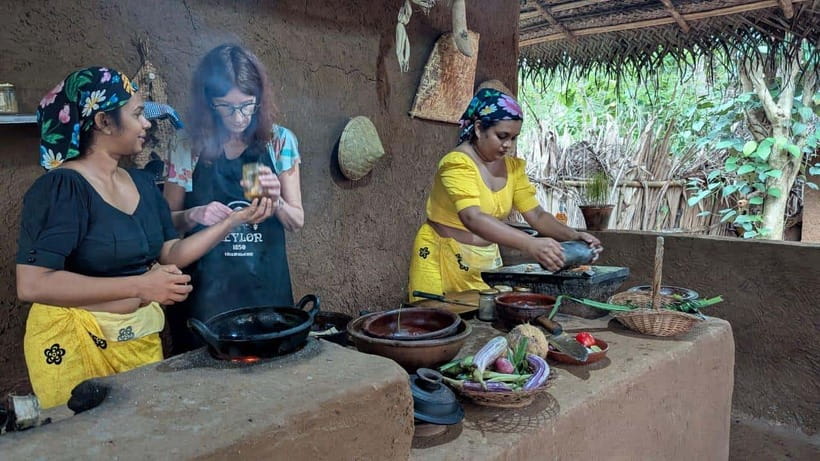
Then comes cinnamon—because you can’t talk village life without talking spices. You’ll watch a cinnamon peeling demonstration by skilled artisans, learning what goes into preparing cinnamon sticks.
This is one of those moments where the “why” becomes obvious. Cinnamon isn’t just a flavoring you sprinkle on dessert. It’s part of trade, craft, and seasonal work. Watching the peeling process gives you a new respect for the spice when it shows up later in your meal.
If you like souvenirs, this is also the time to pay attention. You’ll usually understand the difference between whole, properly prepared sticks and ground cinnamon that’s already lost some character.
Pick Vegetables from the Garden: Where the Meal Starts
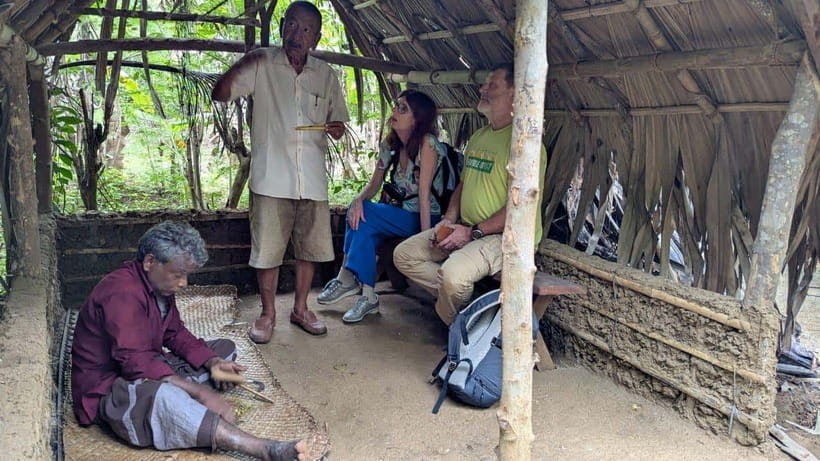
Next you’ll pluck vegetables from an organic garden. This is a simple idea that makes a big difference to your day. When you pick the ingredients yourself, the cooking class stops being a performance and becomes a collaboration.
You’ll join the workflow the way villagers do it: hands first, then lessons. The garden visit also helps you see what “farm to table” means in practice in this part of Sri Lanka—fresh produce, minimal fuss, and a kitchen that’s set up to use what’s available.
Bring a basic mindset: pick without being too precious. This is about harvesting and moving forward, not collecting perfect-looking samples.
Cook in a Traditional Village Kitchen with Local Women
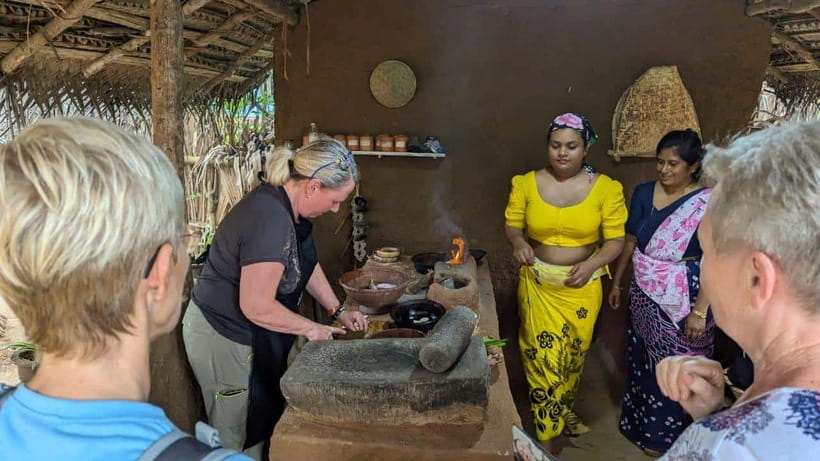
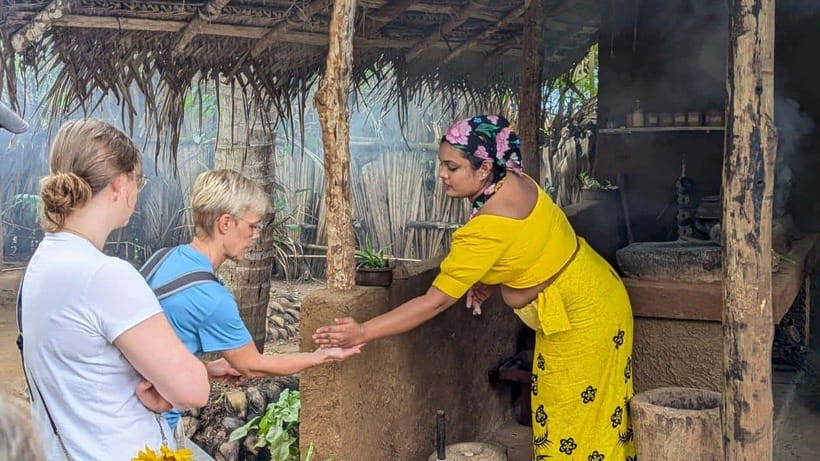
The heart of the experience is the cooking class. You’ll cook in a traditional village kitchen with local women, using age-old recipes and techniques. This is hands-on, and it’s structured so you’re part of the process from spice prep to the final cooking.
You can expect classic kitchen tasks such as grinding spices and cooking over a fire. That open-flame element matters because it changes flavor. It’s not just “old-fashioned.” It’s how the dishes develop character.
One detail that stands out from earlier guests: the women running the class do a great job keeping you involved and explaining what you’re doing as you go. That’s important if you’re not a confident cook. You don’t need technique—you need guidance, and you’ll get it.
Also, the class is designed for a private group. That usually means less waiting, fewer awkward pauses, and more chance to ask questions without feeling rushed.
The Local Feast: Coconut Sambal and Dahl That Actually Deliver
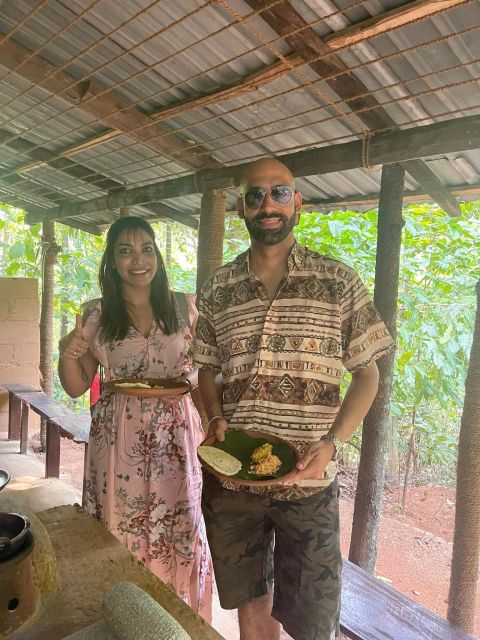
After the cooking, you sit down for the meal you helped prepare. This is communal eating in a setting that feels like real village hospitality, not restaurant formality.
The dishes you make will include items like coconut sambal and dahl—and previous participants specifically called out the sambal and dahl as standouts. That’s a good sign, because coconut sambal depends on balance: coconut richness, heat level, and acidity all have to click.
What to watch: the meal may not include drinks. One earlier guest said beverages were charged separately during the meal and priced much higher than at shops nearby, without clear prior notice. I’d treat that as a heads-up. If you want soda, juice, or anything bottled, ask the guide what’s included and what isn’t, and confirm the expected cost before you order.
If you’re trying to keep the day “value-smart,” it’s perfectly fine to drink the included welcome beverage and keep your water plan simple for the meal.
Join the Melas: Music, Crafts, and Local Snacks
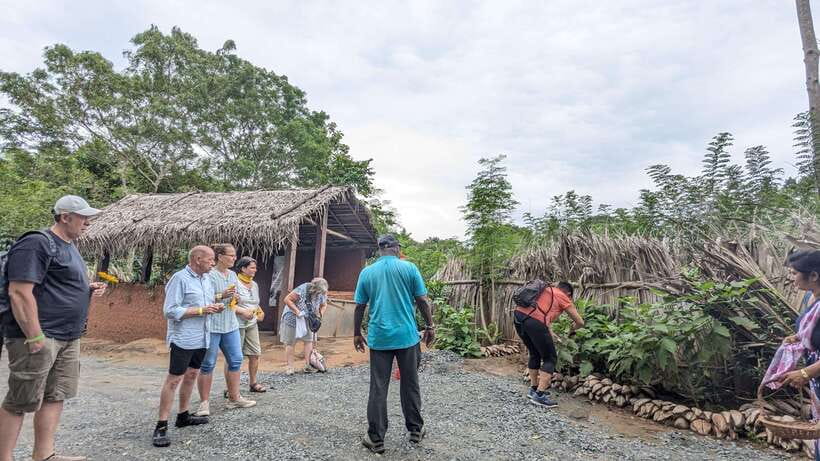
To close the loop, you join local melas—traditional fairs with music, dance, crafts, and local delicacies. This is the cultural layer that turns the day from “cooking workshop” into “village day.”
The mela part is especially useful if you like variety. You’ll get your hands dirty in the kitchen, then shift to watching and sampling what’s happening around you. It’s also a social setting, where you can see how locals spend time outside routine chores.
Even if you’re not a big festival person, melas are good for context. You’ll understand the atmosphere that makes food and cooking part of everyday life, not just a class activity.
Price and Value: Is $30 Fair for This Much Included?
At $30 per person for a 2-hour experience, you’re not just paying for a cooking class. You’re paying for a full bundle:
- a welcome drink
- an ancient gem mine visit
- a cinnamon peeling demonstration
- vegetable picking from an organic garden
- a hands-on cooking class with local women
- the meal made by you
- participation in local melas with crafts and local delicacies
That matters because many “cooking experiences” cost more but skip the wider cultural pieces. Here, the price is tied to multiple activities, and the meal is a result of your labor.
It’s not a luxury day. It’s not trying to be. It’s value in experience design: you do work, you learn processes, and you eat what you made. For the Udawalawe area, where you may spend a lot of the day around wildlife, this offers something different without demanding a whole extra day.
Where cost can surprise you is drinks during the meal. That’s the one place where the advertised price can feel different in your final total. Ask upfront what’s included with your meal so you’re not guessing.
Timing, Walking, and What to Wear (So You Enjoy It More)
The tour is described as a full walking tour around 90 minutes inside a total 2-hour block. That means you should plan your energy accordingly. You’ll be moving between points and spending time in the garden and kitchen areas.
Wear closed-toe shoes with grip. You’ll likely be on uneven ground at least a few times, and you don’t want to worry about slipping while you’re learning to cook or handle ingredients.
If you’re going in hot weather, bring a light layer and a hat. You’ll be outside for portions of the experience, and cinnamon tea won’t replace hydration.
If you’re planning photography, this is a good day for it, especially during the garden picking and cinnamon prep. Just keep in mind that the kitchen and cooking portions are intimate spaces where people are working and teaching.
Who Should Book This Udawalawe Village Experience?
This is a strong match if you want food that has a story attached to it—spices, village methods, and community meals. It’s also ideal if you like interactive experiences where you do more than watch.
Book it if:
- you’re in the Udawalawe area and want something beyond elephants
- you enjoy cooking classes that teach real technique, not just recipes
- you want cultural context through daily life: garden work, spice prep, communal dining
- you’re traveling with someone who enjoys meeting local hosts and learning how things are made
It may be less of a match if:
- you need wheelchair access (the tour is noted as not suitable for wheelchair users)
- you dislike walking and outdoor time, even though it’s not long
Because it’s a private group, couples and small groups often find it feels more personal and relaxed.
Should You Book It?
I’d book this if your goal is a true village-style day where the food comes from hands-on effort. The best reasons are simple: you pick vegetables, you cook with local women, and you get a meal that reflects that work—plus you add cinnamon and an ancient gem mine to broaden the story.
Just go in with two smart expectations. First, it’s active enough to need comfortable shoes. Second, confirm what drinks cost during the meal so the final tab matches your plan.
If you want a hands-on cultural stop that doesn’t feel like a checklist, this is one of the better value moves near Udawalawe.
FAQ
How long is the experience?
The tour runs for about 2 hours total, with walking time listed as around 90 minutes.
Where is the meeting point?
The meeting point is 1.2 km from the Udawalawe Elephant Orphanage.
What language will the guide speak?
The live tour guide speaks English and Singhalese.
What activities are included besides the cooking class?
Besides the cooking class, you’ll have a cinnamon tea welcome, an ancient gem mine visit, a cinnamon peeling demonstration, vegetable picking from an organic garden, and participation in local melas.
Is the meal included?
Yes. You’ll eat a delicious meal featuring the dishes prepared during the cooking class.
Is it wheelchair accessible?
No. The activity is not suitable for wheelchair users.