REVIEW · TRAKAI
Vilnius-Trakai: Private Alpaca Farm Tour
Book on GetYourGuide →Operated by Alpaca Family Park · Bookable on GetYourGuide
A shy animal meeting is a great way to reset. This private Vilnius–Trakai alpaca farm tour brings you up close with calm, curious alpacas in the countryside outside Vilnius, plus a friendly guide who explains what makes them tick. I love how interactive it feels, especially hand-feeding.
The second big win is the small, personalized vibe—when you’re with an owner and a guide, you can actually ask questions and get answers. One thing to consider: alpacas aren’t allowed outdoors in rainy weather, so plan for possible changes if the forecast looks messy.
In This Review
- Key highlights to look forward to
- A private alpaca visit that feels more personal (and calmer)
- From Vilnius to Palaimos g. 13A: what the 2-hour plan really means
- Your hands-on moment: feeding alpacas and getting their attention
- What your guide teaches: Peru-to-Lithuania, plus alpaca quirks
- Photos, weather, and farm-smart packing tips
- Adding Trakai Castle or Užutrakis Manor on the return route
- Value check: is $47 per person a good deal?
- Who should book this (and who should skip it)
- Should you book the Vilnius–Trakai Private Alpaca Farm Tour?
- FAQ
- How long is the Vilnius–Trakai private alpaca farm tour?
- Where is the pickup point in Vilnius?
- How long is the guided farm visit at the alpaca park?
- What’s included in the tour?
- Are Trakai Castle or Užutrakis Manor included?
- What languages are available for the live tour guide?
- What should I bring to the alpaca farm?
- Can I go if it’s rainy?
- Who is this tour not suitable for?
Key highlights to look forward to
- Hand-feeding alpacas up close, with food included
- A private-group feel that makes questions and photos easy
- An owner-led visit lasting about 30–45 minutes
- Quirky alpaca personality facts shared by your live guide
- Peru-to-Lithuania background to connect the dots on alpacas
A private alpaca visit that feels more personal (and calmer)
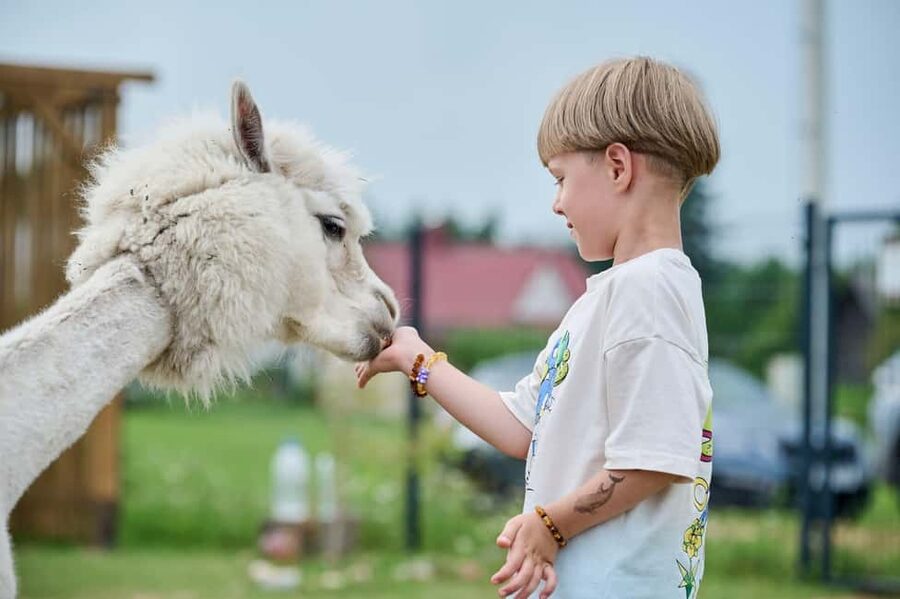
If you’ve done zoo-style animal tours before, you know how quickly they can turn into a checklist. This one is different. You’re not just watching from a distance. You’re in the area where the alpacas live, guided step-by-step so you know how to approach, what to do with the food, and how to get great photos without stressing the animals.
I also like the way the tour is built around interaction rather than rushing. Alpacas are naturally curious, but they still have their own pace. With a private setup and a guide in your language (English, Russian, or Turkish), you spend your time actually connecting with the herd instead of waiting behind crowds.
One more quiet bonus: you get that countryside calm outside Vilnius—forest views, open air, and a break from the city rhythm. It’s the kind of outing that works even if you’re not a hardcore animal person. You’ll still leave smiling.
You can also read our reviews of more tours and experiences in Trakai.
From Vilnius to Palaimos g. 13A: what the 2-hour plan really means
The tour runs for about 2 hours total, starting with pickup in Vilnius. You’ll go to the alpaca farm area at Palaimos g. 13A, where the main guided visit lasts around 1 hour.
Here’s how that time typically breaks down in practice:
- You’re collected from your Vilnius pickup location and transferred to the farm.
- At Palaimos g. 13A, you join the guided portion (about 1 hour) that focuses on meeting the alpacas and learning their background.
- Then you head back to Vilnius for drop-off.
That timing matters because it keeps things easy for a first outdoor experience. You’re not committing half a day to transportation and logistics. It’s also long enough to make feeding memorable (not just a quick photo moment).
If you want to time it with other sights: you can request a stop on the way back to Vilnius for Trakai Castle or Užutrakis Manor (for an additional fee). If that’s in your plan, you’ll want to mention it in advance so they can work it into the return route.
Your hands-on moment: feeding alpacas and getting their attention
This is the part most people remember. You’ll feed the alpacas by hand using food provided as part of the tour. The goal isn’t to treat this like a petting zoo frenzy—it’s a gentle, guided interaction where you learn how to approach and how to behave around the herd.
What makes this visit especially satisfying is the way the guide helps you “read” the alpacas. Alpacas have distinct personalities. Some come closer quickly. Others take time. Your guide explains what you might notice—small behavior cues that make the animals feel less like props and more like individuals with preferences.
And yes, you’ll get photo opportunities. With a private guide helping you, you’re not stuck trying to grab pictures at awkward angles while the group flows past. It’s more relaxed, which usually means better photos and fewer hassled moments.
Also, the alpacas are clearly well cared for based on guest feedback—people specifically called out their healthy look and friendly temperament. That matters because it changes the whole tone of the experience. When animals seem comfortable and cared for, your interaction feels respectful instead of rushed.
Practical tip: comfortable shoes are a must. You’ll be moving around in a farm setting, and you’ll want your feet to feel stable while you’re focused on feeding and photos.
What your guide teaches: Peru-to-Lithuania, plus alpaca quirks
One of the most useful parts of the tour is the short education piece that gives context. You’ll get an introduction about the alpacas’ journey from Peru to Lithuania. That’s a simple detail on paper, but it helps you understand why alpacas ended up here and what connects them across continents.
The guide also brings the alpacas to life with facts and stories that don’t feel like generic animal trivia. Multiple reviews praised the guide’s explanations and the fun way they shared information throughout the trip. Names that came up include Arthur and Artur, both described as friendly, polite, and strong at teaching.
What I think you’ll appreciate is how the guide blends information with the moment you’re living. So instead of hearing facts and then immediately forgetting them, the facts attach to what you’re seeing—fur, body language, feeding behavior, and overall herd dynamics.
If you’re going with kids, this teaching component is a big plus. It turns an animal encounter into a learning experience that still feels like play. Even if you’re an adult, it’s the difference between I saw alpacas and now I understand why alpacas act the way they do.
Photos, weather, and farm-smart packing tips
This is an outdoor farm visit, so your packing can make or break comfort.
What to bring (don’t skip these):
- Comfortable shoes
- Hat
- Change of clothes
- Insect repellent
- Biodegradable insect repellent (also recommended)
The repellent detail is worth noting. Farm tours are where bugs can appear when it’s warm. Bring repellent you’re comfortable applying, and if you have the biodegradable option, that’s aligned with the tour’s guidance.
Then there’s the weather rule: alpacas are not allowed to go out in rainy conditions. That means your experience may depend on the day’s weather. You shouldn’t plan this as a guaranteed outdoor show no matter what the forecast says.
If you’re flexible and you like outdoor experiences, this usually works out fine. But if you’re traveling on tight timing and the weather looks questionable, build in a little buffer (or at least be mentally ready that the exact outdoor feeding moment could be affected).
Adding Trakai Castle or Užutrakis Manor on the return route
One of the nicest things here is the option to combine alpacas with a big-name Lithuanian stop—without turning your day into a juggling act.
If you tell the provider in advance, they can visit Trakai Castle or Užutrakis Manor during the return to Vilnius (for an additional fee). This is a smart way to stretch a short, two-hour experience into a more complete sightseeing moment.
Just keep expectations grounded: this is still a private alpaca tour at the core. The castle or manor is an add-on on the way back, so it’s best for people who want a taste rather than a deep, full-day exploration of those sites.
Value check: is $47 per person a good deal?
At about $47 per person for a 2-hour private tour, the value depends on what you care about: hands-on animal time, personalized attention, and a guided explanation that adds meaning.
Here’s why it can feel like good value:
- Food is included for the alpaca feeding.
- You get pickup and drop-off in Vilnius, which saves time and hassle.
- The experience includes a guided farm visit plus interaction with the owner for 30–45 minutes.
- A live guide in English, Russian, or Turkish helps you get more out of the experience than just standing near animals.
Where the price makes sense most:
- Families who want a safe, guided animal interaction
- Animal lovers who hate rushed, crowded settings
- People who like short outings that fit into a travel schedule
Where it might feel less perfect:
- If you only want a quick look and don’t care about feeding or explanations, you could potentially find other animal viewing options.
- If you’re traveling in heavy rain season and you can’t be flexible, the weather rule (alpacas not outdoors in rain) may reduce the certainty of the experience.
But overall, for many visitors, the combination of private guiding, feeding, and the Peru-to-Lithuania context is the kind of practical, local value that justifies the cost.
Who should book this (and who should skip it)
This is best for people who enjoy calm outdoor time and don’t mind a short rural transfer. It’s also a strong choice for families and animal lovers because the interaction is guided and the overall pacing is relaxed.
Based on the tour’s stated limits, it’s not suitable for:
- Wheelchair users
- Babies under 1 year
- People over 95 years
If you’re fit and can handle walking in a farm environment with comfortable shoes, you’re likely to enjoy it. If you’re sensitive to insects, bring repellent and plan to reapply as needed.
And if you’re the kind of traveler who likes small-group attention and conversation, the private group format is a big part of the appeal. You won’t feel like you’re competing for time with the guide.
Should you book the Vilnius–Trakai Private Alpaca Farm Tour?
I’d book it if you want an animal experience that’s friendly, guided, and hands-on—without turning into a crowded, noisy stop. The strongest reasons to go are the hand-feeding moment, the private-group attention, and the guide’s ability to turn alpacas into something you actually understand (not just see).
Book with extra caution if rain is a major risk on your dates. Since alpacas can’t go out in rainy conditions, you’ll want to stay flexible and ready for possible adjustments.
If you like short tours with meaningful interactions, this is a solid pick. Plan your day around it, pack your basics, and you’ll likely come away with a real connection to the animals—not just a few photos.
FAQ
How long is the Vilnius–Trakai private alpaca farm tour?
The tour lasts about 2 hours total.
Where is the pickup point in Vilnius?
Pickup is from your location in Vilnius. The farm visit takes place at Palaimos g. 13A.
How long is the guided farm visit at the alpaca park?
The guided portion is about 1 hour, including time with the alpaca farm owner for roughly 30–45 minutes.
What’s included in the tour?
It includes pickup and drop-off in Vilnius, an introduction about the alpacas’ journey from Peru to Lithuania, an excursion with the alpaca farm owner, alpaca feeding (food included), and pictures with the alpacas.
Are Trakai Castle or Užutrakis Manor included?
They are not included in the base tour. If you want them, you need to ask in advance, and the visit can be added during the return to Vilnius for an additional fee.
What languages are available for the live tour guide?
The live guide is available in English, Russian, and Turkish.
What should I bring to the alpaca farm?
Bring comfortable shoes, a hat, change of clothes, and insect repellent. Biodegradable insect repellent is also recommended.
Can I go if it’s rainy?
Alpacas are not allowed to go out in rainy conditions, so rain can affect the farm outdoor part of the experience.
Who is this tour not suitable for?
The tour is not suitable for wheelchair users, babies under 1 year, and people over 95 years.