REVIEW · ACCRA
Boti Falls, Umbrella Rock, Aburi Gardens & Cocoa Farm Day Tour
Book on Viator →Operated by Expedition-Go Tours Ltd · Bookable on Viator
This day trip starts with thunder and ends with chocolate dreams. I love the mix of Boti Falls scenery and the hands-on cocoa stop. I also like that you get guided context at several places, not just drive-by photos. One thing to consider: the weather and dry-season water levels can change what you see at the falls, so don’t plan on waterfalls being full-force every time.
If you’re in Accra and want a taste of eastern Ghana without juggling tickets or routes, this is a solid way to do it. You’ll ride in an air-conditioned vehicle, get bottled water, and spend your time on specific sites with admission taken care of. The itinerary has enough movement to feel like an outing, but it’s still a day trip you can handle with moderate fitness.
The big payoff is variety. You get forested waterfalls, a climb with a standout view, manicured gardens with serious history, and Ghana’s cocoa story in plain, edible form.
In This Review
- Key things I’d watch for
- A day that strings together Ghana’s nature, a climb, and cocoa
- Getting there in comfort: pickup, vehicle setup, and pace
- Stop 1: Boti Falls, twin falls in the Yilo Krobo District
- Stop 2: Umbrella Rock climb and the three-headed palm moment
- Stop 3: Aburi Botanical Gardens—64.8 hectares with a guided plant lesson
- Stop 4: Tetteh Quarshie Cocoa Farm—the process and the taste
- Price and value: what $150 covers (and what it doesn’t)
- What to pack and how to stay comfortable in the sun
- Who this tour is best for (and who should rethink it)
- My practical recommendation: should you book?
- FAQ
- How long is the Boti Falls, Umbrella Rock, Aburi Gardens & Cocoa Farm day tour?
- What’s included in the tour price?
- Is lunch included?
- What fitness level do I need?
- What should I expect at Boti Falls in dry season?
- Are pick-ups available from Accra?
Key things I’d watch for
- Twin falls at Boti: female and male waterfalls, with local folklore about a rainbow when they meet
- A real climb at Umbrella Rock: you can go up, and the reward is a striking palm feature
- Aburi’s garden guide: explanations on tree species and how plants are used
- Cocoa before chocolate: learn the process, then taste ripe cocoa
- Heat can be real: plan for midday sun if you’re hiking in the upper parts
- Water levels vary: dry season can mean less flow at Boti Falls
A day that strings together Ghana’s nature, a climb, and cocoa
This tour is built for people who want more than one highlight. You’re not just seeing one thing well—you’re bouncing between forest, rock, gardens, and farming. That blend matters, because Ghana’s beauty doesn’t come in a single flavor. Here, it’s water in motion, plants with names and uses, and cocoa as a food you can actually taste.
The structure is simple: you start with Boti Falls, move to Umbrella Rock, then shift into calmer territory at Aburi Botanical Gardens and the Tetteh Quarshie Cocoa Farm. Depending on timing and conditions, the full outing can run about 3 to 9 hours. That’s wide, but it usually means the operator flexes the pace based on site access and weather.
Also, you’re not doing this on your own. Pickup is offered, and you’re transported in an air-conditioned vehicle with bottled water and onboard WiFi. For a day trip that involves stairs, trails, and outdoor time, that support is genuinely useful.
You can also read our reviews of more tours and experiences in Accra.
Getting there in comfort: pickup, vehicle setup, and pace
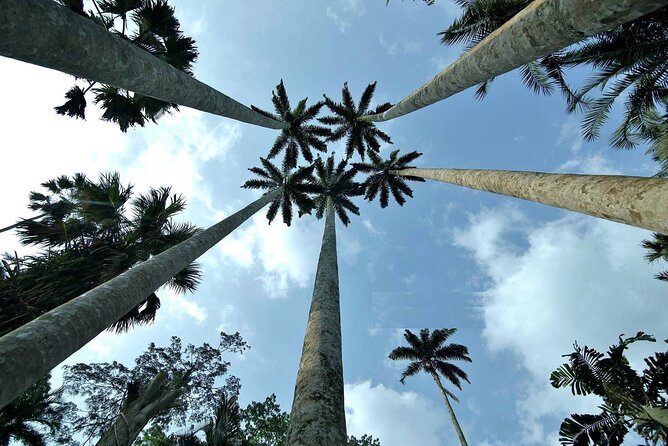
The tour includes an air-conditioned vehicle, WiFi onboard, and bottled water. Those sound like small perks, but they matter on days like this—especially if you hit traffic around Accra or you’re dealing with heat.
You’ll also be in a group setting. The tour caps at 100 travelers, and you’ll see group discounts mentioned as part of the experience. In practice, that usually means you won’t be trapped in a tiny van for hours, but you also won’t feel like you’re alone trying to keep up.
Timing is the only variable. The attractions are scheduled in a way that lets you enjoy each stop without rushing through everything. But if conditions are off—hot sun, slower entry, or lower rainfall—your day may stretch or shift. One review note specifically flagged that the guide kept things sensible and adjusted when needed, which is exactly what you want from a local team.
Stop 1: Boti Falls, twin falls in the Yilo Krobo District
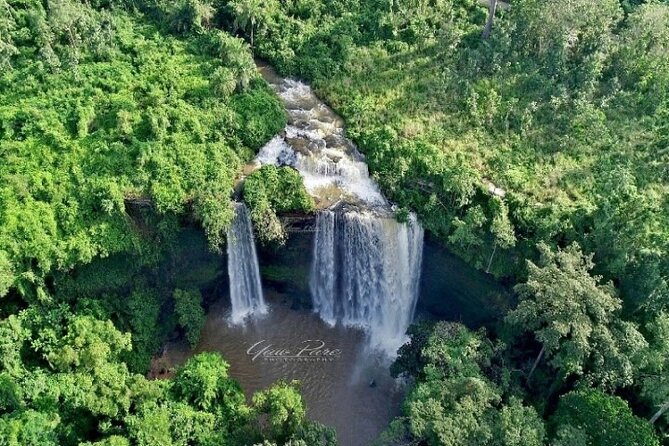
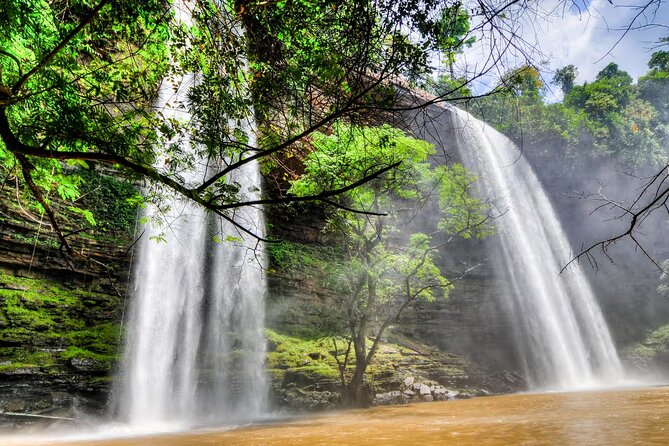
Boti Falls is the emotional opener of the day. It’s described as a pair of waterfalls—twin falls—found in Ghana’s Yilo Krobo District in the eastern region. The idea of two falls with different identities (female and male) is part of the local folklore. Another layer of that folklore says when the waters combine, a rainbow appears. Even if the rainbow is more legend than guarantee, the story adds meaning to what you see.
You’ll connect with the waterfalls through physical activity. The tour frames it around exploring the upper and lower streams of the River Pawnpawn in the forest. That forest setting matters: you’re not looking at a waterfall from a paved walkway only. You’re moving through the area enough to feel like you’re part of the landscape.
Now the practical part. The tour includes admission at Boti Falls, but water levels aren’t something anyone can lock in. Dry-season conditions can mean less flow. One review mentioned arriving when there was no water at Boti Falls, with the guide giving a heads-up in advance. So your best move is mindset: expect a hike-and-water outing that can look different depending on rainfall.
If you want the most from Boti, go in ready to enjoy the forest, the sound, the rock edges, and the walk—even if the water isn’t roaring.
Stop 2: Umbrella Rock climb and the three-headed palm moment
Umbrella Rock lives up to its name. The rock has the appearance of an umbrella, and yes, it’s climbable. This is the stop that tends to feel most like an adventure, because it’s not just looking—you’re moving upward, step by step.
Beyond the rock is where the payoff sits. The overview notes that after the climb you can see a unique feature: a three-headed palm tree. That kind of detail is exactly why climbing matters here. You’re not doing it to check a box; you’re doing it for a specific view and a natural curiosity you won’t get from the road.
Two big considerations for this section:
- Physical effort: the tour asks for moderate physical fitness. If you’re comfortable with uphill walking and uneven ground, you’ll likely feel fine.
- Heat timing: one review called out hiking around midday in high heat as not ideal. Umbrella Rock is outdoors and sun exposure is unavoidable, so plan around that reality.
What I’d do: bring a hat, wear grippy shoes, and pace yourself. If the climb feels harder than expected, slow down early rather than pushing and burning out halfway.
Also, admission is included for this stop, so you’re not adding ticket friction to your day.
Stop 3: Aburi Botanical Gardens—64.8 hectares with a guided plant lesson
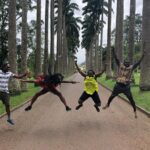
After the rock climb, Aburi Botanical Gardens are a nice shift. This is where your day slows down into walking, shade, and plant talk. The gardens cover 64.8 hectares in Ghana’s Eastern region, and they’re not a modern theme park. The site’s backstory is part of the experience.
The gardens were built by Governor William Bradford-Griffith and Dr. John Farrell Easmon, and they were officially inaugurated in March 1890. That matters because it explains why the space feels organized and intentional rather than random.
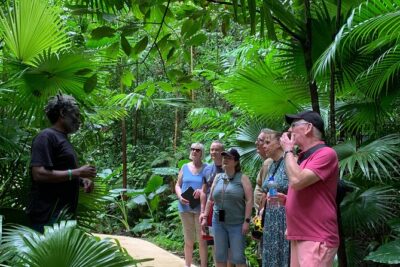
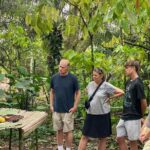
A guide takes you through the gardens and explains tree species and their use. That’s a key value point. Many garden visits are just “pretty plants, have fun.” Here, you get context—what the trees are, why they’re there, and how people use them. Even if you don’t love botany, you’ll probably appreciate how the guide turns the greenery into something understandable.
This stop is scheduled for about 2 hours. That’s usually enough time to enjoy the lawns and the mix of local and foreign trees and flora without feeling exhausted from constant moving.
If you want a quieter, less strenuous segment after Boti and Umbrella Rock, this is it.
Stop 4: Tetteh Quarshie Cocoa Farm—the process and the taste
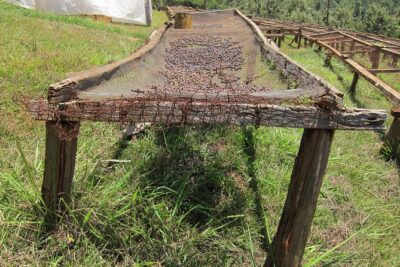
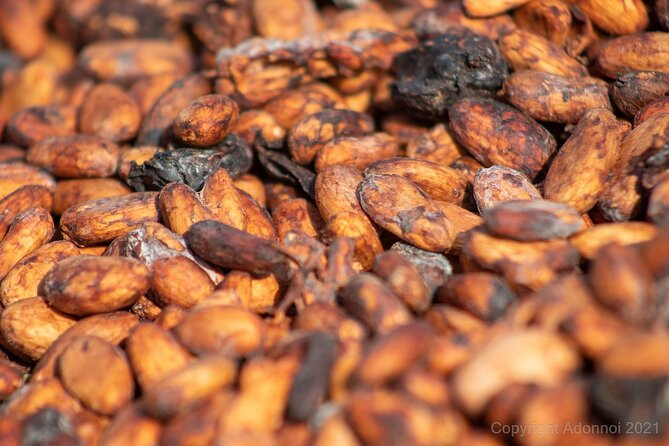
Cocoa is where the day becomes practical and memorable in a different way. You visit the site of Ghana’s first cocoa farm, then explore the processes of cocoa cultivation. This is not just a photo stop. You get the story of how cocoa goes from plant to product.
You also taste ripe cocoa before it becomes chocolate. That’s the kind of detail that makes a tour worth it. It turns cocoa from a vague “sweet thing” into an ingredient with a real flavor and texture.
One review added that cocoa made the trip feel even better—especially when conditions affected other plans. That’s a good sign for value: if you’re here to learn something and eat something, this stop delivers both.
This portion is short—about 1 hour—so it’s best enjoyed with an open mind. Think of it as an introduction you can build on later, whether you’re buying chocolate afterward or just curious about where it really comes from.
Price and value: what $150 covers (and what it doesn’t)
The price is $150 per person, with admissions included for Boti Waterfalls, Aburi Botanical Gardens, and Tetteh Quarshie Cocoa Farm. You also get pickup, an air-conditioned vehicle, onboard WiFi, and bottled water. Lunch isn’t included.
Is $150 “cheap”? In a vacuum, no. But for a day trip that combines multiple paid entries plus transport and guided time, it’s easier to justify. You’re paying for convenience and structure: less time figuring out routes, less time buying tickets, and fewer chances to waste half a day.
Where the value can shift is in conditions. If Boti Falls has low or no water because of seasonality, the emotional impact can be lower than expected. Still, the overall day can remain worthwhile because Umbrella Rock, Aburi’s guided garden walk, and the cocoa farm don’t depend on a waterfall volume you can’t control.
My takeaway: the price makes more sense if you’re the type who likes a full itinerary and wants guided explanations. If you only care about one stop, you might feel the cost is too high for what you personally want.
What to pack and how to stay comfortable in the sun
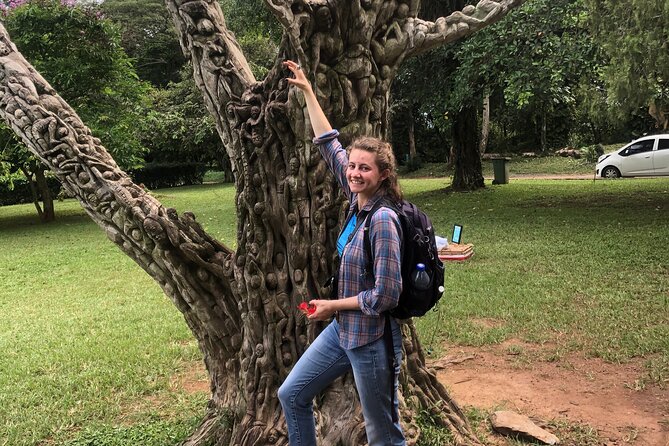
Because this is outdoors, your comfort is half the success. Based on the tour’s moderate physical fitness requirement and the heat concern raised by one review, here’s your no-regrets packing list:
- Sturdy shoes for uneven ground at Boti and during the Umbrella Rock climb
- Hat and sunscreen for outdoor sun exposure
- Refillable bottle or extra water if you tend to get thirsty (bottled water is included, but you’ll still want to manage your own pace)
- Light layers for moving between shaded gardens and open trails
Also, wear clothes you don’t mind getting a little dusty or sweaty. This is a working day in nature. You’re not going to a museum.
Finally, bring a calm attitude about water levels. If the falls are lower than hoped, it’s still a nature hike with forest scenery—and you can focus on the rest of the day’s highlights.
Who this tour is best for (and who should rethink it)
This fits best if you want:
- a one-day plan that covers several top sites in the eastern region
- guided context at the gardens and cocoa stop
- a mix of walking and sightseeing, not just sitting
You’ll likely feel good if you have moderate fitness and are okay with a climb at Umbrella Rock. Service animals are allowed, and the tour is set up with an air-conditioned vehicle and bottled water, which helps if you’re not used to long, hot outdoor blocks.
Who might reconsider:
- If you hate climbs or uneven ground, Umbrella Rock may feel like too much
- If your priority is only a huge, high-flow waterfall moment, dry-season conditions can disappoint you
The good news: even with low waterfall flow, you’re still getting gardens and cocoa, which can keep the day satisfying.
My practical recommendation: should you book?
Yes—if you’re planning a first-time Ghana stop in Accra and you want an honest sampler day. The tour’s strength is the mix: Boti Falls for nature and mythology, Umbrella Rock for a real climb and a specific natural curiosity, Aburi Gardens for historical plant context, and Tetteh Quarshie Cocoa Farm for learning and taste.
I’d book it if:
- you like guided explanations, not just sightseeing
- you’re comfortable walking outdoors and handling some sun
- you want multiple experiences in one organized day
I’d think twice if:
- you want only the waterfall experience and nothing else matters to you
- you’re not comfortable with a climb
This is priced like a structured day out, not a low-cost sampler. But when the guide keeps things moving well and when you arrive with realistic expectations about water flow, it’s the kind of itinerary that feels worth it.
FAQ
How long is the Boti Falls, Umbrella Rock, Aburi Gardens & Cocoa Farm day tour?
The tour duration is listed as approximately 3 to 9 hours, depending on the flow of the day and conditions at the stops.
What’s included in the tour price?
It includes an air-conditioned vehicle, WiFi on board, bottled water, admission to Aburi Botanical Gardens, admission to Tetteh Quarshie Cocoa Farm, and admission to Boti Waterfalls, plus all fees and taxes.
Is lunch included?
No. Lunch is not included.
What fitness level do I need?
The tour notes a moderate physical fitness level is required, since you’ll be doing outdoor walking and there is a climb at Umbrella Rock.
What should I expect at Boti Falls in dry season?
Water levels can vary. One review specifically noted that there was no water at Boti Falls due to the dry season, and the guide had provided a heads-up in advance.
Are pick-ups available from Accra?
Pickup is offered, and you’ll travel by air-conditioned vehicle as part of the tour.