REVIEW · CUENCA
Cuenca to Guayaquil one-way tour with Cajas Park and a Cacao Farm visit
Book on Viator →Operated by Cuenca Bestours Tour Operator · Bookable on Viator
Turn a transfer into a real day. This one-way ride from Cuenca to Guayaquil adds a Cajas National Park hike option and a cacao farm stop, so you arrive with memories, not just miles.
I like the small-group feel built into this style of transfer, and I especially enjoyed how guides such as Wilson, Genero, Luis, and Javier adapt the day to what the weather will allow. You also get a smart mix of nature and food: Laguna La Toreadora and Polylepis-moorland scenery, then lunch, then a fruit-market break.
One thing to consider: the day runs only in good weather, and you should budget for the Cacao Loma entrance fee (not included in the base price).
In This Review
- Key highlights that make this ride worth it
- A one-way transfer that actually earns its place on your route
- Price and real-cost math (and what you’re paying for)
- Leaving Cuenca: private AC van comfort that keeps the day smooth
- Laguna La Toreadora in Cajas: Polylepis forest and a hike you can choose
- The continental divide drive: when your guide works with the weather
- Mestizo Restaurant lunch: trout-forward, with vegetarian and vegan options
- Fruit market stop at Puente de las Frutas de Tamarindo
- Cacao Loma family farm: craft chocolate starts with fresh cacao pulp
- End in Guayaquil: drop-off that matches how you’re traveling
- Who should book this tour, and who might skip it
- Should you book Cuenca Bestours for this one-way day?
- FAQ
- Is this tour one-way or round trip?
- How long does the Cuenca to Guayaquil tour take?
- What’s included in the price?
- Is lunch included automatically?
- Do I have to pay an entrance fee for the cacao farm?
- Is the hike required at Cajas National Park?
- What group size is this designed for?
- What weather conditions are needed?
- Where will I be dropped off in Guayaquil?
Key highlights that make this ride worth it
- UNESCO Cajas hike option around Laguna La Toreadora, with Polylepis forest and moorland ecosystems
- Continental divide to lowlands driving with extra photo stops when conditions permit
- Local food stops including a trout-focused lunch at Mestizo Restaurant and a fruit-market stop at Puente de las Frutas de Tamarindo
- Family cacao farm experience at Cacao Loma, from fresh cacao pulp to craft chocolate tasting if you want it
- Comfort-first transportation in a private AC van, often with a bilingual guide who can also drive for smaller groups
- Flexible drop-off in Guayaquil at your hotel, the airport, or another chosen location in the city
A one-way transfer that actually earns its place on your route
If you’ve ever done the simple thing—grab a seat and get to the other city—you know it can feel like nothing happens. This is different. You leave Cuenca heading into the Andes, spend meaningful time in Cajas National Park, then work your way down toward the coast and finish in Guayaquil.
The big win is that this trip turns a transfer into three distinct “chapters” of Ecuador: highland nature, local eating, and cacao craft. That mix is why people plan it instead of just driving or taking a bus.
It also helps that it’s designed for small groups, up to 15. That keeps the day from feeling like a rushed conveyor belt. You’re still on a schedule, but it feels human.
Price and real-cost math (and what you’re paying for)
The tour price is $73.99 per person for a one-way Cuenca to Guayaquil experience lasting roughly 6 to 8 hours. What you’re really paying for is the end-to-end organization: a driver/guide, private AC van transportation, and hotel pickup and drop-off within Guayaquil.
A key value point: the ticket for Laguna La Toreadora (inside Cajas National Park) is included. Lunch is included only if you choose the lunch option, and the Cacao Loma entrance fee is extra at $15.00 per person.
So think of it like this:
- Base price covers transportation, guide/driver time, and the main park ticket
- Add-on you should budget for: Cacao Loma entrance ($15/person)
- Potential add-on depending on your selection: lunch at Mestizo Restaurant
Honestly, if you were to arrange these pieces separately—transport, a proper park stop, and a guided farm visit—you’d likely spend more and spend more time coordinating. This is the “all-in-one day” convenience, with real stops instead of quick pull-offs.
Also, you’re making this booking with enough lead time that availability matters. On average, people reserve about 25 days ahead, so don’t wait until the last minute.
Leaving Cuenca: private AC van comfort that keeps the day smooth
You’re picked up at Simón Bolívar 832, Cuenca, and the van is private with AC. That matters on Ecuador road days because you’re not just sitting—you’re spending the day crossing ecosystems, and comfort keeps everyone alert.
Group size is capped at 15. For smaller groups of 1 to 5 passengers, the bilingual guide may also be the driver. With more passengers, you’ll have a driver plus a bilingual guide. Either way, you’re not stuck trying to piece together details yourself.
The route itself is built around viewpoints and transitions. You drive through the Andes mountains, crest the continental divide, then continue toward the lowlands. The stops are timed to what the day is doing—especially weather.
A practical tip: bring layers. Even if you think you know what the temperature is doing in the Andes that day, conditions can shift fast.
Laguna La Toreadora in Cajas: Polylepis forest and a hike you can choose
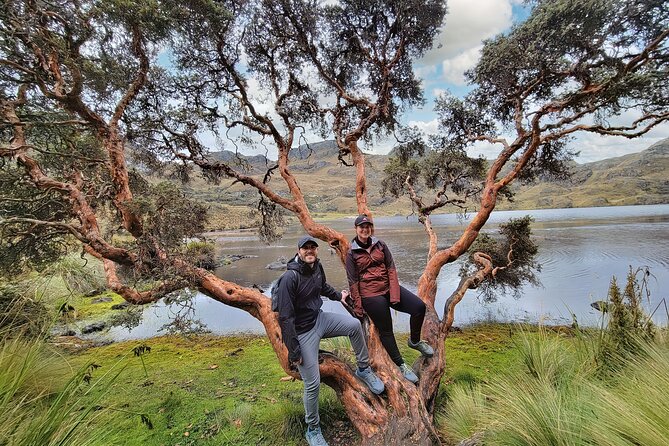
Your first major stop is Laguna La Toreadora, reached from Toreadora refuge inside Cajas National Park. This park is a UNESCO World Heritage Site, and it’s also one of the most important protected areas in southern Ecuador. It’s especially important to Cuenca because it’s a main water supplier for the city.
The timing here is about 1 hour 30 minutes, and the admission ticket is included. You have an option to hike to explore Polylepis forest and moorland ecosystems, with lakes in the mix. If you choose to hike, you get the payoff this trip is built around: highland scenery that feels remote but accessible.
The drawback to keep in mind: Cajas experiences weather changes. In thick fog or low visibility, views can soften. In one example day, a guide named Genero drove calmly through very heavy fog with low visibility. That’s a good sign: the trip is designed for real road conditions, not fair-weather fantasy.
If hiking isn’t your thing, don’t feel pressured. The hike is optional, and you can still enjoy the park stop and the scenic break.
The continental divide drive: when your guide works with the weather
After Cajas, the plan shifts from walking to driving. You cross the continental divide and head down toward the lowlands. Along the way, there are stops to enjoy the views if weather permits.
This is where the “guide value” shows up. You’re not just seeing places; you’re learning what you’re looking at and why it matters. Guides like Wilson and Javier have been praised for sharing interesting facts about local plants and the area, which turns roadside stops from random photos into something with context.
One practical reality: your best photo moments depend on clouds. If the day is bright, you’ll likely get more viewpoint time. If the day is gray, the pacing still works, but your shots may be more moody than postcard.
If you’re the type who gets impatient during scenic drives, this is your challenge. But if you’re open to “slow down and look,” it turns the transfer into part of the experience.
Mestizo Restaurant lunch: trout-forward, with vegetarian and vegan options
About one hour into the route, you stop for lunch at Mestizo Restaurant. Their specialty is trout, but there are several options including vegetarian and vegan. Your guide can advise you based on what’s available.
This lunch stop has two benefits:
- You get a genuinely local-style meal break rather than eating in a generic tourist zone.
- You get another chance to appreciate the Andes scenery from a calmer moment.
The only catch: lunch is included only if you select the lunch option. If you skip lunch, you may still have a stop built into the schedule, but you’ll want to confirm what’s included for your booking choice.
If you have dietary needs, tell the operator at booking. The tour data says you should advise specific dietary requirements ahead of time, which is the difference between “I’ll figure it out” and “this is handled.”
Fruit market stop at Puente de las Frutas de Tamarindo
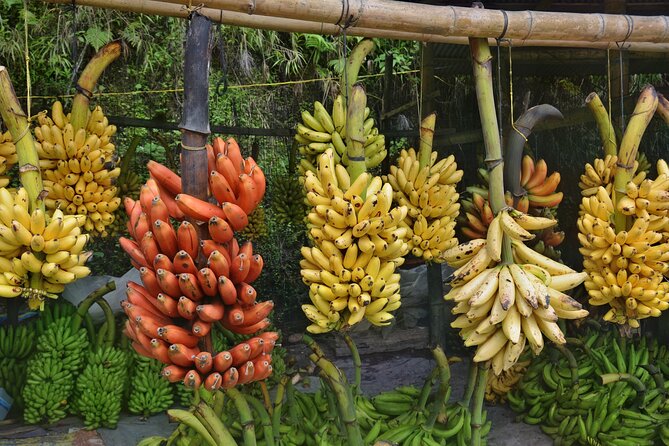
Next up is a quick, fun break: Puente de las Frutas de Tamarindo. It lasts about 15 minutes, and it’s a local market known for colors and fruit.
This is one of those stops that sounds small on paper but is memorable in practice. The plan is to learn about the fruits and, if you like, sample a few sweet and exotic ones. If you think you know the taste of bananas, mandarines (mandarins), coconut, dragon fruit, or passionfruit, this is where you get a reality check.
The value here isn’t just eating. It’s seeing fruit as part of daily life and understanding how locals talk about what grows where and when.
The only drawback is time. Fifteen minutes means this is for quick browsing and tasting, not shopping like you’re stocking a pantry for a month. Bring curiosity, not shopping lists.
Cacao Loma family farm: craft chocolate starts with fresh cacao pulp
The final “why this tour is special” moment is the Cacao Loma visit. Plan about 30 minutes here. The experience is designed around seeing how cacao is grown and processed by a local family farm.
You’ll be able to experience the process of craft chocolate making and try chocolate if you want to. The guide also explains the history of cacao and shares local customs connected to it.
You’ll also learn that the farm is not only about cacao. They grow other products too, such as breadfruit, coffee, passionfruit, and pineapple. That matters because cacao farms often feel like one-crop places from a distance. This shows you the working reality.
Budget note: the entrance fee for Cacao Loma is listed as $15.00 per person and not included. So when you’re comparing the price to other transfers, add that $15 if you plan to do the farm visit.
This is also the stop that tends to change how people think about chocolate. Once you see cacao handled at the farm level, regular chocolate tastes less like mystery and more like a final product in a chain of real steps.
End in Guayaquil: drop-off that matches how you’re traveling
When you arrive in Guayaquil, the trip ends with drop-off at your hotel within the city, or you can request the airport or another location you choose in Guayaquil.
That flexibility is more helpful than it sounds. Guayaquil can be spread out depending on where your plans start—cruise transfers, flight times, or hotel locations. This tour is built to meet you where you’ll actually need to go next.
The ending time is part of the full day feel. You’re not arriving in a vague window and hoping for the best. The transfer is scheduled to finish after the cacao farm visit.
Who should book this tour, and who might skip it
This one-way Cuenca to Guayaquil option is ideal if you want:
- A transfer with real stops instead of a straight drive
- Time in Cajas National Park with an option to hike
- Food experiences that feel local, not generic
- A cacao farm encounter where you see and understand the process
It’s also a good choice for mixed ages, because guides have been praised for accommodating small children and an elderly aunt. If your group includes people who won’t hike, you can still take the park visit at a pace that fits your group.
Consider skipping (or choosing something else) if:
- You’re set on doing zero hiking, and optional walking still sounds like stress
- You only want the fastest possible transit time
- You don’t want to spend part of the day in a market stop and a farm visit (you’ll want a more direct route)
Finally, keep in mind the tour requires good weather. If weather is poor, the experience can be canceled and you’ll be offered a different date or a full refund.
Should you book Cuenca Bestours for this one-way day?
Yes, if you’re aiming for a one-day “Sierra to coast” experience with built-in structure. For the money, you’re getting more than transportation: you’re getting park time with a provided ticket, local lunch options, a fruit-market taste-and-learn stop, and a cacao farm visit that explains what you’re eating.
The best decision point is this: do you want your Guayaquil arrival to be the end of a pleasant day, not just the end of a trip? If yes, this fits.
If you’re okay with weather-dependent viewpoints and you don’t mind the day running 6 to 8 hours, it’s a smart booking. Add the $15 Cacao Loma entrance fee to your mental budget, and you’ll be set.
FAQ
Is this tour one-way or round trip?
It’s a one-way experience. The trip runs Cuenca to Guayaquil (or vice versa), depending on the booking direction.
How long does the Cuenca to Guayaquil tour take?
The duration is about 6 to 8 hours.
What’s included in the price?
Included are transportation in a private AC van, a tour guide/driver (depending on passenger count), hotel pickup and drop-off, and the Laguna La Toreadora admission ticket. Lunch is included only if you select the lunch option.
Is lunch included automatically?
No. Lunch is included only if the option is selected. The lunch stop is at Mestizo Restaurant.
Do I have to pay an entrance fee for the cacao farm?
Yes. The Cacao Loma entrance fee is $15.00 per person and is not included in the base tour price.
Is the hike required at Cajas National Park?
No. The hike is optional. You can choose whether to do the hike at the Laguna La Toreadora / Toreadora refuge area.
What group size is this designed for?
It has a maximum of 15 travelers per tour. A minimum of 2 people per booking is required.
What weather conditions are needed?
Good weather is required. If it’s canceled due to poor weather, you’ll be offered a different date or a full refund.
Where will I be dropped off in Guayaquil?
You’ll be dropped off at any hotel in Guayaquil city, or you can arrange drop-off at the airport or another location you choose. You’ll need to contact the operator to arrange it.