REVIEW · FLORENCE
Florence: Cooking Class at a Tuscan Farm & Local Market Tour
Book on GetYourGuide →Operated by Walkabout Tours · Bookable on GetYourGuide
Fresh pasta in the Tuscan hills feels unreal. This Florence cooking class starts with a guided hunt for ingredients at Mercato Centrale, then turns them into hands-on dishes at a real rural farmhouse outside the city. You get to learn why Tuscan cooking tastes the way it does, not just follow steps on a screen.
I love that the morning market tour is built around learning how to choose: cheeses, cured meats, produce, and pantry staples, all while your English guide helps you read the stalls like a local. I also love the practical, step-by-step kitchen time, including making pasta from scratch with freshly laid eggs, plus a full meal you actually eat together at the end.
One possible drawback: the experience is on uneven and steep surfaces, so it’s not suitable for wheelchair users or anyone with mobility limitations.
In This Review
- Key highlights worth your attention
- A Florence cooking class that starts with what matters: the market
- Mercato Centrale: where your Tuscan menu starts forming
- The ride to a Tuscan farmhouse outside the city
- Making fresh pasta from scratch: the skill you’ll actually use later
- Bruschetta with homegrown tomatoes and real olive oil
- Chianti break: a pause that keeps the day moving
- Roast pork and herb potatoes: Tuscan flavors beyond pasta
- Tiramisù: coffee and cream, finished with care
- The 3-course meal: you eat what you make, paired with wine
- The takeaway: recipes, a diploma, and confidence in your own kitchen
- Price and value: why $94 feels fair for six hours
- Who this class is best for (and who should skip it)
- Small practical notes that make your day smoother
- Should you book this Florence to Tuscany cooking class?
- FAQ
- What is the meeting point for the tour?
- How long is the Florence: Cooking Class at a Tuscan Farm & Local Market Tour?
- Is the Mercato Centrale stop included every day?
- What dishes will we cook during the class?
- Is wine included?
- Is there a vegetarian option?
- Can the tour accommodate gluten-free or other dietary restrictions?
- Is this tour suitable for children?
- Is it wheelchair accessible?
Key highlights worth your attention
- Mercato Centrale shopping first: you choose ingredients before you cook, so every bite makes sense
- Tuscan farmhouse views: the countryside setting makes the class feel like a real retreat
- Classic dishes you can recreate: bruschetta, pasta with ragù, roast pork and potatoes, and tiramisù
- Wine at the table: Chianti shows up during the day, then wine pairs with your 3-course meal
- Recipe copy and a cooking diploma: you leave with a real takeaway, not just photos
- Top-tier guides in the kitchen: Luca often leads the day, with chefs like Erica/Erika and Carmela appearing in the class team
A Florence cooking class that starts with what matters: the market
Most cooking classes in Florence jump straight to the kitchen. This one begins at the heart of everyday Italian eating: Mercato Centrale. The difference is big. When you shop first, you stop treating ingredients like generic items and start treating them like decisions.
At the market, you’re not just walking past displays. You’re learning how locals think about quality—how certain fruits look when they’re in season, how cured meats and cheeses are chosen, and what pantry basics matter for Tuscan flavors. It’s the kind of shopping lesson that makes you feel smarter fast, even if you never plan to cook professionally.
You can also read our reviews of more tours and experiences in Florence.
Mercato Centrale: where your Tuscan menu starts forming
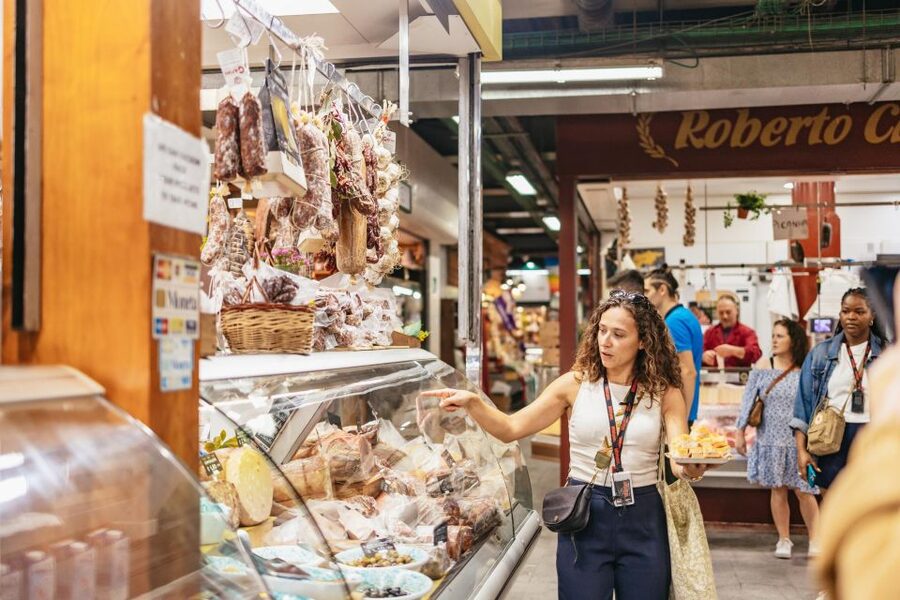
Your morning begins at the taxi stand outside Santa Maria Novella train station, where your guide meets you holding a sign for Walkabout Tours. After you get oriented, you head into the market area with your English guide leading the way.
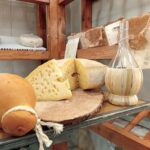
This stop is built to feel friendly and practical. You’ll see bakers, butchers, and farmers selling the products people actually buy. Then you’ll browse stalls for key Tuscan staples like fruit and vegetables, cheeses, cured meats, balsamic vinegar, and things like olives and sun-dried tomatoes.
A small detail that matters: the market is closed on Sundays and public holidays, so you won’t visit on those days. Plan your Florence schedule around that if a Sunday is your only free day.
Also, Mercato Centrale has uneven and steep areas. Even if you’re a confident walker, you should expect real stone-and-crowd walking. If your mobility is limited, this is one Florence activity you’ll want to skip.
The ride to a Tuscan farmhouse outside the city
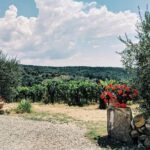
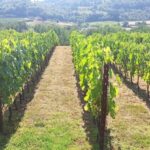
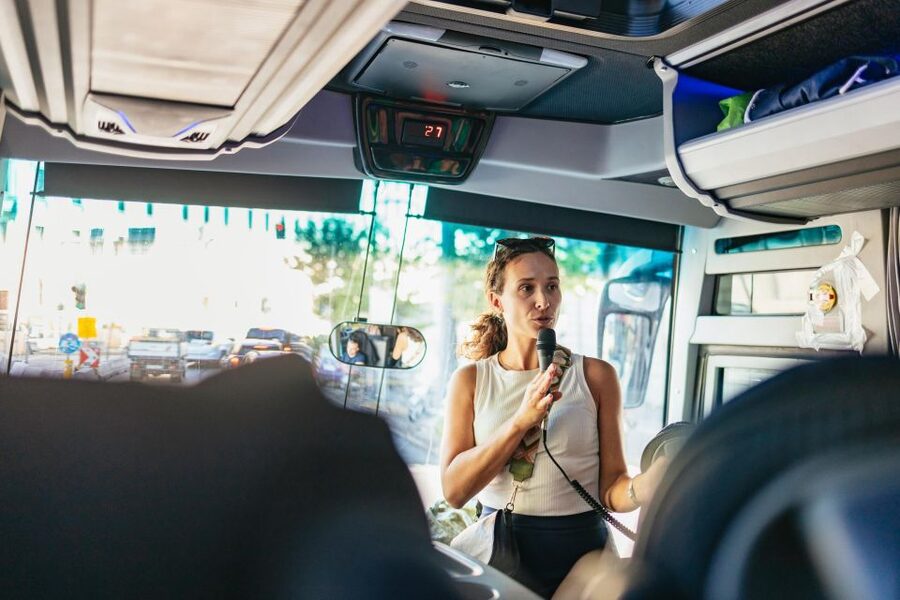
After the market, you board the bus and head into the countryside around Florence. The setting is part of the point. In reviews, people keep mentioning the view when you arrive—rolling Tuscan hills, cypress trees, and that slow, open feeling you don’t get inside the city.
This transition matters for your mood. In six hours, you go from the tight rhythm of Florence shopping to space and calm. You also get a change of pace before your hands get flour on them.
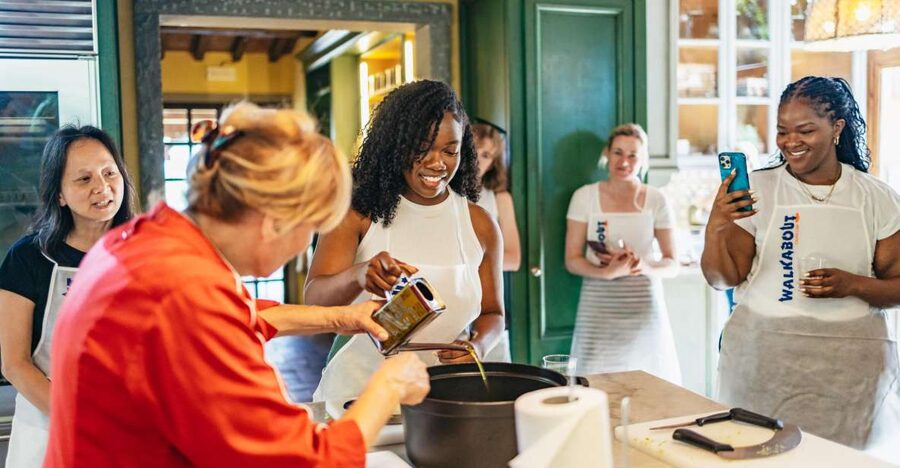
From there, you’re in a charming farmhouse setting for the cooking portion. You’ll cook in a shared group kitchen, with your chef guiding you through classic Tuscan recipes while your guide helps keep the group moving smoothly.
Making fresh pasta from scratch: the skill you’ll actually use later
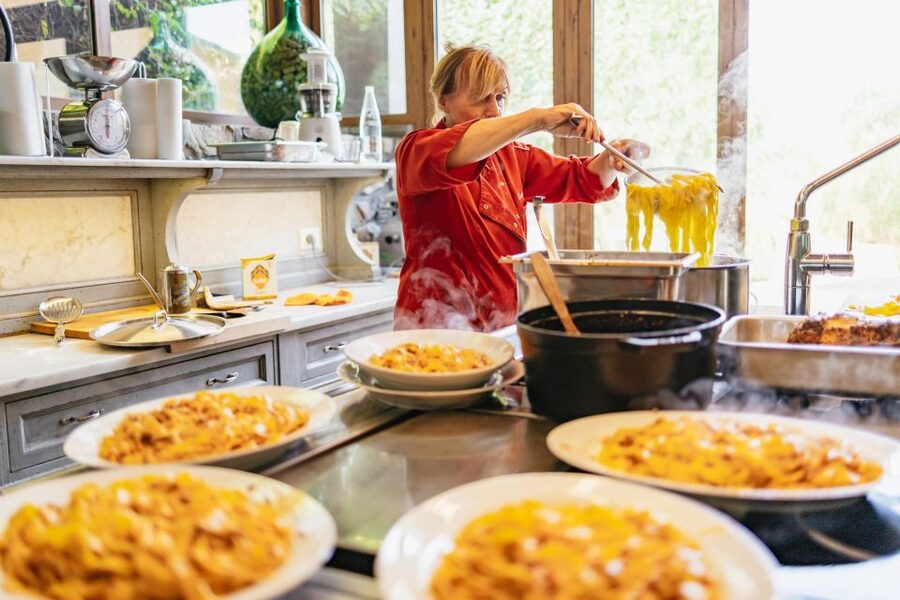
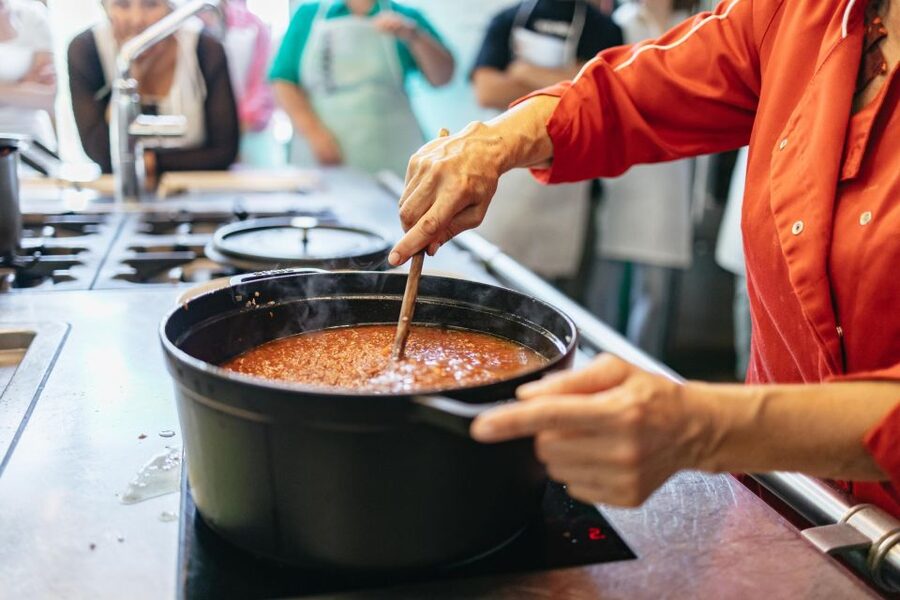
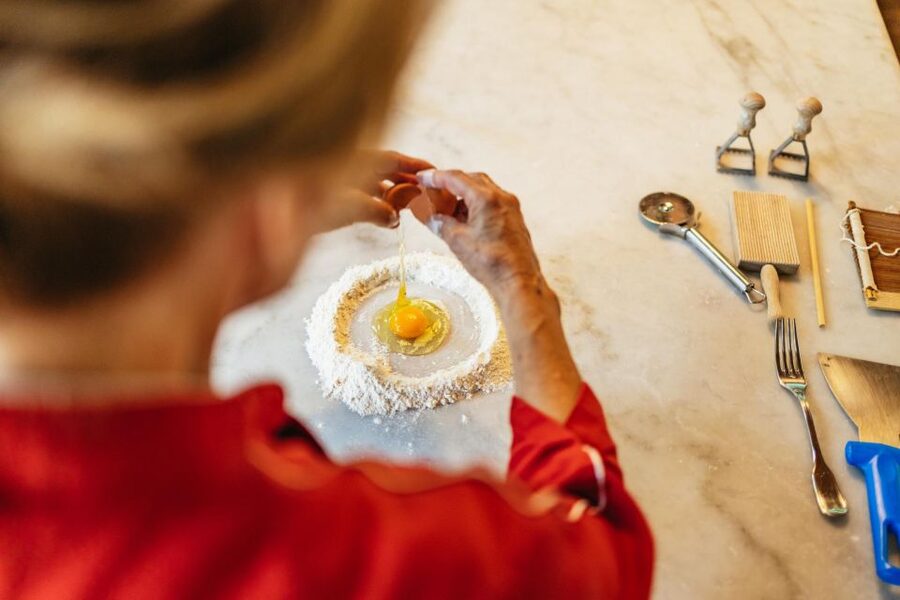
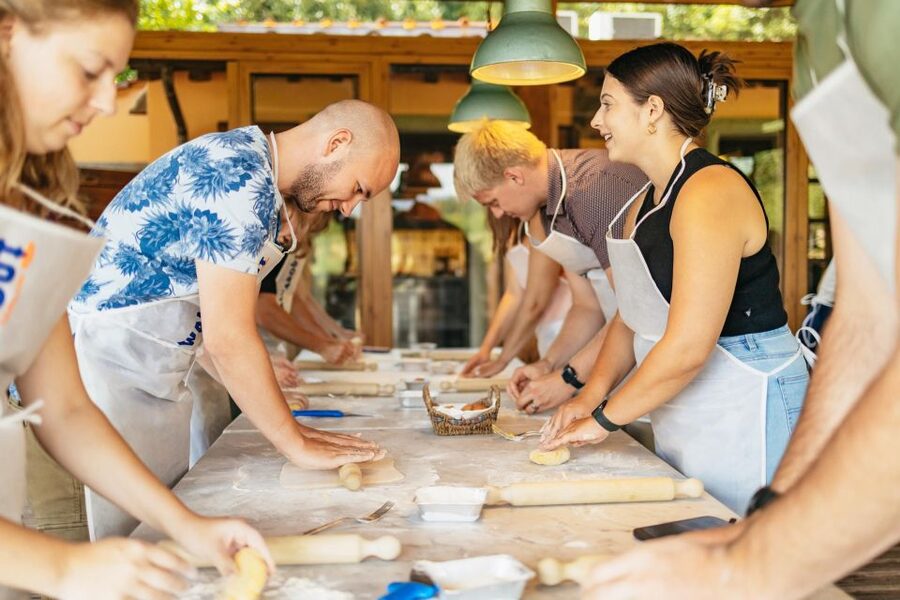
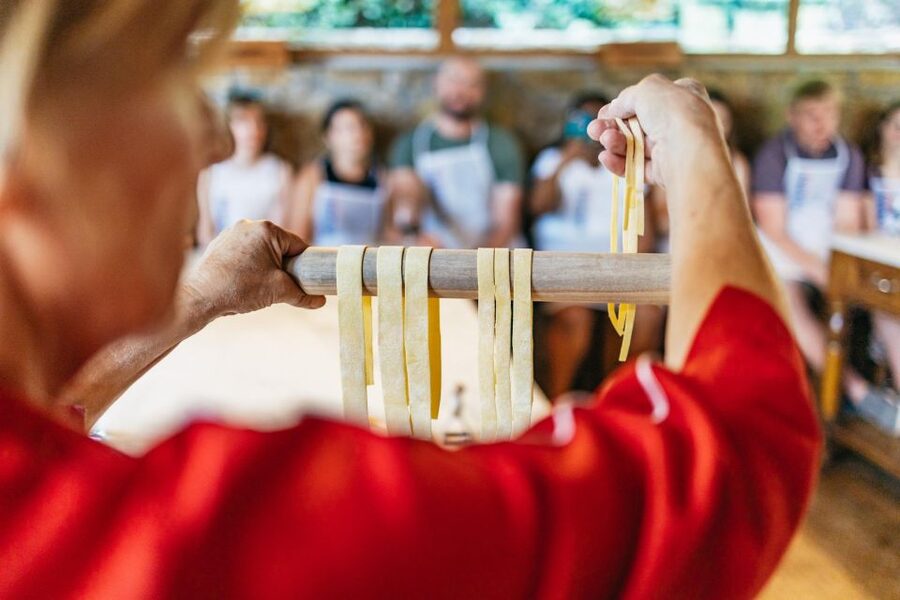
If you remember only one part of this class, make it the pasta. The menu includes learning how to create authentic Italian pasta by hand using freshly laid eggs. That’s not a throwaway demonstration. You’re taught the steps in a way that helps you understand what to look for as the dough comes together.
Then you pair the pasta with a traditional ragù—the hearty sauce that anchors so much Tuscan home cooking. The goal isn’t to make it complicated. It’s to understand how flavors build and why you give the sauce the time and attention it needs.
And yes, this is where the day becomes fun in a very specific way. Guides like Luca show up with humor and energy, and the kitchen chefs (often Erica/Erika and sometimes Carmela) keep everyone confident. More than once, people highlight that even if you’re not a confident cook, you’re encouraged and taught step-by-step.
You should still go in with realistic expectations: cooking together takes coordination. If your group is on the larger side (one review mentioned a group of 24), not every second is a personal one-on-one moment. But the structure is designed so you still participate and learn the techniques.
Bruschetta with homegrown tomatoes and real olive oil
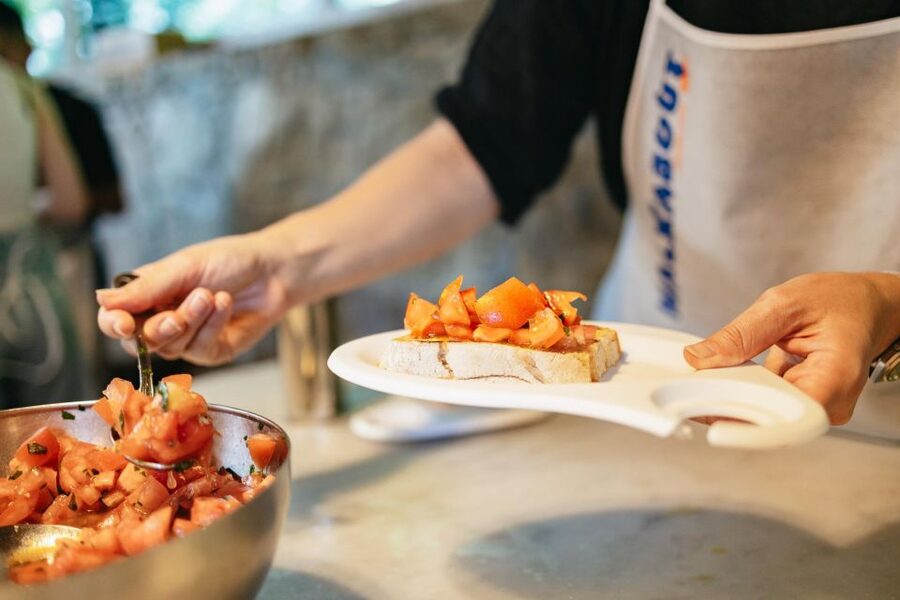
Next up is bruschetta, focused on simple ingredients done correctly. You’ll build it around fresh bread, tomatoes, and the farmhouse’s extra virgin olive oil. This is a classic reason Tuscan cooking feels so satisfying: it doesn’t rely on tricks. It relies on good inputs and careful assembly.
What makes this more than a snack stop is that you’re learning the logic. You’re not just throwing toppings on bread. You’re learning how ingredients work together, and how balance shows up in flavor even when the dish looks easy.
Chianti break: a pause that keeps the day moving
After the first set of cooking tasks, you get a break with a glass of Chianti. It’s not only for pleasure, though that’s clearly part of it. It’s also practical. Midday wine makes the next stations feel like a continuation of a celebration instead of another work task.
This pacing helps the day feel like six hours that fly by rather than a marathon. When the group stays relaxed, you learn better and cook more confidently.
Roast pork and herb potatoes: Tuscan flavors beyond pasta
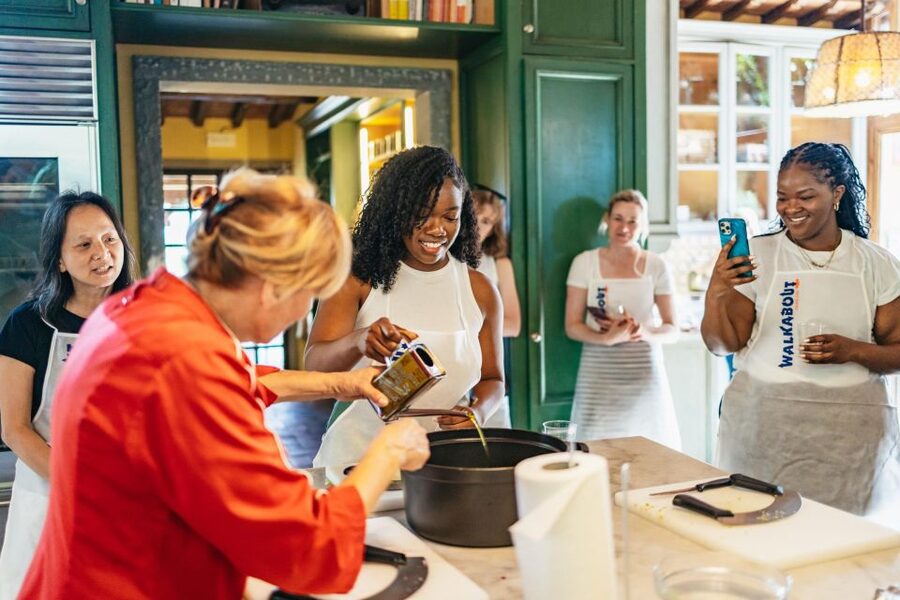
Then you switch gears to something more hearty: traditional Tuscan roast pork and roast potatoes. You’ll use fresh herbs collected around the farmhouse, which is a small detail but a meaningful one. It connects the food to the place, and it also gives you a flavor memory you can bring home.
The potatoes matter here too. They’re not a generic side. This is part of the meal’s Tuscan comfort-food identity—roast potatoes that actually taste like they belong on the same plate as slow-cooked savory meat.
By this stage, you’re usually more confident than you expected. Even if your first attempts aren’t perfect, the chefs are there to guide you toward the finished result.
Tiramisù: coffee and cream, finished with care
Every good Italian class needs a finale that feels rewarding, and this one includes tiramisu made with Italian coffee and cream. Dessert is often the moment people realize they’ve been trained, not just entertained.
You’ll learn how to build the texture and balance of the classic flavors—coffee, sweetness, and that creamy finish that makes tiramisù so recognizable. When you’re done, you’ll have a dish you can recreate at home without needing specialized equipment beyond a basic kitchen.
The 3-course meal: you eat what you make, paired with wine
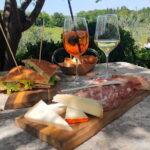
At the end, you sit down to enjoy the fruits of your labor: a 3-course lunch that includes wine paired to compliment the flavors. This is one of the best value parts of the experience. You’re not cooking for someone else’s buffet line. You’re eating your own work in a setting with those iconic Tuscan views.
The table is set to make it feel like a proper meal, not a rushed lunch between activities. It’s also a chance to slow down and compare notes with your group—how you handled the pasta dough, whether your sauce got that right depth, what you thought of the bruschetta tomatoes.
People frequently mention that the wine makes the day feel celebratory, with the emphasis still on a shared experience rather than a party atmosphere.
The takeaway: recipes, a diploma, and confidence in your own kitchen
When the meal wraps up, you receive a diploma plus a copy of the recipes. That’s a big deal if you’re the type who likes to bring experiences home in a practical form.
The best cooking classes teach you technique, and this one is designed around dishes you can realistically remake. Bruschetta. Fresh pasta and ragù. Roast pork and potatoes. Tiramisù. Those are not restaurant-only items. They’re the kind of recipes that can fit into future dinners if you keep the steps and proportions in mind.
Price and value: why $94 feels fair for six hours
At $94 per person for about six hours, the value comes from what’s included and what you avoid.
You’re paying for:
- a guided Mercato Centrale walking tour
- transportation round-trip between Florence and the farmhouse
- a full cooking lesson
- a 3-course meal
- wine
- recipes and a cooking diploma
If you’ve tried DIY cooking lessons in Italy before, you know how quickly time, transportation, and guidance add up. Here, the structure is doing the heavy lifting: you get ingredient selection time in Florence, then instruction and a meal in the countryside. You’re also saving energy because the day is planned so you’re not figuring out routes or timings while hungry.
Who this class is best for (and who should skip it)
This is a great fit if you want a Florence day that feels like Tuscany—not just a quick stop outside town. You’ll likely enjoy it most if you like:
- hands-on cooking
- traditional Italian food
- learning how to choose ingredients
- a relaxed group day with real entertainment from guides like Luca
It’s not the best fit if:
- you need wheelchair access or have trouble with uneven and steep surfaces
- you’re traveling with children under 8
- you have food allergies (the class can’t accommodate them)
- you need gluten-free options (gluten-free and other alternative dietary requirements can’t be accommodated)
A vegetarian option is available, which helps a lot if you’re planning with mixed diets. If you’re gluten-free or managing another restriction, you’ll want to think carefully before booking.
Small practical notes that make your day smoother
These details can help you get the most out of the six hours:
- Wear comfortable, grippy shoes. The market and the farmhouse walkways are not flat.
- Plan on being on your feet. This is a walking-and-cooking day.
- Keep your appetite open. You’ll snack in the market and then eat a full 3-course meal.
- Don’t stress about competence. The tone from guides like Luca and the chefs in the kitchen is consistently supportive.
- If you prefer more one-on-one attention, be aware group size can run into the 20s, so participation may rotate.
Should you book this Florence to Tuscany cooking class?
Book it if you want a day where you shop for ingredients in Florence and then cook Tuscan classics at a farmhouse with real countryside views. The best reason to book is simple: you leave with technique and recipes you can use, plus a meal you didn’t just watch from the sidelines.
Skip it if mobility, allergies, or gluten-free needs are central to your trip. Also skip it on Sunday or public holiday plans if the market stop is non-negotiable for you.
If you want a cooking class that feels like both a local food lesson and a memorable countryside escape, this one is a strong bet.
FAQ
What is the meeting point for the tour?
Meet your guide at the taxi stand outside Santa Maria Novella train station. Your guide will be holding a sign with the provider name Walkabout Tours.
How long is the Florence: Cooking Class at a Tuscan Farm & Local Market Tour?
The experience lasts 6 hours.
Is the Mercato Centrale stop included every day?
No. Mercato Centrale will not be visited on Sundays or public holidays because the market is closed.
What dishes will we cook during the class?
You’ll make bruschetta, fresh pasta with a ragù, roast pork with roast potatoes, and tiramisù.
Is wine included?
Yes. You’ll have wine during the day, including a Chianti break, and the final 3-course meal is paired with local wine.
Is there a vegetarian option?
Yes, a vegetarian option is available.
Can the tour accommodate gluten-free or other dietary restrictions?
Gluten-free or other alternative dietary requirements cannot be accommodated.
Is this tour suitable for children?
No, it’s not suitable for children under 8.
Is it wheelchair accessible?
No. The tour is not suitable for wheelchair users or people with walking difficulties due to uneven and steep surfaces.