REVIEW · MELANES
Melanes: Naxos Perivoli Farm & Cooking Class with Wood Fire
Book on GetYourGuide →Operated by Perivoli Naxian Farm Experience · Bookable on GetYourGuide
That wood-fire smell starts early. At the Perivoli Farm in Melanes, you move from fresh eggs and farm animals to olive groves and then straight into a hands-on cooking class that runs on a wood fire. It feels less like a demo and more like getting invited into a family routine.
Two things I love most are the farm morning you can actually touch and taste, and the way the cooking lesson builds around what the land is producing that day. You’ll see chickens, rabbits, pigs, peacocks, and more up close, then you’ll cook with seasonal vegetables, Naxian potatoes, olive oil, and local wine. The food is also genuinely filling, so you should treat this as a meal, not a snack.
One thing to consider: you’re on uneven farm paths in real sun, and you’ll walk between different areas of the property. Bring comfortable shoes and plan your transportation ahead, since pickup or drop-off isn’t part of the experience.
In This Review
- Key things to know before you go
- Arriving at Perivoli Farm Experience in Melanes
- Farm tour first: animals, eggs, and the daily rhythm
- Olive grove walking and how oil production really works
- Naxian potatoes and why the island grows them
- Fruit trees, sampling, and walking through the gardens
- Wood-fire cooking class: what you make and how it feels
- Appetizers and the early courses
- The main dish: briam or gemista
- Desserts, preserves, and local wine
- Outdoor eating setup: when comfort meets rustic
- The value question: $117 for 4 hours of farm-to-fire cooking
- Who should book this (and who might want a different style)
- A realistic schedule: how the afternoon usually unfolds
- Should you book Perivoli Farm & Wood-Fire Cooking?
- FAQ
- How long is the cooking class experience?
- Where do I meet the guide?
- Is the tour guide available in English?
- How big is the group?
- What is included in the price?
- What isn’t included?
- What should I bring?
- Is free cancellation available?
Key things to know before you go
- You start with real farm time, including animals and collecting freshly laid eggs
- Olives aren’t just a theme: you walk the olive grove and learn how oil is made
- Potatoes get their own moment, with a focus on why Naxos grows them so well
- You pick and sample seasonal fruits before heading into the gardens and vineyard areas
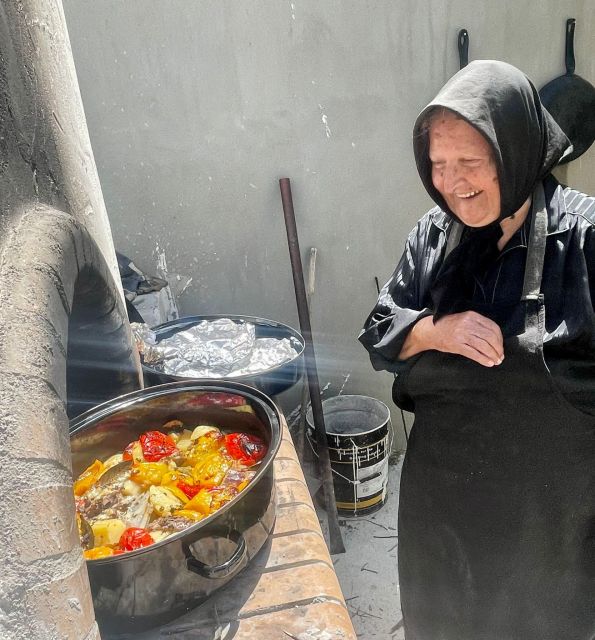
- The cooking is wood-fired, with classic dishes like zucchini balls and briam (and sometimes gemista)
- You may end with Greek dancing, if you feel like joining in
Arriving at Perivoli Farm Experience in Melanes
Perivoli Farm Experience is outside the village of Melanes, and you’ll meet the staff at the entrance to the farm. From there, it’s a guided circuit across the property, with a small group capped at 10 people. That size matters: you don’t spend the whole time standing behind someone’s camera.
Expect a relaxed pace that still moves. You’ll be walking between the animal areas, fields, orchards, gardens, and the outdoor kitchen space. It’s not a museum. It’s an active farm, and you’ll feel it in how the guide explains everything.
You can also read our reviews of more tours and experiences in Melanes.

Farm tour first: animals, eggs, and the daily rhythm
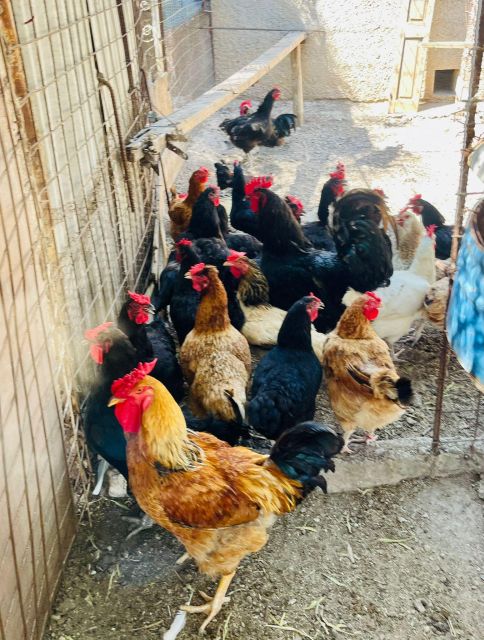
The best part of starting with the animals is how quickly it turns into a conversation, not a lecture. You’ll tour the farm and see chickens, rabbits, pigs, peacocks, and more, and the guide points out how the farm is managed and what’s grown here.
Then comes the moment many people look forward to: collecting freshly laid eggs. It’s simple, but it’s also oddly satisfying. You’re not buying eggs that sat in a store cooler for weeks. You’re gathering them from the coops.
If you’re traveling with kids or teens, this early farm segment is often the hook that keeps everyone engaged. Reviews also mention that the family vibe helps little ones who just want to watch and learn at their own pace.
Olive grove walking and how oil production really works
After the animals, you head into the olive groves. This is where the tour shifts from seeing life on the farm to understanding how the farm turns into food you can eat.
You’ll learn how the olive trees are cultivated and the basics behind producing olive oil. You don’t need a farming degree to follow along, and the guide connects the technique to what ends up on your plate later. It also helps that you’re literally walking among the trees while you learn, so the story sticks.
Practical tip: olive groves can be sunny and a bit dusty, so your sunglasses and sun hat won’t be optional. You’ll get the most out of this part if you can keep your focus on the guide instead of squinting the whole time.
Naxian potatoes and why the island grows them
Next stop is the potato fields. Naxos potatoes get special attention here, and the guide explains how they thrive in the local climate and fertile soil.
This section is valuable because it gives you a reason behind the flavor. Later, when you’re eating Naxian fried potatoes, you’ll understand why they taste the way they do—more than just salt and crunch. It’s one of those small context boosts that makes the meal feel like the end of a story, not the start of another buffet.
Fruit trees, sampling, and walking through the gardens
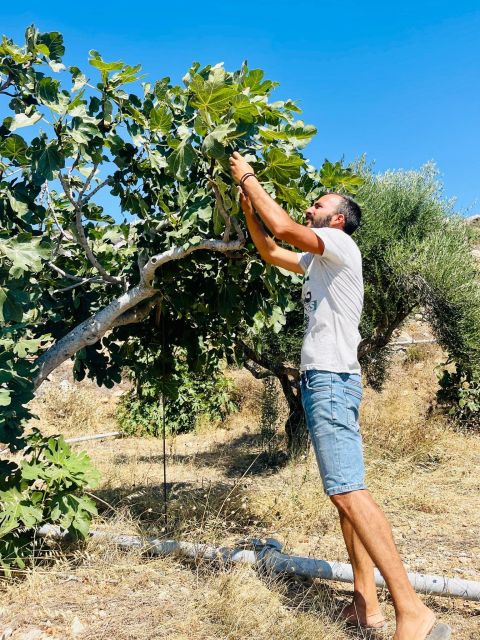
Once you leave the potatoes, you’ll walk to fruit trees and sample seasonal fruit. You may also hear the guide point out herbs and plants growing on the property, which turns this into a mini lesson in what grows well on Naxos and how island kitchens use it.
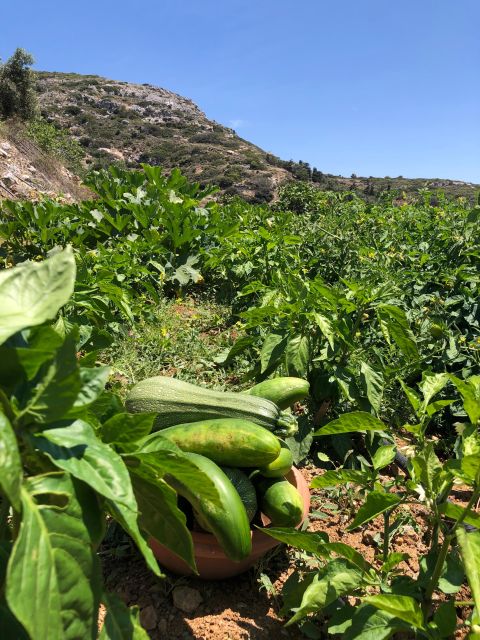
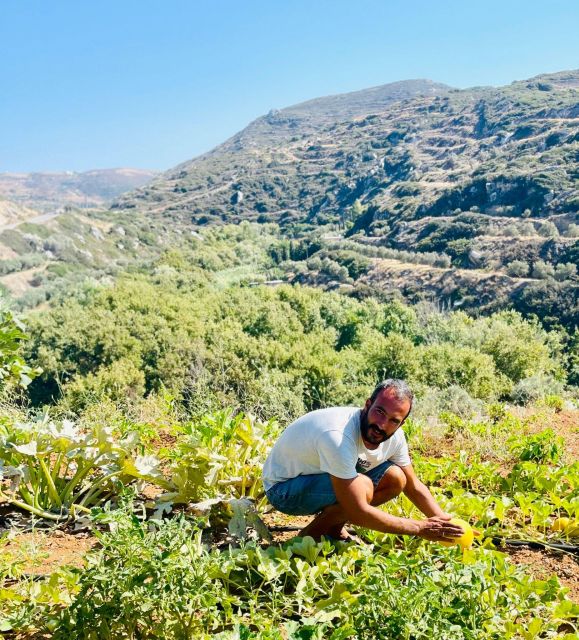
The tour continues with a walk to the vineyard and then into the vegetable garden. This is where you see the day’s produce up close—greens, vegetables, and whatever is ready right now. You might pick some seasonal produce from the garden areas, depending on the timing of your visit.
One reason I like this part: you’re not just tasting. You’re learning where ingredients come from and how they connect to the recipes you’ll cook later.
Wood-fire cooking class: what you make and how it feels
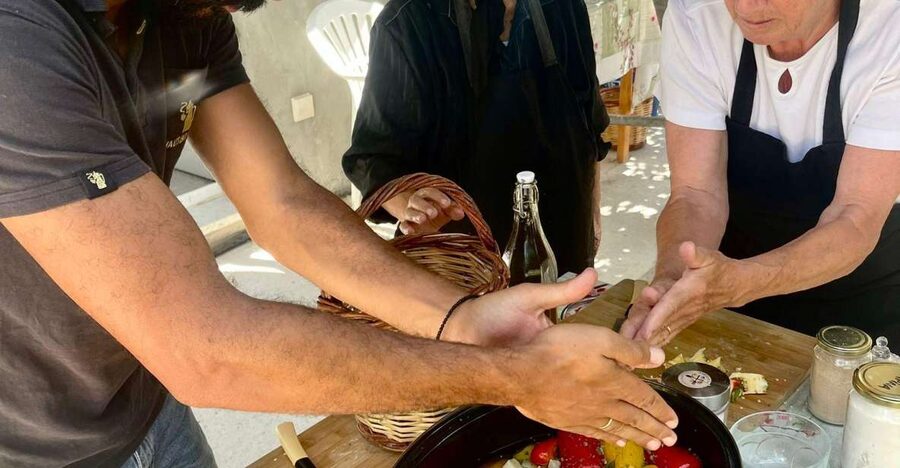
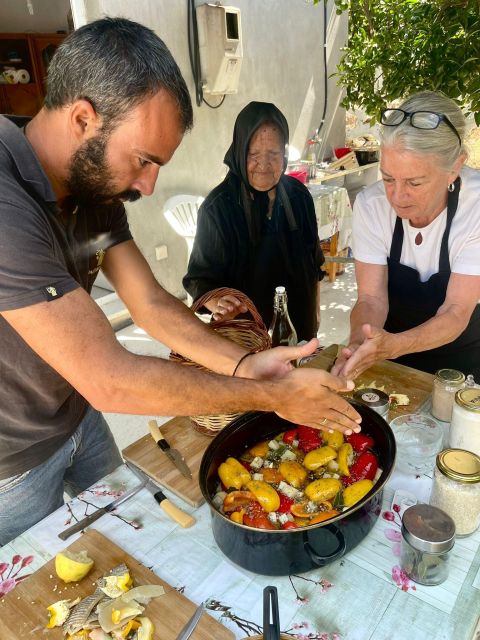
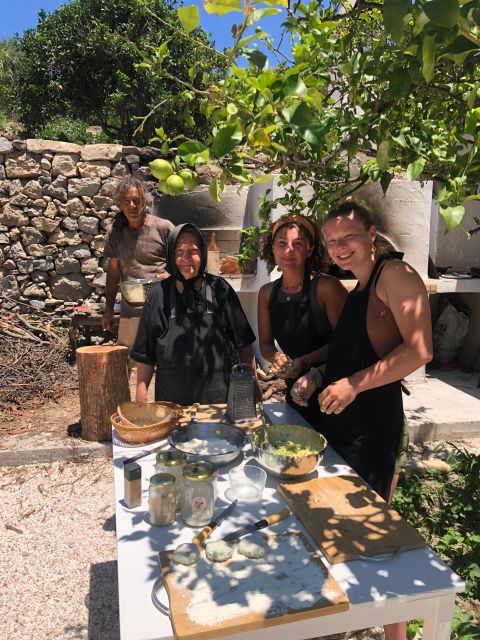
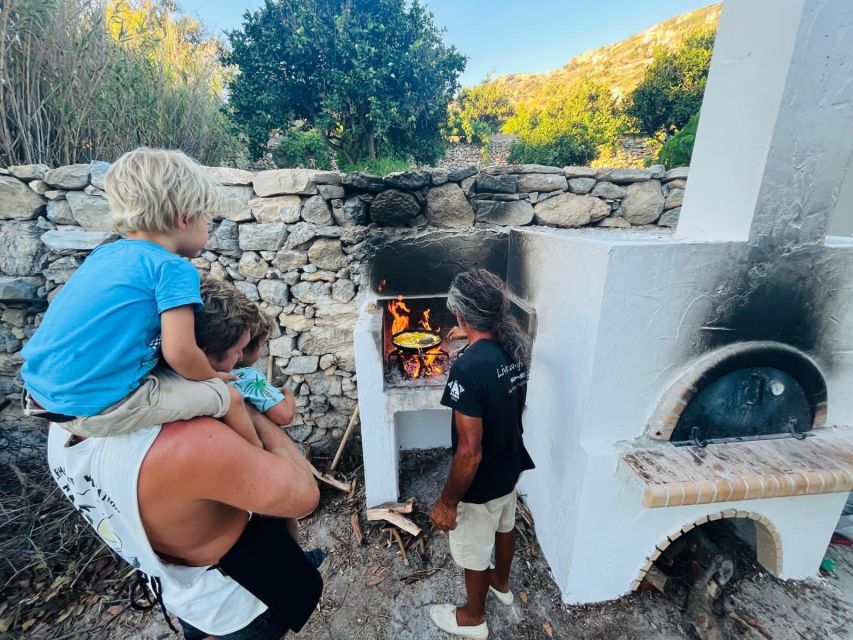
Now you get to the kitchen part, and it’s the heart of the experience. Cooking happens over a wood fire, and you’ll work on dishes like zucchini balls and omelets, with an emphasis on using ingredients harvested from the farm areas you just visited.
The class flow usually looks like this: you help with prep tasks (chopping, grating, mixing), then you gather around the outdoor cooking setup while the cooking finishes over the fire. You’ll eat what you make, plus additional dishes prepared by the hosts.
Appetizers and the early courses
You can expect an appetizer spread that may include an omelet, zucchini balls, Naxian potatoes, and cheese. Some versions of the meal add more classic island bites, like fried cheese with honey, depending on the day and menu.
Even if you’re not a confident cook, the process is designed so everyone can join in. You’ll get aprons and utensils, and the guide keeps it friendly and manageable.
The main dish: briam or gemista
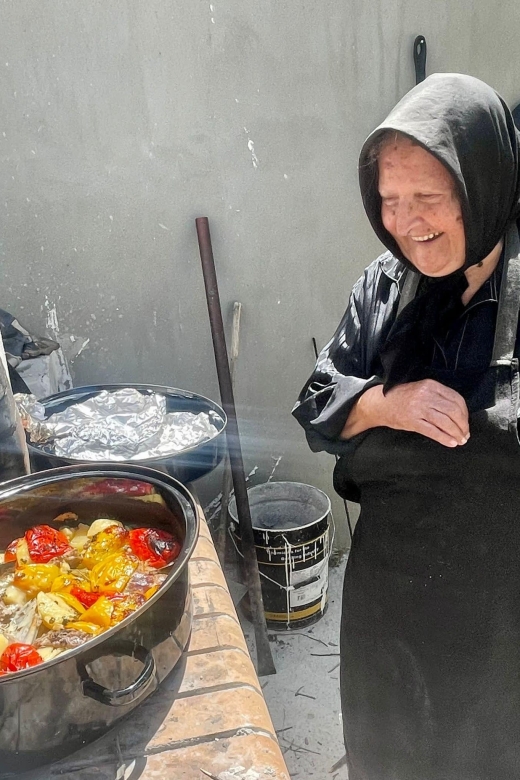
For the main course, you’ll cook a traditional Naxian dish such as briam or gemista. Briam is typically a roasted vegetable style dish, while gemista usually means vegetables (often peppers or tomatoes) stuffed and cooked until soft.
Either way, the main idea stays the same: you’re cooking homestyle Greek food with island ingredients, not trying to replicate restaurant plating.
Desserts, preserves, and local wine
Lunch isn’t just included. It’s structured like a proper meal with bread and dessert. You’ll also sip local wine with the food, and you may be served homemade fruit preserves.
In plain terms: plan for a second serving. The meal is not small, and you’ll likely feel full long after you finish cooking.
Outdoor eating setup: when comfort meets rustic
One thing to look for on this kind of farm experience is whether you get to eat comfortably. Here, you typically sit together at a large table in an outdoor setting, often under cover like a pergola so you’re not baking in direct sun the whole time.
That matters because the experience is 4 hours long. When the food stops and the group settles, you still want a place to relax, not stand around waiting for the next step.
The value question: $117 for 4 hours of farm-to-fire cooking
At $117 per person for a 4-hour small-group experience, the cost makes sense only if you compare it to what’s actually included. Here, you’re paying for a guided farm tour plus a hands-on wood-fire cooking class, along with lunch, bread, dessert, and local wine.
This is why it often feels worth it. You’re not just getting a meal. You’re getting ingredient sourcing (eggs, olives, potatoes, fruit, garden vegetables), farm explanations, and the chance to bring techniques home. Many people leave with recipes too, so you’re not locked into a single day of flavor.
If you’re comparing it to a casual meal, it’s more expensive. If you’re comparing it to a cooking class plus a farm visit, it’s a solid deal—especially with group size limited to 10.
Two practical notes:
- Transportation isn’t included, so your final cost depends on how you’ll get there and back.
- This is a 4-hour block. If your schedule is tight, you’ll want to plan the rest of your day around it.
Who should book this (and who might want a different style)
This is a great fit if you want your Naxos trip to feel hands-on and specific. If you care about olive oil, local produce, and classic Greek home cooking, you’ll get a lot out of the farm walkthrough and wood-fire meal.
It also works well for groups because everyone can participate: prep, cooking, tasting, and asking questions. If you like a slower pace with real people rather than a checklist tour, this is your kind of afternoon.
What might not suit you:
- If you hate walking on uneven farm ground, you might find parts of the route uncomfortable.
- If you want just a quick tasting with no prep time, the hands-on cooking may take longer than you prefer.
Also, dietary needs matter. Some people report the experience can be adapted for vegan diets, but you should still ask when you book so the hosts can plan your meal.
A realistic schedule: how the afternoon usually unfolds
You’ll typically start at the farm entrance, meet the guide, and get your bearings. Then you move through animals and egg collecting, followed by olive grove learning and the potato field section. After that, you’ll go through fruit and garden areas, with vineyard time in the mix.
Finally, the cooking class takes over. You’ll prep and cook dishes on the wood fire, eat multiple courses (including bread, lunch, dessert), and sip local wine. If you feel like it, the day can end with traditional dancing—something fun when you’re in the mood and easy to skip if you’re not.
Should you book Perivoli Farm & Wood-Fire Cooking?
If you want an experience that connects food to place, this one is hard to beat. The farm tour isn’t window dressing, and the cooking isn’t a rushed demo. You leave with a fuller understanding of Naxian farming—especially olives and potatoes—plus recipes and a meal you’ll remember.
Book it if:
- you like hands-on cooking
- you want real rural Naxos life, not just beaches
- you’re comfortable walking in sun and wearing sunscreen
Skip it or choose another option if:
- you want minimal walking
- you have a very tight schedule for the rest of the day
- you don’t plan to eat a full included meal
If you’re on Naxos only briefly, this is one of the best ways to spend a few hours and still feel like you understood the island.
FAQ
How long is the cooking class experience?
It lasts about 4 hours.
Where do I meet the guide?
Meet at the entrance of the Perivoli Naxian Farm Experience, where staff will welcome you.
Is the tour guide available in English?
Yes, the live tour guide speaks English.
How big is the group?
It’s a small group limited to 10 participants.
What is included in the price?
The price includes the farm tour, lunch, bread, dessert, and local wine.
What isn’t included?
Transportation to and from the farm isn’t included.
What should I bring?
Bring comfortable shoes, sunglasses, a sun hat, sunscreen, and comfortable clothes.
Is free cancellation available?
Yes, you can cancel up to 24 hours in advance for a full refund.