REVIEW · HOI AN
Rural Cycle, Market Tour, Basket Boat & Organic Farm Cooking
Book on GetYourGuide →Operated by Momo Travel Limited Company · Bookable on GetYourGuide
A morning of bikes, boat paddles, and farm-fresh cooking beats the usual Hoi An routine. You’ll start with a short ride from the Hoi An Post Office through rice fields and villages, then stop at a local market for fruit you probably won’t recognize. Two big things I love here: hands-on organic farming work and a lunch you cook yourself from what you harvest. One possible drawback: the cycling is brief, but it still includes parts of the city, so traffic can feel stressful for very young riders.
You also get the combo that makes this tour feel like more than a class: a basket boat ride into the coconut water-forest, followed by a meal built around garden produce. Guides you might meet, like Trang, Kun, Nguyen, Khieu, and Karla, all seem to keep the day moving with clear English and practical farm stories. The main consideration is timing and weather: the tour runs rain or shine, and it’s not built for pregnancy.
In This Review
- Key takeaways
- From Hoi An Post Office to rice fields: the bike start you’ll actually enjoy
- The market fruit stop: where the day gets tasty fast
- Basket boat into the coconut water-forest: calm, simple, and very local
- Arriving at the organic farm: what “hands-on” really means here
- Cooking lunch from what you harvested: the best part of the day, with real results
- Value check: why $34 feels fair for a 4-hour combo day
- Rain or shine: how to dress so the day stays fun
- Who this tour fits best (and who should skip it)
- Small details that make the day smoother
- Should you book this organic farm cycle + basket boat cooking tour?
- FAQ
- Where do I meet the tour?
- How long is the tour?
- How far do I cycle?
- Does the tour run in bad weather?
- Can the tour accommodate vegan, gluten-free, or allergies?
- What activities are included in the price?
- Is this tour suitable for everyone?
- Is free cancellation available?
- Can I reserve now and pay later?
Key takeaways
- 3 km cycling makes the bike portion feel doable, even if you’re not a confident rider
- Basket boat in the coconut water-forest gives you a calm, local-feeling water experience
- Organic farm chores (manure, soil prep, organic pesticides) make the day hands-on, not just “see and listen”
- Market stop for unusual fruit sets up a dessert you won’t forget
- Cook your lunch from garden harvest at a garden table, with dietary needs handled
- Dishes vary, and you may make classics like pancakes, banh xeo, or banana-leaf fish
From Hoi An Post Office to rice fields: the bike start you’ll actually enjoy
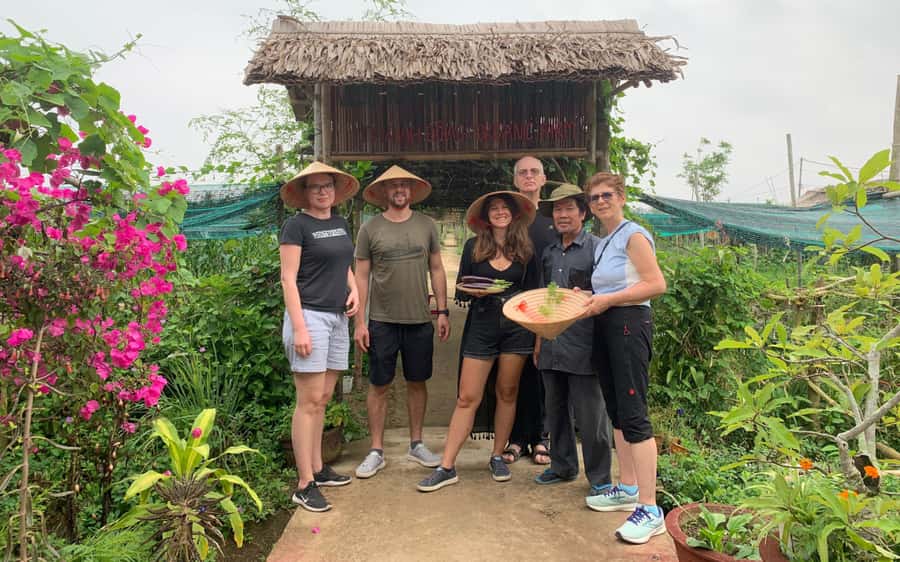
The tour begins right at the front of the Hoi An Post Office, where you’ll meet your English-speaking guide and get your bicycle plus helmet. The bike part is only 3 km, which matters. You’re not signing up for a sweaty workout. You’re signing up for views, photos, and a gentle transition from town life into rural Hoi An.
After the intro, you’ll warm up on paths that pass rice fields and small villages. This is where the day starts to feel real. Hoi An is full of pretty streets and lantern nights, but this ride shows the other side: daily farming rhythms, quiet lanes, and the kind of scenery you usually only catch from a window.
One practical note: at least one traveler found the city riding section the hardest part because of traffic, especially for kids under 12. If you’re bringing younger riders, plan for short stops and a slower pace right from the start. The group moves together, but anxious riders can slow things down.
You can also read our reviews of more tours and experiences in Hoi An.
The market fruit stop: where the day gets tasty fast
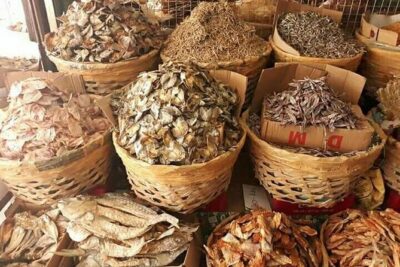
Next you’ll head to a local market. The goal here isn’t sightseeing for its own sake. It’s a small shopping mission tied to your dessert later. You’ll pick up fruit, including types you probably haven’t seen before, and it adds a fun “we chose this” feeling when you eat it.
Markets also do something subtle. They teach you how people actually buy food in this region, not just what tourists expect to buy. You’ll get guidance from your guide on what you’re looking at and why it matters in everyday Vietnamese meals.
Keep an eye on your comfort level with crowds and stalls. The market is active, so it’s not the time to act like you’re in a museum. But that’s the point: you’re stepping into normal life, not a staged version of it.
Basket boat into the coconut water-forest: calm, simple, and very local
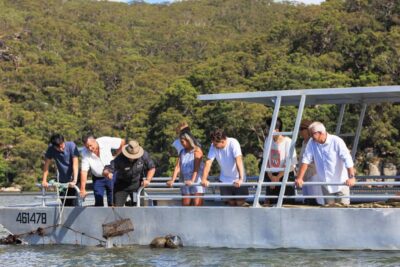
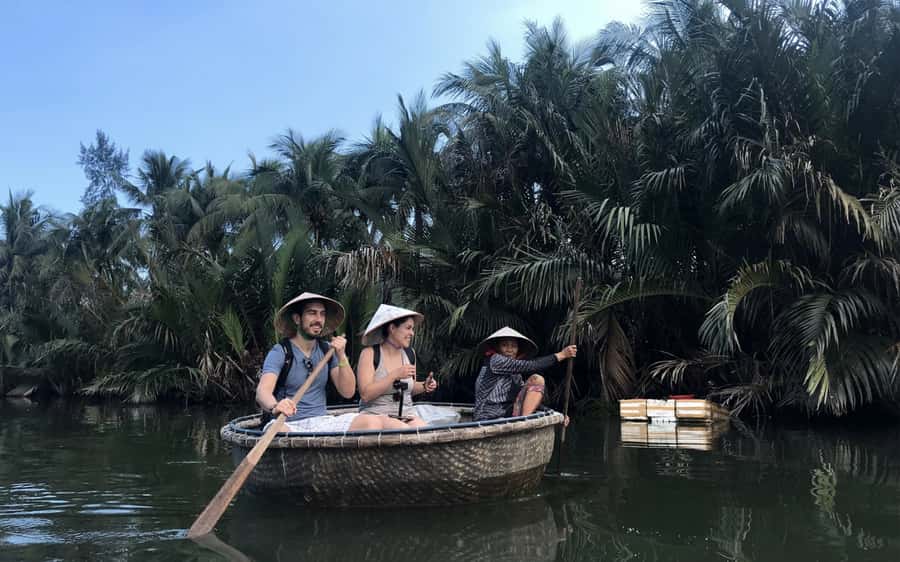
Then comes one of the most relaxing parts: a basket boat ride into the water coconut forest. This is a different pace than the bike and market. The water route slows your thoughts down fast. You’re gliding along, surrounded by trees that make the river feel tucked away.
Several past groups mentioned it felt quiet, with the vibe more “peaceful ride” than “tourist line.” Even if you share the boat with others, it still tends to feel intimate because the setting does the work for you.
This part also helps you understand the farm-to-water connection in central Vietnam. Coconut and waterways aren’t just scenery. They’re part of how communities live, grow food, and use the land-water edge.
Arriving at the organic farm: what “hands-on” really means here
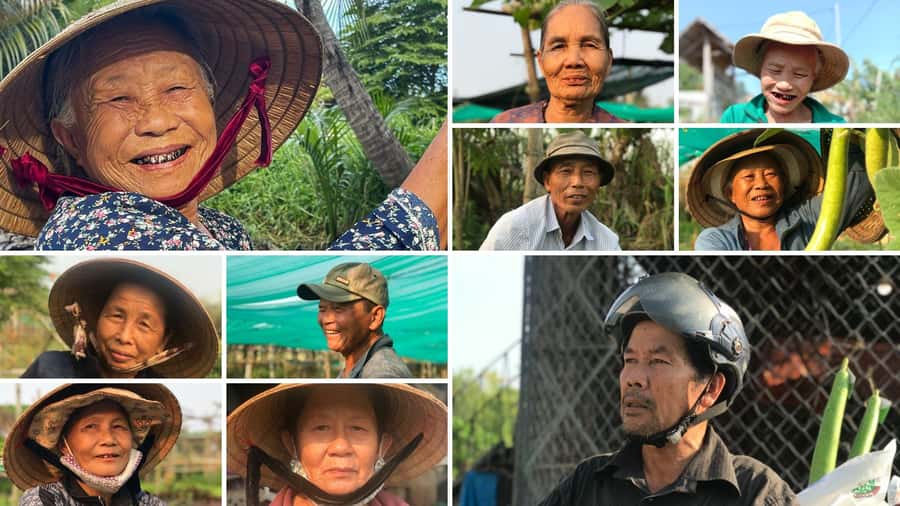
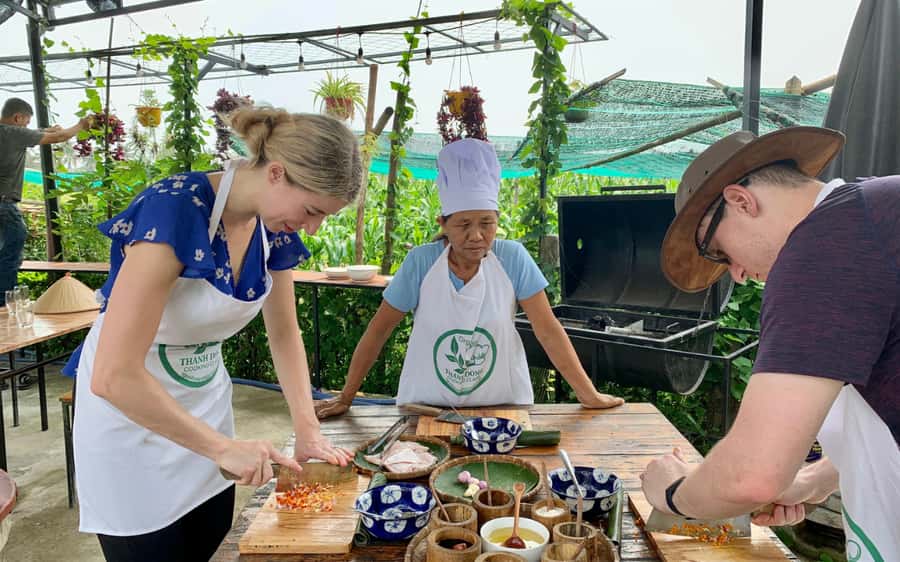
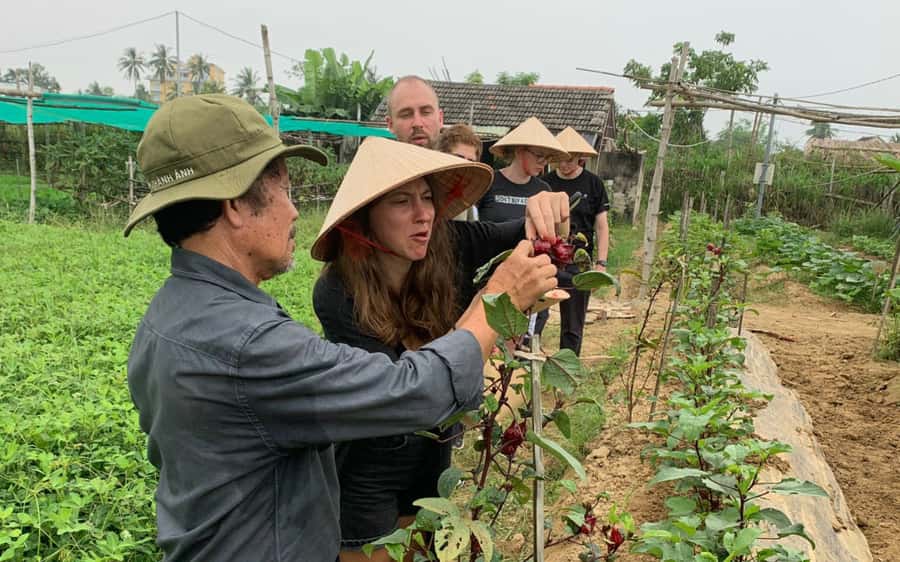
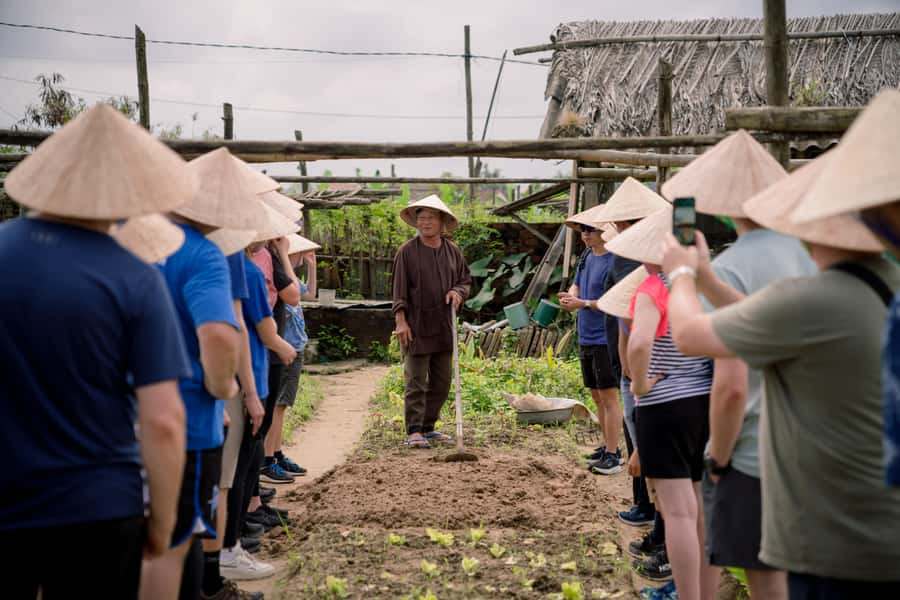
Once you reach the farm, the story becomes practical. You won’t just hear about organic farming. You’ll be invited to join in daily work like applying organic manure, making organic pesticides to control pests, cultivating the soil, and watering. That’s a key difference from tours that stop at a single photo spot.
Your guide will explain the community-based project behind the farm practices. The whole angle is sustainability with local farmers, meaning the lessons are grounded in what people do day after day, not generic eco talk.
What you take away is simple: organic farming is mostly about systems. Soil health, compost and manure, careful pest prevention, and timing. Even if you don’t remember every detail, you’ll understand the logic when you see how much effort goes into soil and prevention rather than quick chemical fixes.
Also, pay attention to the people you meet. Some guides (like Khieu and Kun in different groups) made a point of walking guests through herbs and how vegetables connect to Vietnamese cooking. It makes the farm feel like a working kitchen, not just a farm.
Cooking lunch from what you harvested: the best part of the day, with real results
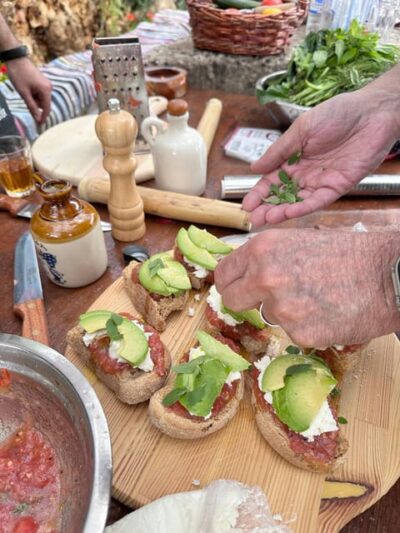
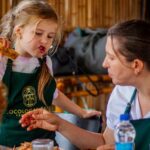
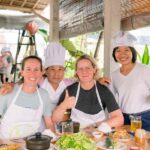
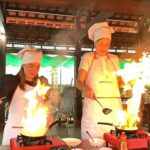
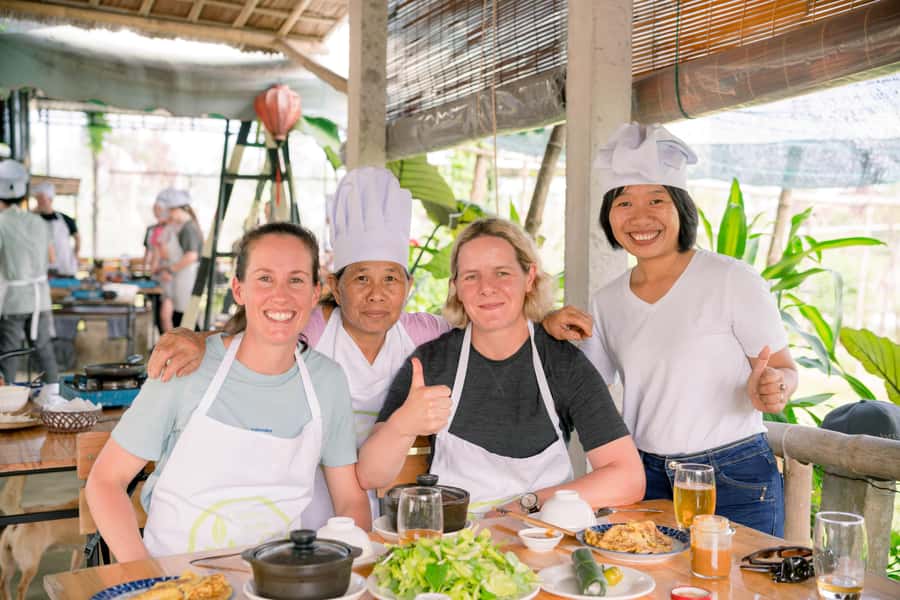
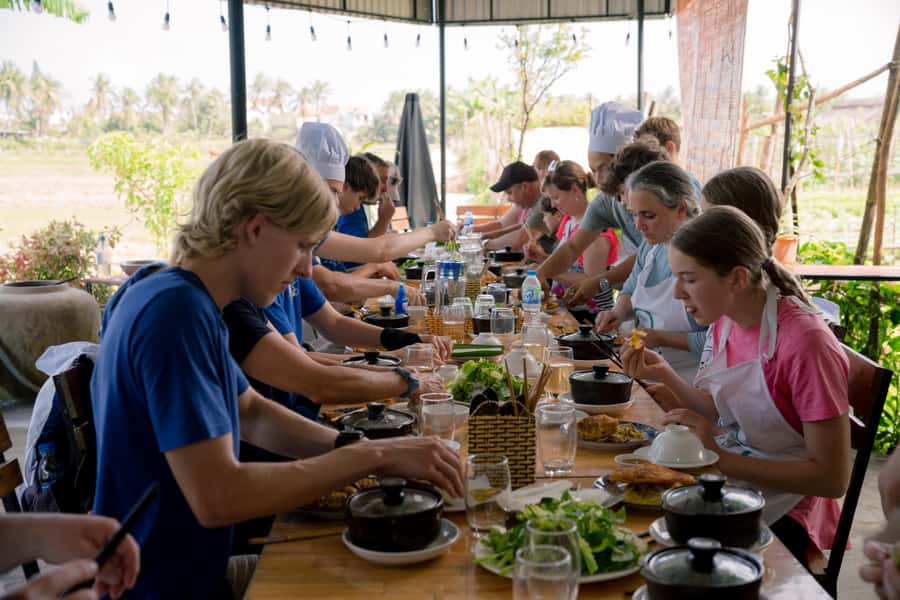
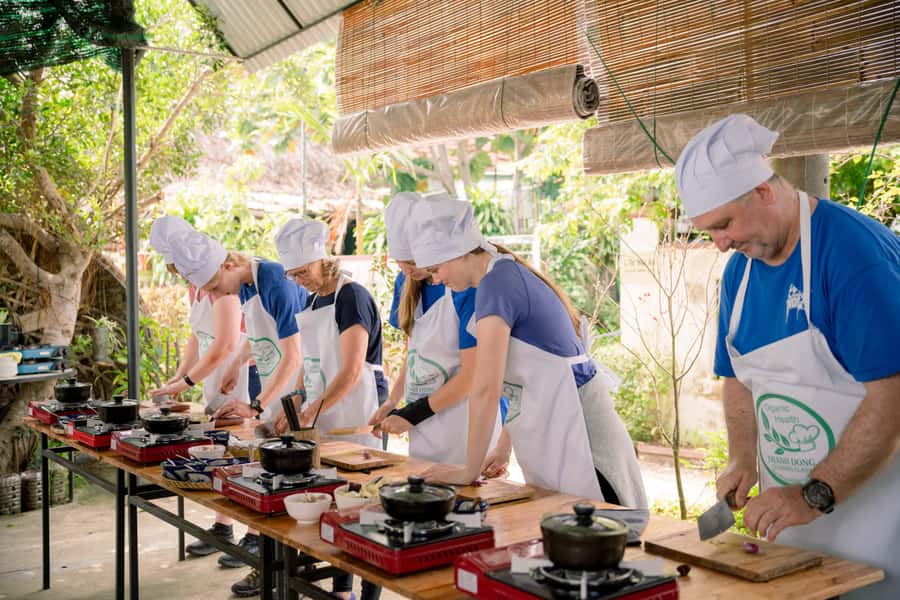
After the gardening, you’ll head back to the farmer’s house for cooking. This is where the tour earns its price. You’ll use produce from the organic vegetable garden to cook your own Vietnamese lunch, then eat it together at a garden-setting table.
The best part for me is that you’re not watching someone else cook while you hold a fork. You participate, you taste, and you end up with a full meal built around what you touched earlier in the morning.
Dietary needs are specifically handled. You can expect options for vegan, gluten-free, and allergies. This is not a “we’ll try” situation. The tour is set up to adapt the cooking so you’re part of the experience, not stuck with a plain plate.
As for what you might cook, it can include dishes like banh xeo, pancakes, banana-leaf fish, and vegetable-forward dishes such as eggplant with mushrooms in a clay pot. Dishes vary by group and ingredients, but you can count on Vietnamese classics and garden vegetables.
One more small but meaningful bonus: you may receive recipes to take home. That’s useful because it turns the memory into something you can recreate later instead of just a photo.
Value check: why $34 feels fair for a 4-hour combo day
At $34 per person for about 4 hours, this tour packs a lot into one block of time. You’re paying for four separate experiences stitched together with guiding and food:
- short bike ride (bike + helmet included)
- market fruit stop
- basket boat ride
- farm work + cooking class + all food and drink
Most single activities in Hoi An cost close to that once you add entry fees, guide time, and transportation. Here, you also get the education part: how organic farming works and how those harvest choices show up on your plate.
The hidden value is the dietary flexibility. If you travel with gluten-free or vegan needs, the “cost” of a normal food tour can get high fast when places can’t adapt. Here, the structure is already built to accommodate you.
Is it perfect value for everyone? If you’re not interested in cooking or farm work, you may find the day feels busy. But if you want an active morning that turns into a satisfying meal, it’s priced like a deal.
Rain or shine: how to dress so the day stays fun
The tour runs rain or shine, so plan like it might sprinkle. The bike and garden work keep going even if the weather changes, which is why your comfort matters.
Wear breathable clothes you don’t mind getting a little dusty. Closed-toe shoes help for farm ground and for standing around while you cook. Bring a light rain layer just in case, since one guide in a rainy experience reportedly helped with a poncho so you could keep moving.
For most people, the cycling is short enough that you won’t need to turn this into a fitness mission. Still, hydrate and protect yourself from sun between stops.
Who this tour fits best (and who should skip it)
This tour fits best if you want a more grounded Hoi An day than walking the old town. It’s also a great fit for food lovers who enjoy learning by doing.
It’s especially suitable if you’re:
- interested in organic farming practices, not just farm photos
- comfortable with a short bike ride
- excited to cook and then eat what you make
- traveling with vegan, gluten-free, or allergy needs
It’s not suitable for pregnant women, per the tour rules.
If you’re traveling with kids, it can work, but plan for the reality of city riding. The farm and cooking parts tend to be engaging, but the road section can be the stress point for very young riders.
Small details that make the day smoother
A few things repeatedly show up in how this tour feels in practice:
- The guides (Trang, Kun, Nguyen, Khieu, Karla, Toan, Tom) tend to keep explanations practical and English clear
- Group pacing usually includes waiting and catching up when needed
- The day is designed as a sequence, so you move from “town” to “water” to “farm” to “lunch” without long idle gaps
- The boat ride often feels calmer than the more famous tourist-style routes because it’s focused on a quiet coconut-water area
Also, helmets are provided, so you don’t have to hunt one down before meeting.
Should you book this organic farm cycle + basket boat cooking tour?
Book it if you want a hands-on Hoi An day: cycling, boat time, real organic farm tasks, and a lunch you cook yourself from garden harvest. At $34, the value is strongest when you care about food, want dietary support, and enjoy experiences that go beyond “walk and look.”
Skip it if you dislike cooking or farm work, or if you’re not comfortable with any city riding element. It’s not a hard-bike tour, but it isn’t zero-stress either.
If you want a single 4-hour experience that combines rural life with a satisfying meal, this is the kind of tour that tends to land as a highlight.
FAQ
Where do I meet the tour?
You meet at the front of the Hoi An Post Office, where your guide and bicycles with helmets are waiting.
How long is the tour?
The total duration is about 4 hours.
How far do I cycle?
The cycling portion is about 3 km.
Does the tour run in bad weather?
Yes. The tour runs rain or shine.
Can the tour accommodate vegan, gluten-free, or allergies?
Yes. Vegan, gluten-free needs, and allergies can be catered for.
What activities are included in the price?
Bicycle and helmet, an English-speaking guide, the basket boat ride, entrance ticket, and all food and drink.
Is this tour suitable for everyone?
It is not suitable for pregnant women.
Is free cancellation available?
Yes. You can cancel up to 24 hours in advance for a full refund.
Can I reserve now and pay later?
Yes. You can reserve your spot and pay later.