REVIEW · MONTEPULCIANO
Cooking class at the farm in Tuscany
Book on Viator →Operated by Valdichiana Living · Bookable on Viator
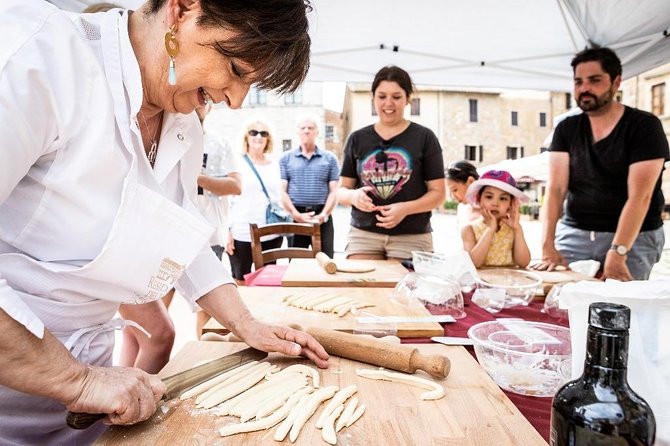
Cook, eat, and sip wine in rural Tuscany. In Montepulciano, this 3-hour class at a working farm mixes hands-on teaching with great farm views, then ends with a relaxed meal of what you cooked. The vibe is friendly and practical, with English instruction and patient help (one instructor named Laura comes up in repeat praise).
The biggest thing I like is that you’re not just watching. You prep a classic starter, roll and shape fresh pasta, and finish with a Tuscan dessert, using fresh local ingredients and techniques you can recreate later. One possible consideration: because the menu can shift with the season, you may encounter flavors you don’t love—one guest noted a liver-based starter wasn’t to their taste.
In This Review
- Quick Highlights
- Cooking On A Farm Above Montepulciano: What The Setting Does For The Class
- Your Menu In Real Tuscan Terms: Starter, Handmade Pasta, Dessert
- Starter: Typical Products (and seasonal surprises)
- Main: Fresh Handmade Pasta + Traditional Sauce
- Dessert: Typical Tuscan Sweet
- The Cooking Lesson Itself: How the Teaching Works in English
- Welcome Drink, Then Work—What Your 3 Hours Feel Like
- Lunch or Dinner With Local Wine: Eating What You Made (For Real)
- Price and Value: Is $174.60 Worth It?
- Logistics That Can Make or Break Your Day
- Who Should Book This Tuscan Farm Cooking Class (and Who Might Skip It)
- Should You Book Valdichiana Living’s Cooking Class?
- FAQ
- How long is the cooking class?
- What’s included in the price?
- Is the class offered in English?
- What dishes will I prepare?
- Is transportation provided?
- What is the cancellation policy?
Quick Highlights
- Small group size (up to 15) makes it easier to get real help while you’re cooking.
- English-led instruction keeps the class accessible, though you may rely on clarification now and then.
- Starter + fresh handmade pasta + dessert gives you a full Tuscan meal, not a demo.
- Farm-to-table lunch or dinner means you eat what you make, with a glass of local wine.
- Apron included (Valdichiana Living) makes the experience feel like more than a one-time activity.
- Patio meal setup is part of the experience, with the food served after a short break.
Cooking On A Farm Above Montepulciano: What The Setting Does For The Class
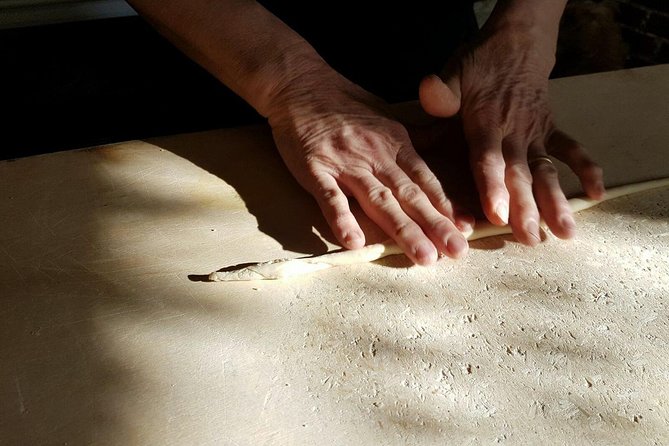
This isn’t a kitchen in a hotel basement. You’ll be cooking at a farm in the Montepulciano area (meeting at 53045 Montepulciano, Province of Siena), where the setting helps you slow down and focus on the food. The views are part of the deal, and you can see why people remember this class as something special long after they leave.
The pace feels human. You get a welcome drink to start, then you’re gradually pulled into the workflow—prep, cooking, tasting, and refining. That matters because Tuscan cooking is very technique-driven. If you want to understand why sauce thickness or dough texture matters, you learn it by doing, not by reading.
Also, the small-group limit (max 15 travelers) changes the whole experience. You’re not shouting over a crowd or waiting your turn for basics. It’s easier to ask questions while you’re hands-on.
You can also read our reviews of more tours and experiences in Montepulciano.


Your Menu In Real Tuscan Terms: Starter, Handmade Pasta, Dessert
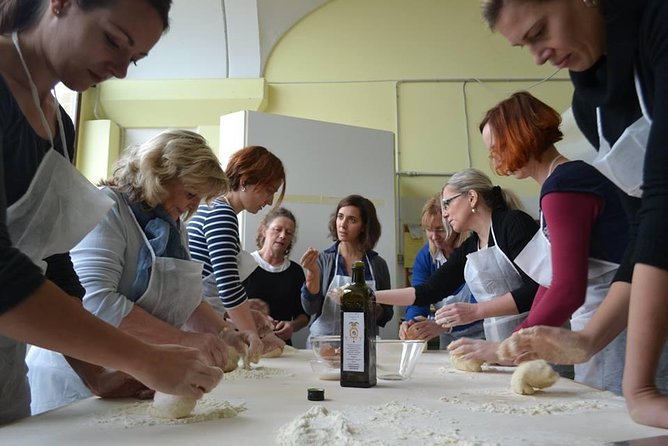
The class is built around a full Tuscan meal. While the exact ingredients can vary slightly with seasonal availability, the structure stays the same: starter, fresh pasta with its traditional sauce, and a Tuscan dessert.
Starter: Typical Products (and seasonal surprises)
You’ll make a typical Tuscan starter using fresh local ingredients. That can mean anything from a simple spread to something built from local products, and one review specifically mentioned a chicken liver-based spread. If liver flavors aren’t your thing, treat that as your cue to be honest with the instructor if there’s time to adjust what you sample or eat. You can’t always rewrite a menu, but you can usually manage expectations around what’s on the table.
Main: Fresh Handmade Pasta + Traditional Sauce
This is the heart of the class. You’ll prepare fresh handmade pasta and learn how it connects to a traditional sauce. Even if you’ve rolled pasta before, you’ll likely pick up small technique tips that make it easier next time—things like thickness, handling, and how sauce behaves with pasta texture.
This part is why the class is worth your time. Cooking pasta hands-on teaches you the difference between a dish that tastes good and one that tastes genuinely Tuscan.
Dessert: Typical Tuscan Sweet
The dessert section keeps things grounded and local. You’re not chasing a fancy restaurant recipe. You’re making a typical Tuscan dessert that matches the rest of the meal—simple, classic, and meant to be shared.
Dessert also gives you a mental reset. By the time you’re finished, you’re ready to sit down and eat without feeling like you spent three hours in a culinary gym.
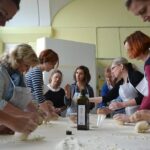

The Cooking Lesson Itself: How the Teaching Works in English
Instruction is offered in English, and that’s a big plus if you don’t want a language barrier to swallow your experience. That said, at least one guest noted that English was a little hard to understand, then got through it with a translation app during the trickier parts. If you’re the type who freezes when a sentence is unclear, bring a translation app just in case. It’s a small move that can save your confidence.
The teaching style seems to focus on patience and step-by-step guidance. One review praised an instructor, Laura, for being extremely helpful and patient, especially when guests felt they weren’t naturally great at cooking. That kind of coaching is exactly what you want in a hands-on class. Pasta dough and sauces don’t reward overconfidence—they reward calm attention.
You’ll also notice how the class encourages you to do the work yourself. It’s not a spectacle. You learn by repeating the steps, adjusting, and seeing what the food does as it changes.
Welcome Drink, Then Work—What Your 3 Hours Feel Like
The duration is about 3 hours, and the structure is designed to keep the class moving without rushing you. You’ll start with a welcome drink. Then you’ll shift into cooking: starter first, then pasta, then dessert.
What I like about this flow is that it mirrors how a real meal is built. You’re not stuck on just one dish for the entire session. You learn multiple components—prep, dough work, sauce thinking, and finishing touches for dessert—so you leave with a more complete skill set than you’d get from a one-recipe class.
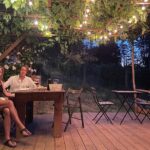
After you cook, you get a chance to reset. One guest specifically described a small break and then the food being served by wait staff on an outdoor patio. That small transition—from cooking station to dining table—makes the meal feel celebratory, not like you just cleaned up your own mess.
Lunch or Dinner With Local Wine: Eating What You Made (For Real)
At the end, you’ll enjoy the lunch or dinner you prepared. It also includes a glass of local wine, which is a classic Tuscan way to make the meal feel complete.
This part matters because it closes the loop. You don’t just leave with knowledge—you leave with proof. You taste your results while they’re still fresh, and you can connect what the instructor taught to how the food actually comes out.
The dining setup is also part of the charm. Reviews mention serving on an outside patio, which pairs beautifully with Montepulciano’s countryside vibe. If you like meals that feel like a pause from sightseeing, this is your moment.
And yes, the wine matters. One review said the wine served with the meal was very good. That’s not universal in every cooking class setup, so it’s worth taking note.
Price and Value: Is $174.60 Worth It?
At $174.60 per person, this class isn’t the cheapest way to eat in Tuscany. But it also isn’t just a “try something local” experience.
Here’s what you’re getting that’s bundled into the cost:
- A guided Tuscan cooking class
- A welcome drink
- Your lunch or dinner
- A glass of local wine
- A Valdichiana Living apron included
For many people, the value comes from the meal and the learning together. You’re paying for instruction and for the food you make, plus the setting and service that happens afterward. A lower-cost class might hand you a recipe card and call it a day. This one gets you into the process, then lets you eat the result like it’s yours.
The group size helps value too. Up to 15 travelers means you’re less likely to feel like a passenger in someone else’s class. That kind of attention is hard to price, but it’s obvious when you’re in the kitchen.
Logistics That Can Make or Break Your Day
You’ll meet at 53045 Montepulciano, Province of Siena. The activity starts there and ends back at the meeting point. So you’re not signing up for a long transfer across the region.
Transportation is not included on request. That means you should plan on getting there on your own. One practical worry you might have—especially if you’re driving in rural dark—came up in a review. Someone was concerned about driving home after sunset, but it turned out not to be difficult. I’d still plan with daylight in mind when you can, and have a simple route ready.
Also keep in mind:
- You’ll receive confirmation at booking.
- You’ll have a mobile ticket.
If you’re the kind of traveler who hates last-minute fuss, these details reduce friction. You can focus on cooking instead of paperwork.
Who Should Book This Tuscan Farm Cooking Class (and Who Might Skip It)
This class fits well if you want food learning without the pressure of a cooking showdown. You’ll be in a small group, with patient help, and you’ll learn a full meal (starter, pasta, dessert). It’s also a strong pick for couples and friends who want shared time doing something hands-on rather than collecting photos.
You’ll enjoy it most if you:
- Love Italian food and want technique, not just taste
- Want to eat outdoors in a farm setting
- Prefer small-group instruction in English
- Are happy to follow a menu that can vary with seasonal ingredients
You might skip it if:
- You have very specific dietary dislikes (like a no-liver preference) and you’re uncomfortable with seasonal starters that may include them
- You’re expecting a strictly scripted, identical menu every time
Should You Book Valdichiana Living’s Cooking Class?
If you want a Tuscany experience that goes past the usual sightseeing loop, I think this is a solid booking. You get real instruction, a full Tuscan meal you make yourself, and the setting is memorable. The class is small, the atmosphere feels relaxed, and the ending meal with wine keeps it from feeling like a chore.
Book it if you’re excited to cook and eat in the countryside. You’ll likely leave with practical skills for homemade pasta and sauce—and with a very Tuscan meal that feels earned.
FAQ
How long is the cooking class?
It runs for about 3 hours (approx.).
What’s included in the price?
The price includes a welcome drink, the Tuscan cooking class, lunch or dinner with a glass of wine, and a Valdichiana Living apron.
Is the class offered in English?
Yes. The experience is offered in English.
What dishes will I prepare?
You’ll prepare a typical Tuscan starter, fresh handmade pasta with its traditional sauce, and a Tuscan dessert. The menu may vary slightly depending on seasonal availability.
Is transportation provided?
Transportation service is not included (it’s only mentioned as available on request).
What is the cancellation policy?
You can cancel for a full refund up to 24 hours before the experience’s start time. Changes within 24 hours of the start time aren’t accepted, and free cancellation applies up to that cutoff.