REVIEW · EDINBURGH
Makars Mushroom Farm Summerhall Tour with DIY Block Making
Book on GetYourGuide →Operated by Makars Mushroom Farm · Bookable on GetYourGuide
Mushrooms grow in the dark, on purpose. I love how hands-on this lion’s mane farm tour feels, and I love that you finish by making a DIY block you take home. One possible drawback: the farm is in an underground basement, so if you hate tight spaces, this may not feel comfortable.
This is a small-group experience (up to 8) that stays friendly and easy to follow, with a live English guide and fun timelapse videos. I also liked the lightly playful tone—one guide even brought in cute handmade mushroom treats as part of the vibe—without turning the lesson into a gimmick.
In This Review
- Key things I’d bet on before you go
- Entering the Makars Mushroom Farm under Summerhall
- Fungi basics: why this tour starts with evolution
- Lion’s mane growing, step by step: grain to incubation to fruiting
- Sterile conditions on display: the real-world reason growers are strict
- Fruiting tents and crop monitoring: oxygen, water, nutrients
- The fun part: inoculate your own block to take home
- How to think about value for the price
- Summerhall and Edinburgh logistics, in plain terms
- Who this tour is best for (and who might skip)
- Should you book the Makars Mushroom Farm DIY block tour?
- FAQ
- What is the duration of the Makars Mushroom Farm tour with DIY block making?
- How much does it cost?
- What will I learn during the tour?
- Will I make something to take home?
- When will my block fruit?
- Is the tour only for mushroom experts?
- Are children allowed?
- Is the venue wheelchair accessible?
- Where does the tour start inside Summerhall?
Key things I’d bet on before you go
- A real sterile mushroom setup, explained in plain language
- Lion’s mane from grain to fruiting, not just a surface demo
- Fruiting tents where you learn what you actually monitor (oxygen, water, nutrients)
- You inoculate your own block and take it home
- A practical finish that makes the hour feel worth it
Entering the Makars Mushroom Farm under Summerhall
The tour takes place at Makars Mushroom Farm, set inside a disused underground basement of Summerhall in Edinburgh. You start by going into the main entrance, then walking to the back door where there are stairs. Go down and follow the signs for the machine room, then keep following signs to the end of the corridor.
Walking down helps you get the point fast: this is not a museum display. It’s a working growing environment, and you’ll see why growers care about cleanliness, consistency, and timing. Expect the tour to feel close-up and a bit unusual—in a good way—since you’re basically learning in the same conditions where mushrooms are cultivated.
You’ll also be in a small group, capped at 8 people. That matters because questions don’t get swallowed, and the guide can answer in a way that fits beginners as well as curious food nerds.
Fungi basics: why this tour starts with evolution
Before you see tents and sterile rooms, you get a quick, approachable introduction to fungi as a life form. The guide frames fungi as the third branch in evolution, which is a helpful way to break people out of the usual plant-or-animal thinking. You also learn how fungi can be nutritious food, with benefits that sit somewhere between what people think of as meat and plants.
That opening matters because it changes how you watch what comes next. Instead of treating mushrooms like magic, you start seeing them as living organisms with specific needs. You’ll leave that first stage with more context for why the farm is so strict about sterile technique later on.
Lion’s mane growing, step by step: grain to incubation to fruiting
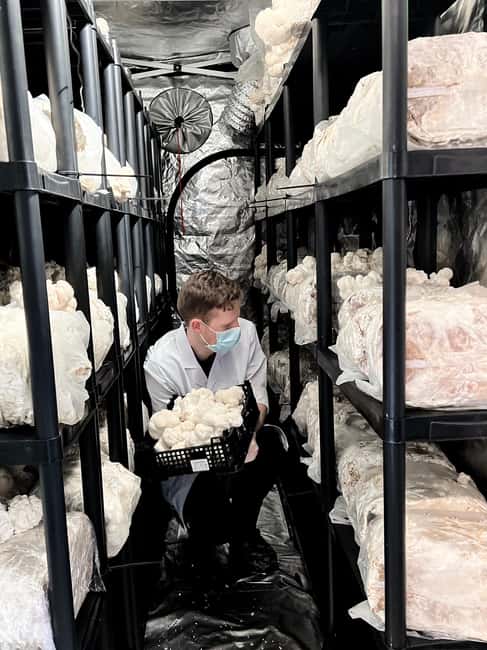
The heart of the tour is learning how lion’s mane is grown reliably. You’ll walk through the process from grain production to incubation and fruiting, and you’ll see how the farm’s approach keeps conditions controlled.
What I like here is that you don’t just get a general story. You get the sense that each stage has a job: prepare the material, keep it stable while it develops, then shift it toward fruiting. In plain terms, the farm’s system is built to reduce randomness, which is exactly what you want when you’re trying to repeat results.
The guide also explains the sterile environment and why it’s needed. You’ll hear that mushrooms can be finicky, and that contamination is the enemy of predictable growth. Even if you’re not trying to become a home grower, understanding sterile technique helps you grasp what you’re seeing in the farm rooms and tents.
Sterile conditions on display: the real-world reason growers are strict
This part is where the tour earns its keep. You’ll see sterile conditions and techniques used to grow these exotic mushrooms reliably. That’s not just a lecture point—it’s the foundation for how the farm keeps the crop on track.
You’ll also notice how carefully the farm separates clean growing from everything else. The main takeaway for you is simple: sterile doesn’t mean fussy for the sake of it. It means protecting the culture you’re trying to grow from unwanted organisms.
If you’ve ever tried growing mushrooms at home and felt like you were doing everything right, but results still varied, this section explains why that happens. It’s the difference between guessing and controlling.
Fruiting tents and crop monitoring: oxygen, water, nutrients
Then you move into the fruiting tents, where the tour turns practical. This is where you learn how growers monitor key factors like oxygen, water, and nutrients to support a successful crop.
Those words matter because they’re not abstract. Oxygen connects to how mushrooms develop and how the environment supports the fruiting stage. Water and nutrient balance affect whether you get healthy growth or weaker results.
The guide also talks about what to look for in the mushroom crop before harvest. You’ll get enough observational guidance to understand what a good outcome looks like, which helps you connect the lesson to the block you’ll take home later.
I like that this isn’t presented as a single magic trigger. You see fruiting as something that’s managed and checked, not something that just happens on its own.
The fun part: inoculate your own block to take home
The tour finishes with a DIY session. You inoculate your own mushroom block to take home, and the expectation is that it will fruit in about three weeks.
This is the piece that turns a 1-hour tour into something you can extend at home. You’re not leaving with only facts—you’re leaving with a living project. The excitement level stays high because the timeline is short enough to feel like you’ll actually see progress soon.
You’ll also watch timelapse videos showing the fruiting process. For many people, timelapse is what makes the whole thing click. Mushrooms are slow in real time, so those videos help you visualize what you’re waiting for when your block is sitting quietly.
One extra note from the guide’s approach: the overall tone stays light and welcoming. That helps if you’re nervous about doing something unfamiliar. And because the group stays small, you’re more likely to get direct help if you need it.
How to think about value for the price
At about $13 per person for a 1-hour guided visit, the value is strong because you get three things at once: education, a tour inside an actual growing operation, and a take-home inoculated block.
Many short tours give you one of those. This one strings them together, so you’re paying for a complete mini-experience: what the farm does, why it does it, and how it translates into a home-growing attempt. It also helps that the guide’s style is engaging—people tend to leave feeling they not only learned something, but also enjoyed the hour.
The price also makes it realistic for a spontaneous add-on if you’re already in Edinburgh. If you like hands-on workshops or you want a memorable food-and-science experience that isn’t hard to understand, this is priced in a way that makes it easy to justify.
Summerhall and Edinburgh logistics, in plain terms
This experience runs at Summerhall, which is walkable through the Meadows, and it’s simple enough to reach by bike too (bikes can be brought inside or locked in racks). If you’re using public transport, several Lothian Bus routes serve Summerhall. Stops on South Clerk Street are a short walk away, and some routes stop directly outside the main entrance.
Parking is limited to street meter options, so I’d plan to arrive with a little patience if you’re driving. The venue’s setup is also worth knowing for your comfort: it’s underground, and the tour isn’t suitable for wheelchair users.
On timing, it’s a 1-hour experience with live English commentary, and the schedule depends on availability. Because you’ll be in a small group, showing up on time helps you start smoothly and settle into the sterile-environment mindset the guide wants.
Who this tour is best for (and who might skip)
This is suitable for all interest levels, not only mushroom enthusiasts. Even if you know nothing, you’ll get the big picture of fungi as a life form, plus a guided explanation of how lion’s mane is grown.
You’ll especially enjoy it if you like practical learning, food science, or workshops where you leave with something you can try at home. The DIY inoculation gives you a personal stake in the story, and the three-week fruiting expectation adds a satisfying “wait and see” payoff.
If you have claustrophobia, or you strongly dislike underground spaces, consider skipping. Also, it’s not for children under 10, which keeps the experience calm and focused.
Should you book the Makars Mushroom Farm DIY block tour?
Book it if you want a fun, hands-on Edinburgh experience that mixes real farming practice with a takeaway project. The biggest win is that you learn how lion’s mane grows in controlled sterile conditions, then you immediately apply part of that learning by inoculating your own block.
Skip it if you’re uncomfortable in underground spaces or if you’re expecting a quick photo-op. This tour is more about process and observation than scenery. If that fits your style, it’s an easy yes—especially at this price and with a small group size that keeps the guide’s attention on you.
FAQ
What is the duration of the Makars Mushroom Farm tour with DIY block making?
The tour lasts 1 hour.
How much does it cost?
The price is $13 per person.
What will I learn during the tour?
You’ll learn about fungi and the lion’s mane growing process, including grain production, incubation, fruiting, and how growers monitor factors like oxygen, water, and nutrients.
Will I make something to take home?
Yes. You inoculate your own mushroom block to take home.
When will my block fruit?
Your block is expected to fruit in about three weeks.
Is the tour only for mushroom experts?
No. It’s suitable for all interest levels, not just mushroom enthusiasts.
Are children allowed?
It’s not suitable for children under 10.
Is the venue wheelchair accessible?
No. There is no accessible access, and it is not suitable for wheelchair users.
Where does the tour start inside Summerhall?
Go in the main entrance, walk to the back door where stairs are, go down the stairs, and follow signs for the machine room and then to the end of the corridor.