REVIEW · HO CHI MINH CITY
Market to Farm to Table Cooking Class in saigon
Book on Viator →Operated by HCM Cooking Class · Bookable on Viator
Morning starts with food in mind. This Saigon market-to-farm-to-table cooking class turns you loose at a local wet market and then onto an organic farm, so the ingredients feel real before you ever pick up a knife. I really like that it stays small (max 15), which means the chef can help you nail classic techniques while you’re learning from people like Chef Tan, and sometimes Chef Daisy is leading the way at the market.
The other thing I love: it’s truly hands-on. You’ll cook and eat four Vietnamese dishes, then get recipes plus a completion certificate. One possible drawback to weigh: it’s a full day that starts early at 7:30am, so go in knowing you’ll be active for about 8 hours.
In This Review
- What the day feels like in practice
- Key takeaways before you book
- Trading sleep for flavor: the 7:30am start that actually pays off
- Wet market time: seafood, herbs, and fruit you’ll recognize later
- Farm arrival with a farmer-style welcome and an organic-plant focus
- Picking your own produce: the moment lunch becomes personal
- The cooking class: four dishes, 100% hands-on
- How to think about the four dishes
- Vegetarian options and special requests
- Lunch, coffee, tea, and what you actually take home
- Practical value: why this beats a normal meal out
- Price and logistics: is $70 a fair deal for a full day?
- Who this suits best (and who might want a different plan)
- Simple ways to get the most from the day
- Should you book this Saigon market-to-farm cooking class?
- FAQ
- What time does the cooking class start?
- How long is the experience?
- How many dishes will I cook and eat?
- What size is the group?
- Do you offer pickup and drop-off?
- Is there a vegetarian option?
- What’s included in the price?
What the day feels like in practice
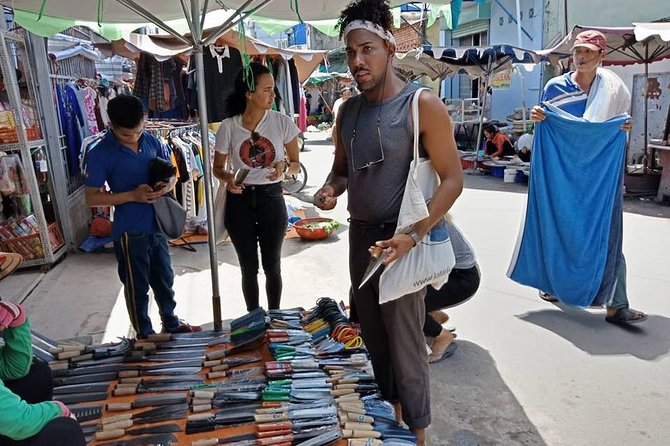
You’re not just watching a cooking show. You’re shopping with a guide, meeting the farm side of Vietnamese eating, picking produce yourself, and then cooking multiple dishes as a group. If you’re the type who wants the why behind the flavors (herbs, vegetables, mushrooms, and how people grow them), this format makes sense.
If you want an easy, sit-down-only tour, this probably won’t feel like the right fit. But if you enjoy doing, tasting, and learning on the move, it’s a great way to spend your time in Ho Chi Minh City.
Key takeaways before you book
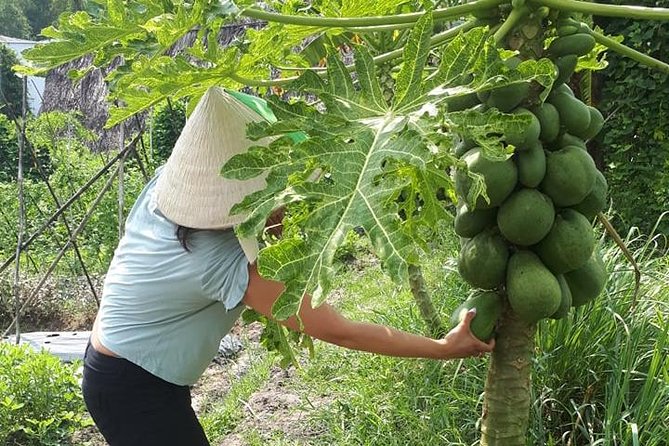
- Wet market morning with fresh fruit, seafood variety, and ingredient education you can see up close
- Organic farm visit where you learn what grows where and why herbs and plants matter for flavor and nutrition
- Pick-your-own produce so lunch is connected to what you handled earlier
- 100% hands-on cooking for four dishes, not a passive demo
- Small group (max 15) for more attention and less waiting around
- Take-home extras: recipes, coffee/tea, lunch/snacks, and a certificate
You can also read our reviews of more tours and experiences in Ho Chi Minh City.


Trading sleep for flavor: the 7:30am start that actually pays off
The class begins at 7:30am, and yes, that’s early. But in Vietnam, early often means better produce, fewer crowds, and a market that’s still in full swing. By the time you’re cooking, you’re already thinking like a cook, not like a tourist with a camera.
Plan on about 8 hours total. You’ll have hotel pickup and drop-off, and you’ll spend the day moving between three main phases: the wet market, the farm, and the kitchen/lunch table. Because the schedule is packed, it helps to eat lightly beforehand or be ready for breakfast to be handled as part of the day (you’ll have snacks and then a full lunch setup during the experience).
What I’d do if you’re budgeting energy: wear comfortable shoes and keep water handy. Bottled water is included, but you’ll still want to stay ahead of the heat.
Wet market time: seafood, herbs, and fruit you’ll recognize later
This is a wet market visit with a chef/guide explaining what you’re looking at, not just walking past stalls. Expect to see plenty of ingredient variety, including alive seafood, plus the vegetables, herbs, and produce that show up again and again in Vietnamese cooking.
This part of the day is valuable because it turns ingredients into names and flavors you can use later. You’ll sample fresh fruit from the market, which gives you a quick taste of how Vietnamese meals balance freshness and sweetness alongside herbs and savory sauces.
You’ll also get the sense that the market is the real classroom. When you understand what’s available and how people choose it, the cooking class becomes more than recipes—it becomes a way of thinking. And that matters if you plan to cook back home.
Small practical tip: markets involve lots of smells and bright colors. If you’re sensitive to strong odors, give yourself a second to adjust, then focus on what your guide is pointing out.
Farm arrival with a farmer-style welcome and an organic-plant focus
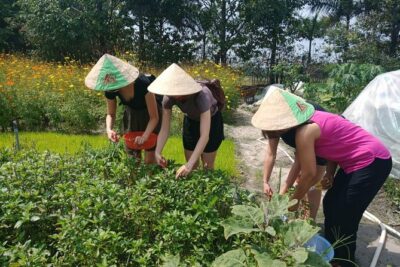
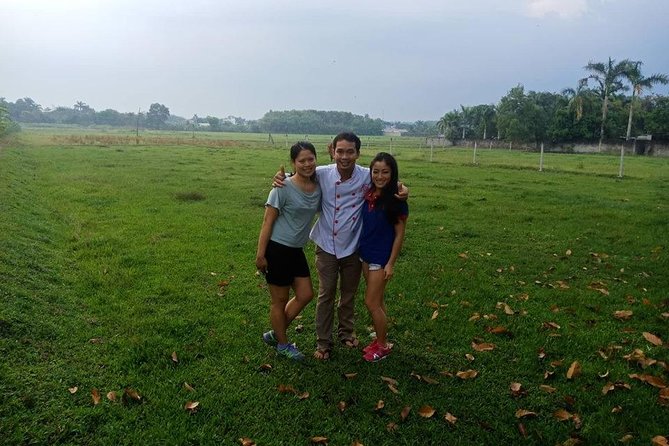
After the market, you’ll head to the farm, where the whole vibe shifts from crowded stalls to plants growing in the open. You get a traditional hat and basket welcome from a farmer, which sounds like a detail, but it sets the tone: this isn’t staged. It’s an introduction to farm life.
On the farm, you learn about the organic growing methods and you’ll see a lot of vegetables and herbs up close—things like mints and mushrooms are specifically part of what you’ll be learning about. The way the guide frames it is useful for cooks: different plants contribute different nutrition and different flavors, and Vietnamese dishes often build on that logic.
You’ll also get to taste or try produce that comes from the farm, not just look. That’s one of the biggest “aha” moments in a market-to-farm experience: you realize how the ingredient supply shapes the menu.
Picking your own produce: the moment lunch becomes personal
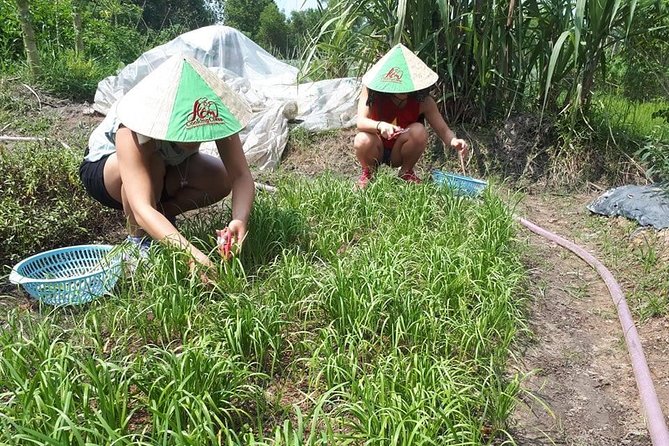
One of the best parts is that you don’t just watch someone harvest. You’ll be picking your own ingredients from the farm. This is more than fun—it’s motivation. When you’ve chosen the herbs or vegetables with your own hands, you pay attention during prep and cooking because you already feel ownership of the flavors.
This is also where you’ll start connecting the dots between what you saw at the market and what’s growing at the farm. If you noticed certain vegetables earlier, you’ll understand why those ingredients show up in the dishes you’re about to cook.
If you’re the type who forgets what you did two hours ago, here’s the solution: take a few mental notes while picking. Which greens did you choose? What did the herbs smell like? Even without taking photos constantly, that memory will help when you’re seasoning later.

The cooking class: four dishes, 100% hands-on
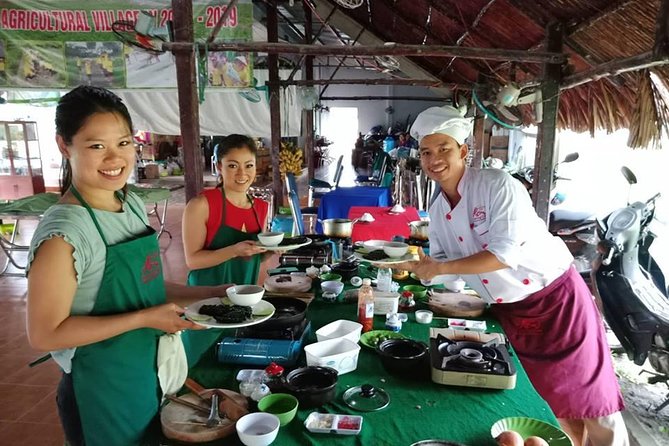
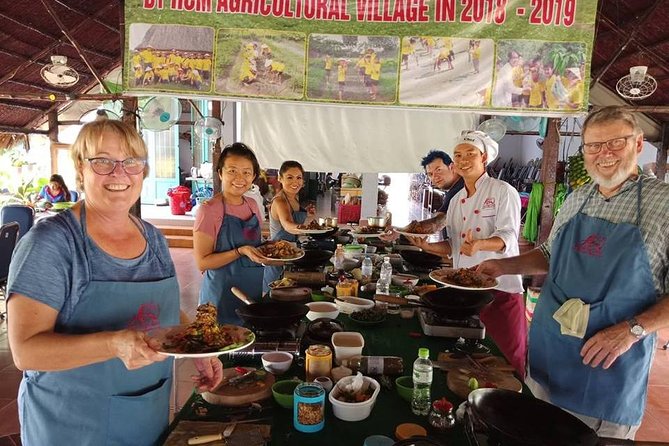
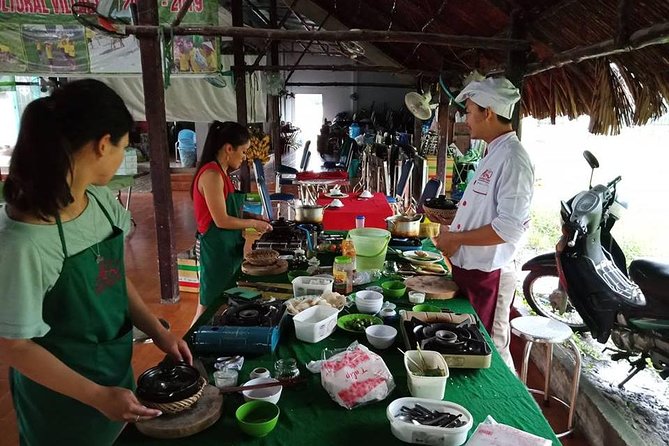
Now for the part you came for: the cooking. The format is 100% hands-on, and you’ll prepare and enjoy four different authentic Vietnamese dishes. With a class size limited to 15, you’re not stuck waiting for your turn or guessing what to do next.
The chef’s job here is practical: help you handle classic Vietnamese techniques and turn ingredient knowledge into real flavor. The reviews around this class highlight how friendly staff are and how patient the teaching can be—especially when you’re learning basics and not just following steps.
How to think about the four dishes
The specific dishes can vary by what’s available and how the chef structures the day, but the core method stays consistent: you’ll use ingredients you saw in the market and picked on the farm, and the cooking teaches you how those ingredients work together.
If you’ve had Vietnamese food before and wondered why it tastes the way it does—herbs, acidity, fresh notes, and savory depth—this is where you start seeing the pattern.
Vegetarian options and special requests
There’s a vegetarian option available, as long as you advise at booking. Also, the experience appears flexible if you request special dishes you’ve enjoyed during your trip, so it’s worth telling the team what you like when you book.
Lunch, coffee, tea, and what you actually take home
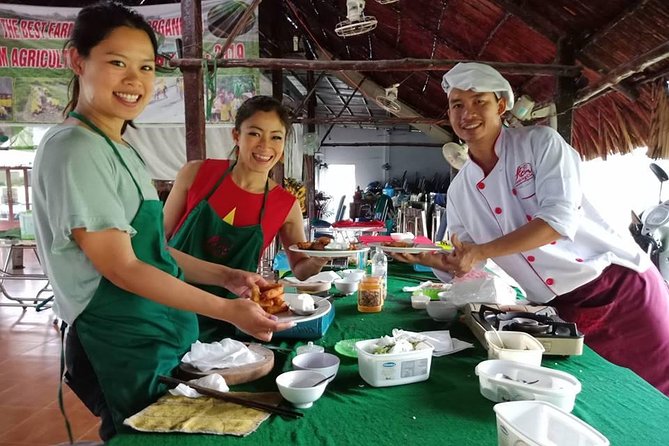
After cooking, you’ll enjoy what you made as a 4-course lunch, plus snacks during the day. Coffee and/or tea are included, and bottled water is part of the package. Drinks beyond what’s listed aren’t included, so if you like soda or extra beverages, plan on paying for those separately.
You’ll also receive recipes and a certificate of completion. The recipes matter because they translate your memory into something you can recreate. The certificate is mostly for fun, but it’s also a nice touch if you’re the type who likes proof of learning.
Practical value: why this beats a normal meal out
Lots of Vietnamese meals in the city are delicious, but you don’t always leave with a repeatable method. Here, you’re building a skill set. Even if you don’t cook every week, you’ll be more confident ordering Vietnamese dishes later because you’ll understand what ingredients are doing on your plate.
Price and logistics: is $70 a fair deal for a full day?
At $70 per person, this is not the cheapest half-day activity in Ho Chi Minh City. But the value stacks up when you look at what’s included:
- hotel pickup and drop-off
- market visit and farm visit
- 100% hands-on cooking for four dishes
- lunch + snacks (including a 4-course lunch)
- coffee and/or tea
- recipes and a certificate
- small group size (max 15)
In other words, you’re paying for a full-day food experience plus instruction plus transportation plus meals. If you’ve already spent time sightseeing and want something that’s both practical and memorable, this class is a strong use of your budget.
Who this suits best (and who might want a different plan)
This works especially well if you:
- like learning through doing, not just watching
- want market-to-table context for Vietnamese ingredients
- plan to cook at home and want real recipes
- prefer a small-group experience over crowded classes
It might be less ideal if you:
- hate early starts (7:30am is the schedule)
- want a very relaxed pace
- want a simple “just eat” activity without chopping, mixing, and cooking
Simple ways to get the most from the day
Bring your best “kitchen mindset.” You don’t need fancy cooking gear, but you do want to listen for the practical notes: what to taste, when to adjust, and how Vietnamese dishes balance herbs, seasoning, and freshness.
Also, if you have dietary needs beyond the vegetarian option, mention them when booking. The experience specifically asks you to share any dietary requirements ahead of time, and the cooking format is built around the group’s dish plan.
One more thing: take a moment to enjoy the farm and market even if you’re focused on cooking. The learning isn’t only in the kitchen—it’s in seeing where ingredients come from.
Should you book this Saigon market-to-farm cooking class?
Yes, if you want a hands-on Vietnamese food day that links wet market ingredients to organic farm picking and then into real cooking. The small group size (max 15) and the fact that you cook four dishes make it feel like a true experience, not a rushed show-and-tell.
Book it if you value take-home recipes and want to understand flavors beyond a restaurant menu. If early mornings and full-day schedules sound exhausting, you might prefer a later-day activity—but for most people, this one delivers the kind of learning and meal you remember.
FAQ
What time does the cooking class start?
The experience starts at 7:30am.
How long is the experience?
It lasts about 8 hours (approx.).
How many dishes will I cook and eat?
You’ll prepare and enjoy four different Vietnamese dishes.
What size is the group?
The tour/activity has a maximum group size of 15 travelers.
Do you offer pickup and drop-off?
Yes. Hotel pickup and drop-off are included.
Is there a vegetarian option?
Yes. A vegetarian option is available—you should advise at booking.
What’s included in the price?
Inclusions include lunch, snacks, a 4-course lunch, all activities, bottled water, coffee and/or tea, guides, hotel pickup/drop-off, and recipes plus a certificate of completion. Drinks beyond what’s listed aren’t included.