REVIEW · LEFKADA
Phyllo Pies Baking Class @ Lefkada Micro Farm
Book on Viator →Operated by Lefkada Micro Farm · Bookable on Viator
Phyllo dough starts with a simple stretch. This 4-hour class shifts you from Lefkada’s beach pace to the calmer Greek countryside at Lefkada Micro Farm, where you’ll make traditional phyllo pies and eat them at a shared table.
I especially love the hands-on pace: you learn phyllo work step by step, instead of just watching. And I like that the morning includes a real farm walk, so the food connects to the way it’s grown.
One possible drawback: the whole experience depends on good weather, so you’ll want flexibility in your schedule.
In This Review
- Key highlights to know before you go
- Lefkada Micro Farm phyllo pies: why this class feels different
- Meeting point, timing, and what to bring (without the stress)
- Step one: morning coffee and fire-warmed dough
- Walking Lefkada Micro Farm while the oven builds momentum
- Getting phyllo right: stretching, filling, and rolling
- The four recipes you’ll make (and what each teaches you)
- Lunch at the dining table: the part that sticks with you
- Price and value: what $144.05 really covers
- Who this phyllo class is perfect for
- Weather matters more than you think
- Final call: should you book this baking class?
- FAQ
- What time does the Phyllo Pies Baking Class start?
- How long is the baking class?
- Where does the class meet?
- How many people are in the group?
- What recipes will you make during the class?
- Is lunch included?
- Can you bring a service animal?
- What happens if the weather is bad or you need to cancel?
Key highlights to know before you go
- Small group (max 10) means more time for questions and hands-on guidance.
- Wood-burning oven start sets the tone and moves things along at a practical pace.
- Farm walk during the process shows how organic growing supports what you’re making.
- Four distinct recipes range from savory pies to a honey-cinnamon baklava-style finish.
- Lunch is included and you eat what you helped prepare.
- Andreas and his mom are repeatedly praised for warm, helpful teaching.
Lefkada Micro Farm phyllo pies: why this class feels different
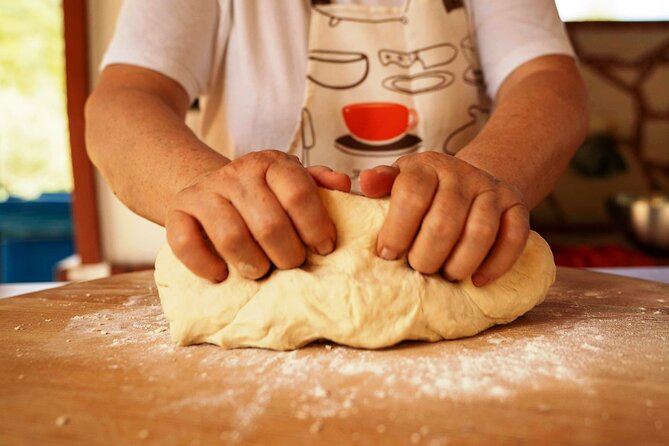
Lefkada can lure you into beach days fast. This activity gives you a new kind of connection to the island: food grown and cooked with care, not packaged for tourists.
The core idea is simple. You’ll learn traditional Greek phyllo pie methods from dough work to stretching, filling, rolling, baking, and then sitting down to eat. With a start time of 10:00 am and about 4 hours total, it’s long enough to learn, but not so long that it hijacks your whole day.
It’s also a strong value if you like cooking. At $144.05 per person, you’re not just paying for a single tasting. You’re paying for instruction, baked results, and a lunch that’s part of the process (not an add-on).
You can also read our reviews of more tours and experiences in Lefkada.
Meeting point, timing, and what to bring (without the stress)
The class meets at Lefkada Micro Farm, Ε.Ο. Νυδριου Βαυκερής Ράχη, Nidri 311 00, Greece. It starts at 10:00 am and ends back at the same point.
A few practical notes that matter:
- You’ll get a mobile ticket, so have it ready on your phone when you arrive.
- It’s near public transportation, which helps if you’re not driving.
- It’s a small group (max 10), so arriving on time helps you settle in before the dough work begins.
What I’d pack is basic but smart: comfortable clothes you don’t mind getting a little flour on, and closed-toe shoes for moving around. If you have allergies or dietary restrictions, tell the organizers when you book. They ask you to share this in advance, so you get the most accurate guidance.
Step one: morning coffee and fire-warmed dough
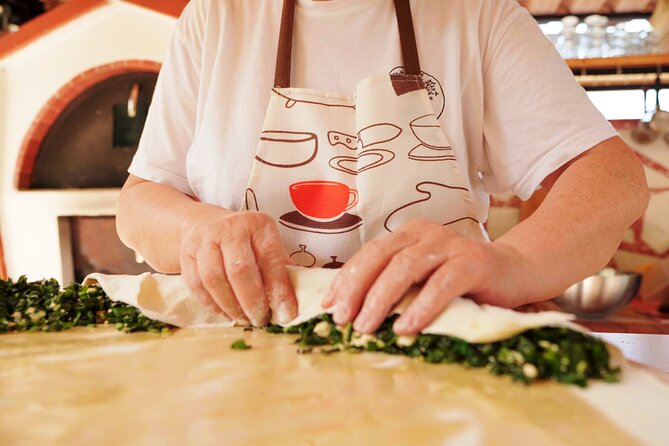
The experience kicks off with a welcoming coffee or tea. That small start matters, especially if you’re coming in from a vacation schedule. It gives you a moment to get comfortable with the group and settle before the kitchen part begins.
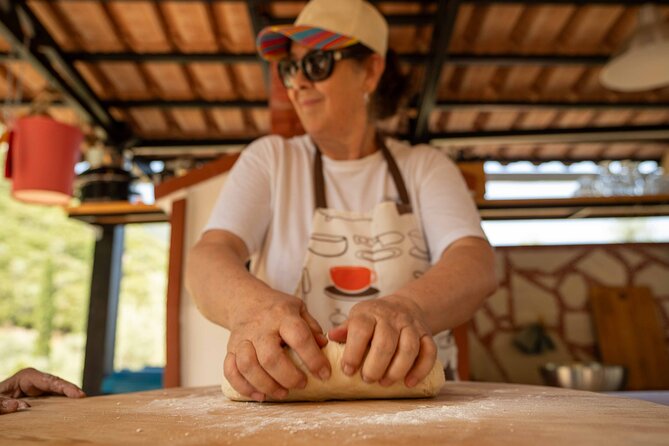
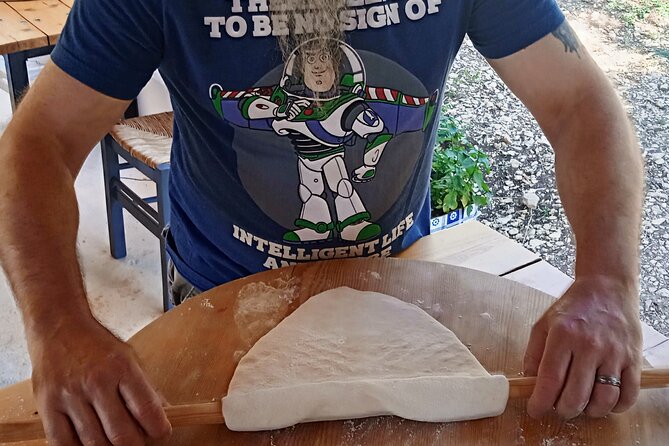
Then the fire gets lit in the wood-burning oven. You’ll start kneading phyllo dough right after, which is where the class becomes truly hands-on. Even if you’ve never worked with phyllo, the structure is designed to take you step by step rather than dump you into the deep end.
A practical bonus here is pacing. Dough work is time-sensitive, so learning while the oven is heating keeps everything moving. It also means you’re doing real cooking—not waiting around while something else happens off to the side.
Walking Lefkada Micro Farm while the oven builds momentum
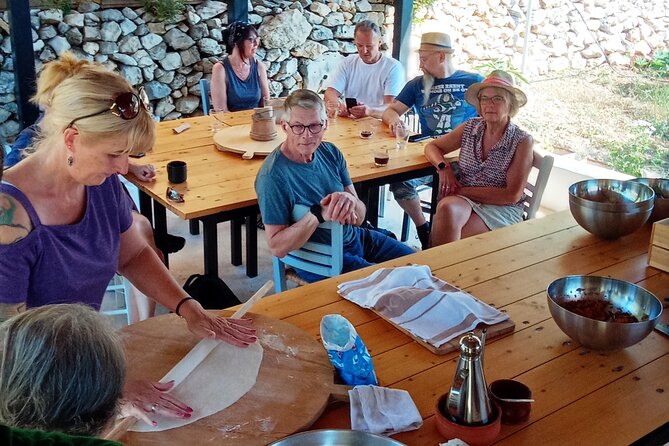
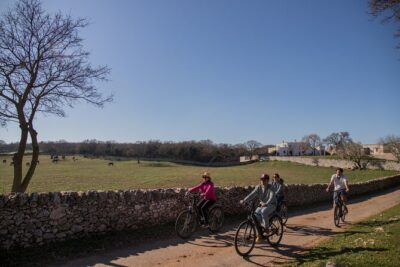
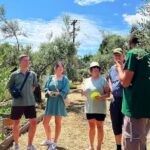
After the initial dough steps, you’ll walk around Lefkada Micro Farm and see how food is grown the traditional organic way. This is one of the best parts if you like understanding where ingredients come from.
You’ll learn about:
- trees, vegetables, and herbs grown on the property
- the farm’s animals
Even if you only catch a snapshot, this farm walk gives context for what you’re eating later. Instead of treating lunch like a generic Greek meal, you connect it to the farm basics you saw earlier that day. It’s also a nice break from the kitchen rhythm—your arms and hands get a mental reset while you’re still part of the same process.
One thing to keep in mind: because it’s an oven-based cooking class, the timing depends on the day’s conditions. If weather is good, everything stays on track. If it’s not, you may be offered a different date or a full refund, since the experience requires good weather.
Getting phyllo right: stretching, filling, and rolling
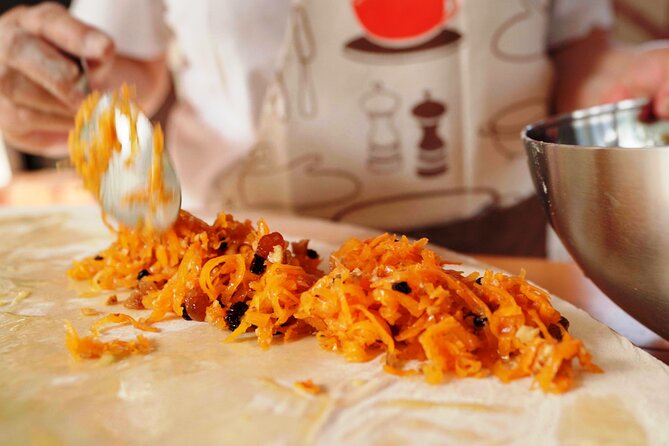
When you return to the open-air kitchen, the oven is hot and the dough is ready. This is the moment where the class shifts from preparation to shaping.
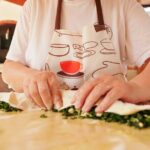
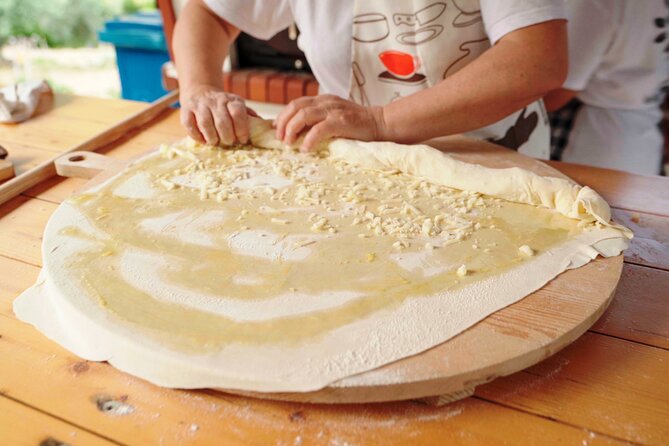
You’ll stretch the phyllo dough, then fill and roll your pies. This is where the instruction style matters. With only up to 10 people, you’re less likely to get lost in a crowd, and it’s easier to get quick fixes if your dough tears, your roll looks off, or your filling is too generous.
If you’re the kind of person who likes learning by doing, you’ll probably enjoy this segment most. The work is tactile, and you’re building a repeatable skill. The goal isn’t just to make pies once; it’s to take away the know-how and recipes so you can attempt it again later at home.
The four recipes you’ll make (and what each teaches you)
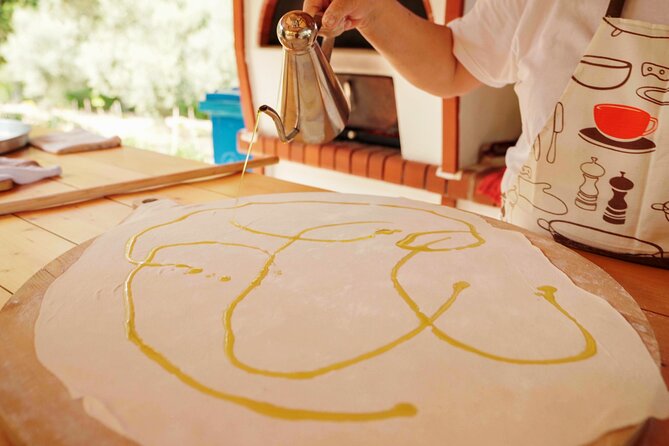
This class includes four different recipes, and that variety is a real part of the value. You’re not just repeating the same form with slightly different seasoning. Each one gives you a different flavor profile and a different kind of filling.
Here’s what you’ll prepare:
- Wild greens with Feta cheese
Expect a savory, herb-and-cheese combo. This one is great for learning how to balance a flavorful filling without overwhelming the dough.
- Goat cheese, sun-dried tomatoes, olives, and oregano
This is bolder and tangier. It helps you understand how stronger flavors behave inside a rolled pie.
- Squash pumpkin, walnuts, cinnamon, and raisins
This is the sweet-spiced side of Greek baking. It teaches you about texture and how dried fruit and nuts work together with cinnamon warmth.
- Baklava with honey, cinnamon, and walnuts
This one brings the dessert feel into the same skill session. It’s a satisfying finish because you get that classic honey-cinnamon-walnut vibe you’ve probably seen in local bakeries.
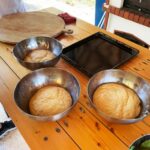
After you assemble and bake, you finally get the payoff: you eat what you made with your own hands. That matters more than people expect. A cooking class can still feel abstract until you’re actually sitting down with the results.
Lunch at the dining table: the part that sticks with you
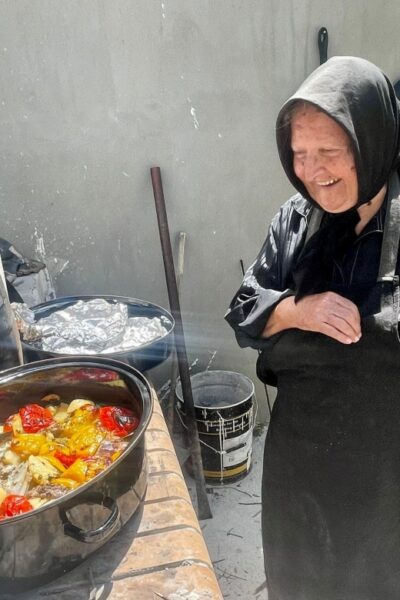
Once the pies come out, you sit around a dining table and enjoy a delicious lunch prepared together. This is where the class becomes more than just a skill workshop.
You’ll likely appreciate the social angle because you’re sharing the same work and the same flavors. The group is small, so the vibe stays friendly. And since you made multiple dishes, there’s plenty to compare and talk about—how the fillings turned out, how the dough behaved, and what you’d tweak next time.
If you’re hoping for a calm change of pace from the beach, this lunch format helps. You’re not rushing to the next stop. You’re tasting and reflecting while your work is still fresh.
Price and value: what $144.05 really covers
Let’s talk value without the hand-waving. At $144.05 per person, you’re paying for:
- instruction through the dough and shaping steps
- baking in a wood-burning oven setup
- four recipes worth of results
- and an included lunch you help prepare
If you’d otherwise buy pastries and maybe a quick coffee, this cost can feel high. But the class is a skill experience, not just food. The best part is that you’ll take away recipes and technique you can try again later.
Also, the small group size (max 10) plays into value. More hands-on time usually means less waiting and fewer missed moments when the dough is the dough.
Finally, the overall reception is strong, with an average rating of 4.6 and 90% recommending it. That kind of consistency usually points to a well-run class and a teaching approach that works for different skill levels.
Who this phyllo class is perfect for
This is ideal if you:
- want a break from beach-only days and prefer the quieter countryside side of Lefkada
- like cooking or food workshops where you actually make the meal
- enjoy farm visits that connect ingredients to real growing
- want something small-group and friendly rather than a big bus-style excursion
It’s also a good choice if you’re traveling as a couple or with friends who enjoy teamwork in the kitchen. The recipes are varied, so you’ll likely learn something even if you’re a competent cook.
If you’re someone who hates hands-on cooking, or you’re hoping for a mostly passive tour, this may feel like too much work. Even though the pace is guided, you are expected to knead, stretch, fill, and roll.
Weather matters more than you think
This experience requires good weather. That’s not just a footnote. Because part of the process happens in an open-air kitchen and the schedule is built around timing, poor conditions can interrupt the plan.
The good news is you’re not left hanging. If it’s canceled due to poor weather, you’ll be offered a different date or a full refund. So you’ll want to book it thoughtfully, ideally with a little flexibility in your Lefkada plans.
Final call: should you book this baking class?
Book it if you want an authentic Lefkada food day that’s hands-on, social, and genuinely memorable. The farm walk, the wood-fired cooking, the skill-building phyllo work, and the four-recipe result are a strong combo for anyone who likes learning by doing.
Skip it only if you have limited time, no interest in cooking, or your schedule is too rigid for a weather-dependent experience. Otherwise, this class is the kind of activity you’ll talk about long after the pies are gone—because you’ll have the method, not just the memory.
FAQ
What time does the Phyllo Pies Baking Class start?
The class starts at 10:00 am.
How long is the baking class?
It lasts about 4 hours.
Where does the class meet?
The meeting point is Lefkada Micro Farm, Ε.Ο. Νυδριου Βαυκερής Ράχη, Nidri 311 00, Greece.
How many people are in the group?
The class has a maximum of 10 travelers.
What recipes will you make during the class?
You’ll prepare four recipes: wild greens with feta cheese; goat cheese with sun-dried tomatoes, olives, and oregano; squash pumpkin with walnuts, cinnamon, and raisins; and baklava with honey, cinnamon, and walnuts.
Is lunch included?
Yes. You’ll sit down for a lunch that you prepared together.
Can you bring a service animal?
Yes, service animals are allowed.
What happens if the weather is bad or you need to cancel?
This experience requires good weather. If it’s canceled due to poor weather, you’ll be offered a different date or a full refund. You can also cancel for a full refund up to 24 hours before the experience’s start time.