REVIEW · UBUD
Balinese Farm Cooking Class by Pemulan Bali
Book on Viator →Operated by Cooking Class Ubud - Pemulan Bali Balinese Farm Cooking School · Bookable on Viator
A Balinese cooking class should feel like part of the day, not a performance. This one pairs a market visit with a farm-to-table cooking session, so you shop, pick, cook, and eat in the same calm rhythm. I especially like the mix of hands-on cooking and ingredient sourcing, and I like that you leave with recipes and the meal you make.
One heads-up: the full experience can run a bit longer than you expect, especially if your class level includes more dishes or extra food stations.
In This Review
- Key things that make Pemulan Bali worth your time
- Farm-to-table in Ubud: what makes this cooking class work
- Getting oriented with pickup and the meeting point
- The market visit: shopping for flavor in Ubud
- The organic farm walk: pick your own produce
- Open-air kitchen cooking: making multiple Balinese dishes
- What you eat, what you take home, and how the meal ends
- Timing choices: morning vs afternoon vs evening
- Group size and the pacing you’ll feel
- Value check: is $39.71 a good deal in Ubud?
- Who should book this cooking class, and who should skip it
- Should you book Pemulan Bali Farm Cooking Class?
- FAQ
- How long does the Balinese Farm Cooking Class take?
- What start times are available in Ubud?
- Is there pickup in central Ubud, and where do we meet?
- Does the class include a market visit?
- What dishes will I cook?
- What’s included with the meal afterward?
- How big is the group?
- What happens if weather is bad or I need to cancel?
Key things that make Pemulan Bali worth your time
- Market morning in Ubud: you shop for ingredients first, including sampling fresh fruit and treats.
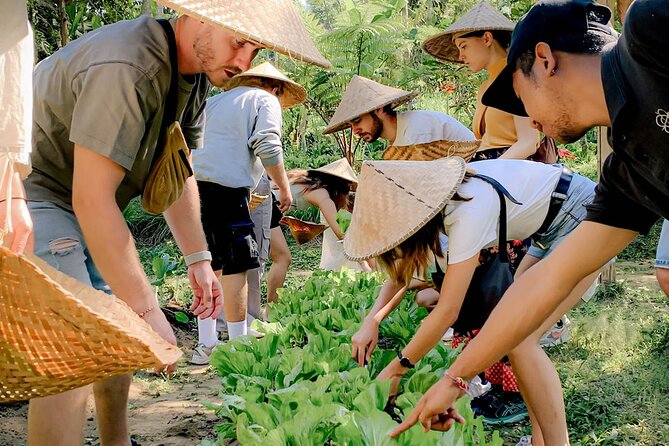
- Organic farm picking: you hand-pick produce and learn directly from the garden.
- Open-air kitchen cooking: you cook multiple authentic Balinese dishes with chef guidance.
- Six dishes on the promise (with variation): the experience centers on six dishes, but some class levels may result in fewer or more items.
- Coffee and tea included: your meal ends with drinks and time to slow down.
- Small groups: up to 20 people, which makes questions easier and the atmosphere less chaotic.
Farm-to-table in Ubud: what makes this cooking class work
In Ubud, you’ll find plenty of cooking classes. What I liked here is the way the experience is built like a day on the island, not just a ticket to an open kitchen.
You start with pickup from central Ubud and you’re headed to a farm setting where you can actually see the ingredients you’ll cook. Then you cook in an open-air kitchen with chefs guiding you through Balinese techniques and flavors. It’s practical, and it’s hands-on.
The value is also straightforward. For $39.71 you’re not just watching someone cook. You’re preparing and eating multiple dishes, plus you get recipes and even take-home food.
You can also read our reviews of more tours and experiences in Ubud.
Getting oriented with pickup and the meeting point
The class starts with free pickup from Ubud’s central meeting area. Your pickup point is near Pura Dalem Puri Peliatan (Jl. Sukma Kesuma / Jl. Raya Ubud, Tebesaya, Petulu, Kecamatan Ubud, Kabupaten Gianyar, Bali 80571).
This matters because cooking classes can be a hassle to reach, especially if you’re not renting a scooter. With pickup included and the activity ending back at the meeting point, it’s easier to stay focused on the food and not your navigation app.
The experience runs with a small-group cap of 20 travelers, which also helps make the logistics feel manageable.
The market visit: shopping for flavor in Ubud
If you book the morning class, you’ll add a traditional market visit before you cook. This is one of the most useful parts of the day because it connects ingredients to dishes right away.
You’ll explore local produce and sample items like fresh fruits and small treats. That sampling isn’t just for fun. It helps you notice the flavors and textures that later show up in Balinese cooking—fruity brightness, aromatic leaves, and the kinds of ingredients cooks rely on daily.
For me, a market stop is the difference between learning recipes and understanding food. You’ll get a feel for what’s fresh and what’s common in Balinese kitchens, not just what’s available at a tourist-friendly grocery.
The organic farm walk: pick your own produce
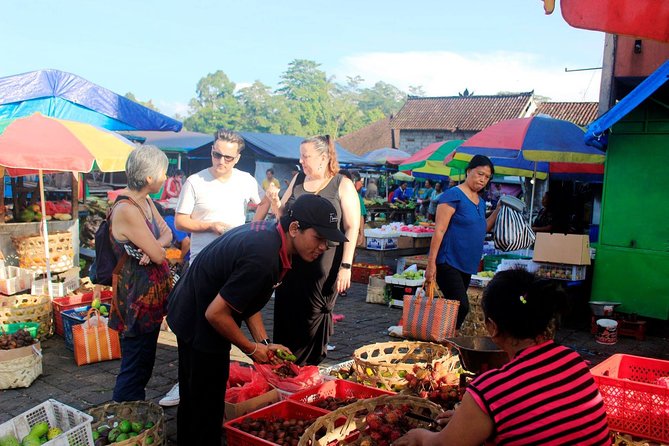
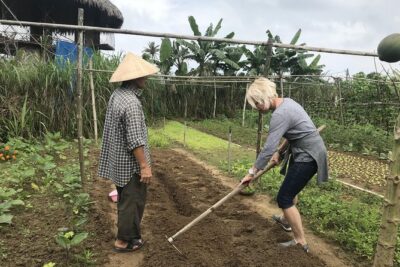
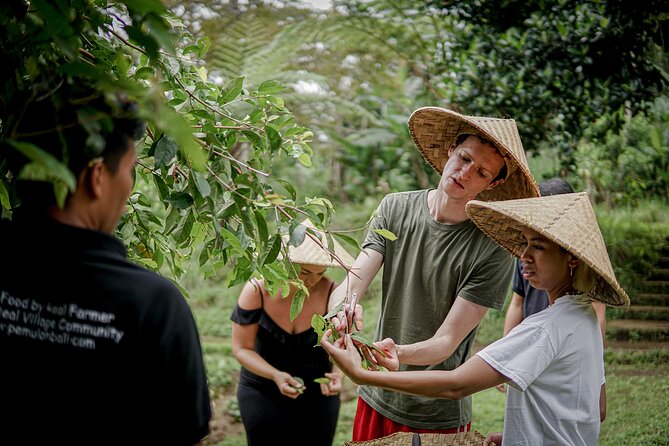
After the market, you head to the farm. The experience is described as an organic farm, and the idea is simple: walk the garden and hand-pick fresh ingredients.
This part works well even if you’re not a “garden person.” You learn what plants look like growing, not just what they look like in a package. And because Balinese cooking relies on herbs, aromatics, and produce that are used quickly, seeing them in place makes the cooking steps feel more intuitive.
You also spend time in the lush garden area with guidance from the chefs and farm setting around you. It’s peaceful, and it gives you a little breathing room before the kitchen gets busy.
Open-air kitchen cooking: making multiple Balinese dishes
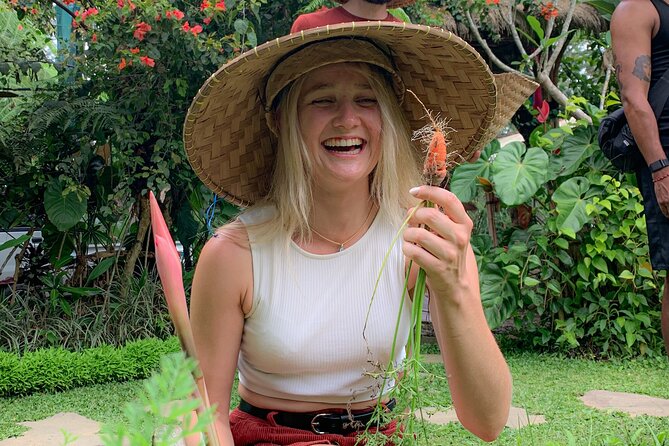
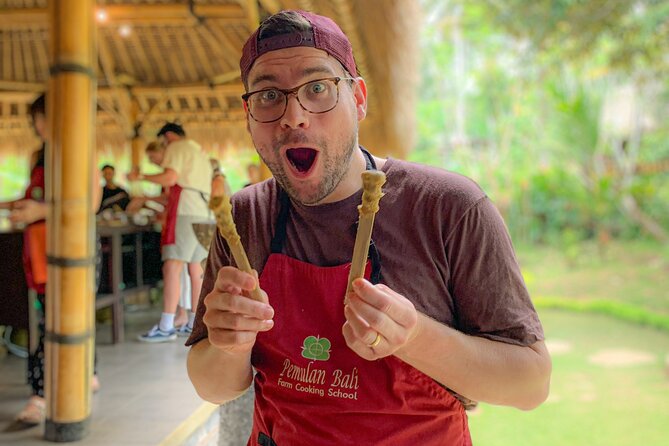
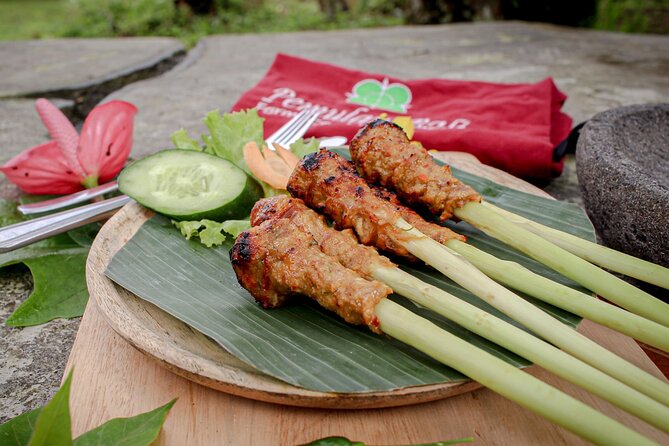
Once you’re in the open-air kitchen, you’ll cook several authentic Balinese dishes—centered around six different dishes in the standard description. Chefs guide you step-by-step, and the process is very hands-on.
You’ll also gather enough food to actually enjoy the meal you make afterward with tea and coffee. That last part matters more than you’d think. If you’re only cooking and never eating what you made, the whole class can feel like a chore. Here, you’re meant to sit down and savor.
Some classes may vary. One experience described cooking appetizers, main dishes, and a community-style dessert, and another described making around five dishes—so plan on some variation depending on the class level that day. The core stays the same: chef-led, multi-dish, and authentic Balinese flavors.

What you eat, what you take home, and how the meal ends
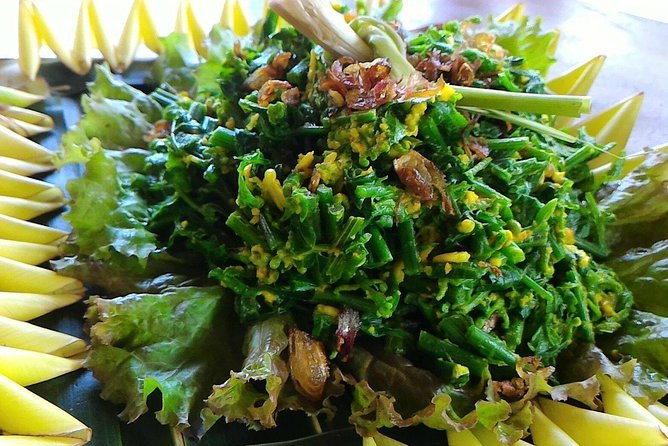
This class isn’t only about the cooking station. After you finish cooking, you share the meal together and enjoy what you prepared.
You also get coffee and tea included with the experience. If you like food classes that feel like an actual lunch (not a snack), this ending helps a lot.
Another big practical point: you can take home recipes and leftovers. That turns the class into something you can repeat at home. Even if you don’t recreate everything perfectly, having the written guidance makes it far more likely you’ll cook Balinese-style dishes again rather than letting the memory fade.
Timing choices: morning vs afternoon vs evening
You have three start times:
- Morning class: 07:30 AM
- Afternoon class: 12:30 PM
- Evening class: 16:00 PM
Morning is the one that includes the market visit and the fresh ingredient sampling. If you want the fullest “where food starts” experience, morning is the best match.
Afternoon and evening are still described as cooking sessions on the farm, but without specifying that they include the market stop. So if market browsing is important to you, choose the morning schedule.
Also keep expectations realistic about duration. Even though the tour is listed around 5 hours (approx.), one review highlighted that the overall experience can end up closer to 3–4 hours at minimum and may feel longer depending on your class level and the flow of dishes. The safe move is to keep your next plan flexible.
Group size and the pacing you’ll feel
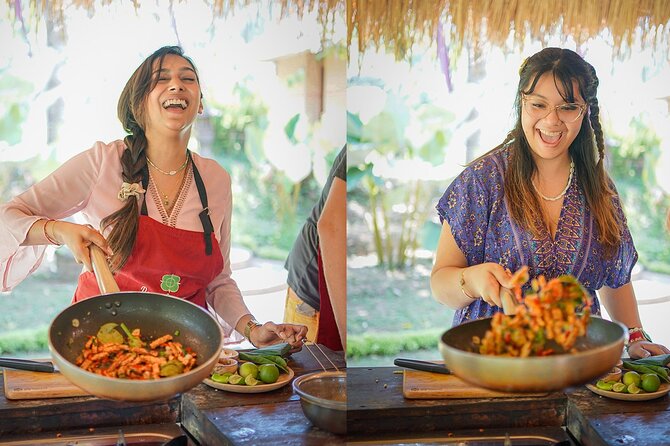
With a maximum of 20 travelers, you’re not being packed into a huge classroom. That helps with two things: it’s easier to ask questions, and it’s easier to keep the cooking station moving without long waits.
The schedule tends to be organized around dish timing. You’ll cook multiple items in a sequence designed to make everything land in time for the meal. Because it’s hands-on, you’ll likely spend more time actively working than you expect, even if you’re an inexperienced cook.
If you’re the kind of person who loves clear instructions and you like learning by doing, this format is a good fit. If you’re looking for a quick “watch and taste” experience, you might want to look for something shorter or more demo-style.
Value check: is $39.71 a good deal in Ubud?
Let’s put the price into plain terms.
At $39.71 per person, you’re paying for:
- pickup from central Ubud
- farm access and ingredient picking
- cooking instruction for multiple dishes (centered on six)
- the meal you make
- coffee and tea
- recipes you can take home
- leftovers you can take home
In Ubud, a cooking class that includes both ingredient sourcing and meal outcomes is usually the one that feels most “worth it.” Here, you’re doing the hard part of learning—making food—not just eating someone else’s version. The market visit (on morning classes) is also a bonus because it adds cultural context and ingredient familiarity.
The only value risk is the time commitment. If you’re trying to fit this into a very tight schedule, you’ll feel it. But if you plan a half-day or more, the price-to-experience ratio feels solid.
Who should book this cooking class, and who should skip it
I think this fits best if you want:
- a hands-on Balinese cooking experience
- a genuine farm ingredient component (not just a photo stop)
- a class that includes a real meal with drinks
- something small-group that doesn’t feel like a production
If you already know you want to cook on vacation, you’ll have fun because you’ll be actively making multiple dishes. If you prefer learning through visuals only, you might find the hands-on pace more effort than you want.
Also consider your timing preferences. Morning gives you the market visit. Afternoon and evening prioritize cooking. Choose based on what you care about most: ingredient shopping or cooking time.
Should you book Pemulan Bali Farm Cooking Class?
Yes, I’d book it if you want a practical Balinese food day that starts with ingredients and ends with a meal you actually made. The combination of market visit, farm picking, and chef-led multi-dish cooking is the kind of structure that turns cooking into a memory you can repeat.
I’d hesitate only if your schedule is too tight or you don’t want a hands-on class. In that case, you may feel the hours more than the reward.
If you want an authentic taste of Ubud beyond another restaurant meal, this is one of the better ways to do it without making things complicated.
FAQ
How long does the Balinese Farm Cooking Class take?
The experience runs about 5 hours (approx.). In practice, the full experience can vary a bit depending on how the class day flows.
What start times are available in Ubud?
You can choose from three class times: 07:30 AM, 12:30 PM, or 16:00 PM.
Is there pickup in central Ubud, and where do we meet?
Yes. The class includes free pickup from a central Ubud meeting point near Pura Dalem Puri Peliatan at the address listed for the activity. The tour ends back at the meeting point.
Does the class include a market visit?
Yes. Morning classes include a market visit where you explore local produce and sample fresh fruits and treats.
What dishes will I cook?
You’ll prepare and enjoy six different authentic Balinese dishes as the standard promise. Some class levels may vary the number of dishes you end up cooking.
What’s included with the meal afterward?
After cooking, you eat the meal together and you’ll have coffee and tea. You also receive recipes, and you can take home leftovers.
How big is the group?
The activity has a maximum of 20 travelers, so it stays small enough for real interaction and guidance.
What happens if weather is bad or I need to cancel?
This experience requires good weather. If it’s canceled due to poor weather, you’ll be offered a different date or a full refund. For cancellations, it’s free cancellation and you can cancel up to 24 hours in advance for a full refund.