REVIEW · UBUD
Ubud: Organic Farm Harvest, Bali Cooking Class by Pemulan
Book on GetYourGuide →Operated by Pemulan Bali Farm Cooking School · Bookable on GetYourGuide
Your meal starts in the garden.
This is a Ubud cooking class built around organic farm harvest and hands-on Balinese cooking, so you’re not just watching recipes, you’re making them with ingredients you helped gather. I like that the day follows a clear rhythm: market first, farm next, then the kitchen—so the food makes sense, step by step.
One thing to plan for: it’s a small group (max 14) with shared cooking stations, meaning you’ll work in pairs rather than solo the whole time.
In This Review
- Key things to know before you go
- Why Pemulan’s Ubud Farm Cooking Feels Like Real Bali
- Getting to the Class: Sens Hotel Pickup and Air-Conditioned Ride
- Market Morning: How Balinese Shoppers Choose Ingredients
- Organic Farm Harvest: Picking Your Own Veggies Then Cooking Them
- Cooking Like a Local: The Hands-On Class Flow
- The Menus: Regular 6 Courses, Vegetarian 6 Courses, and Advanced 8–10
- Regular menu: 6 courses
- Vegetarian menu: 6 courses
- Advanced option: 8–10 courses
- What You’ll Actually Learn (Beyond Just Tasting)
- Value for About $29: What You Get for the Money
- Who Should Book Pemulan, and Who Might Not
- Book It or Skip It: My Decision Guide
- FAQ
- Where is the meeting point in Ubud?
- Is the local market tour included?
- Do you harvest ingredients at the farm?
- What dishes are included in the regular 6-course menu?
- What dishes are included in the vegetarian 6-course menu?
- What should I bring, and are pets allowed?
- Is free cancellation available, and can I reserve without paying now?
Key things to know before you go

- Market morning, not just a supermarket stop: you’ll learn what Balinese shoppers look for and even taste some produce.
- Harvesting from an organic garden: you pick some veggies, then cook with them right away.
- Chef-led, step-by-step cooking: English instruction that keeps you on track without feeling rushed.
- Two cooking modes you can choose: Regular 6-course, Vegetarian 6-course, or an Advanced 8–10 course option.
- A real meal you cook yourself: you finish by sitting down to eat what you made.
Why Pemulan’s Ubud Farm Cooking Feels Like Real Bali
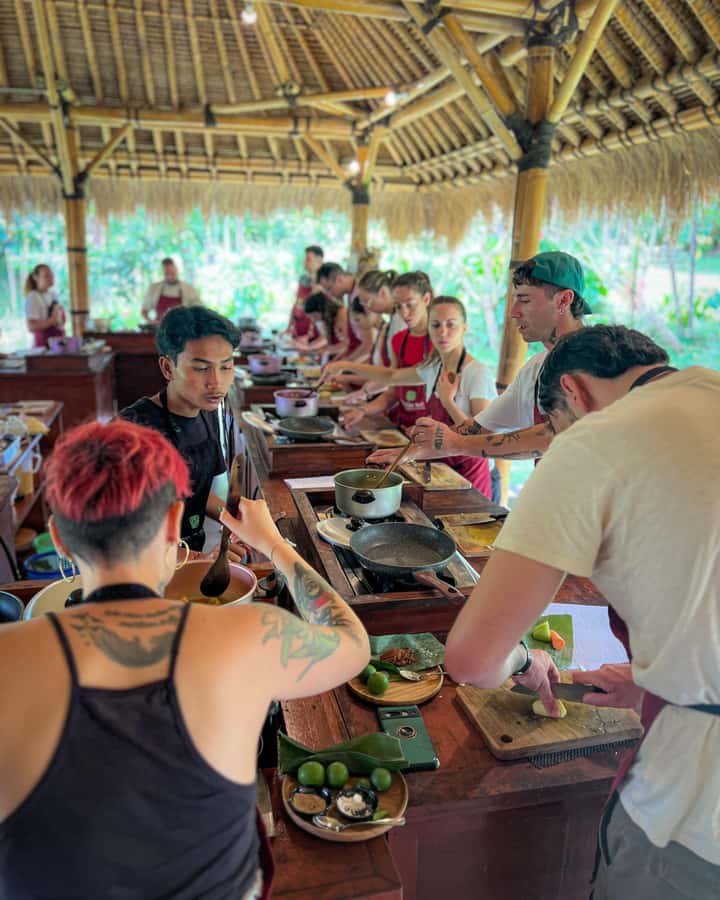
Pemulan Bali Farm Cooking School is one of those experiences that hits a simple idea hard: Balinese cooking starts with the ingredients and the people who grow and buy them. Here, you get a full arc, from market choices to farm harvesting to cooking at your station. That matters because Balinese food isn’t just about following a recipe. It’s about timing, chopping, mixing, and balancing flavors like spice, coconut, sweet-sour notes, and savory sauces.
What I especially like is the hands-on structure. You cook from start to finish, not just taste or watch a demo. You also get a meal out of it, so your time turns into something you can actually take home in your stomach. And the class stays friendly and grounded, thanks to a chef-instructor who’s described as warm and funny, with English that’s clear and step-by-step.
The other practical win: because you harvest and then cook, you’re more likely to remember what you did. You’ll know why the dish tastes the way it does, not just that it ended up delicious.
You can also read our reviews of more tours and experiences in Ubud.
Getting to the Class: Sens Hotel Pickup and Air-Conditioned Ride
You meet in Ubud across from Sens Hotel, under a big Banyan Tree. From there, you’re picked up for transport in an air-conditioned car. This is a small but important comfort detail—Ubud roads can be slow, and you’re spending the rest of the day moving between sites.
The class is built for small groups. The maximum is 14 people, and each cooking station is shared between 2 people. That affects your whole experience. You’ll likely meet people easily, but you also need to be comfortable cooking shoulder-to-shoulder. If you prefer lots of personal space, this setup might feel a bit tight.
Also note that the class instruction is in English, which helps with the pace. You’ll get guidance step by step rather than having to translate everything yourself.
One more planning tip: the experience can be scheduled around local life and holidays. On at least one occasion, a class did not run as expected due to a Hindu holiday and communication issues. That doesn’t mean it’s a common problem, but it does mean you should confirm pickup details the day before and make sure you can be reached.
Market Morning: How Balinese Shoppers Choose Ingredients
The morning part centers on local market shopping. This isn’t framed like a tourist “here’s what you can buy” walkthrough. The point is to show you how ingredients make their way into daily meals and why certain items show up again and again in Balinese cooking.
You’ll see fruits and vegetables in the way locals pick them—fresh, practical, and ready for the next step. One nice touch: you don’t just look. You can taste many items during the market stop. That simple tasting helps you learn quickly because you’re connecting flavor to ingredient, not reading a list later.
For many people, this is the most useful segment even if you’re not a cook. It trains your eye. When you later try to recreate something at home, you’ll know what kind of texture and freshness the dish expects. Balinese food often depends on crisp vegetables, strong aromatics, and the right balance of spicy and sweet elements. The market stop gives you the baseline.
If you’re the type who likes to photograph details, bring your camera. And wear comfortable shoes, because market ground can be uneven.
Organic Farm Harvest: Picking Your Own Veggies Then Cooking Them
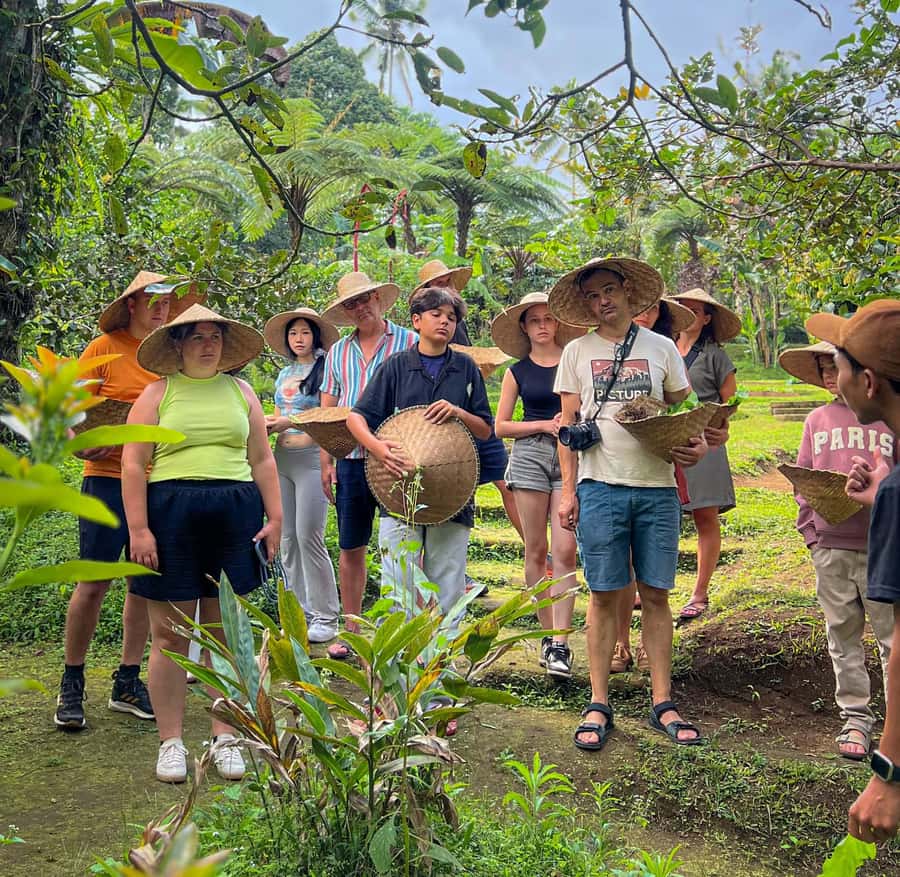
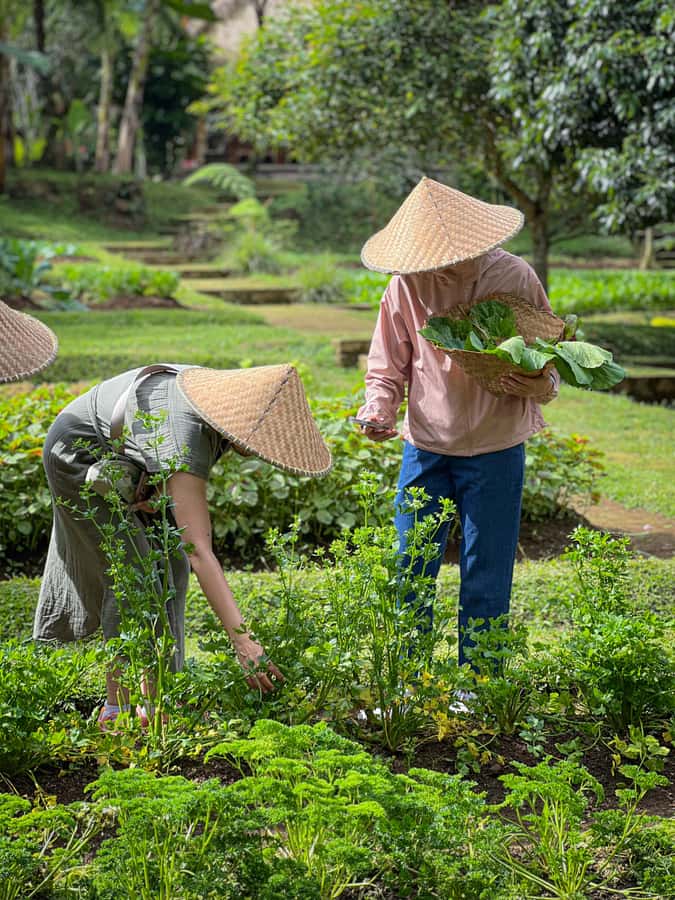
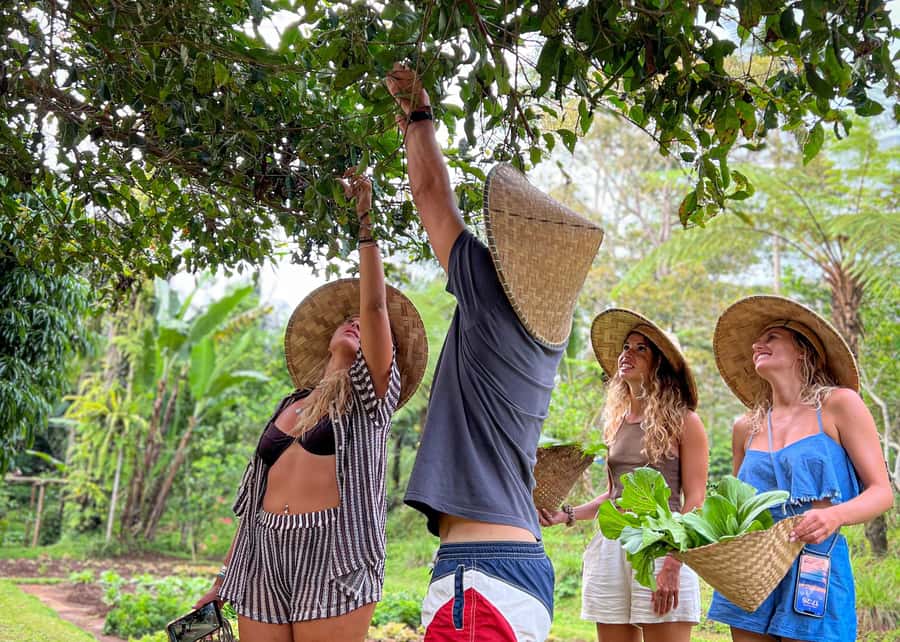
After the market, the day shifts to the organic farm and your chance to harvest ingredients. This is where the experience becomes more than a cooking lesson. You’re connecting with the source of the food in a very direct way: you pick some veggies, then you turn around and use them.
Why it works so well: harvesting doesn’t just add a fun activity. It slows you down just enough that you pay attention. You remember what you picked, what it looked like, and what you thought it would taste like. Then, when you cook, your brain stays engaged. You’re not only following instructions; you’re monitoring flavors and textures because you know what the ingredient is.
It’s also a good way to understand how “organic farm” fits in. The idea isn’t marketing. It’s about using ingredients that are fresh enough to matter. And because this is a cooking school, the farm tour is paired with immediate use, not a separate sightseeing event.
You’ll want sunglasses and comfortable shoes again here. Fresh air, walking around, and moving between spots are part of the flow.
Cooking Like a Local: The Hands-On Class Flow
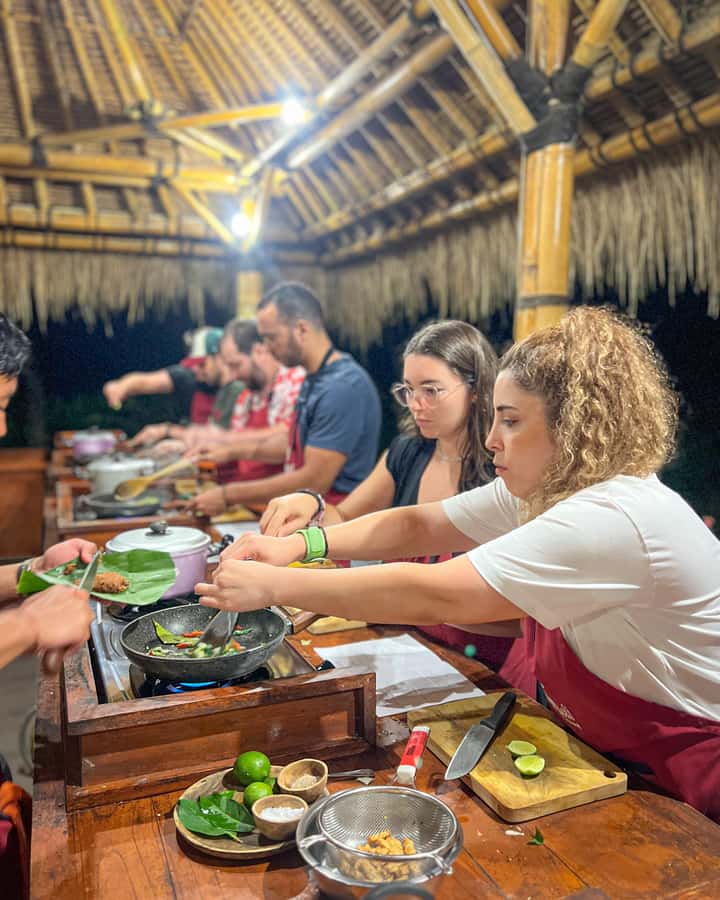
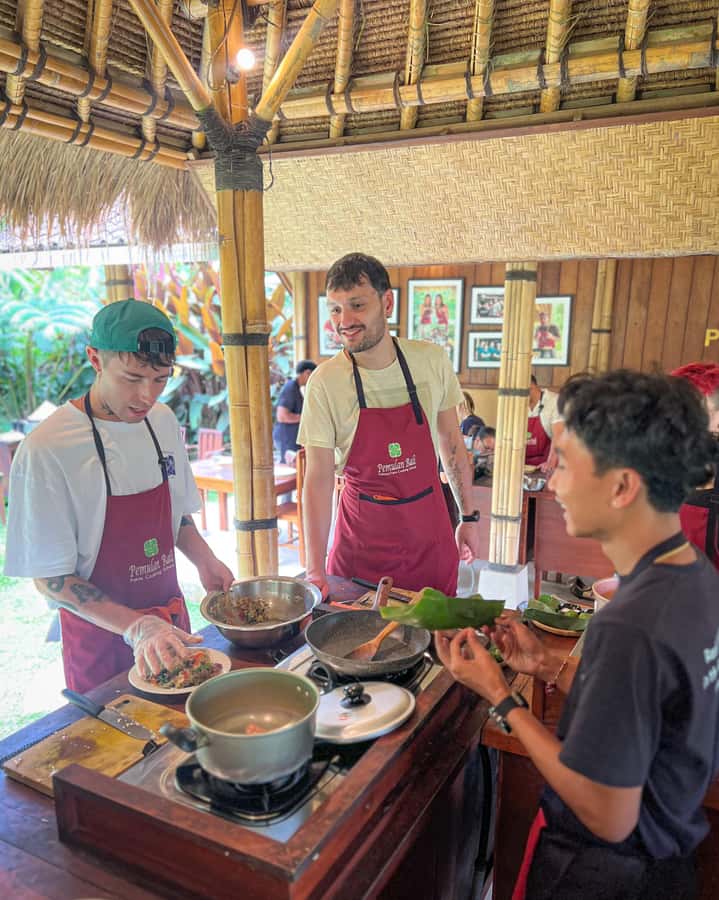
The cooking class is structured to feel relaxed and doable. Your chef-instructor guides you through each step. That matters because Balinese cooking can sound intimidating if you only see finished dishes online. In a real kitchen class, you get hands-on practice with the basics: chopping, mixing, and cooking techniques that build flavor.
Also, you’re not just doing one dish. You’ll work through a multi-course menu and learn how the dishes fit together. That makes the meal more satisfying. You’re not cooking separate random recipes; you’re building a table of complementary flavors.
The station setup also helps. Since each station is shared between 2 people, you’ll naturally split tasks—one person chopping or mixing while the other handles cooking stages. This is a big advantage for confidence. When one task feels tricky, your partner can help, and the chef’s step-by-step guidance keeps everyone moving.
And yes, it ends with eating. You sit down and feast on what you prepared. That’s one of the best payoff moments, because you get to measure your success immediately and understand the final balance of each course.
Finally, you get a downloadable PDF recipe book, which is great for recreating dishes later. Even if you never cook everything again, it’s a useful reference when you want to repeat one or two favorites.

The Menus: Regular 6 Courses, Vegetarian 6 Courses, and Advanced 8–10
Pemulan’s class offers clear menu choices, which makes it easier to pick what matches your diet and your comfort level in the kitchen.
Regular menu: 6 courses
You can expect a sequence that covers meat and seafood flavors along with salads, tempeh, and dessert. The listed courses include:
- Balinese chicken curry
- Traditional pork kebabs
- Tuna with raw sauce
- Mixed green salad with coconut and spice
- Sweet and sour tempe
- Dessert: crispy banana fritters and/or black rice pudding
This is a solid “starter map” of Balinese flavors: curry spice, grilled-savory kebabs, bright green salad with coconut, and that sweet-sour tempe note that shows up in many Southeast Asian cuisines in different forms.
Vegetarian menu: 6 courses
If you prefer vegetarian dishes, the course list shifts while still keeping that Balinese flavor balance. It includes:
- Tempe curry
- Steamed vegetables with peanut sauce
- Fried corn with Balinese spices
- Dessert: banana fritters and/or black rice pudding
This menu is a good choice if you want the experience without meat and still want multiple textures—creamy, steamed, fried, and dessert—rather than one-note veggie plates.
Advanced option: 8–10 courses
For food enthusiasts, there’s an advanced class option with 8–10 courses. If you’re the type who wants more practice and more variety, this is the route. You’ll likely learn more techniques through repetition, just spread across more dishes.
One practical tip: if you’re sensitive to raw seafood items (the regular menu includes tuna with raw sauce), choose the vegetarian menu or plan to ask the chef how raw items are handled.
What You’ll Actually Learn (Beyond Just Tasting)
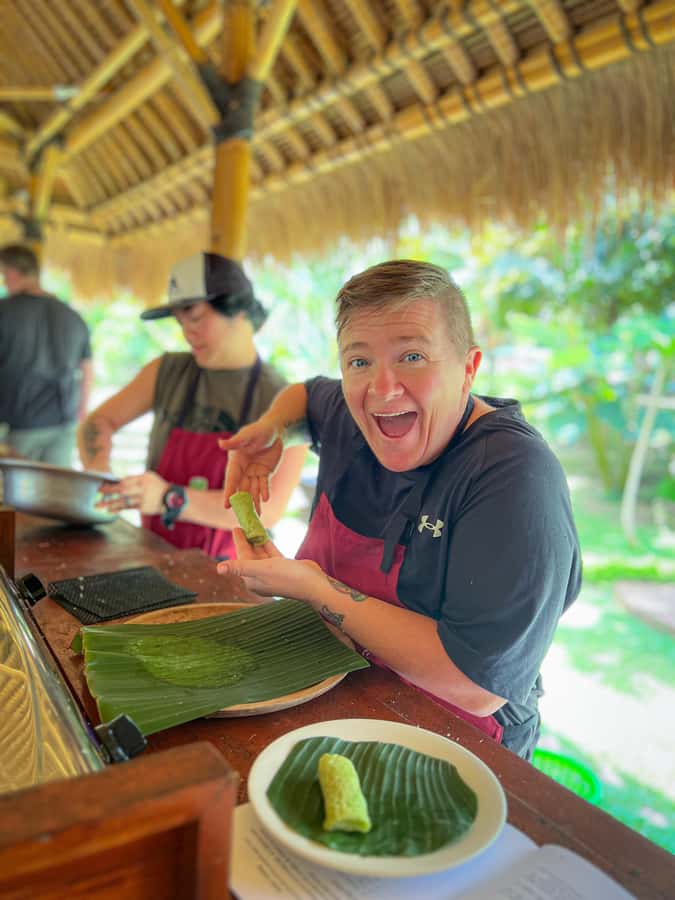
A good cooking class teaches you repeatable moves, not just tasty food. Here, you learn because the day forces you through the process: choose ingredients, harvest what you use, and cook multiple dishes under guidance.
You’ll likely walk away understanding how Balinese flavor builds across courses. For example, coconut and spice show up in the mixed green salad, while sweet-and-sour notes appear in the tempe dish. The curry gives you a benchmark for savory depth, and the dessert portion teaches a different side of the cuisine—sweet, starchy, and comforting.
And because it’s a small group, you tend to get more individual attention than big factory-style classes. The chef takes time with steps and questions, which helps if you’re nervous about cooking in a second language or in an unfamiliar style.
The PDF recipe book is also a big part of making this useful after you leave Bali. Even if you don’t replicate every single dish, you’ll have the framework: course order, ingredient categories, and likely the method you used for each stage.
Value for About $29: What You Get for the Money
At around $29 per person, this class can be a strong value when you look at what’s included. You’re not paying just for a cooking demo. Your price covers:
- Air-conditioned transportation from the Ubud meeting point
- Local market tour (morning class only)
- Organic farm tour and harvesting some ingredients
- Hands-on cooking class
- A meal
- Mineral water plus coffee or tea during the class
- A downloadable recipe book (PDF)
- Soft drinks and beer available for purchase
So you’re getting multiple experiences stitched together: shopping education, farm connection, cooking practice, and a full meal. That makes the cost feel more like a day of activities than a single kitchen lesson.
The only extra cost you might face is if you choose to buy drinks like beer. And you’ll want to bring your own camera and basic comfort items, since there’s no mention of equipment being provided.
If you’re comparing Bali options, look for classes that include both a market visit and active harvesting. That’s the difference between a fun cooking afternoon and a “how this food really gets made” day.
Who Should Book Pemulan, and Who Might Not
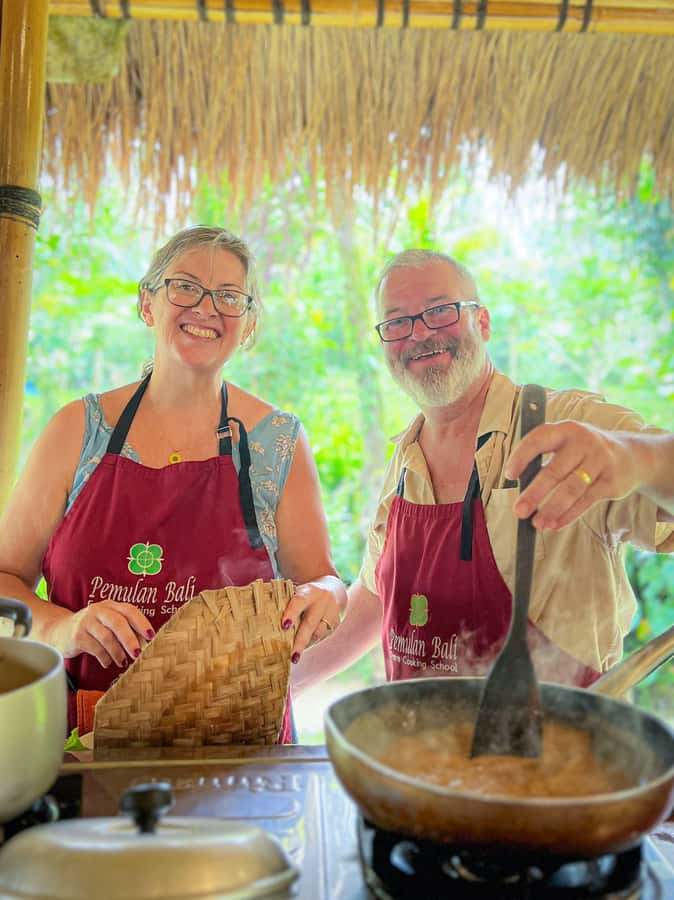
This experience is a great match if you want a hands-on Balinese cooking class in Ubud with real ingredients. You’ll do well if you like learning by doing and you’re comfortable working with others at a shared station.
It’s also ideal if you’re curious about Balinese food beyond fried snacks and street dishes. The menu covers curry, salads, tempe, grilled items, and desserts like banana fritters and black rice pudding. That’s a wide spread for one trip.
Where it may not fit: it’s not suitable for wheelchair users. Also, because the class is max 14 and stations are shared between 2 people, solo travelers who hate collaboration might find the setup less comfortable.
If you’re traveling with friends, this can be a fun experience to do together. If you’re solo, you’ll likely meet helpful partners quickly because shared stations force conversation.
Book It or Skip It: My Decision Guide
Book Pemulan if you want a structured, chef-led Balinese cooking day that includes the whole loop: market shopping, organic farm harvesting, then cooking and eating multi-course meals. The combination is the selling point, and it’s also what makes the class feel more authentic than a kitchen-only workshop.
Skip or choose a different option if you need a fully private, solo-at-your-own-station setup, or if mobility access is a concern. And if you’re visiting around major local holidays, take an extra moment to confirm pickup timing and communication so you don’t lose your day.
If you want a Bali food experience that feels grounded—ingredients you pick, flavors you build, and a meal you cook—this is one of the better bets in Ubud.
FAQ
Where is the meeting point in Ubud?
You meet across from Sens Hotel, under a big Banyan Tree.
Is the local market tour included?
Yes. The local market tours are included for the morning class only.
Do you harvest ingredients at the farm?
Yes. The experience includes organic farm tours and harvesting some ingredients.
What dishes are included in the regular 6-course menu?
The regular menu includes Balinese chicken curry, traditional pork kebabs, tuna with raw sauce, mixed green salad with coconut and spice, sweet and sour tempe, and dessert such as crispy banana fritters and/or black rice pudding.
What dishes are included in the vegetarian 6-course menu?
The vegetarian menu includes tempe curry, steamed vegetables with peanut sauce, fried corn with Balinese spices, and dessert such as banana fritters and/or black rice pudding.
What should I bring, and are pets allowed?
Bring comfortable shoes, sunglasses, and a camera. Pets aren’t allowed, but assistance dogs are allowed.
Is free cancellation available, and can I reserve without paying now?
Yes. You can cancel up to 24 hours in advance for a full refund. You can also reserve now & pay later, with pay nothing today.