REVIEW · UBUD
Small-Group Farm Tour & Balinese Cooking Class in Ubud with Kadek
Book on Viator →Operated by Traveling Spoon · Bookable on Viator
A farm-to-food morning beats a cookbook-only day. This small-group Ubud experience pairs a hands-on farm tour with a practical Balinese cooking class, then you sit down to eat what you made. You’ll also get straw hats for the heat and a home recipe book for later.
I really like the way the tour starts with ingredient gathering, so the cooking lesson has context. I also like the private-style instruction in a traditional outdoor kitchen, where you learn a few dishes well instead of rushing through everything. There’s even a vegetarian option if you request it ahead of time.
One thing to consider: it’s outdoors, and parts of the farm walk can involve mud and warm weather. Bring sun and bug protection, and wear shoes you’re okay getting a little dirty.
In This Review
- Key things to know before you go
- Farm Tour in Ubud: Picking Spices Before You Cook
- Inside the Outdoor Community Kitchen: How the Cooking Class Flows
- What You’ll Cook: Real Balinese Dishes You Can Recreate
- The Meal Moment: Eating What You Made (and Why You Might Wait)
- Transfers, Timing, and Meeting Point: Making the Day Easy
- Price and Value: What $49 Gets You in Ubud
- What to Bring and How to Handle the Outdoor Heat
- Who This Works Best For (and Who Might Skip It)
- Should You Book This Farm Tour & Balinese Cooking Class?
- FAQ
- How long is the farm tour and cooking class?
- What can I expect to cook during the class?
- Is pickup included from my hotel?
- Is this experience private or small-group?
- Can I request a vegetarian option?
- What should I bring because it’s outdoors?
Key things to know before you go
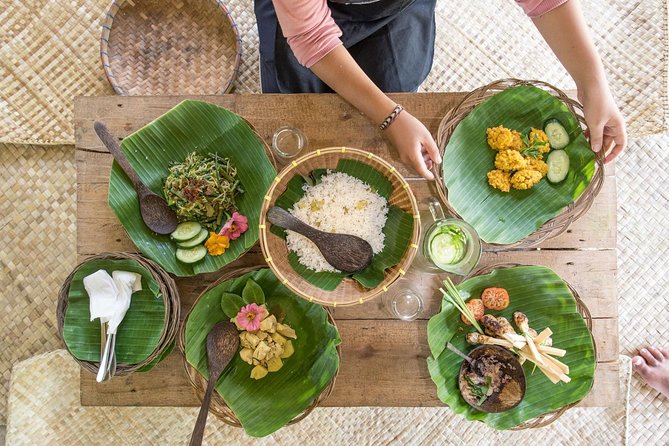
- Organic farm ingredient picking tied directly to your meal
- Up to 10 people for a more personal feel
- Straw hat, wet towels, and a refreshing drink after the farm walk
- You cook 2-3 dishes in a traditional outdoor community kitchen
- Recipe book to take home so you can repeat the dishes
- Round-trip transfers in Ubud included, with pickup details depending on where you stay
Farm Tour in Ubud: Picking Spices Before You Cook
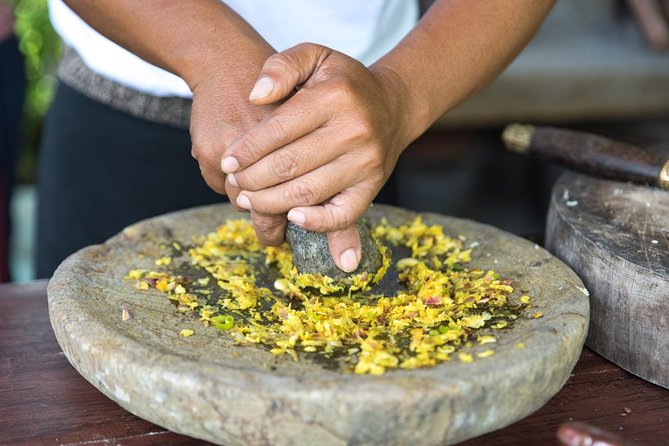
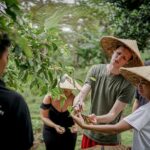
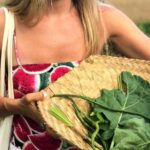
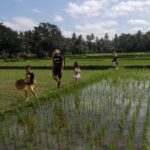
This experience kicks off with a local farm walk with your host, Kadek. It’s not a quick photo stop. You’ll actually gather ingredients and spices you’ll use later, which is a huge part of why the class feels satisfying when you’re back at the cooking station.
Expect about 30–45 minutes outside, moving through tall bushes and muddy ground. You’ll want to wear clothes and shoes that can handle working-farm conditions. Straw hats are provided, which helps a lot when the sun hits hard in Ubud.
What you gather can include items like beans and lemongrass, plus other farm produce used in Balinese cooking. Even if you’ve cooked before, this stage changes your perspective. When you know where an ingredient comes from and what it smells like at the source, the flavors make more sense on the plate.
Right after the walk, Kadek provides a refreshing drink and wet towels. It’s a small detail, but it makes the shift from fieldwork to cooking feel smooth instead of exhausting.
You can also read our reviews of more tours and experiences in Ubud.
Inside the Outdoor Community Kitchen: How the Cooking Class Flows
After the farm, you’ll move into a traditional Balinese style outdoor community kitchen. The cooking time is about two hours, and the pace is built for real participation, not just watching.
You’ll typically learn 2-3 dishes. The goal here is skill, not volume. If you’ve ever taken a class where you’re shuffling tasks for a dozen ingredients, this format feels calmer and more learnable.
You’re in a small setting, and the class is described as private-style, meaning you’ll get personalized instructor attention. That matters for the little things: how to prep, how to pace your cooking, and how to balance spices. And because it’s outdoors, you’ll notice how the kitchen works day-to-day, not a staged indoor demo.
The group limit is 10 travelers, which keeps the room from getting chaotic while you’re hands-on.
What You’ll Cook: Real Balinese Dishes You Can Recreate
The menu varies by what’s available and what the instructor plans, but you may cook dishes such as:
- Nasi sela (rice with sweet potato)
- Garang asem (chicken cooked with Balinese spices)
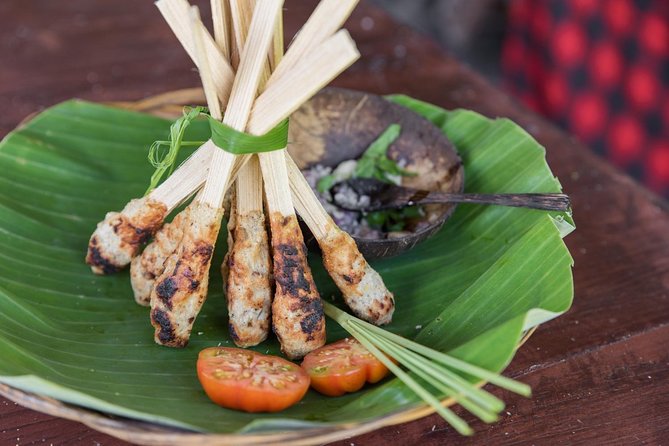
- Tuna satay (fish kebabs, Balinese style)
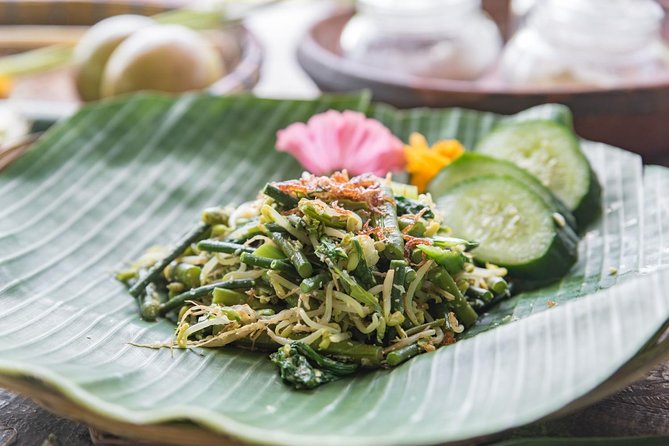
- Sayur urab (green vegetables with coconut and spices)
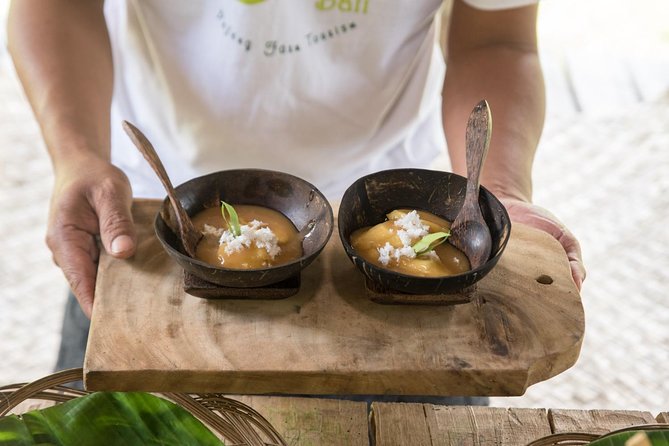
- Kolak (banana dessert) plus Balinese coffee or lemongrass tea
I like this mix because it covers more than one type of flavor. You get starchy comfort (rice), savory spice work (chicken or fish), and vegetable balance (urab with coconut). Then you get a clear finish with kolak, which gives you something sweet that still feels like it belongs at a Balinese table.
Also, the class includes a take-home recipe book. That’s what turns the experience from a one-day memory into something you can actually cook later. If you’ve ever tried to recreate a meal from memory and guessed wrong on the spice proportions, a written reference helps you get closer.
If you prefer vegetarian food, request it when booking. The option exists, and it’s best handled in advance so your cooking plan can match.
The Meal Moment: Eating What You Made (and Why You Might Wait)
At the end, you’ll eat a Balinese meal featuring what you helped prepare. You’ll finish with kolak and either Balinese coffee or lemongrass tea. It’s a complete arc: field, cook, eat, and then a sweet and warm drink to close the day.
One detail worth knowing: Kadek may not join you for the meal. He needs to offer the meal to mother nature and prefers you don’t wait for him to finish the ritual before you start eating. This isn’t a service delay. It’s part of the respect-and-rhythm of the farm.
If you arrive expecting the host to sit down right away, you could feel a bit confused. The better mindset is to treat the meal as part of the process you’re participating in. You’ll eat, and the day still keeps its own flow.
Transfers, Timing, and Meeting Point: Making the Day Easy
This is a 5-hour experience in Ubud. That length is long enough to feel like a full activity—farm walk, cooking time, meal, and the time gap between steps—without stealing your whole day.
Pickup and drop-off are included only if you’re staying in Ubud. The details are specific: pickup is included for Hanoman street, Monkey Forest street, and Jl. Raya Ubud. If you’re farther out, your pickup point may be in front of Maybank Gianyar at Jl. Raya Ubud No.115, Petulu.
The start point is listed as Maybank KCP Gianyar, Jl. Raya Ubud No.115, Petulu (Ubud area). The activity ends back at that meeting point. In practice, that means you can plan your day with less uncertainty than tours that end far away.
You’ll also receive a mobile ticket, and confirmation comes within 48 hours of booking (subject to availability). It’s a good schedule for travelers who like to book ahead but still keep flexibility.

Price and Value: What $49 Gets You in Ubud
At $49 per person, this is priced like a mid-range activity for Bali. What makes it feel worth it isn’t just the cooking. It’s the combination:
1) You start with a farm walk tied to ingredients you’ll cook.
2) You get a real class structure for 2-3 dishes over two hours.
3) You eat the meal you made.
4) You get a recipe book to keep.
5) Transfers in Ubud are included (in the specified areas).
The tour also includes local alcohol, listed as 1–2 glasses. If you don’t drink, you’ll still benefit from the included meal and drinks like coffee or tea at the end. If you do drink, your transport is already planned, which is practical.
There’s also an all-in feel with taxes, fees, and handling charges included. You’re not stuck hunting for small add-ons mid-day.
My take: for a cooking class in Ubud, the key value driver is the farm component plus an actual set of dishes you can repeat later with the recipe book.
What to Bring and How to Handle the Outdoor Heat
Because it takes place outdoors, you’ll want to prepare like you’re going to be working a little. The experience recommends:
- Bug spray
- Sunscreen
- A hand towel or tissues
- Clothes and shoes appropriate for walking and cooking on a working farm
I’d also add one practical rule: if your shoes are already worn-in, you’re less likely to regret muddy sections. If you bring shoes you love, you might feel nervous the whole time.
The straw hats help with sun, but they don’t replace sunscreen. And since you’ll be handling ingredients, bring something you’re comfortable wiping and washing after.
Who This Works Best For (and Who Might Skip It)
This is ideal if you want something more than a passive food tour. If you like rolling up your sleeves, learning technique, and then eating your results, this format fits well.
It’s also a strong pick if you want Balinese flavors with a clear learning pathway. The class focuses on a few dishes, which makes the flavors stick better than a long list.
Consider a different option if:
- You hate heat and don’t do well with outdoor activity.
- You want a full private, one-on-one class without a small group setup (this is limited to 10, and described as small-group shared, even if instruction feels personal).
- You’re not comfortable with the idea of a farm walk on muddy ground.
Should You Book This Farm Tour & Balinese Cooking Class?
I’d book it if you want a hands-on Bali day in Ubud that connects ingredients to cooking and gives you something to repeat at home. The farm walk adds real context, and the cooking class is structured so you learn a handful of dishes properly.
If you’re worried about outdoor discomfort, plan for sun and bugs. And if you have dietary needs, ask for the vegetarian option when you book so your class can match what you eat.
If your goal is simple: learn Balinese cooking, eat well, and walk away with a recipe book you’ll actually use—this one makes a lot of sense.
FAQ
How long is the farm tour and cooking class?
The total experience is about 5 hours. The farm tour runs around 30–45 minutes, followed by a cooking class of about 2 hours, and then you eat what you made.
What can I expect to cook during the class?
You’ll learn to make 2–3 Balinese dishes. Dishes you might make include nasi sela, garang asem, tuna satay, and sayur urab, plus kolak dessert and Balinese coffee or lemongrass tea.
Is pickup included from my hotel?
Hotel pickup and drop-off are included only if you’re staying in Ubud, specifically around Hanoman street, Monkey Forest street, and Jl. Raya Ubud. If you’re outside those areas, pickup may be at Maybank Gianyar on Jl. Raya Ubud No.115 in Petulu.
Is this experience private or small-group?
It’s a small-group experience with a maximum of 10 travelers, and the class is described as private-style to ensure personalized instructor attention.
Can I request a vegetarian option?
Yes. A vegetarian option is available, but you should advise the provider at the time of booking.
What should I bring because it’s outdoors?
Wear clothes and shoes appropriate for walking and cooking in a working farm. Bring bug spray and sunscreen, and consider packing a hand towel or tissues.