REVIEW · CHIANG MAI
Half-Day Thai Cooking Class at Organic Farm in Chiang Mai
Book on Viator →Operated by Smile Organic Farm Cooking School · Bookable on Viator
Cooking Thai food by hand feels magical. This half-day style class from Smile Organic Farm Cooking School turns a drive into Chiang Mai’s countryside into something practical: you visit a small market, learn from the herb and vegetable beds, then cook Thai dishes from scratch. It’s the kind of activity where you actually do the work—chopping, grinding, stirring—so the food doesn’t stay a mystery after you leave.
What I like most is the mix of market-to-farm-to-kitchen flow, so you see ingredients before they land on your plate. I also like that you can choose a menu by category (curry paste, curry, stir-fry, soup, spring rolls) and adjust heat from mild to spicy. One thing to plan for: you’ll likely end up with a very full table, and there’s no guaranteed dessert, so pace yourself during the courses.
The logistics are also calmer than many cooking classes because round-trip hotel transfers are included and the group is kept small, with a maximum of 12 people. In that size, it’s easier to get clear guidance (and lots of hands-on help) while you cook. If you want a quick snack tour, this is not it—this is a real meal experience built around cooking.
In This Review
- Key things to know before you go
- Getting from Chiang Mai city to the farm kitchen without the hassle
- What makes the Smile Organic Farm visit worth your time
- The market stop: your shortcut to understanding Thai flavors
- Cooking from scratch in five skill sets
- Curry paste and curry: the core lesson that pays off later
- Stir-fry: fast, flexible technique under clear direction
- Soup: comforting flavors, big-course energy
- Spring rolls: the hands-on crunch-and-assembly moment
- Spice control and vegan/vegetarian choices that don’t feel like an add-on
- The “you cook, then you eat” pacing (and why you should come hungry, but not reckless)
- Small group setup, personal stations, and guides with real energy
- What you’re paying $29.35 for—and why it can be good value
- Who should book this Chiang Mai Thai cooking class
- Booking checklist for families and age expectations
- Should you book it or skip it?
- FAQ
- Is pickup from my hotel included?
- What’s included in the class besides cooking?
- How long does the experience last?
- What dishes will I cook?
- Can the dishes be vegan or vegetarian?
- Is the group size small?
- Will I cook with my own station?
- What are the age rules for children?
- Is there a cancellation option for a full refund?
Key things to know before you go
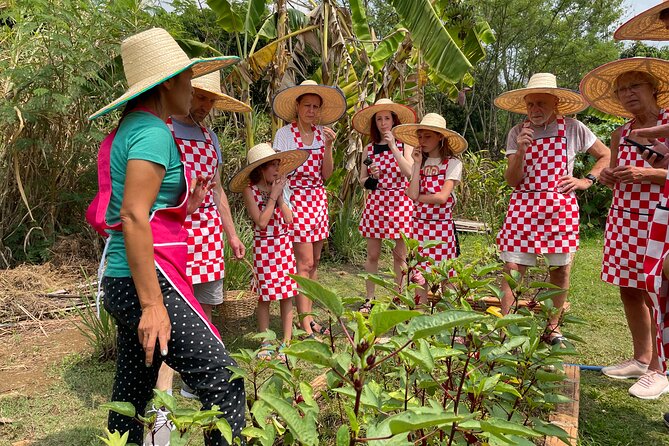
- Small group size (max 12) helps the instructors manage stations and keep instructions clear.
- Market visit + organic farm garden gives you context for the herbs and vegetables you cook with.
- Menu choice by category lets you steer your own curry, soup, stir-fry, and spring roll lineup.
- Vegan or vegetarian options are built into the class, and you can choose your preferred spice level.
- Hands-on prep means you do the chopping and grinding for curry paste rather than just watching.
Getting from Chiang Mai city to the farm kitchen without the hassle
The experience starts right in Chiang Mai city with pickup from your hotel or accommodation. From there, you head to a local market for a brief look at the ingredients and produce that show up again later in the meal. It’s short on purpose, but it gives you something important: names, textures, and smells of Thai staples before you start cooking with them.
Then it’s on to Smile Organic Farm Cooking School in the countryside. One review mentioned the drive is roughly 30-plus minutes, so consider this part of the experience, not just transit. You’re trading city noise for a calmer farm setting, and that matters once you’re standing at a cooking station.
If you hate guesswork, this setup helps. You don’t need to figure out routes, timing, or what bus takes you where. You show up, get transferred, and the day flows.
You can also read our reviews of more tours and experiences in Chiang Mai.

What makes the Smile Organic Farm visit worth your time
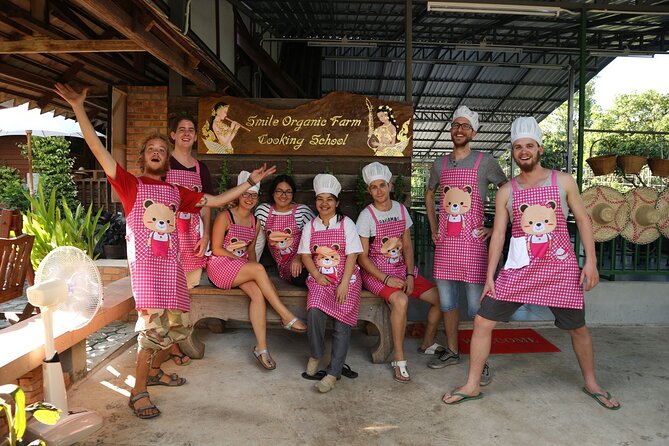
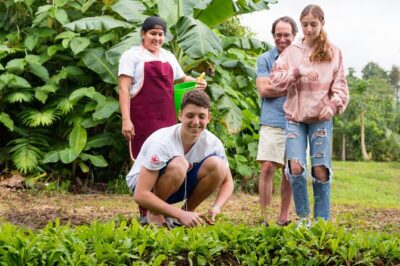
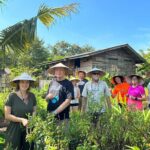
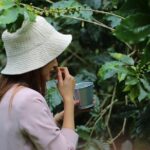
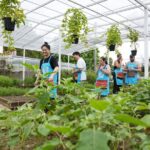
This isn’t only about cooking. A big part of the value is the stop at the organic farm’s herb and vegetable garden. You learn about Thai herbs and vegetables right where they grow, which makes later cooking feel less like following random steps and more like understanding the role each ingredient plays.
This garden portion also sets the tone. The kitchen experience is practical, but the farm time gives it breathing room. You can slow down, smell the herbs, and get a feel for how organic growing changes what you’re cooking with.
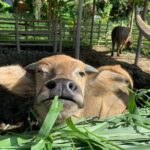
Some details that show up in the overall experience vibe: there’s mention of an outdoor cooking area and a relaxed atmosphere during the meal. There are also animal sightings in the farm setting in at least some visits, including a tortoise and French bulldogs noted by a participant. You should think of it as a bonus mood-booster, not the main reason to go.
The market stop: your shortcut to understanding Thai flavors
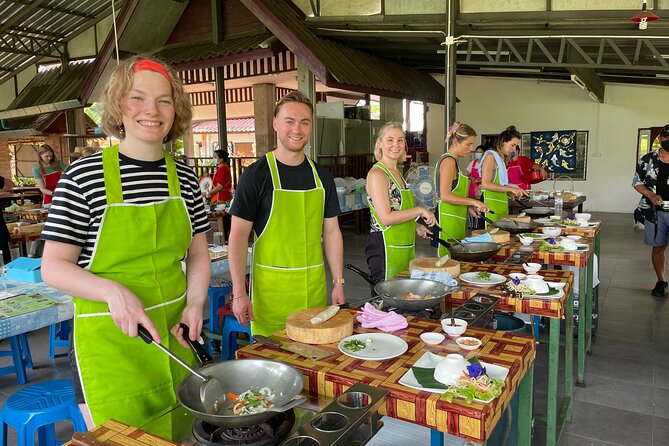
The market visit is brief, but it can help you connect ingredients to the dishes you’ll make. You’ll get guidance on products and spices you use later, which is the kind of prep that sticks in your brain when you’re standing at your station.
If you’re the type who likes to shop for food when you travel, this helps in a smart way. Even if you don’t buy anything, you can leave with a mental map of common Thai ingredients and what they’re doing in curry paste and stir-fries.
If you’re not into markets, it might feel like the only part you could skip. But in this format, it’s usually short enough that it doesn’t hijack your day.
Cooking from scratch in five skill sets
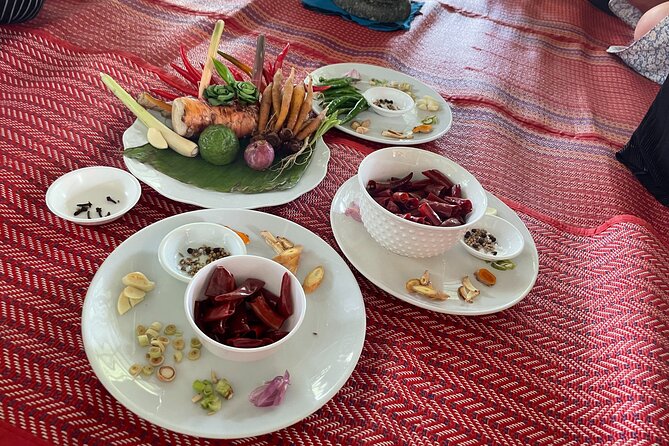
Once you arrive at the cooking school, you’ll get an explanation of what you can cook, then you choose your own menu for each category. The class teaches basic Thai cooking across five categories:
- Curry paste
- Curry
- Stir-fried dish
- Soup
- Spring roll
A key detail: every menu can be made vegetarian or vegan. So you’re not stuck choosing between eating Thai food and sticking to dietary preferences. You’re also able to choose how spicy you want it, which keeps the meal comfortable without losing flavor.
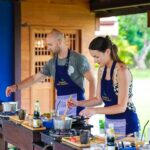
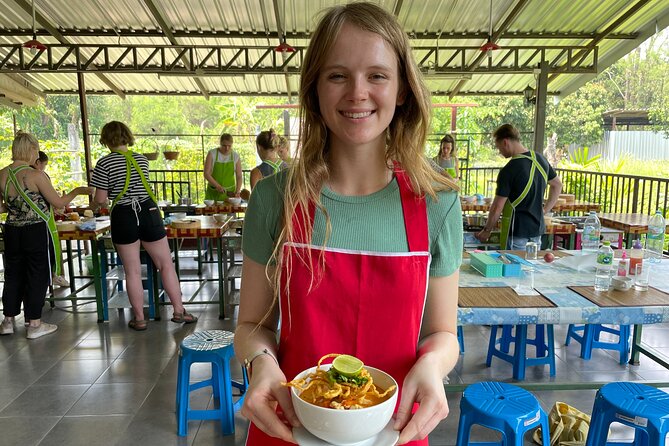
Another important practical point: you’re not just tasting your way through a lesson. You do the real work. Several guides and participants describe doing chopping, grinding, and stir-frying themselves. That hands-on element is a huge part of why this class has such high satisfaction.
Curry paste and curry: the core lesson that pays off later
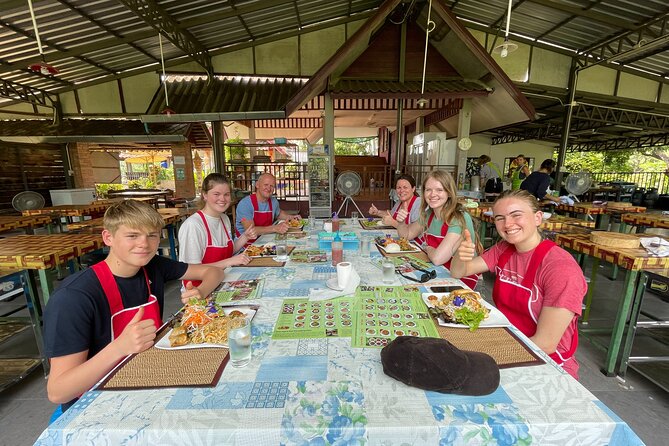
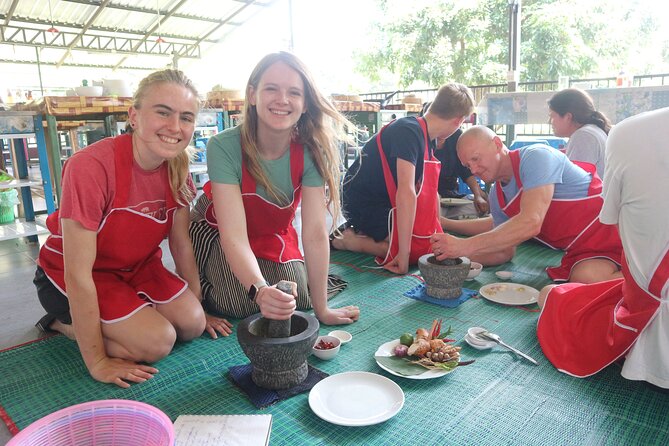
The curry paste is often the moment where the class becomes real for you. You’re working with aromatic spices and ingredients, and grinding and mixing them by hand helps you understand why curry doesn’t taste the same when you just buy paste from a jar.
After curry paste, you move into curry cooking. This is where you see how the paste turns into a dish with structure—sweet, salty, sour, and heat working together. If you plan to cook Thai food at home, this is the section you’ll remember, because it’s the base technique behind a lot of Thai flavors.
A plus: since your menu is flexible and vegetarian/vegan possible, your curry learning can still match your real-world cooking needs.

Stir-fry: fast, flexible technique under clear direction
Stir-fry is where you practice Thai cooking as a skill, not a one-off dish. You’ll work through chopping and cooking in a way that teaches you timing and how ingredients behave when they hit the pan.
One review highlighted clear instructions and an efficient setup, and stir-fry is usually where that planning shows up. If you’ve ever been frustrated by classes that move too slowly or too fast, a well-organized stir-fry session is a sign the school is managing multiple people and stations at once.
It’s also a good category for picky eaters. Stir-fry tends to let you recognize the vegetables and sauces and understand what you can swap next time.
Soup: comforting flavors, big-course energy
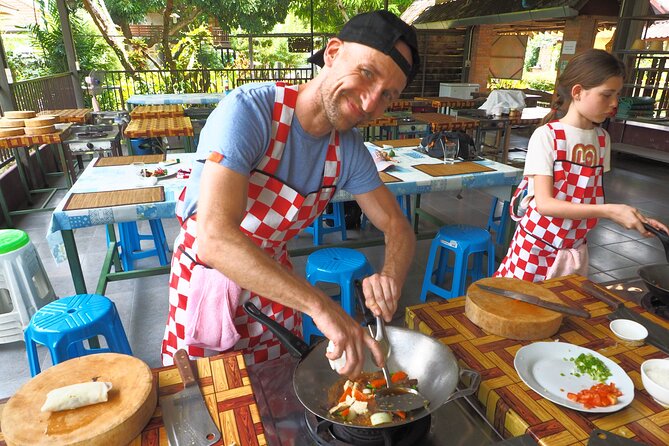
Soup is another category you’ll cook, and it rounds out the meal. In a half-day format, soup can feel like the relief course—warm, fragrant, and easier to finish when you’re tired from chopping.
That said, there’s a catch noted by participants: at least one person felt the soup replaced a Thai dessert that they expected. So if dessert is a must for your ideal day, don’t bank on it. For most people, though, the soup is a satisfying closer, especially when you’ve already built curry and stir-fry.
Spring rolls: the hands-on crunch-and-assembly moment
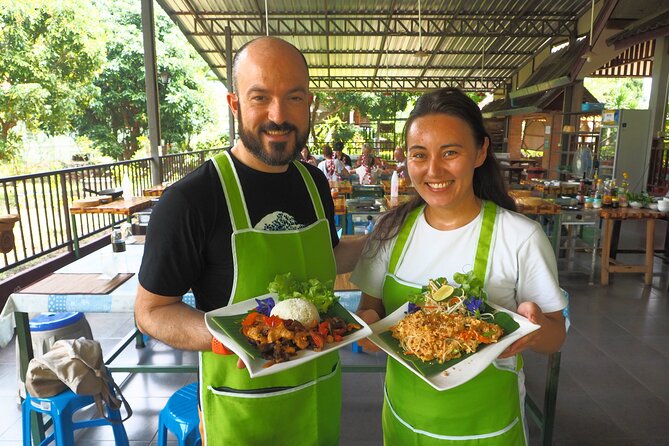
Spring rolls are a classic Thai cooking target for a reason: you can learn technique quickly and then you get that satisfying texture payoff when you eat them.
This category also fits the overall class approach. You work through steps, get guidance, and end up eating what you made. It’s one of the most tangible outcomes of the session because you can see the roll form as it comes together.
If you like food that feels more snack-like, spring rolls are a great counterbalance to curry and soup.
Spice control and vegan/vegetarian choices that don’t feel like an add-on
Dietary flexibility is a standout feature here: the menu can be vegan or vegetarian. That’s important because Thai food often depends on fish sauce or shrimp paste, and classes that only offer a bland substitute can leave you feeling like you missed the real thing.
In this class, the plant-based option is built into the menu planning. You also get to decide spice level—mild or spicy—so the heat matches your comfort level.
Practical tip: If you’re new to Thai cuisine, start mild. You can always ask for adjustments while cooking, and it keeps flavors clearer while you learn techniques like curry paste grinding.
The “you cook, then you eat” pacing (and why you should come hungry, but not reckless)
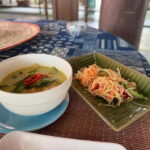
The overall structure is designed so you cook multiple dishes and then enjoy them in a relaxing atmosphere. Several reviews mention excellent pacing and the fact that you’ll eat a lot—like, a lot.
There’s direct advice from participants: don’t overload yourself on the first course. If you rush and eat too fast, the second and third dishes can feel like a challenge. Another participant said not to come hungry in the sense that the class is filling, and you’ll want room for the rest.
So here’s my practical take: treat this like a full meal you’re making, not a light activity. Plan water breaks, and don’t assume you’ll be able to taste everything in one go.
Small group setup, personal stations, and guides with real energy
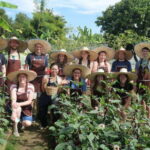
The class caps at 12 travelers, which is the kind of limit that makes a difference. With that size, it’s easier for the team to explain steps and for you to keep up.
Multiple people mention how instructors were fun and energetic, with clear directions and patient help. Guides named include Lilli, Luna, Love, K, Natalie, and Natty, and the common thread is that they guide while keeping the vibe light and focused.
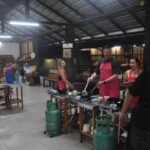
One review specifically described personal cooking stations for students, which is exactly what you want in a hands-on class. If you’re paying to learn technique, standing shoulder-to-shoulder watching someone else cook can be frustrating. Here, the format seems built to keep you cooking.
Also look for the school’s organization style. People mention fast and efficient setup, so even with multiple groups, your instructions don’t fall apart.
What you’re paying $29.35 for—and why it can be good value
At $29.35 per person, the value comes from three things working together:
- You get hotel pickup and round-trip transfer
- You cook multiple categories of Thai food from scratch
- The class supports vegan/vegetarian options and spice control
Many cooking classes charge more for just a single dish or for watching plus tasting. This one is priced like an accessible activity, but it still delivers a full cooking-and-eating session.
Is it perfect value for everyone? If you want a quiet, sit-and-learn experience, this may be too active. If you’re a strong eater and want to learn real techniques, it’s a strong deal.
Also remember the duration is listed at about 6 hours. That makes it more than a quick demo. You’re paying for a real chunk of time plus ingredients, guidance, and meals.
Who should book this Chiang Mai Thai cooking class
This is a great fit if you:
- Want hands-on technique (curry paste grinding, stir-frying, rolling)
- Prefer learning with real Thai herbs and garden context
- Cook at home and want dishes you can reproduce
- Need vegan or vegetarian options
- Like small-group instruction and clear pacing
It’s also good for couples and small groups because everyone can cook and eat together. Some reviews mention families and family-friendly energy, though the class rules mean kids have separate participation expectations.
If you’re tight on time, note that it’s about 6 hours and includes market + farm + cooking + eating + return.
Booking checklist for families and age expectations
The class notes age rules clearly:
- Children 0–3 years old are free of charge.
- Children 4–8 years are priced as visitors.
- Children above 9 years old can participate with their own cooking stations.
So if you’re traveling with kids, check their age category before you book. Having kids cook with their own station is part of what keeps the class from feeling like it’s only for adults.
Should you book it or skip it?
Book this Chiang Mai organic farm Thai cooking class if you want a real cooking lesson with a farm setting, menu choice, and strong instruction. The best reason is the hands-on approach: you make curry paste, curry, stir-fry, soup, and spring rolls, then you eat what you cooked. That combination makes it more than a meal out—it’s a skill you leave with.
Skip or reconsider if:
- You hate cooking and want mostly watching
- You’re very dessert-focused (some participants expected dessert, but soup served as a closer for many menus)
- You get overwhelmed by big meals and want only a light snack experience
If you do book, plan your appetite like you’re eating three courses of Thai food plus more. Bring water, take your time, and treat the spice adjustment as part of learning—mild is still authentic when you’re building your foundation.
FAQ
Is pickup from my hotel included?
Yes. Pickup is offered from your hotel or accommodation in Chiang Mai city, and you’re also taken back afterward.
What’s included in the class besides cooking?
You visit a local market briefly, then go to Smile Organic Farm Cooking School. At the farm, you learn about Thai herbs and vegetables in the organic kitchen garden before cooking.
How long does the experience last?
The duration is listed as about 6 hours.
What dishes will I cook?
You learn basic Thai cooking across five categories: curry paste, curry, stir-fried dish, soup, and spring rolls.
Can the dishes be vegan or vegetarian?
Yes. Every menu is able to be cooked as vegetarian or vegan, and you can choose your spice level from mild to spicy.
Is the group size small?
Yes. The experience has a maximum of 12 travelers.
Will I cook with my own station?
The format supports hands-on cooking, and some classes are described as having personal cooking stations for participants.
What are the age rules for children?
Children 0–3 years old are free of charge. Children 4–8 years are priced as visitors. Children above 9 years old are able to have their own cooking stations as participants.
Is there a cancellation option for a full refund?
Yes. You can cancel up to 24 hours in advance for a full refund. Changes made less than 24 hours before the start time aren’t accepted, and if you cancel within 24 hours, you won’t get a refund.