REVIEW · CHIANG MAI
Chiang Mai: Authentic Thai Cooking Class and Farm Visit
Book on GetYourGuide →Operated by Grandma's Home Cooking School · Bookable on GetYourGuide
Farm-fresh Thai cooking feels real. In Chiang Mai, I really liked how this class mixes a local organic farm visit with a hands-on cooking lesson in Lanna-style pavilions, with English instructors such as Garnet and Toon making the whole flow easy. I also love the small-group format with your own cooking station, so you’re not just watching. One thing to consider: you’ll end up eating a lot, and the schedule can feel fast if you’re hoping for long pauses between dishes.
You start with hotel pickup and go straight into the ingredients part of the day. The market visit isn’t just a quick stop either; it’s where you learn what Thai dishes depend on—fresh herbs, aromatics, and the staples that decide whether a dish tastes flat or spot-on. By the end, you share what you make as a group, which is a fun way to compare flavors and get your confidence up before you cook at home.
In This Review
- Key moments that make this class worth it
- Hotel pickup to Lanna-style cooking stations
- Why the small group format is a big deal
- Market visit: learning Thai staples the practical way
- A quick reality check
- Organic farm visit: herbs, vegetables, eggs, and chickens
- What I think you’ll learn here
- Cooking begins: how curry paste sets the tone
- Tips for getting the most out of curry paste time
- Half-day class (morning or evening): 3 dishes plus the finale
- The good part about choosing fewer dishes
- Full-day class: coconut milk from scratch with the coconut grater
- Why I’d pick the full day
- Eating together: sharing food and comparing flavors
- Price and value in plain terms
- A consideration on scheduling
- Who this is best for (and who may want something else)
- Practical tips before you go
- Should you book Grandma’s Home Cooking School in Chiang Mai?
Key moments that make this class worth it
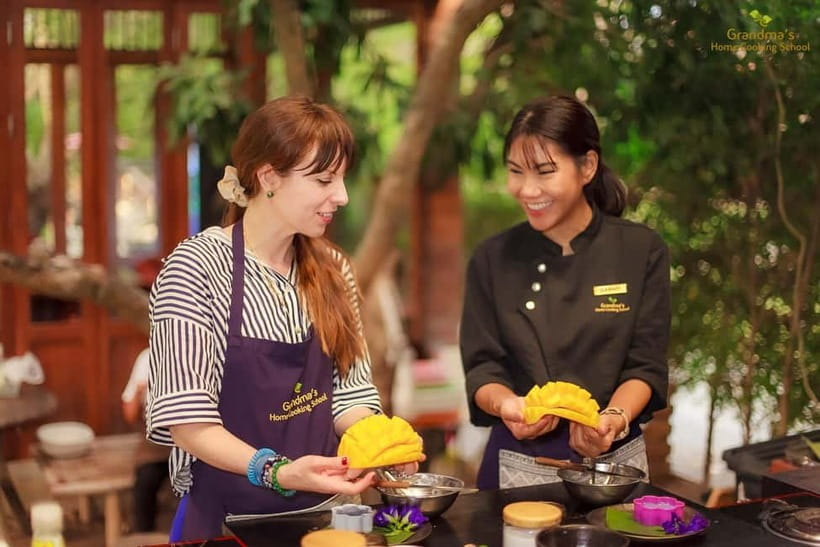
- Organic farm walk with egg collecting: pick herbs and vegetables, collect eggs, and even feed the chickens.
- Market time for real ingredient knowledge: you learn what to look for and why certain items matter in Thai cooking.
- Curry paste from scratch: grind and build the flavors yourself, not just follow a worksheet.
- Individual cooking stations: small groups mean more hands-on time and less waiting.
- Full-day coconut milk, coconut grater style: make your own coconut milk for curry or mango sticky rice.
- You leave with an e-recipe book: helpful for recreating the dishes after you’re back home.
Hotel pickup to Lanna-style cooking stations
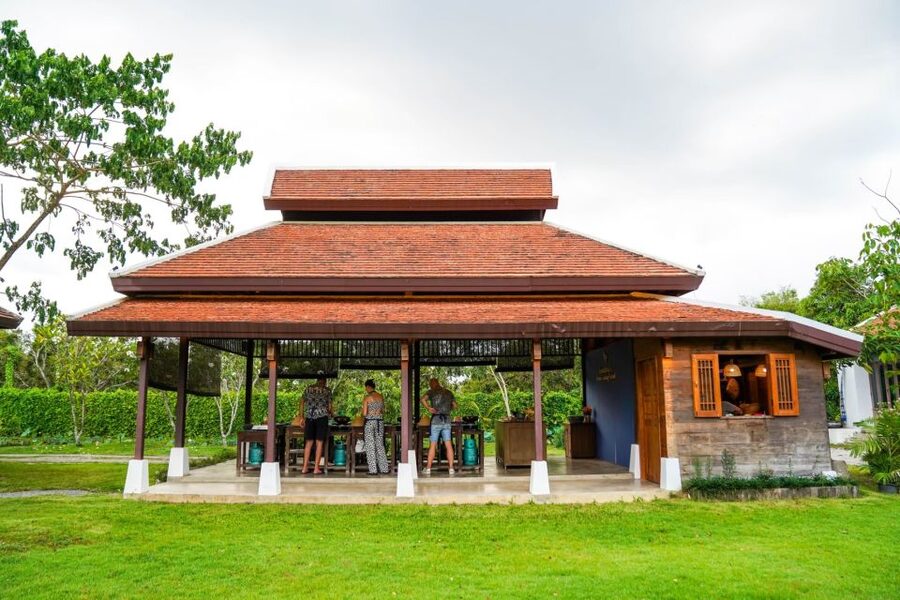
This experience is built around convenience. You’ll get picked up from your Chiang Mai hotel (pickup is available within 10 kilometers of the city center) and transported to the market and then the farm and cooking area. Pickup time depends on the session: morning pickup is around 8:30–9:00 AM, and afternoon pickup is around 11:30 AM–12:00 PM.
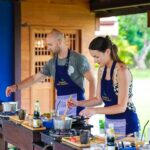
Once you arrive, you’ll meet your instructor and the rest of the small group. The group size is limited (up to 10 participants), and you’ll cook at individual stations. That detail matters. Thai cooking has a few steps where timing and technique really affect flavor—chopping, paste-making, and balancing heat with aromatics. In a group where everyone shares one station, you’d spend half the class waiting. Here, you get to work.
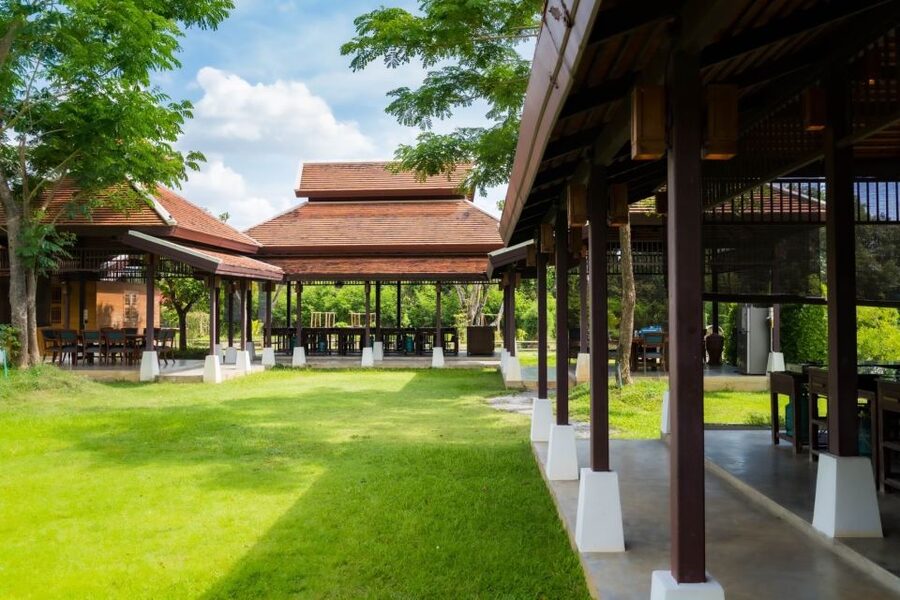
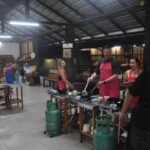
The cooking happens in Lanna-style pavilions, and in some sessions the cooking room is air-conditioned (a big relief when Chiang Mai is humid). You also get a welcome drink before cooking starts, which helps you settle in.
You can also read our reviews of more tours and experiences in Chiang Mai.
Why the small group format is a big deal
I like classes where you actually cook, not just stand around. With individual stations, you can ask questions mid-step and adjust as you go. The instructors I saw mentioned by name in guest feedback—people like Garnet, Tay, Kiki, Jimmie, and Le Vin—are known for guiding you while still letting you do the work. That balance is what makes the class feel empowering instead of scripted.
Market visit: learning Thai staples the practical way
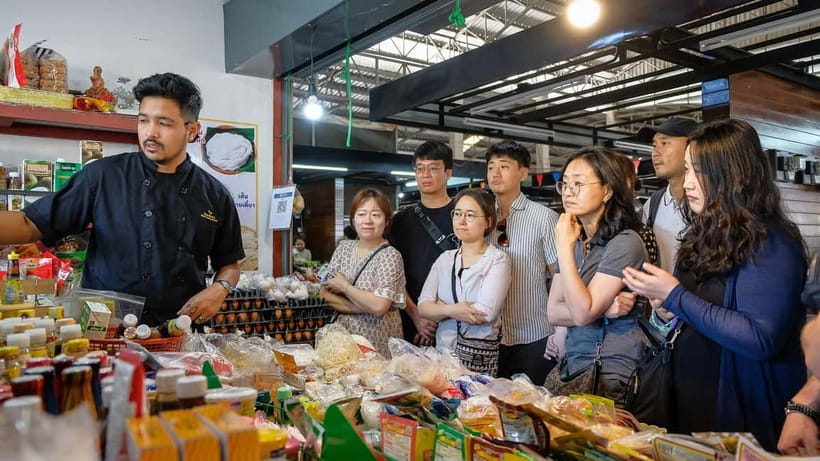
Before you hit the stove, you visit the local market to buy the ingredients for your dishes. This stop is one of the best parts because it trains your eye. Thai cooking isn’t only about recipes—it’s about sourcing. You’ll hear what ingredients are important, and you’ll get a chance to roam so you don’t feel trapped in a single aisle.
In practice, the market visit helps you understand two things:
- What fresh aromatics and herbs look like when they’re at their best.
- How ingredients connect across multiple dishes. For example, certain curry paste components or herb choices can show up in different forms across soups, curries, and stir-fries.
Some market-guides are described as funny and sweet while walking you through what you’re seeing (one guide name that came up was Patty). That makes the market part feel like learning, not like a rush.
A quick reality check
Market time is also why you should bring comfortable shoes. You’ll be standing and walking, then later you’ll be on the farm. This isn’t a sit-and-cook class with a stop-start schedule.
Organic farm visit: herbs, vegetables, eggs, and chickens
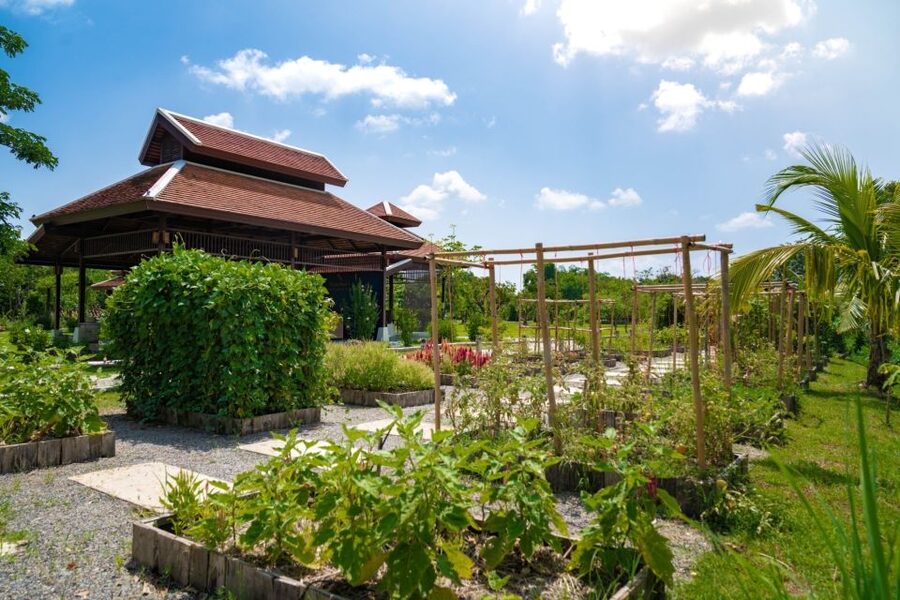
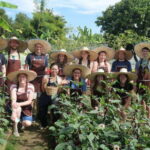
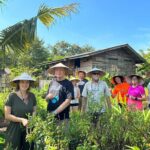
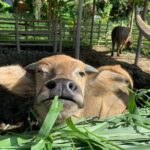
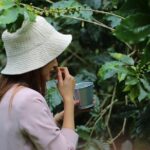
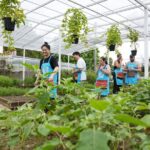
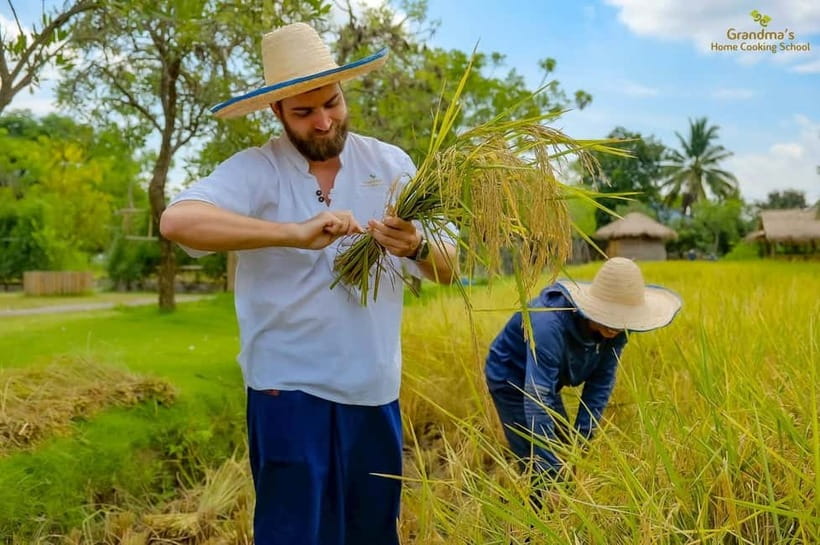
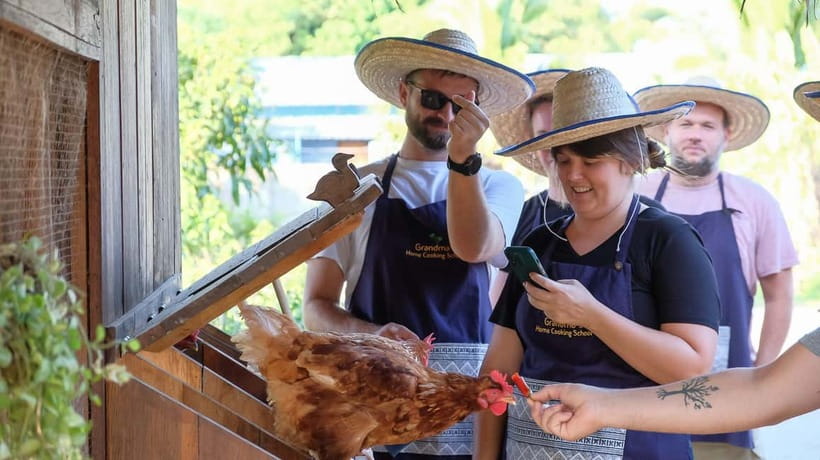
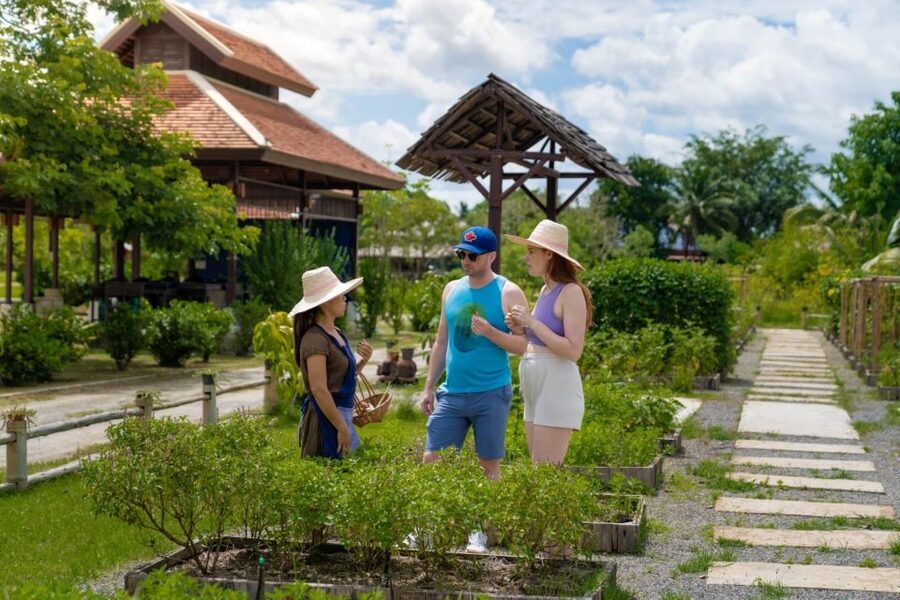
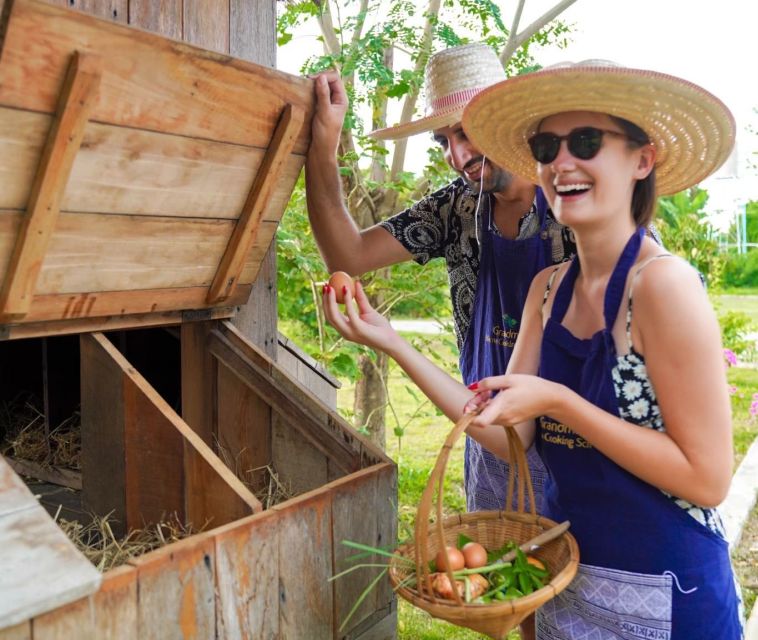
The highlight of the day is the organic farm visit. You’ll walk through the farm with your instructor to get to know Thai herbs and vegetables, and you’ll pick some fresh produce for your cooking. You’ll also collect eggs for your dishes, and you may feed the chickens. That may sound small, but it changes how you cook. You stop thinking of ingredients as something bought in a plastic bag, and start treating them like living components with flavor potential.
The farm setting is also part of the appeal. It’s described as beautiful, with gardens where you can walk around and see what’s growing. This is the kind of place that makes you slow down for a few minutes and look closely at herbs and greens.

What I think you’ll learn here
Farm time is where you pick up the “Thai cooking logic” behind the dishes. Thai flavors often build in layers—fresh herbs for aroma, ground paste for depth, and aromatics for heat and fragrance. Seeing how herbs grow and how vegetables are handled gives you a better mental model for why your final dish tastes the way it does.
Cooking begins: how curry paste sets the tone
After the farm, you head to the classroom and get set up at your individual cooking stations. The instructor will guide you through multiple dishes, and you’ll choose from a menu so you’re cooking meals you actually want to eat.
A consistent centerpiece is making curry paste. This isn’t a shortcut. You’ll build it with your own hands, which is exactly what you need if you want to re-create Thai curry later. Store-bought paste can be good, but once you make it from scratch, you understand how balance works—heat, tang, saltiness, and aroma all need to land together.
In many half-day formats, you cook three dishes. One common menu pattern described in feedback is:
- a soup (with two options)
- pad Thai (usually a single option)
- a curry (with several curry options)
Then there’s mango sticky rice at the end.
Full-day sessions add extra courses, and one standout extra is coconut milk made by you.
Tips for getting the most out of curry paste time
- Watch the instructor’s pacing. Curry paste work is less about brute force and more about grinding and combining flavors evenly.
- Don’t rush chopping. The better your knife work, the easier everything feels later at the wok or pan.
- Ask questions while you’re still in paste mode, because that’s where the flavor decisions happen.
Half-day class (morning or evening): 3 dishes plus the finale
If you choose the shorter format, you’ll spend about 4–6 hours total (with morning or afternoon starting times). The class is designed so you cook enough to feel like you learned real skills, not just made one dish and left.
The flow typically goes like this:
- Market ingredients purchase
- Farm walk and harvesting
- Cooking class with your individual station
- Shared meal with other group members
- Wrap-up and drop-off back to your accommodation
By the end, you usually get to enjoy mango sticky rice. Many people also point out that you should come hungry—there’s more food than you expect, and it can be filling in a good way.
The good part about choosing fewer dishes
A half-day format is great if you have other plans in Chiang Mai. You still get the curry paste and core Thai dishes like pad Thai and a curry, but you don’t need to commit the whole day. For me, that’s a practical sweet spot.
Full-day class: coconut milk from scratch with the coconut grater
If you want the extra Thai food craft, choose the full-day option. This is the session that includes making coconut milk using a coconut grater. You’ll use that coconut milk for your curry or mango sticky rice, depending on what your menu includes.
This part is surprisingly satisfying. Coconut milk isn’t just an ingredient here—it’s a technique. When you grate coconut and prepare it into milk, you understand why coconut flavor is smooth and aromatic rather than sharp. It also helps you appreciate the difference between Thai-style coconut dishes and coconut desserts that rely on sugar or artificial flavoring.
Why I’d pick the full day
If your goal is to cook Thai food at home, coconut milk is one of the hardest flavors to mimic without learning the steps. You also get more time with your station and more chances to ask how to adjust taste during cooking.
Eating together: sharing food and comparing flavors
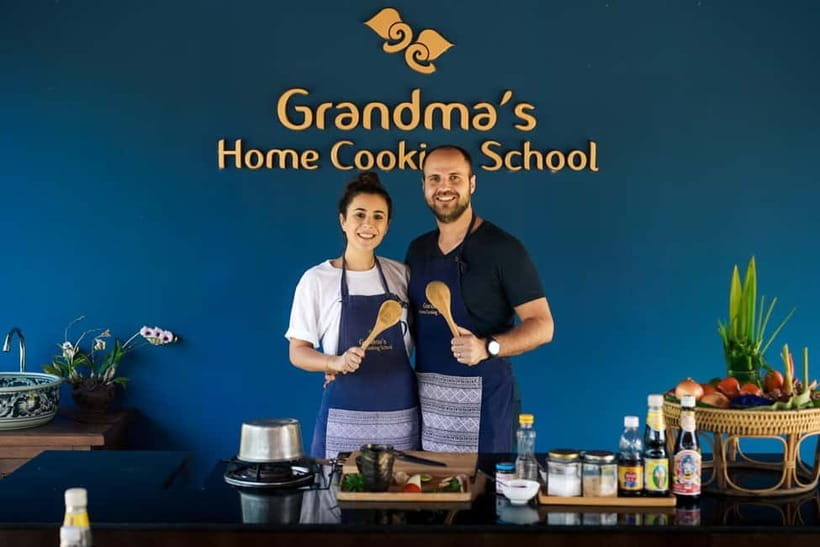
At the end, you share a meal with your group. This is where the experience becomes social in a good way. Everyone is cooking similar dishes but making their own choices and adjustments, and you can compare what worked best.
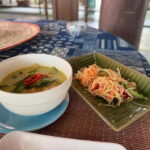
You might also get a moment to sample each other’s cooking. In the feedback, people mention the food is delicious and filling, and some note you can request containers to take food home if you can’t finish.
That last detail is worth knowing. When you leave the table with Thai curry and rice in a container, your class doesn’t end at the cooking school. It turns into a real second meal later.
Price and value in plain terms
This class is listed at about $33 per person. That price is easy to question at first—cooking classes can range wildly in cost—but the value here is tied to what you get for the money.
For roughly a half day to full day, you typically receive:
- hotel pickup and drop-off
- market visit
- organic farm visit with harvesting and egg collecting
- an English-speaking instructor
- small group size (limited to 10)
- individual cooking stations
- welcome drink
- e-recipe book afterward
- multiple dishes you eat together
When you compare that to a cooking class that only teaches one dish and doesn’t include market or farm time, this feels like a more complete Thai food experience. You’re paying for context and ingredients, not just cooking instructions.
Some guests describe it as exceptional value for money, and I get why. The market and farm stops add real “why it tastes right” knowledge, and curry paste/coconut milk add skills you can use later.
A consideration on scheduling
The biggest downside isn’t the guide—it’s the pace and portion size. You’re cooking several dishes and eating them too, and the timing can feel full. If you’re the type who needs long sits between courses, you might prefer the half-day option—or you may want to plan a lighter evening after your class.
Who this is best for (and who may want something else)
This is a strong fit if you want:
- an authentic Thai cooking class in Chiang Mai with ingredient shopping and farm context
- hands-on skills like curry paste and (on full day) coconut milk
- a small-group atmosphere where you can ask questions
- English instruction and structured guidance
It may be less ideal if:
- you hate eating a lot of food in one sitting
- you want a class that’s mostly tasting and minimal cooking
- you’re traveling with pets (pets aren’t allowed)
Practical tips before you go
Bring comfortable shoes and a sun hat. You’ll be walking at the market area and on the farm. Also think about your comfort level with food prep tasks. Curry paste and grating coconut (full day) are hands-on activities, and you’ll use your station actively.
If you have dietary needs, vegetarian and halal options are available. You’ll still want to mention your preferences when choosing dishes so the plan fits your menu.
Finally, remember this tour is applicable for non-Thai residents only. If that affects you, confirm eligibility before booking.
Should you book Grandma’s Home Cooking School in Chiang Mai?
Yes—if you want a real Thai food day, not just a generic cooking demo. The combo of market + organic farm + small-group cooking is what makes this experience feel worth your time. You’ll leave with more than recipes. You’ll understand ingredient choices, and you’ll know how to make two flavor foundations—curry paste and (on full day) coconut milk.
I’d choose full day if coconut flavor and curry depth matter to you. I’d choose half day if you want core dishes, curry paste, and a market/farm foundation without tying up your whole schedule.
If you hate a fast pace or you’re watching your food intake, consider the timing carefully and plan downtime right after. Otherwise, this is one of the more practical and satisfying cooking experiences in Chiang Mai.