REVIEW · CHIANG MAI
Chiang Mai: HALF-DAY COOKING COURSE at a Thai Cooking Farm
Book on GetYourGuide →Operated by THE RICE BARN THAI COOKING FARM CHIANGMAI · Bookable on GetYourGuide
Thai flavors click fast here. This half-day class at The Rice Barn blends a Chiang Mai market walk with fully hands-on cooking, taught by instructors like Oily, Timi, and Katie.
What I really like is the you-station-first setup: each person cooks at their own workstation, supervised all the way. I also like that the lesson starts with ingredients in the market, so you learn what’s doing the work in Thai cooking, not just how to follow steps.
One thing to consider: some parts feel more like guided practice than independent cooking. Ingredients may come in ready-to-use amounts, so if you want a tougher challenge where you choose, measure, and improvise everything yourself, you might find it a bit structured.
In This Review
- Key things to know before you go
- A half-day Chiang Mai cooking class that teaches real technique
- Hotel pickup and air-conditioned transport that keeps you on schedule
- The market stop in Chiang Mai: ingredients, not souvenirs
- Back at The Rice Barn: clean stations and a farm-to-kitchen feel
- How the hands-on cooking works: demo, then your station
- The dishes you’ll cook (and what to expect from each)
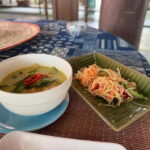
- Tom Yum Kung and Thai soup flavor
- Pad Thai with practical noodle technique
- Curry choice: Green curry or Panang curry
- Cashew stir-fried chicken
- Sticky rice and mango sticky rice
- The big picture: 4 to 5 dishes worth of food
- The meal part: you eat what you made, with enough food to matter
- Price and value at $28: what you’re really paying for
- What you’ll get to take home (besides a full stomach)
- Who this Chiang Mai cooking farm class suits best
- What to do before you go (so you enjoy every bite)
- Should you book this Rice Barn Thai Cooking Farm course?
- FAQ
- How long is the Chiang Mai Thai cooking course?
- Do I get hotel pickup and drop-off?
- Is the class hands-on or mostly watching?
- Do we visit a market before cooking?
- What dishes will I cook?
- What’s included in the price?
- Is there an English-speaking instructor?
- Are coffee or tea included?
- Is it flexible to book or cancel?
- What do I take home after the class?
Key things to know before you go
- Hands-on stations: you cook at your own station instead of watching from the sidelines.
- Market stop first: you learn common Thai ingredients before you touch a wok.
- Farm setting at The Rice Barn: a clean, organized cooking setup in a garden-like property.
- A repeatable skill set: instructors focus on practical technique you can use later at home.
- A menu with fan favorites: Tom Yum Kung, Pad Thai, curry (often green or Panang), and sticky rice-based desserts show up often.
- Food is the point: the class ends with what you make, and it’s usually a lot.
A half-day Chiang Mai cooking class that teaches real technique
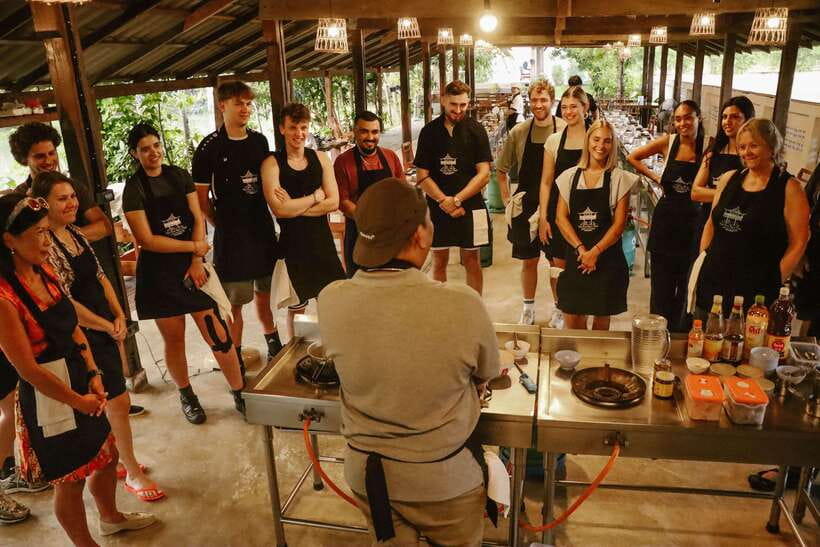
This course is built around the core Thai cooking idea: taste comes from balance. Sweet, salty, sour, heat, and aromatics all play together. The way this class runs helps that click because you learn ingredients first, then you cook them immediately while the concepts are fresh.
You’re also not stuck in a classroom. At The Rice Barn Thai Cooking Farm, you work in a professional, clean kitchen setup with stations made for action. That matters because cooking lessons live or die on prep. If your station is cramped or chaotic, you end up stressed. Here, the format is designed so you can focus on the food.
I like that the course is labeled half-day (around 6 hours) and includes either a morning or evening option, so you can fit it without turning Chiang Mai into a full-day commitment every time.
You can also read our reviews of more tours and experiences in Chiang Mai.


Hotel pickup and air-conditioned transport that keeps you on schedule
Getting to the cooking farm is part of the experience, and it’s handled for you. You get round-trip transportation by an air-conditioned vehicle, and pickup happens at your hotel in Chiang Mai.
This is a big deal in Thailand where traffic and timing can swing your day. With pickup included, you’re not trying to figure out the route, the cost, or the timing on your own. You just go. That helps the whole day feel smooth.
One more practical benefit: you don’t waste your energy negotiating rides after you’ve already been out walking. You arrive ready to cook, not already exhausted.
The market stop in Chiang Mai: ingredients, not souvenirs
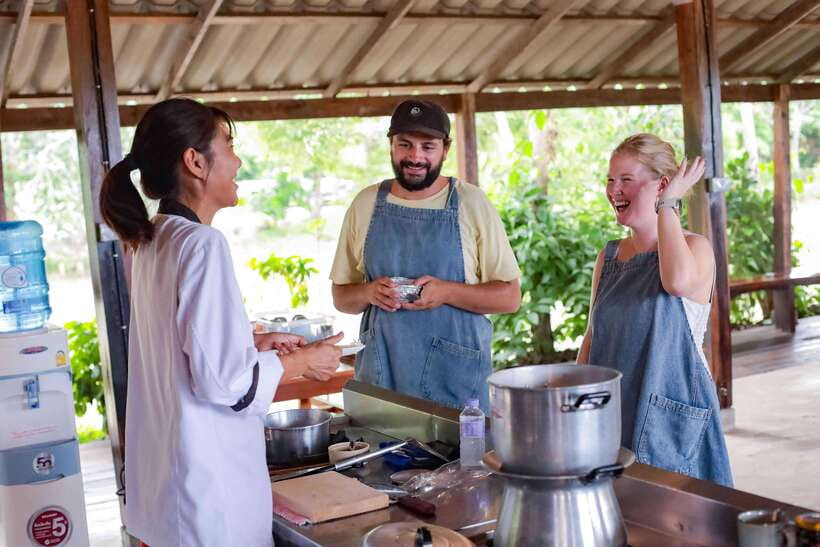
The itinerary starts with a local market visit, guided by an English-speaking instructor (you’ll meet names like Oily, Timi, Katie, and Gobby in different sessions). This is where the class earns its value.
Thai cooking can feel mysterious if you only focus on recipes. But when you see and discuss ingredients in the context they’re used, it makes the dishes easier to reproduce later. In past sessions, the market portion included learning about ingredients that drive flavor in classic dishes like curry pastes, noodles, and soups.
You may also see food-making details that go beyond spice jars. One example from course experiences: you can learn about coconut milk production, and then connect that to how creamy curries and rich desserts happen.
For you, the takeaway is simple: you’ll come away knowing what to look for next time you’re shopping—especially for the flavors that make Thai food taste like Thai food.
Back at The Rice Barn: clean stations and a farm-to-kitchen feel
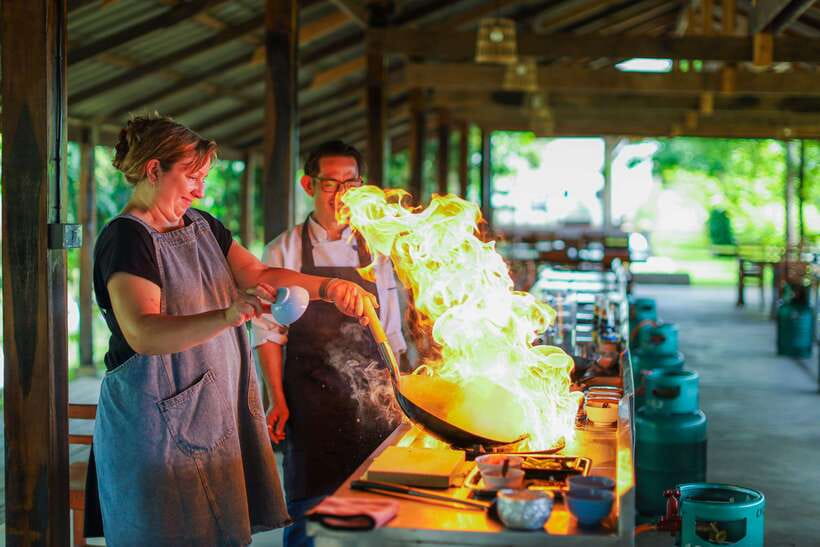
After the market, the group heads back to The Rice Barn Thai Cooking Farm. The property approach shows up in the details people remember: clean work areas, organized stations, and a setting surrounded by gardens and produce.
Even if you’re not chasing a “farm romance” vibe, the practical upside is real. A clean kitchen with working stations means the class moves smoothly and you spend more time cooking than waiting.
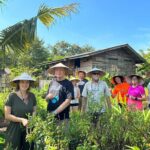
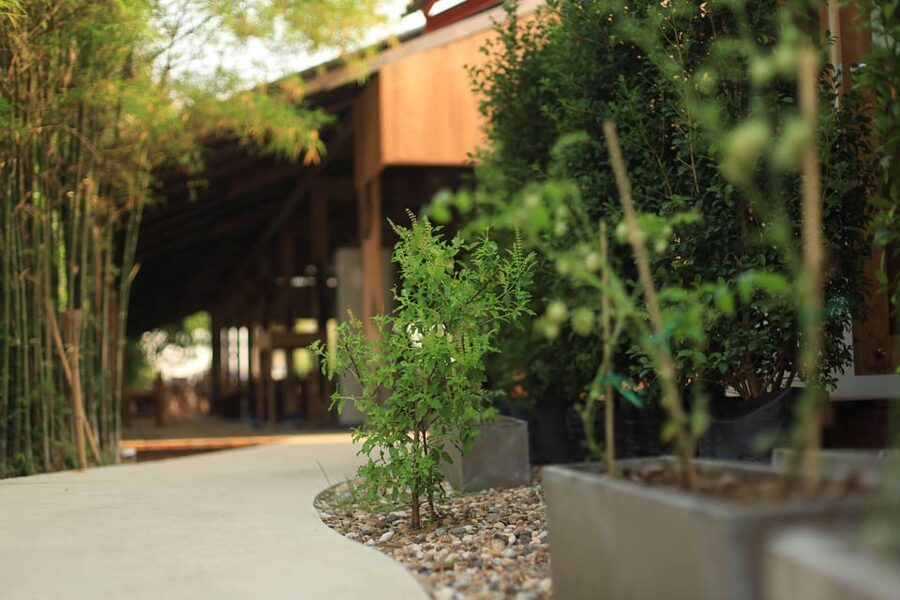
You also get a sense of where ingredients are coming from. Some sessions include seeing plants and produce connected to the food you’re cooking. That helps when you’re trying to understand substitutions later.
How the hands-on cooking works: demo, then your station
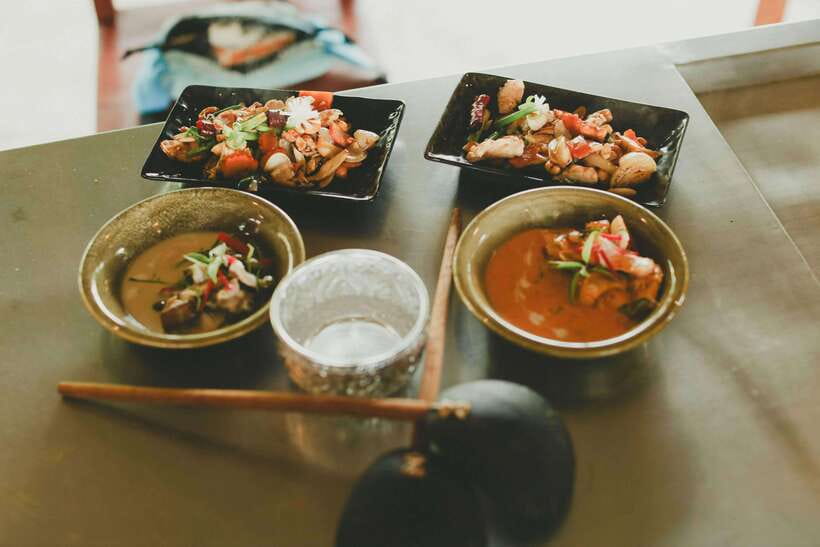
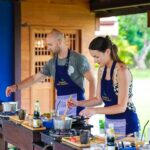
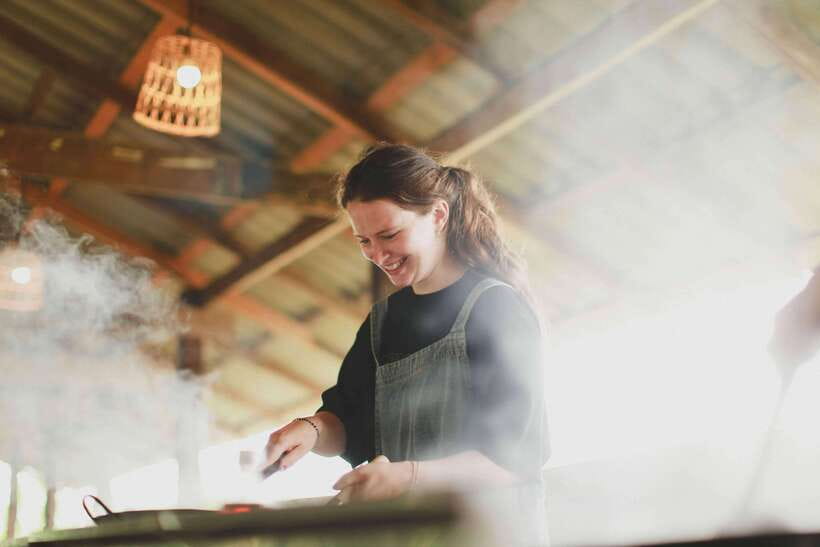
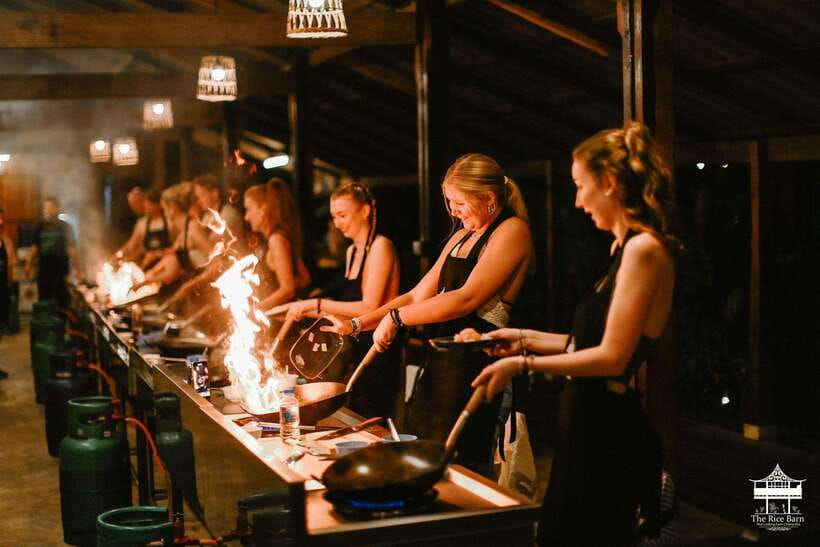
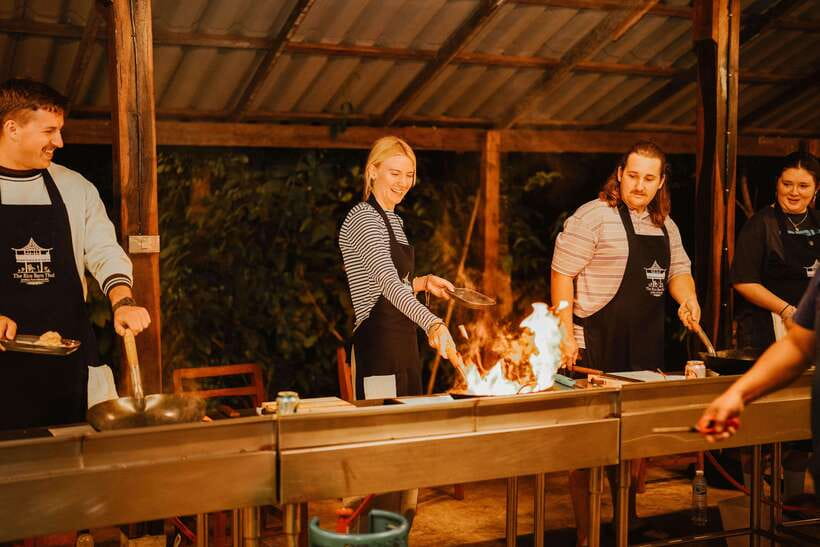
This is the core promise: it’s completely hands-on. Each person has their own cooking station, and you’re not just tasting while someone else cooks.
A typical flow goes like this:
- The instructor explains the dish and shows the steps first.
- You follow along at your station with close supervision.
- You adjust in real time based on taste and texture.
In multiple experiences, instructors were described as entertaining and very clear. Names that showed up again and again include Oily and Katie, plus co-teachers like Gobby/Gobbi. A good sense of humor doesn’t sound important until you’re learning knife work, sauce timing, and heat control. Then it helps a lot.
One small reality check: the class seems set up so most people can succeed. That means some components may already be portioned, and some mixing may be guided. If you’re looking for a fully independent, advanced skills course where you create everything from scratch with heavy improvisation, you might find it slightly less challenging.
Still, for most visitors, that structure is exactly what makes it feel doable and fun.



The dishes you’ll cook (and what to expect from each)
The menu varies by session, but you’ll repeatedly see these Thai favorites in cooking-class lineups at The Rice Barn:
Tom Yum Kung and Thai soup flavor
Tom Yum Kung is a classic Thai go-to: hot, sour, fragrant, and built for balance. You learn how the sour element and aromatics work together, and you’ll likely get a chance to cook it at your station rather than just watching.
Pad Thai with practical noodle technique
Pad Thai is another frequent dish, and it’s a great one to learn because it teaches timing. Noodles can go from perfect to sticky fast. In this class format, you get guidance on the order of steps so you can actually finish the dish well.
Curry choice: Green curry or Panang curry
Curry shows up in multiple ways, including sessions where you choose between green curry and Panang. Curry pastes and coconut interactions are the heart of the flavor. If you’re coming home and want to recreate Thai curry sauce, this is where you’ll gain the most useful understanding.
Cashew stir-fried chicken
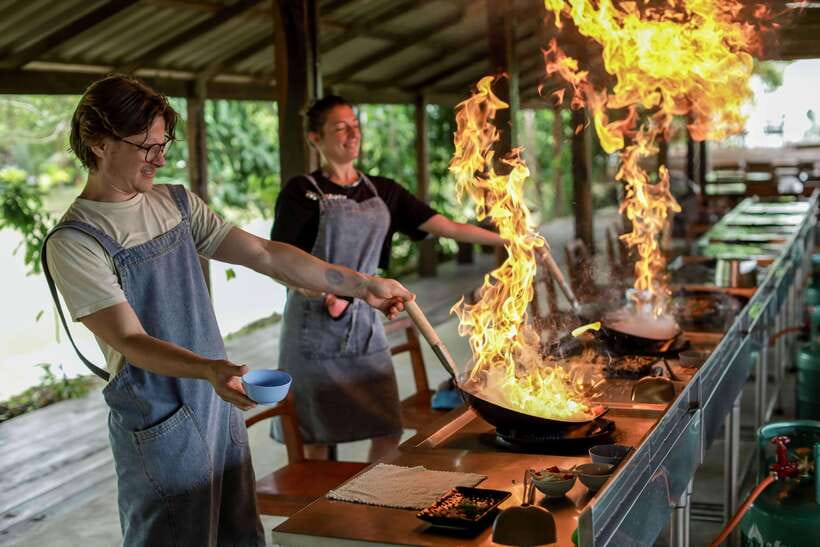
Cashew stir-fried chicken appears often, and one standout moment mentioned from past classes was a dramatic flare-up during cooking. In other words: it’s not just theory. There’s usually a moment where the heat and technique feel exciting.
Sticky rice and mango sticky rice
Sticky rice is a big theme in Thai desserts and comfort foods, and mango sticky rice is commonly included. This part matters because it teaches you what “texture right” looks like, not just what ingredients go together.
The big picture: 4 to 5 dishes worth of food
Across sessions, people describe cooking around four to five dishes, and then eating them afterward. Either way, you should plan to leave full. One tip that comes up: don’t eat a big meal right before you go.
The meal part: you eat what you made, with enough food to matter
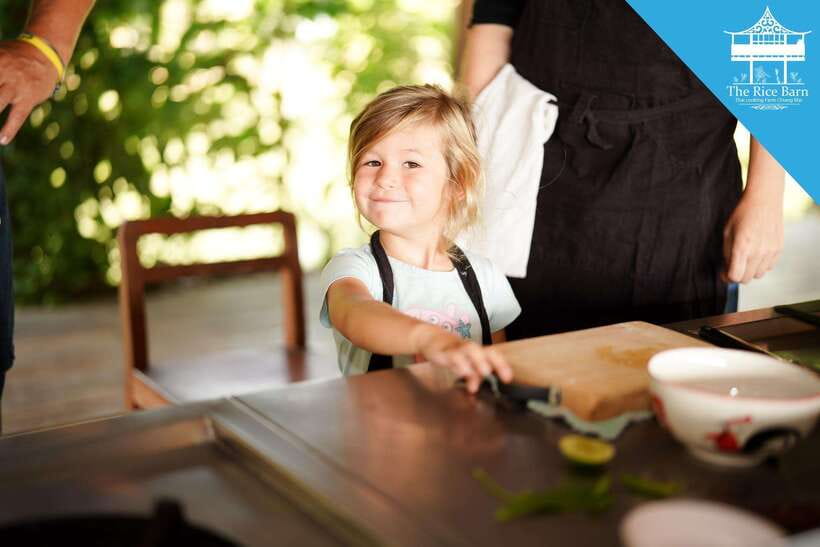
At the end, you don’t just get a tiny tasting portion. You eat the dishes you cooked, and multiple experiences highlight how plentiful it is.
That’s part of why the price feels reasonable. You’re paying for ingredients, teaching time, supervision, and then a full meal outcome, not a light snack. If you’ve ever taken a cooking class where you barely taste your own work, this is the opposite vibe.
Also, because the dishes are Thai classics, it’s a useful “menu map.” Once you’ve made a soup, a noodle dish, a stir-fry, and curry/sticky rice elements, you can mix and match at home more confidently.
Price and value at $28: what you’re really paying for
$28 for a half-day, 6-hour hands-on class includes more than instruction. You also get:
- Materials and all ingredients
- Round-trip air-conditioned transportation
- Coffee and/or tea
- A color recipe e-book
Here’s the value logic in plain terms. If you’re paying $28 and you’re walking away with multiple dishes you cooked yourself, plus the ingredients knowledge to repeat them later, it’s not just a workshop. It’s a full meal education session.
It’s also good value for couples and solo travelers. Couples can cook together at separate stations and still share the meal. Solo travelers don’t get stuck with a “lonely” role because the cooking setup is individual, and the table time naturally brings people together.
What you’ll get to take home (besides a full stomach)
You get a color recipe e-book. That’s important because cooking lessons lose value if you only rely on memory. The e-book should help you recreate the dishes with the right ingredients and steps.
There’s also mention in some experiences that a photographer may be present, and you can purchase the photos afterward. That can be a nice add-on if you like having a visual record without dragging your camera everywhere.
One more practical takeaway: by the time you leave, you’ll know what ingredients to look for in a Thai grocery store or market, and you’ll understand why those ingredients show up repeatedly in different dishes.
Who this Chiang Mai cooking farm class suits best
This class is a strong fit if you want:
- Real hands-on cooking time
- A guided market intro to Thai ingredients
- Classic dishes you can replicate at home
- A friendly, energetic teacher style like Oily, Timi, Katie, or Gobby
It’s also a smart choice if you don’t know what you like yet. Making multiple dishes quickly helps you find your favorites: soup heat level, curry creaminess, noodle texture, and sticky rice sweetness.
You might consider a different class if you want an advanced, independent cooking challenge where you build more from scratch without pre-measured components or heavy guidance.
What to do before you go (so you enjoy every bite)
These are simple moves that make the class better:
- Don’t plan a huge meal right before. The course food is substantial.
- Wear comfortable clothes you can cook in. You’ll be at the station for a while.
- Bring a small water habit. You get coffee/tea, but you’ll still want to stay comfortable while working.
If you have diet needs, it’s worth asking ahead. One course experience mentioned attention to a gluten-free need, which suggests the team takes requests seriously. Just don’t assume every dish can be fully adapted without checking.
Should you book this Rice Barn Thai Cooking Farm course?
If you’re in Chiang Mai and you want one cooking experience that’s practical, hands-on, and built around classic flavors, I’d book it.
Book it if you like structured guidance paired with real action at your own station. Book it if you want a market-to-kitchen lesson where ingredients make sense before you start cooking. And book it if you want good value for money: transportation, ingredients, multiple dishes, and a recipe e-book for $28.
Skip or choose carefully if you’re already an advanced cook looking for lots of freestyle choices and minimal guidance. The class is designed so you succeed, not so you wrestle the process alone.
If you’re somewhere in the middle, you’ll probably leave with skills you can actually use, plus a meal you cooked yourself without stress.
FAQ
How long is the Chiang Mai Thai cooking course?
The course runs for about 6 hours.
Do I get hotel pickup and drop-off?
Yes. You’re picked up from your hotel in Chiang Mai and you also get round-trip transportation.
Is the class hands-on or mostly watching?
It’s hands-on. Each person has their own cooking station, and you cook while the instructor supervises.
Do we visit a market before cooking?
Yes. The course includes a market stop where you learn about common Thai ingredients used in traditional dishes.
What dishes will I cook?
Common dishes mentioned include tom yum kung, pad thai, cashew stir-fried chicken, and curry (often green curry or Panang), plus sticky rice and mango sticky rice.
What’s included in the price?
Materials and all ingredients are included, along with round-trip air-conditioned transportation, coffee and/or tea, and a color recipe e-book.
Is there an English-speaking instructor?
Yes. The instructor is described as English-speaking.
Are coffee or tea included?
Yes, coffee and/or tea are included.
Is it flexible to book or cancel?
Free cancellation is available up to 24 hours in advance for a full refund, and you can reserve now and pay later.
What do I take home after the class?
You receive a color recipe e-book with the recipes from the course.