REVIEW · CHIANG MAI
Chiang Mai: Half Day Cooking Class at Organic Farm
Book on GetYourGuide →Operated by LocalCNXTours · Bookable on GetYourGuide
Chiang Mai smells amazing when you start cooking. This half-day Thai class pairs a market ingredient hunt with hands-on cooking in organic garden surroundings, so you understand what goes into Thai flavors and then make it yourself.
I especially like the way you choose your spice level and can go vegetarian or vegan without the food feeling like a compromise. The only thing to watch is the farm vs city setup—your experience changes depending on which garden option you pick.
In This Review
- Key Things To Know Before You Go
- A Market-First Cooking Class Where Ingredients Make Sense
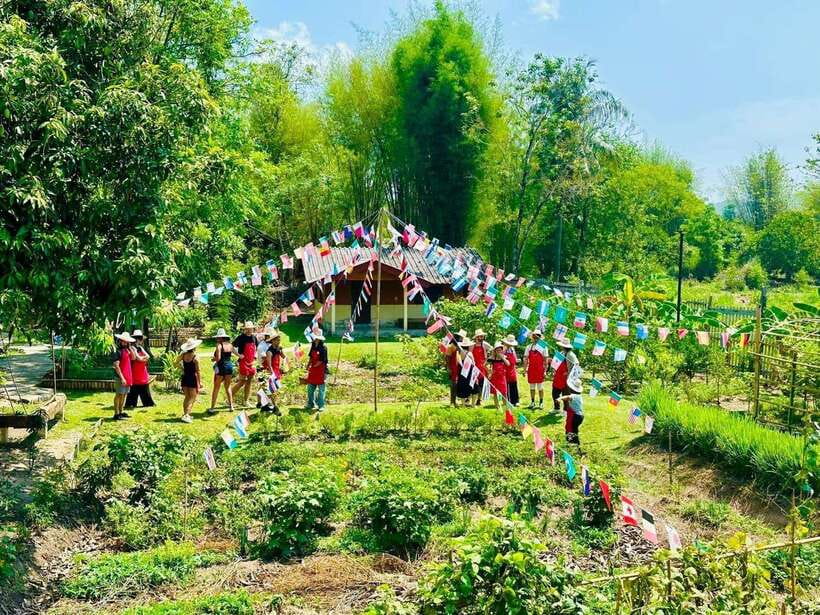
- Garden Options: City Organic Garden vs Yard Garden vs Farm Outside Town
- What You’ll Cook: Curry Paste to Curries, Stir-Fries, Soup, and Spring Rolls
- Customizing Your Curries
- Vegetarian and Vegan Thai Cooking That Actually Holds Up
- Organic Garden Touring and Herb Tasting: Why It’s More Than Scenic
- Eating Thai-Style in the Kitchen Garden (Yes, You’ll Get Full)
- Instructors and Group Size: Intimate, Not Assembly-Line
- Timing and Getting There: Burger King Meeting Point and Optional Pickup
- Price and Value: Why $31 Can Work If You Want Real Skills
- The Practical Recipe Take-Home: Cook Again Without Guessing
- Should You Book This Chiang Mai Cooking Class?
- FAQ
- How long is the Chiang Mai cooking class?
- Where do I meet if there’s no hotel transfer?
- Do they pick up and drop off from hotels?
- What dishes will I cook?
- Can I make the food mild or spicy?
- Are vegetarian or vegan meals available?
- Is there a market visit and a garden or farm tour?
- What do I get to take home?
- Is there a limit on group size?
- Is it suitable for wheelchair users or very elderly guests?
- What’s the weather-and-heat reality for the class?
Key Things To Know Before You Go
- Choose your garden option: city organic garden, city yard garden, or farm garden outside town
- Market visit comes first: you learn what ingredients look like and why they matter
- You cook multiple dishes: plan to be hungry; you’ll make several items per person
- Spice is adjustable: mild or spicy is up to you
- Vegetarian and vegan are built in: not a last-minute afterthought
- Recipes are included: you get a PDF/ebook so you can recreate the dishes later
A Market-First Cooking Class Where Ingredients Make Sense
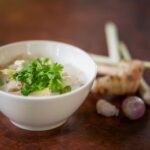
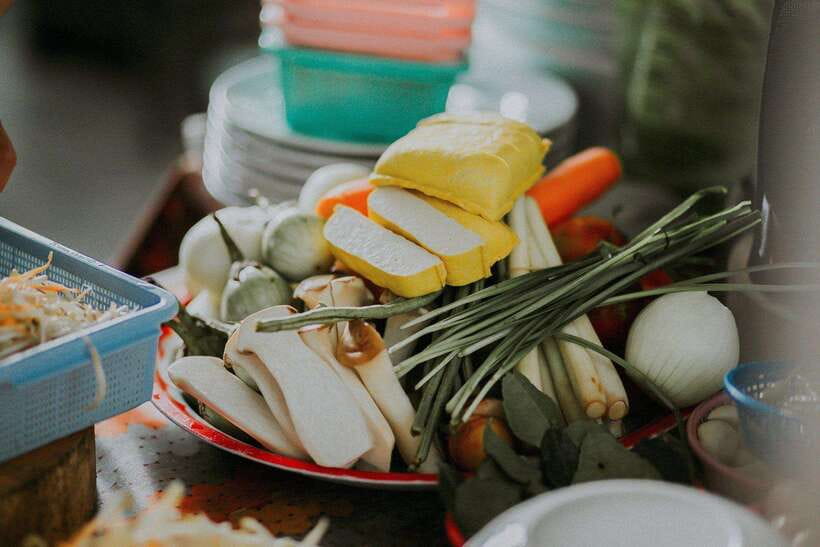
If you’ve ever tried to cook Thai food at home and wondered why yours tastes flat, this is the fix. The class starts with a trip through a local market, where you see ingredients up close before you touch a stove. That order matters. Thai cooking depends on fresh aromatics, spice blends, and the right balance of salty, sweet, sour, and heat. Seeing the ingredients first helps you cook with intent, not guesswork.
You’re also not just wandering. You’re learning what the ingredients are, how they show up in Thai dishes, and how they connect to what you’ll cook later. It’s a practical way to build confidence fast—especially if Thai cuisine is new to you.
You can also read our reviews of more tours and experiences in Chiang Mai.

Garden Options: City Organic Garden vs Yard Garden vs Farm Outside Town
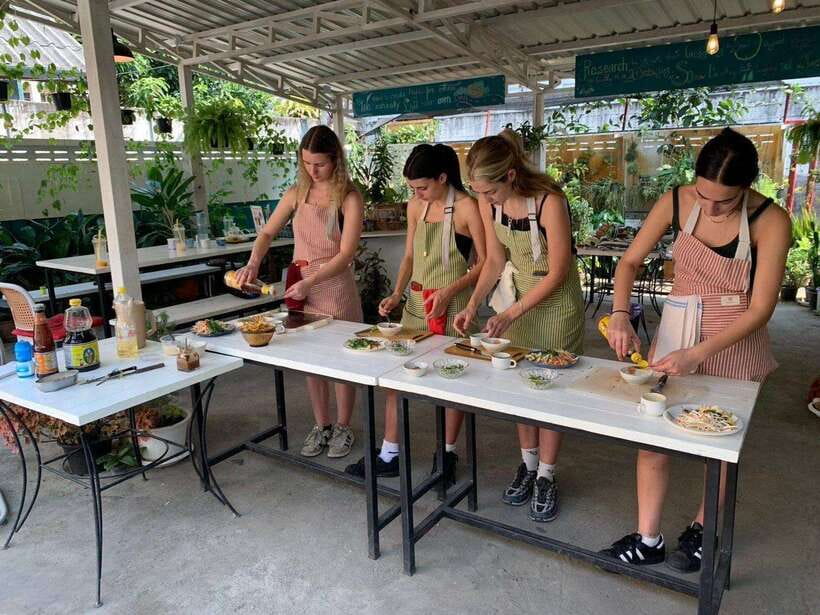
This class runs in different settings, and you should pick based on what kind of morning or evening you want.
City organic garden option:
Expect a greener, garden-style cooking environment without needing to go far outside town. It’s the easiest option if your schedule is tight.
City yard garden option:
This is still in the city, but the setting can feel more like a compact outdoor yard setup. If you like the vibe of being close to Chiang Mai life while still getting a more natural setting, this often works well.
Farm garden outside the city:
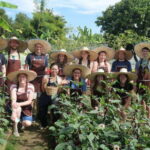
If you want the most “away from it all” feeling, this is the one. You’ll also get the guided tour feel tied to an organic farm environment.
One important consideration: the farm option can be harder to secure at the last minute, so I’d treat it as your first choice if you really want that countryside feel. If it’s unavailable, switching to a city option still keeps the core experience intact.
What You’ll Cook: Curry Paste to Curries, Stir-Fries, Soup, and Spring Rolls
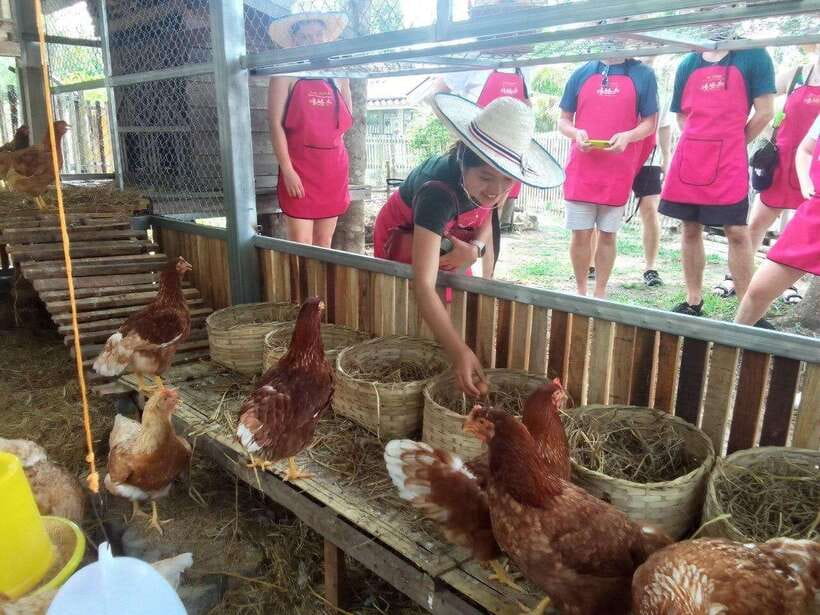
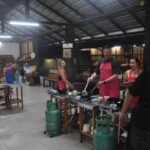
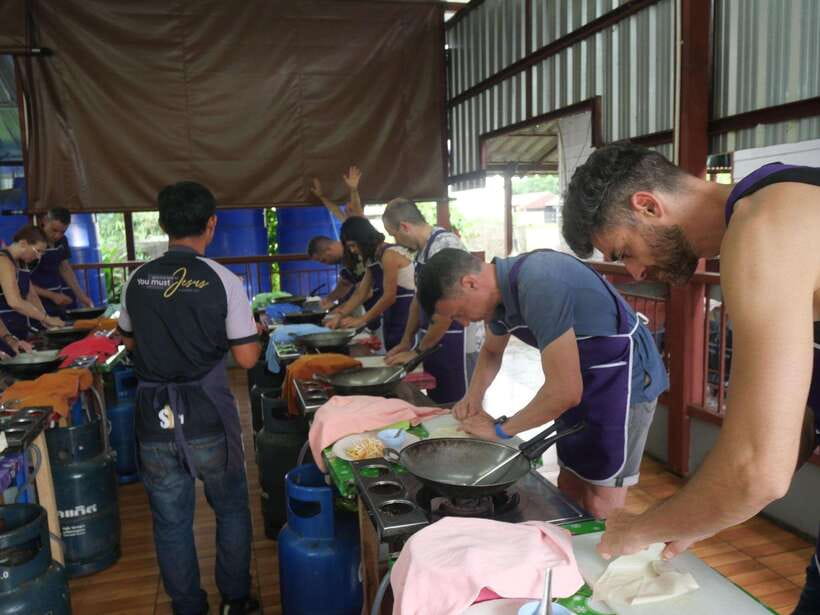
This isn’t a class where you chop for 15 minutes and watch someone else cook. You cook your own dishes at an individual station. The course is designed around 5–6 categories, which typically include curry paste and curries, stir-fried dishes, soup, and spring rolls.
Here’s how that translates into real skills you can use later:
- Curry paste and curry: You learn how the flavor base is built first, then how it changes as it simmers into curry.
- Stir-fried dishes: You practice fast cooking and balance, so you don’t end up with soggy stir-fry at home.
- Soup: This helps you understand Thai flavor layering without relying only on spice.
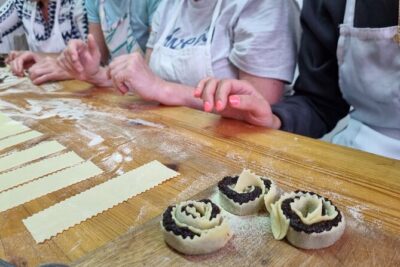
- Spring rolls: You get a feel for texture and wrapping technique, not just eating the result.
Many people plan to cook multiple items per person. In practice, the class structure often lets you choose dishes, and you may end up making around three main choices plus an additional course such as dessert, depending on the session. If you want a clear takeaway: come hungry and expect to eat what you cook.
Customizing Your Curries
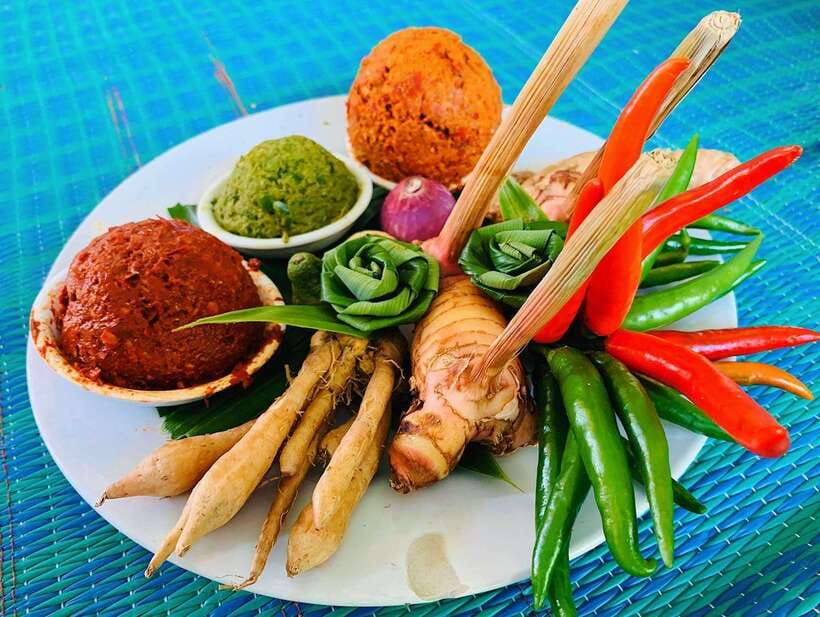
A fun part is how you can tailor the curry type and heat. You can choose options like red, green, Phanaeng, Massaman, or Khao Soi curry paste, and then decide whether you want it spicy or mild. That’s huge for getting Thai food that fits your taste instead of forcing your palate to adapt.
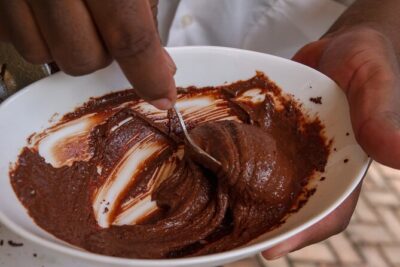
Some instructors also guide you into hands-on steps like making curry paste yourself, so you understand what changes when you grind, blend, and season.
Vegetarian and Vegan Thai Cooking That Actually Holds Up
You can make all dishes vegetarian or vegan. That matters because Thai food can be flexible without becoming bland. You’ll still get herbs, aromatic bases, and flavor structure—you just swap the protein approach.
I’ve seen instructors credited with being especially helpful for different dietary needs, including groups that want vegan-friendly meals and people who prefer less heat. When you tell the team your preferences ahead of time, it helps them steer your cooking so your dishes stay satisfying.
If you’re sensitive to spice, don’t hesitate to request mild from the start. You’ll get the heat level you want while keeping the dish’s Thai character.

Organic Garden Touring and Herb Tasting: Why It’s More Than Scenic
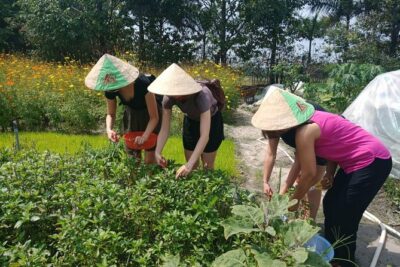
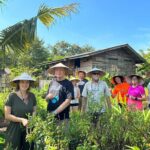
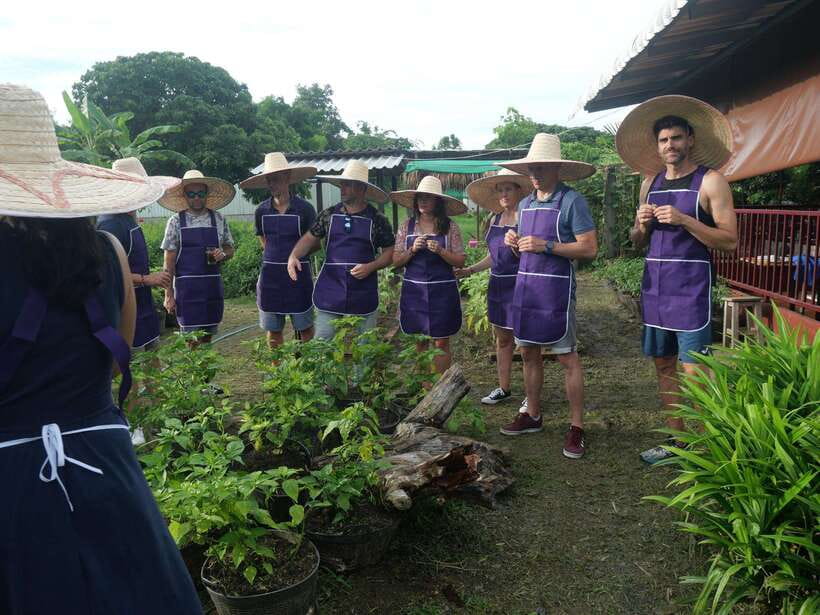
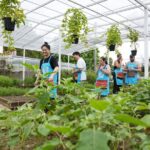
After you cook, you’ll spend time in the organic garden area and taste herbs from their garden. This is one of those “quietly useful” parts.
Thai cooking relies heavily on fresh herbs and aromatic plants—things like leaves, stems, and fragrant greens that don’t taste the same dried or powdered. When you taste them on-site, you learn what they do in flavor terms. Then, when you’re cooking, you can recognize the herb and understand why it’s being added.
It also makes the whole experience feel grounded. You’re not just paying to learn recipes; you’re learning where ingredients come from and how freshness changes the final result.
Eating Thai-Style in the Kitchen Garden (Yes, You’ll Get Full)
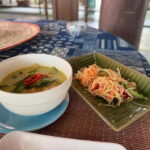
Once your dishes are ready, you eat in a traditional Thai style in the organic kitchen garden setting. That’s part of the value you’re paying for. Cooking classes that end with a few bites are fun, but this one is designed so you actually dine on what you made.
You may also be able to take away the food you cooked, which is handy if you end up with leftovers or want to share later.
If you book an evening session, there’s also a note that beer can be available for purchase on-site. Just remember the class itself states alcohol is not allowed, so think of it as an on-site option rather than something you bring with you.
Instructors and Group Size: Intimate, Not Assembly-Line
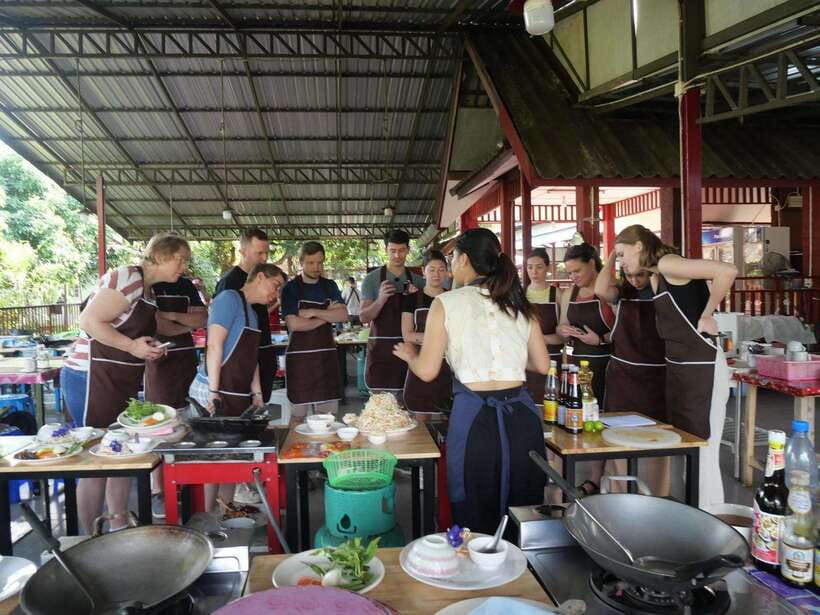
The class is a small group limited to about 10 participants. In plain terms: you’re not stuck at the back watching the action. Multiple people in the program report that instructors focus on individuals, which makes a difference when you’re learning technique like stir-frying timing or getting curry paste texture right.
You may encounter English-speaking instructors such as Wave, Ania, Toy, Balloon, Poppy, Jade, Auntie Sawat, Smiley Anya, or Aryun—names that come up often for being friendly and supportive. What matters for you is the teaching style. The best cooking classes explain the logic behind the steps, not just the sequence.
Timing and Getting There: Burger King Meeting Point and Optional Pickup
The activity runs about 5 hours and can be in the morning or evening, depending on availability.
Logistics are simple:
- If you’re not using hotel pickup, you’ll meet at Burger King, and you should standby about 10 minutes before the start.
- Pickup can be optional. If you’re within about 3 km of Chiang Mai old city, drop-off/pickup coverage is available.
This matters because a cooking class eats into your day fast. If you plan your day around the pickup window, you won’t end up rushing to markets, temples, or dinner.
Also note: there isn’t a wheelchair-friendly setup listed, and the activity isn’t suitable for people over 95 years.
Price and Value: Why $31 Can Work If You Want Real Skills
At about $31 per person, this can be good value when you compare it to cooking classes that only cover a demo and give you a recipe card. Here you’re paying for:
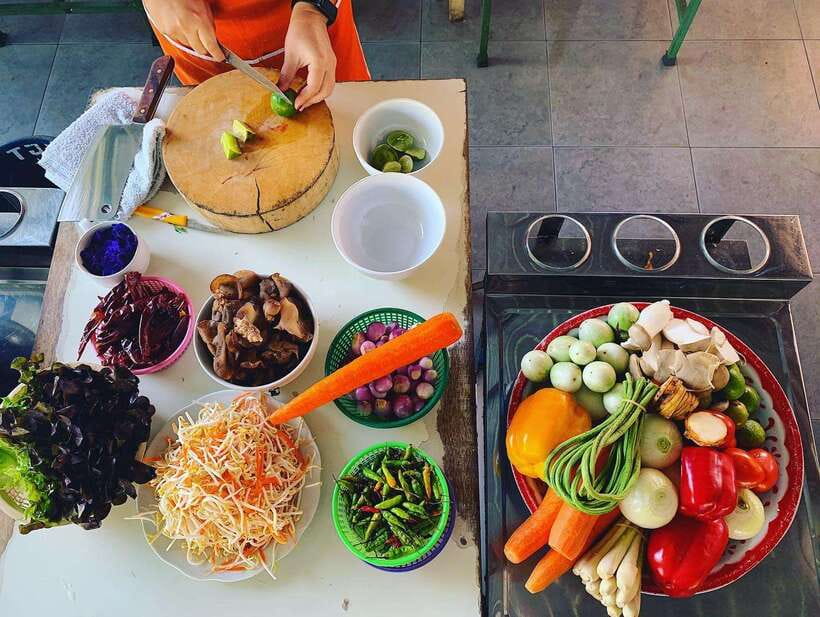
- a market visit (ingredient education before cooking)
- a guided organic garden/farm tour (context for freshness)
- tasting herbs from the garden
- all necessary ingredients
- an individual cooking station
- an English-speaking instructor
- a recipe PDF/ebook so you can cook again later
- a welcome snack, drinking water, and seasonal fruit
- a meal you actually eat, plus the option to take food away
The price makes the most sense if you care about technique and want to leave with usable recipes. If you just want a quick taste of Thai food, you could find cheaper meals. But if you want to learn how Thai flavors are built, this is priced like a learning experience, not a restaurant ticket.
The Practical Recipe Take-Home: Cook Again Without Guessing
One of the strongest benefits is that you get recipes to take home—an e-book/PDF version with step-by-step guidance. That’s what turns a fun afternoon into something you can repeat.
Thai cooking can feel intimidating at home because the flavors come from combinations of herbs, aromatics, and proper seasoning. Having the exact recipe steps helps you recreate the balance. You’ll also have your curry paste and curry choices organized so you don’t end up with random notes and wishful thinking later.
On top of that, there’s an online photo album available on their Facebook page. It’s not the reason to book, but it’s nice when you want proof you actually did it.
Should You Book This Chiang Mai Cooking Class?
Book it if you want Thai cooking skills you can use again—especially if you like the idea of starting at a market, then cooking multiple dishes at your own station, and finally eating a meal you made in a garden setting.
I’d also book it if:
- you’re traveling solo or as a couple and want a small group experience
- you want clear instruction in English
- you care about vegetarian/vegan options and spice control
I’d think twice if:
- you’re counting on the farm option specifically and are flexible on timing, since availability can shift
- you need wheelchair access (this isn’t set up for that)
- you want a super short, light snack-only activity
If you plan your day around the 5-hour slot and choose the garden option that matches your mood, this is a solid way to leave Chiang Mai with more than photos—you’ll leave with a menu you can cook again.
FAQ
How long is the Chiang Mai cooking class?
It runs for about 5 hours, with morning and evening sessions depending on availability.
Where do I meet if there’s no hotel transfer?
Stand by at Burger King about 10 minutes before the activity start time.
Do they pick up and drop off from hotels?
Pickup is optional. The service notes pickup/drop-off within about a 3 km radius of Chiang Mai old city.
What dishes will I cook?
The course focuses on several categories such as curry paste, curry, stir-fried dishes, soup, and spring rolls. You’ll also be able to choose curry paste types like red, green, Phanaeng, Massaman, or Khao Soi.
Can I make the food mild or spicy?
Yes. You can cook to your own taste and choose spicy or mild.
Are vegetarian or vegan meals available?
Yes. All dishes are available as vegetarian or vegan.
Is there a market visit and a garden or farm tour?
Yes. The experience includes visiting the local market and a guided tour of an organic farm or garden, depending on the option you selected.
What do I get to take home?
You receive a PDF/ebook recipe book with step-by-step instructions for the recipes, and you may also be able to take away the food you cook.
Is there a limit on group size?
Yes. The class is small, limited to about 10 participants.
Is it suitable for wheelchair users or very elderly guests?
No. It isn’t suitable for wheelchair users, and it isn’t suitable for people over 95 years.
What’s the weather-and-heat reality for the class?
The class uses a garden setting and involves cooking, so it can involve time outdoors. The good news is you control spice levels in your dishes to match your comfort.